
‘Sentimental Value' REVIEW: Creating Homes Out of Houses

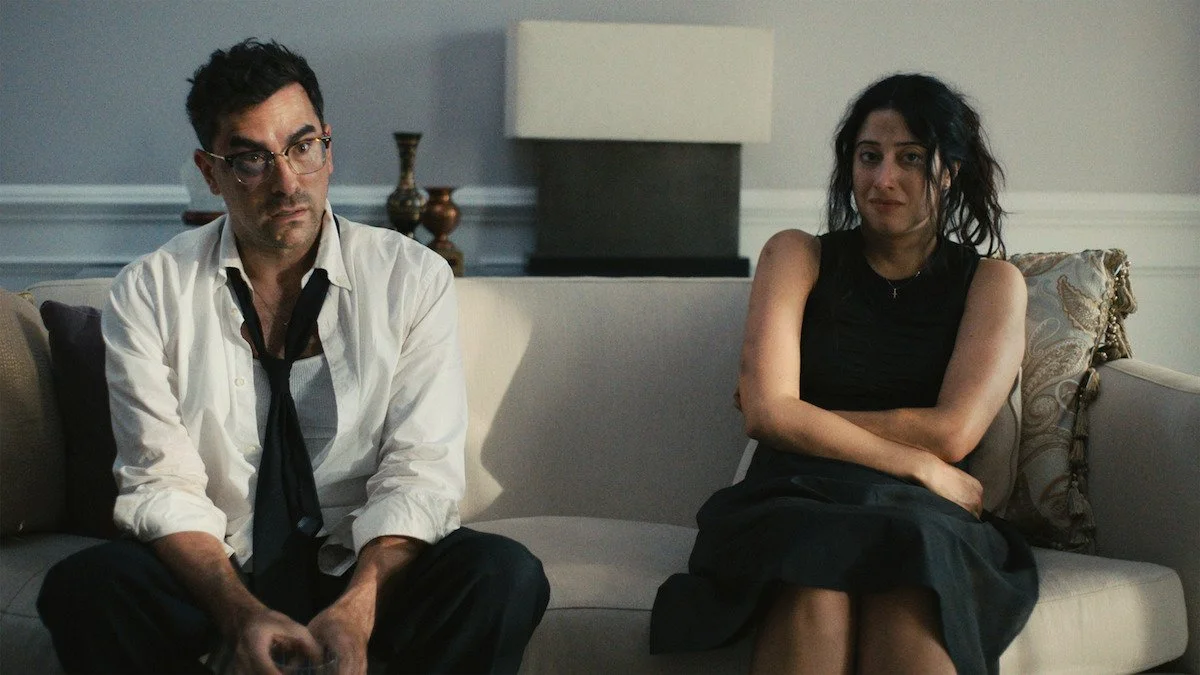
Renate Reinsve as Nora and Inga Ibsdotter Lilleaas as Agnes in Sentimental Value. / Taken from IMDB

A stare can hold as much history as a house that has sheltered generations of unspoken pain. For a family long acquainted with loss, both become sites of communication, or at least desperate attempts at it. In Sentimental Value, words prove insufficient for connection, and a father somehow believes art can, much to the dismay of his two daughters, who are still grieving their mother's passing.
In one of 2025’s best films, Sentimental Value illuminates the unseen costs of creating art and the debt it owes to lived experience. At the same time, it reveals how much of what we hope to express is often suppressed, either in favor of grander gestures or in service of our fears. Some things are simply too difficult to talk about, let alone explain in tongues of different circumstances.
Joachim Trier, in an old interview, spoke of the skills he lacks, yet maintained a steadfast interest in the human experience. Building on the acclaim of 2021’s The Worst Person in the World, his latest film stands as the most persuasive testament to that curiosity.
With a family dynamic dense with recurring patterns and intergenerational tensions, the film offers more than a carefully mapped-out dramedy. It unfolds into a study of the psychosocial tendencies that inform how we confront our own families and unresolved trauma, presented with a welcoming lightness that keeps it from ever feeling overwrought or overly technical. Still, it does not mean it spares its viewers from leaving unscathed, whether in thought or emotion.

Rachel Kemps (Elle Fanning) and Gustav Borg (Stellan Skarsgård) watch the sky together. / Taken from IMDB
Co-written with his long-time collaborator and best friend, Eskil Vogt, Trier once again foregrounds intimate performances sustained by powerful storytelling. He has instinctively drawn outstanding work from his cast for years, and it truly shows. Here, the ensemble is treated as the guiding presence that moves beyond the singular role-focused studies of his earlier titles. Each character gives their all, bringing the screenplay to life with soulful sensitivity, while still retaining hints of the punchy energy his characters are known for.
In arguably his finest performance, Stellan Skarsgård inhabits the arrogant arthouse director Gustav Borg, who takes pride in his ability to judge a good actor in two minutes, yet remains blind to the cruelty of offering a role to his own daughter Nora just right after a funeral and years of neglect.
Gustav claims he wrote the script of his comeback film for her. But what he believes to be an effort of reconciliation is, in fact, the very thing that has caused Nora immeasurable pain, fracturing the family from the start and marking bad childhoods. It seems that being a filmmaker has always been easier than trying to be a present father, and any sense of consideration has somehow eluded him completely.
Not to anyone’s surprise, she rejects the offer. The expressions she exchanges with Gustav seem to withhold stretches of unanswered questions. There's a disruptive sadness, just waiting to be skimmed on the surface. Within so few expository lines, this establishing scene manages to say much more, and this happens throughout the runtime. A lot of revealing emotions hinge on moments that are insistent on their silence.
Of course, this is made possible by the incredible performances all around, one of which stands out as one of this year’s highlights. Renate Reinsve, as Nora, is a relentless force. Every time she appears on screen, she delivers an aching display of subtlety and lived-in melancholy. Through her choices — whether in her avoidant relationship with a married man or in the driving motivations behind her passions — we easily sense the weight of what she keeps hidden, and how her face manages to express it hits remarkably close to home. The way she pauses and looks at something is a story in itself.
And there’s no one better to understand this than Nora’s sister, Agnes, played by the wonderful Inga Ibsdotter Lilleaas. Having consoled each other through shouting parents and casual arguments about vases, she is immediately concerned by the reunion for reasons that belong firmly in the past. Yet Agnes keeps her distance from the brewing tension between her sister and their father’s stiffly polite hugs. Not out of a desire to save face, but as an admission of the helplessness that comes with re-encountering old grief.
Unlike Nora, who immerses herself entirely in the theater to avoid her own emotions by embodying those of others, Agnes has a family to ground her, a routine that provides a sense of control. That stability, however, is upended by her father’s sudden visit.
It isn’t hard for Gustav to sense the heavy atmosphere, so he turns to Elle Fanning’s Rachel Kemp. She's a young actress eager for a breakthrough and very determined to learn a Norwegian accent, no matter how blissfully silly it may sound. Brimming with passionate energy, Rachel attempts to fully channel her character, questioning the intent behind every line. Yet she ends up with an IKEA chair backstory and more deflecting tactics from Gustav. And so it’s equally easy for her to sense that the material she had hoped would be her big break is not meant for her.
Apart from the central plot, each character bears an open wound or two: Gustav wrestles with questions of purpose as he watches his long-time film collaborator struggle to rise from the couch; Nora navigates the persistent unease of her ambitions and relationships; Agnes shoulders the demands of raising a child despite never having received that kind of competent guidance herself; and Rachel discovers that pursuing her dreams demands a tolerance for uncertainty. They orbit one another, each hurtling through life in their own precarious way.

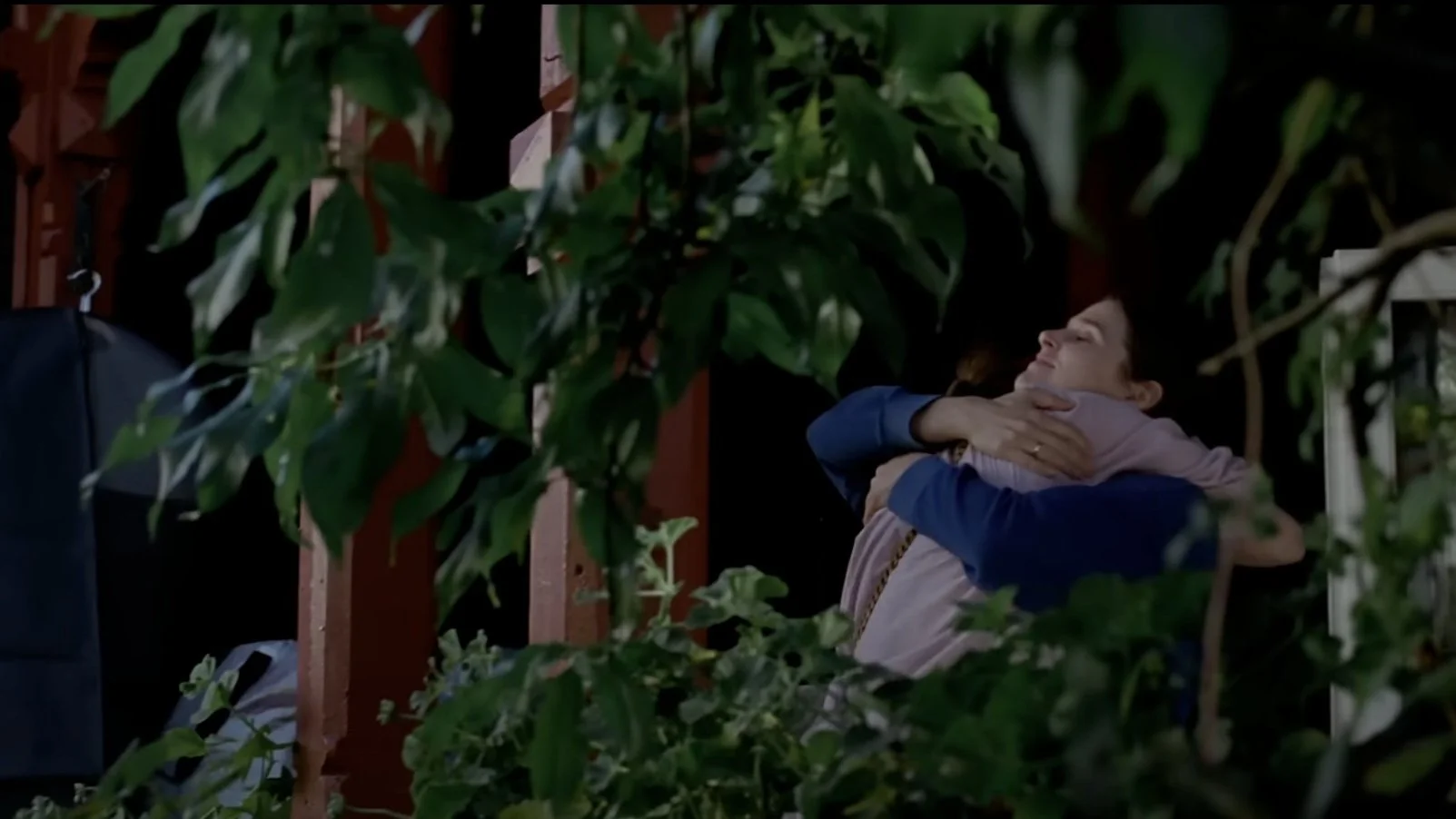
Gustav Borg comforts Rachel Kemps. / Taken from IMDB
As heart-stirring as the family’s friction becomes from this point onward, the story is punctuated with brilliantly timed comedic whips. The most justifiably questionable gag surfaces as a dubious birthday gift given to a child only barely past puberty. Trier demonstrates his refined command not only in balancing tone and executing his playful trademarks in a far more understated film, but also in how a story of an estranged family branches into multiple, distinct thematic threads, including the Nazi occupation and the Netflix consumerist landscape overrun with TikTok trolls.
These subjects find their way into the story without overstaying their welcome, providing meaningful texture to a narrative that explores both the commercial pressures on art in an era governed by marketability and how history repeats itself in different forms.
Stylistically, Trier formats nearly every scene to end with a blackout, as if the curtains are falling on a theater stage. More than just inflections, these blackouts allow each scene to distinguish itself. This choice reinforces the plot’s buildup with deliberate rhythm, which is why the final stretch of the story feels so intense.
As in his previous works, Trier includes narrated montages that provide additional context. Each time they occur, they unfold within the Borg house, which almost assumes the role of its own character. What makes these moments both startling and cohesive is how seamlessly they interrupt realism, forming emotional fissures through which the characters’ inner lives and histories flood the frame.
With a clear-eyed attention to light, shadow, and detail, complemented by thoughtful soundtrack placement and occasional nods to film history, Trier’s camera turns every lingering scene or close-up into an intimate invitation to vulnerability.
Watching the Borg family, I was struck by certain lines, themes, and quiet interactions. Coming from a patriarchal household and carrying a fraught history with my father, I recognize the scars left behind — both theirs and my own — as I grappled with my mental health during the most tumultuous years of my life. Yet with each passing year, as I learn to treat myself with gentleness, I come to better understand the patterns underlying his perfectionism and rigid demeanor. The toys I played with, the home I grew up in, he never had.
We live largely unaware of the effects of our own circumstances, and of how they ripple outward in our families and time. The true struggle lies in seeking understanding, even when we cannot fully hold that conversation within ourselves. Too often, we live inside our own heads, feeling and analyzing more than we act with generosity toward whatever may emerge from it. Sentimental Value is one of many things, but what affected me most is how it makes a case for being openly vulnerable, looking someone in the eye, and learning to reconcile the languages of two generations, each with its own burdens and flaws. Until we dare tenderness, homes remain houses of pretense rather than places that invite the warmest of confrontations.