
Riding the Wrong Train to the Right Station: How ‘The Lunchbox’ Redefines Love Beyond Permanence

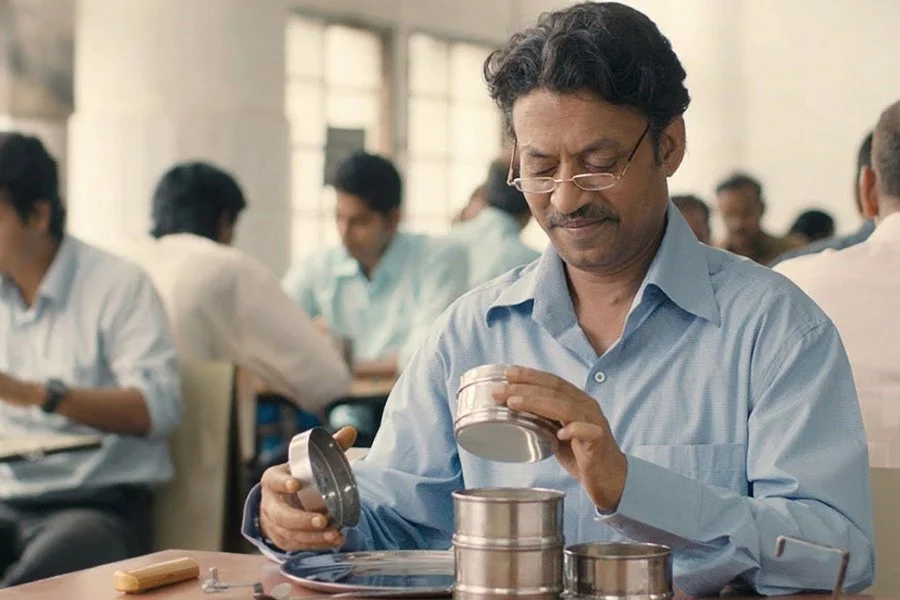
Irrfan Khan as Saajan Fernandes in The Lunchbox | Taken from Asia Society (Australia) Official Website

The Lunchbox, directed by Ritesh Batra, is a film people return to at different stages of their lives because it grows with them. Each viewing opens a new angle, shaped by whatever the viewer carries at that moment. When watched through heartbreak, the film exposes a softer layer. Its quiet story turns into something deeper than a misdelivered meal; it becomes a reflection on mismatched timelines and the kind of connections that change us even when they end. Some loves don’t stay, yet they remain with us, and The Lunchbox handles that truth with unusual tenderness.
What The Lunchbox Understands About Impermanence
The Lunchbox follows Saajan (Irrfan Khan), a widower nearing retirement, and Ila (Nimrat Kaur), a young wife trying to fix a marriage that has already slipped away. The story begins with a simple mistake: Mumbai’s dabbawallahs deliver Ila’s home-cooked lunch to Saajaan. When Ila realizes what happened, she sends a note in the next lunchbox. Saajan replies. The exchange grows. Two lonely people who have no space to speak in their own lives suddenly find someone who listens.
The film never forces their bond into a grand romance. Instead, it shows how two strangers can reshape each other without ever sharing the same room. Saajan, weighted by routine and years of grief, remembers that life still has corners he hasn’t explored. Ila, tired from a one-sided marriage, starts to imagine a future that doesn’t rely on someone who stopped showing up. Their notes don’t erupt with big declarations. They hold small truths: fear, disappointment, hope, set down with care.
What the film gets right about impermanence is this: meaning doesn’t require permanence. Their bond is real, even if it’s brief. They matter to each other even if they never get a traditional ending. The story never claims they’re meant to last; it respects that some relationships have their shape because they can’t survive the weight of real life. It allows their connection to be what it is: important, temporary, and transformative.
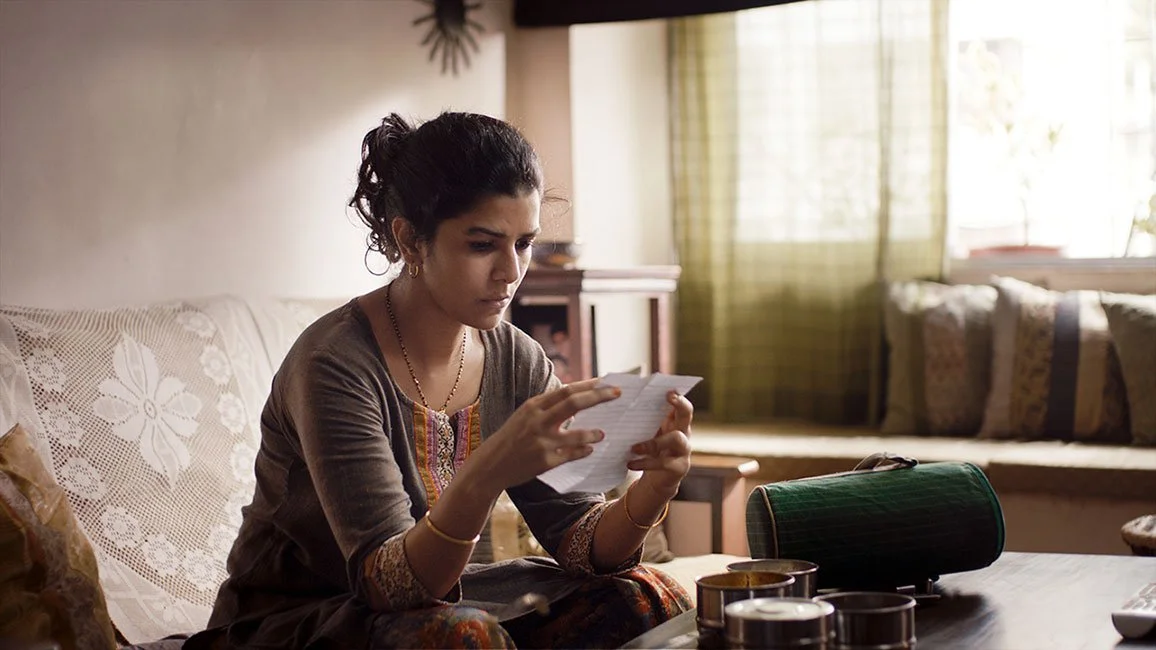
Nimrat Kaur as Ila reading Saajan’s letter | Taken from Sony Classics Official Website
The Beauty of the “Almost”
Saajan and Ila build their bond through scraps of their lives tucked inside a lunchbox. They send each other frustrations, routines, disappointments, and small joys. These aren’t grand moments; they’re glimpses of lives unfolding. And it’s in these glimpses intimacy grows.
The power of their relationship lies in its incompleteness. They fall in love, but they never fully enter each other’s lives. The ending reinforces this: Ila chooses to leave her husband and take her daughter to Bhutan while Saajan goes to her home, maybe too late. The film never reveals if they reunite. Instead, it focuses on what their connection already gave them. Ila finds courage to break from a dead marriage, and Saajan rediscovers the desire to live his own life instead of simply waiting for his days to pass.
This is why the “almost” works. Their relationship doesn’t have to continue for its impact to be real. They were never meant to be permanent fixtures in each other’s lives, but their brief intersection pushed them forward. For Ila, it was the reminder that she deserved more than being ignored. For Saajan, it was the realization that life still had room for new experiences and new emotions even after loss. The film treats the “almost” not as failure but as a valid form of love. Sometimes the person who appears for a short time shifts your direction more than the ones who stay.
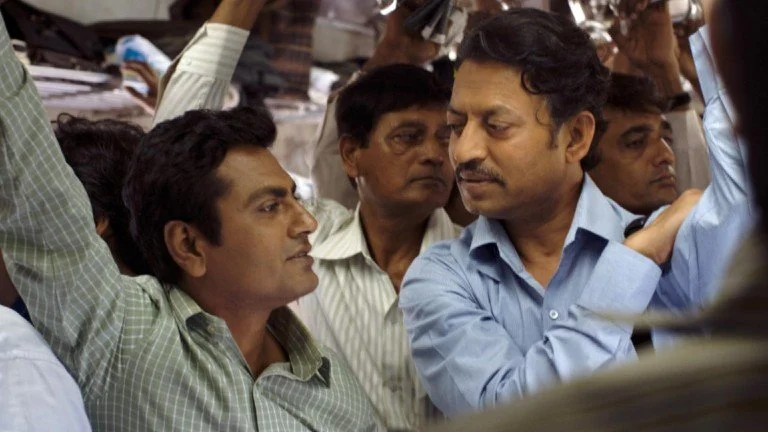
Nawazuddin Siddiqui as Shaikh and Saajan riding a train in Mumbai | Taken from IMDB
Mistakes, Misdeliveries, and Missed Timings: The “Wrong Train” Metaphor
There’s a line in the film that stayed with me: “Sometimes the wrong train could lead us to the right station.” I used to think it was overly sentimental, but I’ve grown to understand its truth. Not everything in life happens as we plan. People come into our lives unexpectedly, often without explanation, and sometimes they leave just as quickly. These brief encounters remind us what it feels like to be seen, even for a moment, and how even a small connection can leave a lasting mark.
Timing guides much of the film. It fails, surprises, misleads, and redirects the characters in ways they never planned. The Lunchbox rests its emotional core on accidents: a mistaken delivery, a curious reply, and choices made on days that felt ordinary. None of these moments were built to lead anywhere, yet they push Saajan and Ila toward versions of themselves they wouldn’t have reached alone. This is where the line moves from dialogue to structure. It becomes the pattern that defines their connection.
The film shows how timing shapes lives without asking for attention. A lunch meal ends up with the wrong man. A woman writes a note. A widower answers. Through these simple acts, two people who feel invisible to their own worlds start to change.
Recently, my own relationship ended under similar circumstances, not in the narrative sense, but in the way life forced two people apart even as they discovered something meaningful in each other. Like Saajan and Ila, we found each other at a moment when we were both navigating isolation. The intensity of that connection was real, transformative, and brief. Mistakes were made, words were exchanged, love was felt deeply, and lessons were learned. In that brevity, the relationship carried weight. It didn’t last, but it shaped the way I see myself and the world around me.
What The Lunchbox Offers to Anyone Moving Through Loss
The strength of Saajan and Ila’s story lies in its incompleteness. They never enter each other’s lives fully, but they leave marks that stay. For Ila, the letters give her courage to imagine life outside a marriage that no longer fulfills her. For Saajan, the bond reawakens curiosity, tenderness, and the desire to engage with life fully, even after loss.
The film doesn’t shy away from the reality of these relationships. Some connections aren’t meant to last, and that’s okay. Their value isn’t in their permanence but in how they shape us. Even a brief meeting with the right person can shift your perspective, teach you something about yourself, or remind you of what it means to hope. My own experience mirrors this: even as the relationship ended, it left me with clarity, self-awareness, and a reminder that intimacy can teach more than permanence ever could. Some connections exist not to last forever, but to redirect, strengthen, and illuminate.
The Lunchbox shows that love can endure without possession. Ila leaves for a new life, Saajan learns to embrace what remains, and neither erases the other’s impact. Their connection shapes who they are, even as their paths diverge, proving that some relationships exist to transform rather than to last.
Saajan carries Ila even in small moments, and she carries him in hers, each altered by what they shared. Like them, the people we cross paths with can remain a part of our story even after they’re gone. I’ve been thinking about how rare it is to meet someone who understands you in that instinctive way; your thoughts, your humor, your view of the world. Is it chance? Or is it about being open enough to let someone in? I’ve always believed that love isn’t just about finding someone who fits into your life, but about finding someone who feels like they belong there. Not perfect, but right. That’s a kind of intimacy we all crave, though not everyone gets to keep it.
And as for me, if my ex and I find our way back to each other someday, the door stays open, not to chase what ended, but to honor the part of us that made the ending worth grieving.