
‘Chungking Express’ or Other Ways of Seeing Dreams
‘Chungking Express’ or Other Ways of Seeing Dreams


Feature art by Angelica Afan
If there’s one defining trait almost reflexively associated with Wong Kar-wai’s films, it’s the dreamlike atmosphere they wear with studied excess. Much of this stems from the Hong Kong auteur’s impressionistic style, but what makes these worlds feel distinctively alive on their own is often the internal logic in which they operate. It’s always a rule of grammar in his work that each film features lonely people, vivid colors, and a bottled intensity of yearning.
In this sense, every title in his catalogue seems like an overarching part of a self-contained universe. To anticipate the hallmarks of his style is all but common news. But WKW's authorial perspective makes that anticipation a pleasure rather than a recycled expectation; it makes each film feel entirely new. That's why there's a lot on the table if we’re picking favorites from his filmography, but personally I find the most lasting form of his candid sensibility in Chungking Express.
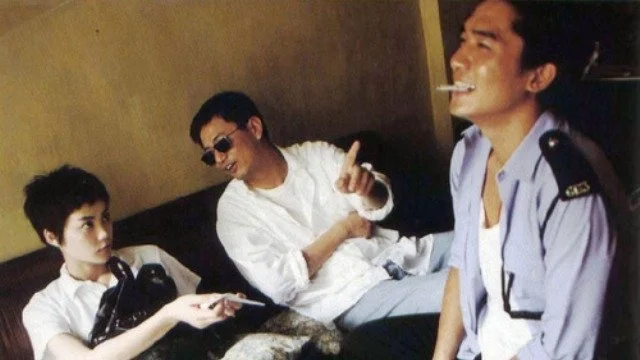
Tony Leung Chiu-wai, Faye Wong, and Wong Kar-wai on the set of Chungking Express. / Taken from IMDB
By now so much has already been said about this cult classic that piling on further praise risks tipping into repetition—but it’s always deserved. Made on a tight budget and as a creative reset to counterbalance WKW’s burnout from Ashes of Time, Chungking Express was conceived and completed in about six weeks. Its stature is further reinforced by the timeless scenes and characters that have made it a recognizable timestamp that everyone keeps returning to—and I'm one of those people.
The film has two overlapping narratives each centered on a police officer: Takeshi Kaneshiro stars in the first segment while Tony Leung leads the second. The female leads, Brigitte Lin and Faye Wong, are afforded equal presence, exerting a latent yet destabilizing force that upends the lives of these lovesick men with an unpredictable charisma. At heart, the film is about chance encounters, with its stories punctuated by recurring, iconic visual refrains: a box of pineapples in one, a bag of fish snacks in the other.
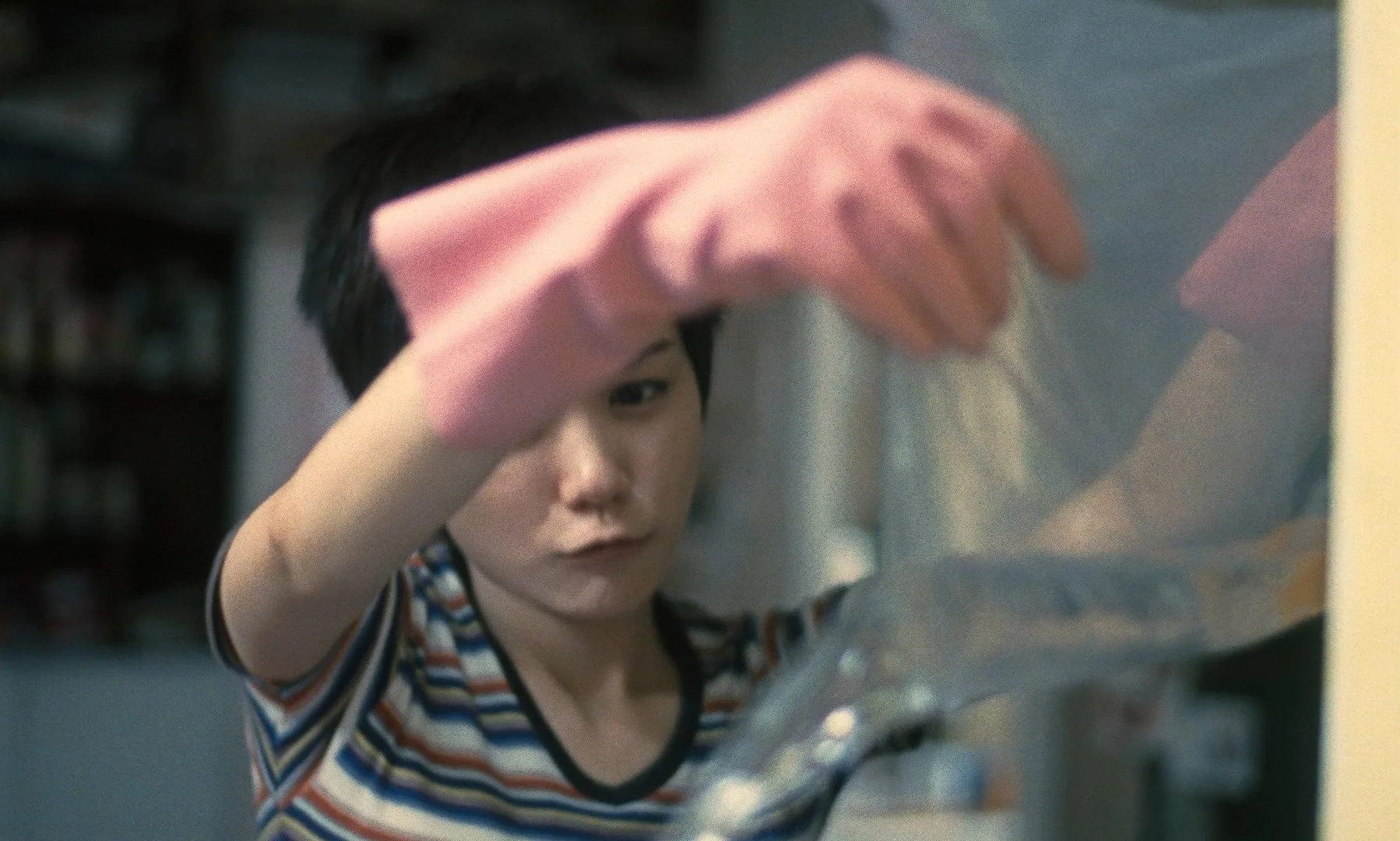
Faye adds water to Cop 663’s aquarium. / Taken from IMDB
Of the two narratives, I find myself gravitating toward the second, largely because of a playful motif that never fails to fascinate me: Faye’s housekeeping. Portrayed by none other than the Mandarin pop queen Faye Wong, the character feels less like a supporting presence and more like a title unto herself. She plays dreamy music in the film, equally attuned to her own discographic tastes and there’s a magnetic quality to her movements that makes even the most mundane gestures feel effortlessly fun and worthy of a fashion poster.
In the aforementioned housekeeping sequences, the song Dreams by The Cranberries fittingly plays in a non-diegetic manner, though it occasionally slips into the world of the film. What we hear notably is Faye Wong’s rendition of the song. On my first watch, I was struck by how delightfully silly and unreal it all felt: expressing love through trespass, cleaning someone else’s apartment, even replacing the fish in the aquarium. By all logic, Tony Leung’s Cop 663 — an officer of the law no less — should have arrested anyone brazen enough to do such a thing. Yet he gladly accepts the odd bits of changes to his living space, even noticing, without question or explanation, that his bar of soap has somehow grown larger.
One can take Faye’s housekeeping at face value, as its absurdity aligns perfectly with WKW’s usual world-building, and Chungking Express is no exception. But it can also be read symbolically: Faye’s quiet intrusions reflect how she becomes lodged in Cop 663’s unconscious, a presence that grows increasingly apparent each time they meet at the marketplace and their interactions accumulate in number. This is why Dreams consistently plays during these sequences as it externalizes the film’s drifting boundary between fantasy and waking life.
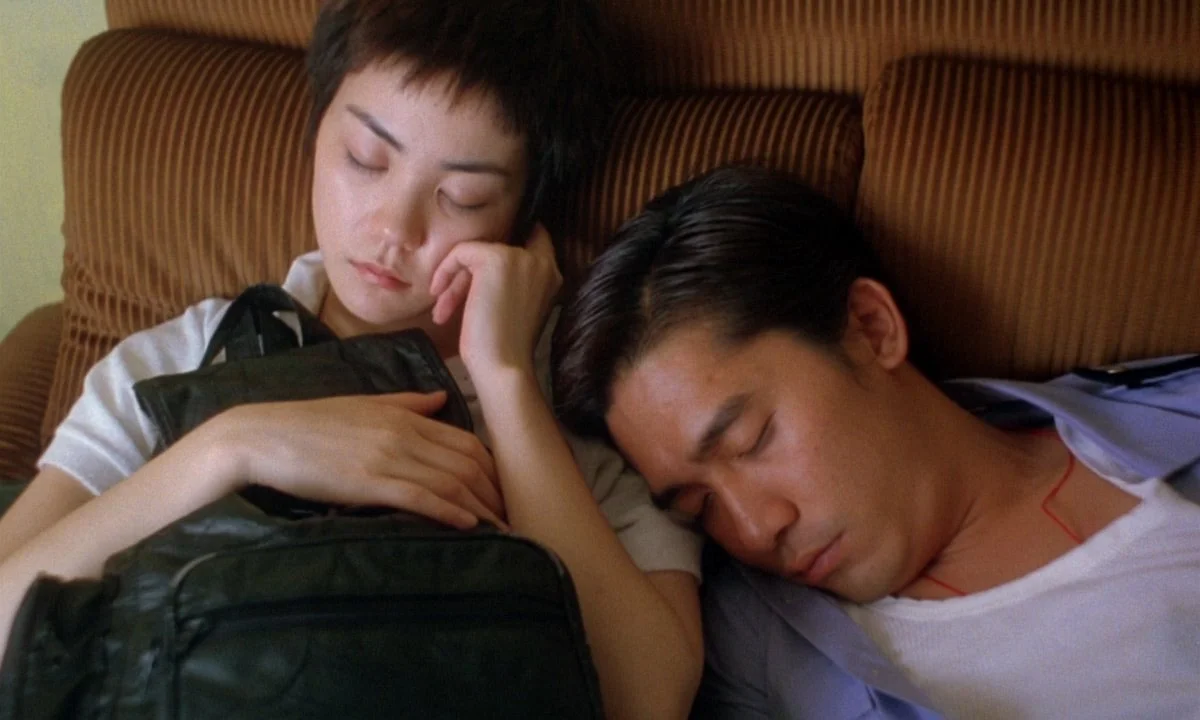
Faye and Cop 663 fall asleep together on a couch. / Taken from IMDB
Another moment I always find charming even on rewatch occurs when Cop 663’s apartment is in disarray and Faye suddenly appears at the entrance with a bag of fish, ready for housekeeping once again. It’s a funny scene, but I like to think of it as part of the gradual build-up of their relationship, one that reveals itself more through gestures and atmosphere than through the concrete progressions typical of other romantic comedies. Instead of following conventional development, WKW leans on visual symbols and small whimsies to express connection.
Take for instance how Faye, despite claiming she likes to numb her thoughts with loud music, drifts through her days almost like a sleepwalker, fixating on the most granular details of the person she is drawn to, quietly doing everything she can to share in his grief. In fact, the only moment she lowers the volume of her CD player is when that person finally wants to get to know her too. Thus, the most outlandish thing in the film is not what the characters say, which often borders on childish sentimentality, nor the ever-moving camera that glances at a signpost before peeking through a character, but rather the absorbing pull that makes it all believable and most of all, intimately magical.
If Wong Kar-wai’s films collectively share a grammar then Chungking Express may be where that language speaks most freely. Like most of his titles, its logic is not governed by realism but by emotional proximity: pillow cases get renewed without explanation, strangers enter private spaces, and affection is expressed through invisible, almost imperceptible acts. Faye’s housekeeping is only strange if we insist on waking rules. In WKW's universe, longing rearranges reality just enough to make narrow spaces for connection. Perhaps that is why the film remains suspended in mood; it doesn’t end so much as it fades, like a dream we wake from, still unsure whether it ever truly left us or if it was real at all. But wherever it takes us, it will linger still.