
‘28 Years Later: The Bone Temple’ REVIEW: 2026’s First Monumental Film
‘28 Years Later: The Bone Temple’ REVIEW: 2026’s First Monumental Film

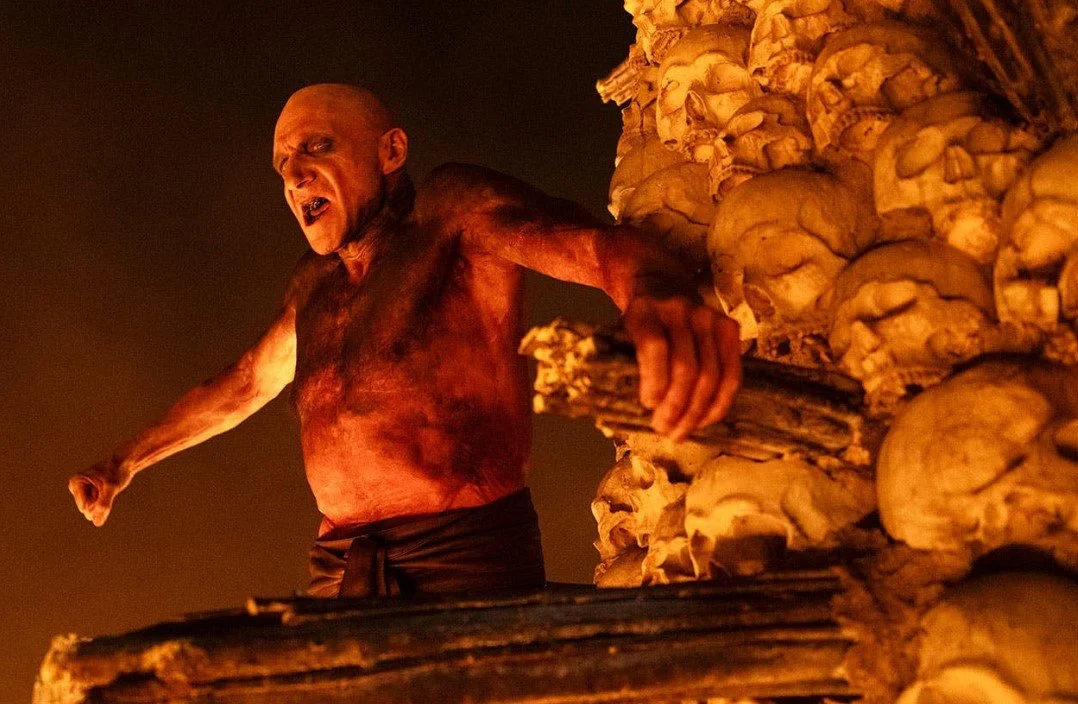
Ralph Fiennes in 28 Years Later: The Bone Temple | Still courtesy of Columbia Pictures

28 Years Later closes with Spike (Alfie Williams) stumbling upon a cult of Satan worshippers dressed like Jimmy Saville, who we then see tumbling around, killing zombies like they're the Power Rangers, a death metal cover of the Teletubbies theme raging in the soundscape. It's a morbidly humorous moment that came out of left field, one that is likely to alienate a core part of the audience.
I, for one, welcome every second of it.
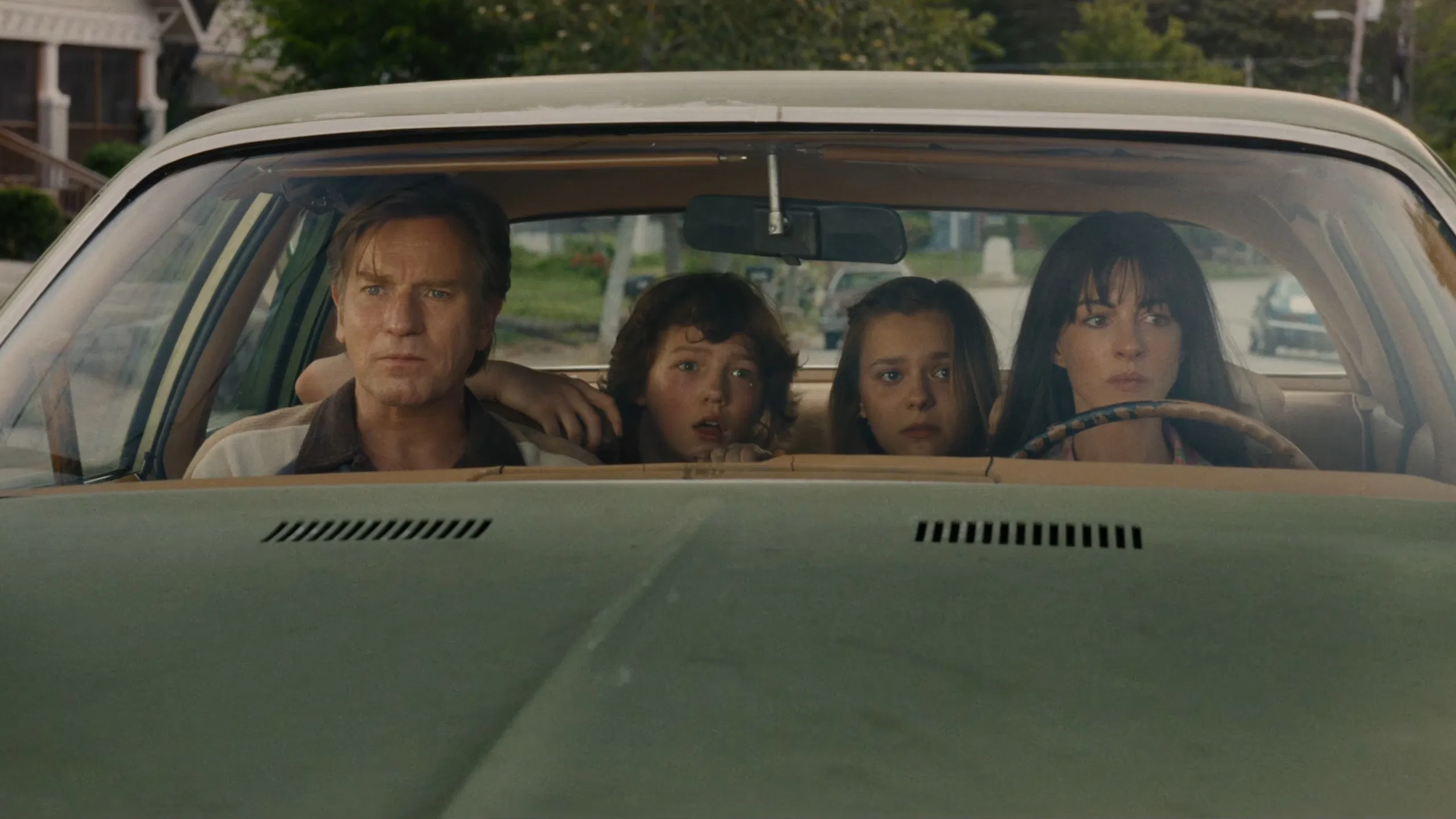
The film's sequel, subtitled The Bone Temple, continues where we left off, following two main storylines: one with Spike being coerced to join the sadistic Jimmys, led by the psychopathic former preacher's son, Sir Lord Jimmy Crystal (Jack O'Connell). Meanwhile, Dr. Ian Kelson (Ralph Fiennes) makes a groundbreaking discovery about the Rage virus through the local Alpha named Samson (Chi Lewis-Parry).
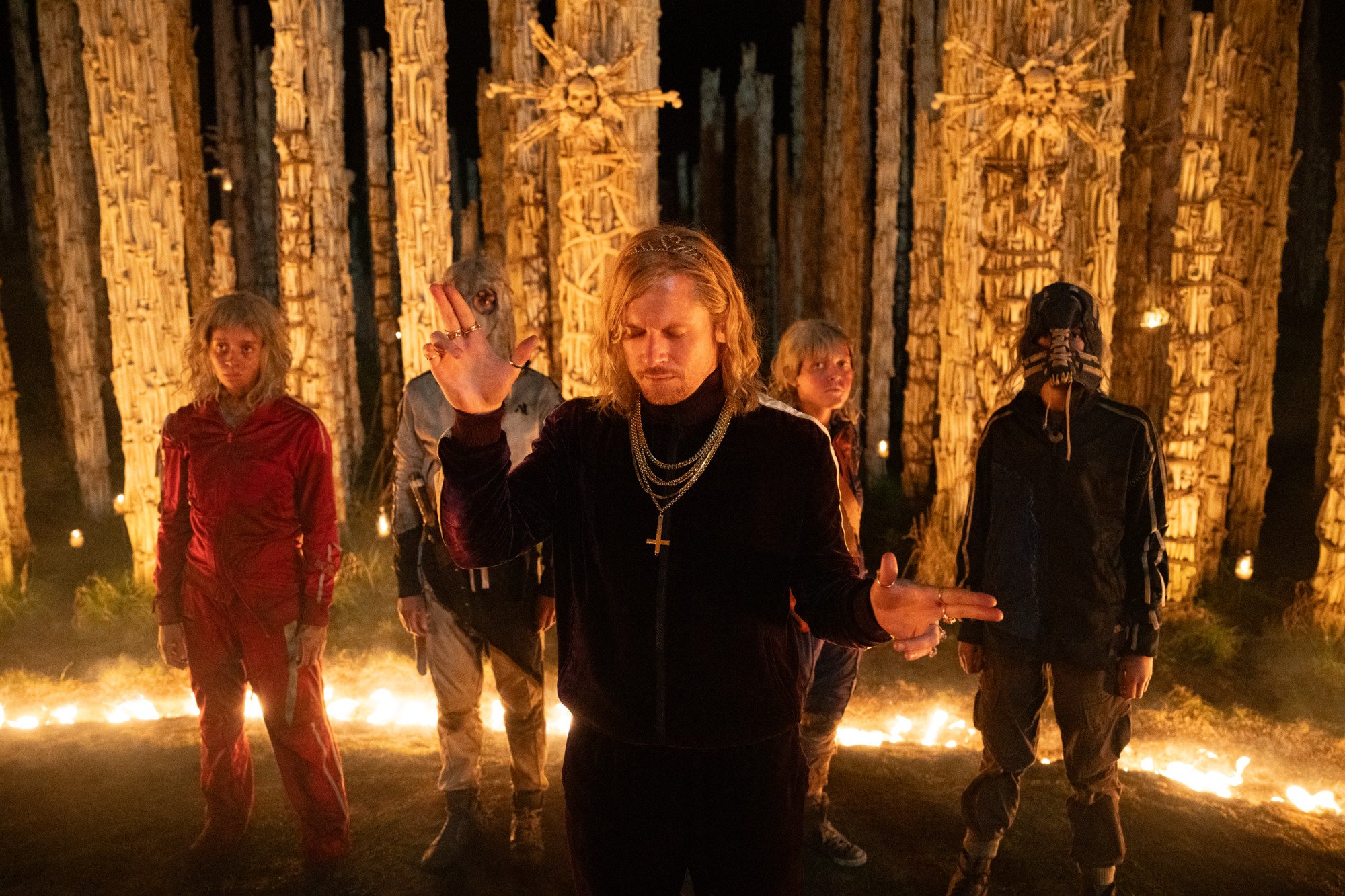
Jack O’Connell in 28 Years Later: The Bone Temple | Still courtesy of Columbia Pictures
The Bone Temple, right off the bat, abandons the surprisingly touching coming-of-age odyssey of 28 Years Later with Spike, being sidelined in favor of Dr. Kelson and the Jimmys, diving deep into the absurd dichotomy between humanity and inhumanity by exploring the respective cultures and ideologies of the two parties.
In addition to that change in direction, Nia DaCosta, who helmed 2021’s Candyman reboot and Marvel Studios’ The Marvels, took the reins as director this time around, with the franchise co-creator Danny Boyle now assuming a role as producer. By frame one, you can tell how utterly different the look and texture of the film is. Compared to the other films’ grimy, dirty aesthetic, The Bone Temple looks much cleaner and polished courtesy of cinematographer Sean Bobbit. And although I do admit that I do miss Boyle's experimental kineticism and Anthony Dod Mantle's expert use of consumer-grade digital cinematography from the previous films, this change isn't a dealbreaker at all.
What helps is the fact that The Bone Temple is, in its numerous distinct qualities, its own beast. And perhaps, for those who aren't into the wacky gonzo formalism of 28 Years Later, this might win back the skeptics as Bone Temple is much more of a conventionally stylized, straightforward film.
Still, this is not to say that the film isn't without its idiosyncrasies. Understand that Alex Garland remains the sole screenwriter of these movies, and for the most part, this new trilogy refuses to take the easy routes, always going for the roads not taken. And if they are choosing the obvious ways, they do it while pouring out gasoline, lighting them up, burning everything behind as it struts along.
The Bone Temple, as previously mentioned, follows two main storylines — one with Dr. Kelson and one with the Jimmys — and both of which are opposites of each other in terms of tone. I remember one moment when there is a particularly horrific scene happening in the side of the Jimmys that involves torture and human sacrifice. Then the film goes back to the bizarrely wholesome Dr. Kelson, who's high as a kite dancing to Duran Duran.
Similar to what I felt about 28 Years Later, it's a wild emotional rollercoaster of a movie that's packed with ideas of varying intensity. It's disturbing, mean, and bleak, but it's also very funny, hopeful, and unexpectedly moving. Everyone is going to talk about the absolute insanity of that Iron Maiden moshpit, but the little moments — such as someone simply uttering the word “moon” — are the ones that feel monumental to me and the future of this fictional universe.
In hindsight, if we bare them down to their simplest forms, a lot of the ideas in The Bone Temple shouldn't mesh together at all.
Except it really does.
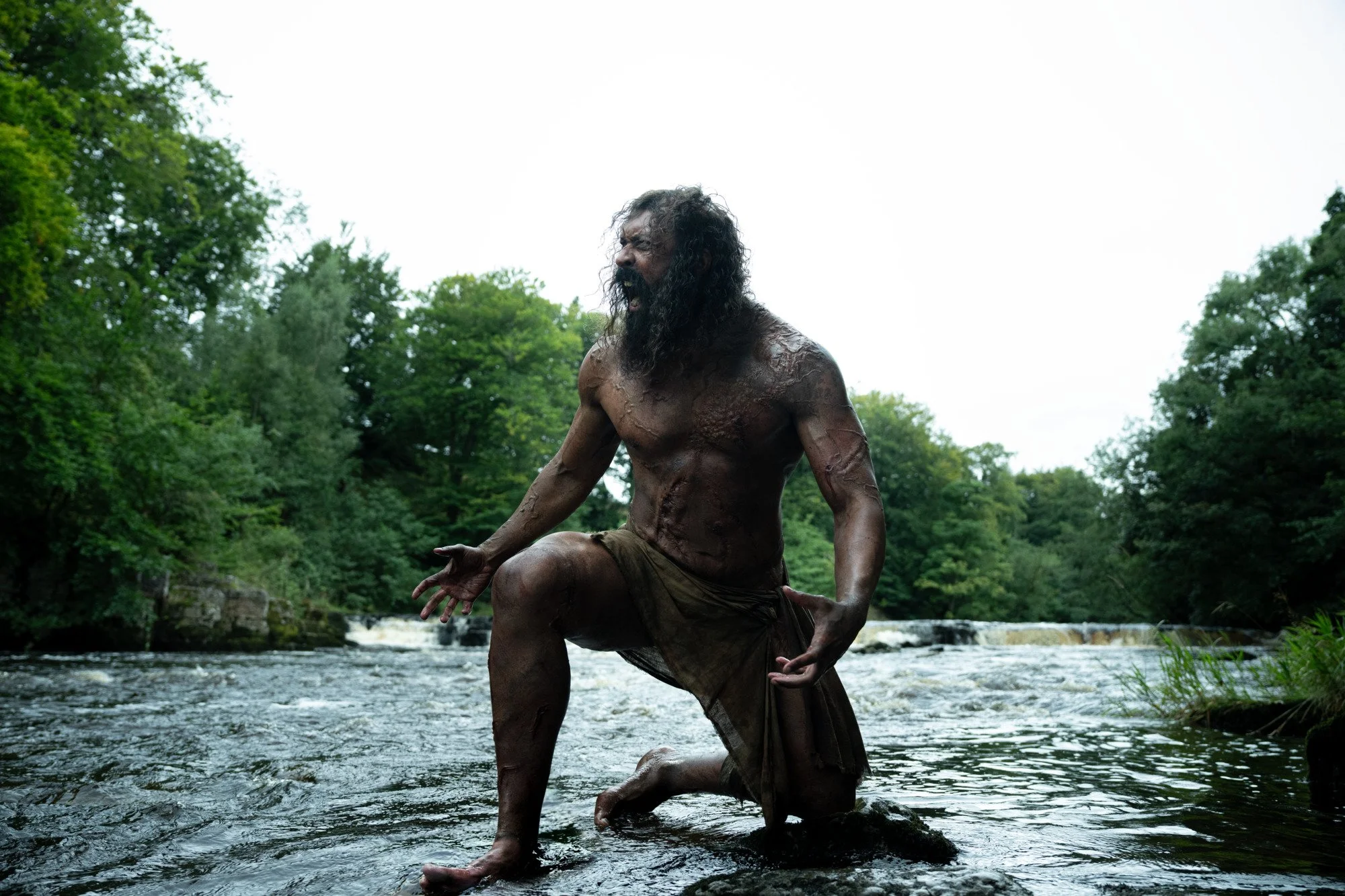
Chi Lewis-Parry in 28 Years Later: The Bone Temple | Still courtesy of Columbia Pictures
And I have to commend DaCosta for that. In Boyle's hands, The Bone Temple would be as formally manic as its predecessor. But with DaCosta, she dials that manic energy down. Her restrained approach not only keeps the most batshit elements of Garland's screenplay grounded but also highlights its key ideas more concretely.
Now, I'm not saying which filmmaker is better. Both directors not only accomplish something in their own right, but I also feel like there is a compelling dialogue between Boyle and DaCosta happening through the vastly unique cinematic language they employed in their respective movies.
28 Years Later is spry and vigorous in its filmmaking with Boyle showing an eager willingness to try different things. And to me, that feels appropriate for Spike's coming-of-age journey.
The Bone Temple feels colder and more cautious, almost as if DaCosta is reaching uncharted territory. But that cautiousness lends itself well to the material. It's a lot more of an evenly composed, paranoia-induced mosaic, compared to its predecessor, where it's throwing things at the wall and crafting a messy, albeit poignant collage. And that sort of composed uneasiness perfectly captures these smaller-scale troubled journeys of these characters, especially for Dr. Kelson and Spike, who are also having their own leaps into the unknown.
In addition to the direction, the performances from the cast are staggering. From Ralph Fiennes, who has created a freaky, fascinating madman with a heart of gold in Kelson, to Jack O'Connell, who's simultaneously menacing and pitifully pathetic as Jimmy Crystal. However, I do think that the standout is Chi Lewis-Parry, whose physicality conveys a wide range of micro-expressions and brings a lot of the film's heart to the table.
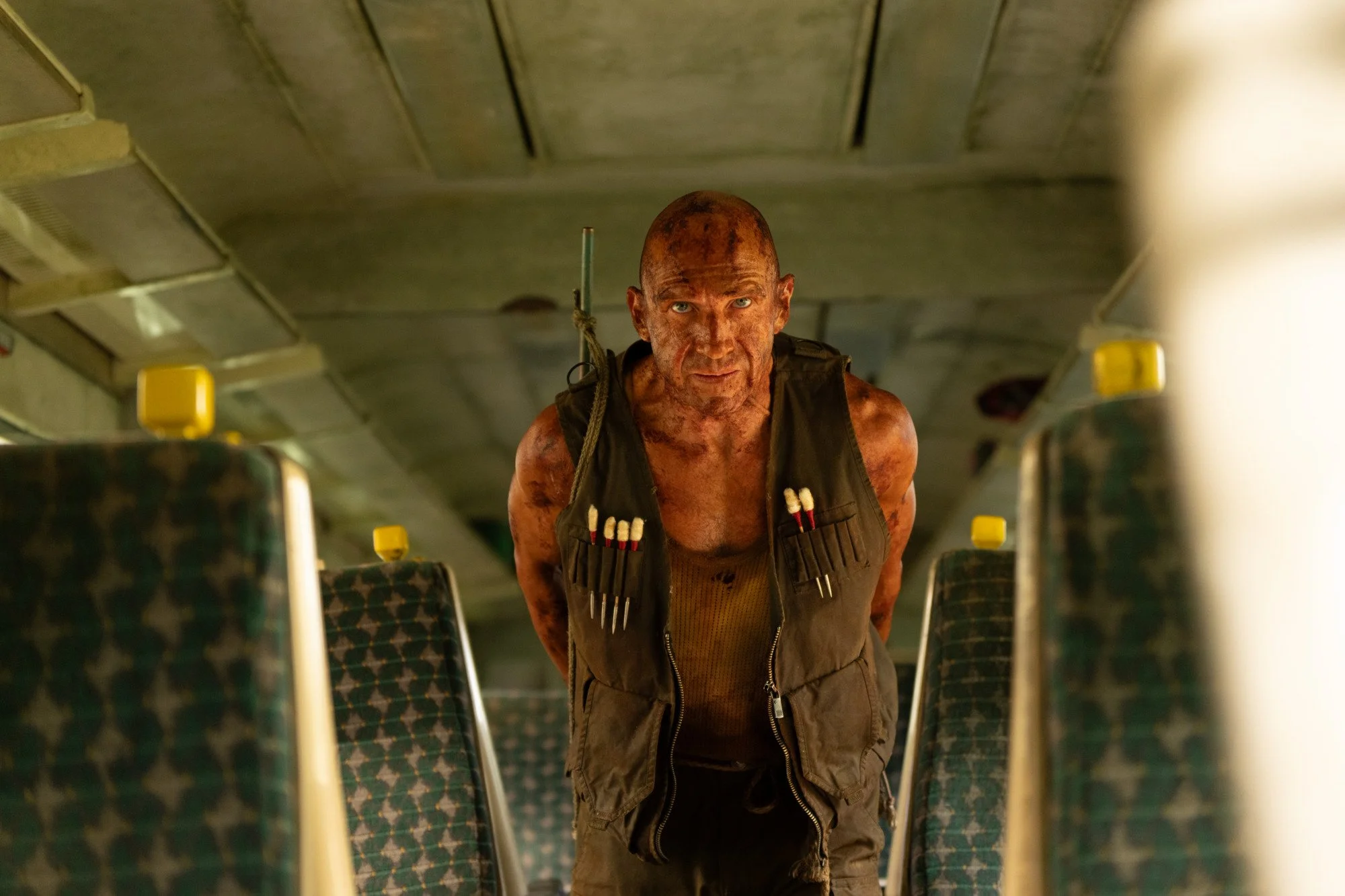
Ralph Fiennes in 28 Years Later: The Bone Temple | Still courtesy of Columbia Pictures
Much of the franchise, even dating back to 28 Days Later, is about people being left to their own devices after society breaks down. Slowly, in these movies (minus Weeks, the second film), the zombies are no longer the focus of these movies, but rather the people themselves. In 28 Years Later, it shows how a culture of constant dehumanization reduces life to nothing but expendable, the death of others as something to be celebrated just because their life no longer serves a purpose, and that life and death shouldn't be something we take for granted.
The Bone Temple now further explores the idea that its predecessor touches on: how people in a dead society tend to look at the past to live in the present. In Spike's island home, bringing back only a frisbee in a supply run feels enough, as it nods to simpler times. For Kelson, it's photo albums and vinyl records. All mementos of a life long past with no path moving forward. Everyone is reduced to hollow shells, operating on basic instinct. If there’s no longer anything to look forward in life except to survive and to die, then what’s the point of living at all?
And there’s also the tendency to look at the past in the wrong light. For the Jimmys, it's through their consumption of children's media that they find a way of surviving the horrors of the Rage virus. But with the cruelty of post-apocalyptic life combined with the leader Jimmy's religious trauma seen in the prologue of the first, in doing so, they use this innocuous icon for sinister purposes, to raise hell on whoever they come across.
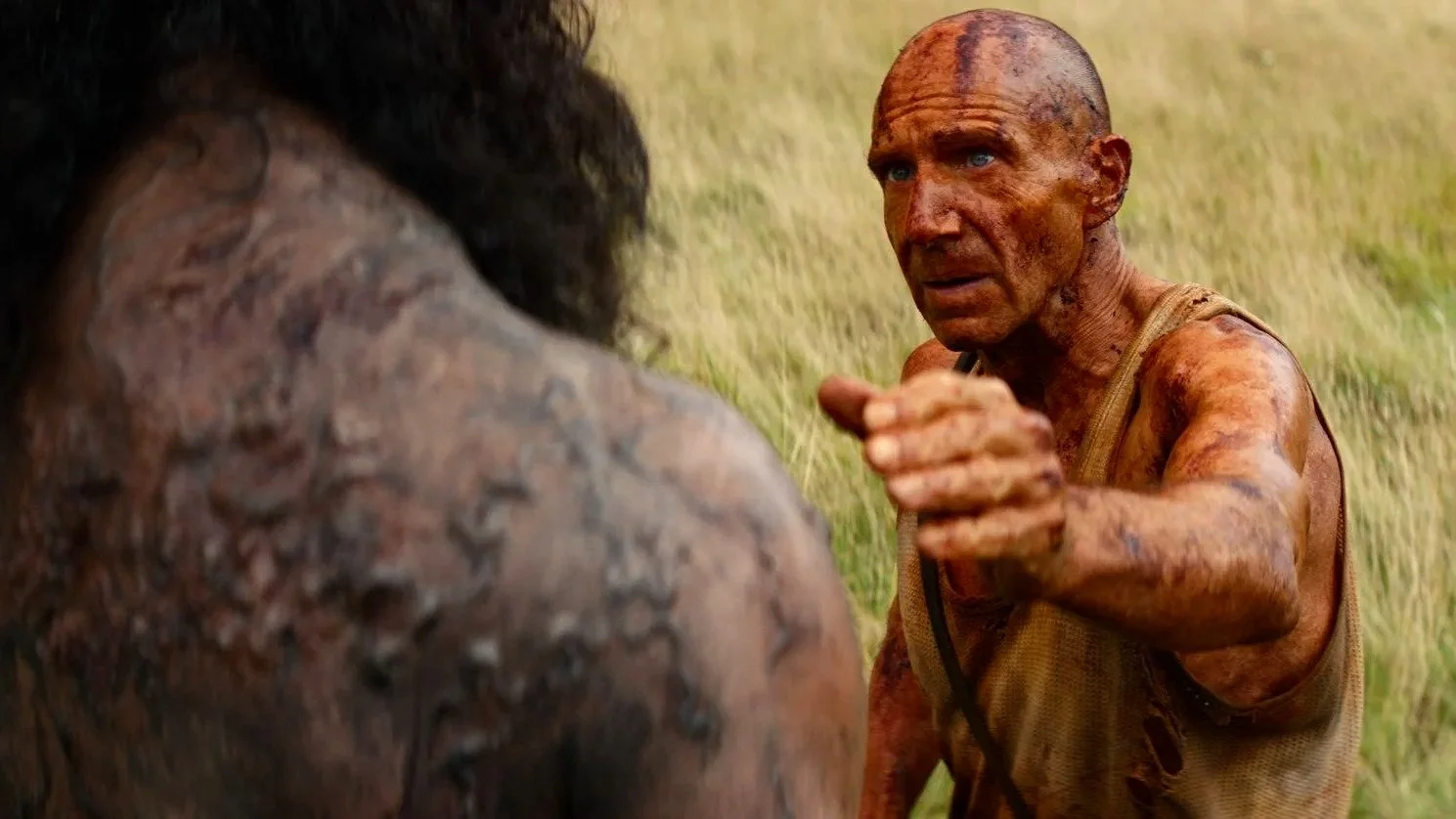
Chi Lewis-Parry and Ralph Fiennes in 28 Years Later: The Bone Temple | Still courtesy of Columbia Pictures
A particularly heavy subtext can also be seen about the Jimmys, especially regarding the real-life monster Jimmy Saville, which a lot of audiences not from the UK wouldn't be picking up on, but this review wouldn't be enough to cover that aspect alone. As I said, these movies have a lot more going on than meets the eye.
But I think this thread all boils down to: how past media, history and other parts of our society that have influenced us over time, if left unchecked and inscrutinized, can cause cultural regression in our collective minds; how that lack of proper supervision and analysis on what the past has given to us can bring forth the worst selves of humanity that history has tried to teach us against repeating many, many times.
At the end of the day, it's we who have the power to redeem ourselves.
Not your mom, not your dad, not your God.
Just us.
‘28 Years Later: The Bone Temple’ is now showing in Philippine cinemas.