
Home as an Authoritarian Machine: A Film Program

Feature art by Yve Ventures
The article contains discussions of sexual abuse. Reader discretion is advised.
Authoritarianism is manifested in the very governing systems of society that continuously subvert or bend democratic principles in favor of the authoritarian figure. Such manifestations as media censorship and a culture of impunity have created an environment that tolerates violence. The idea of home is no exception from the breaches of authoritarianism that create a less-than-nurturing environment and traumatic experience for children. Forms of authoritarianism at home can manifest as abuse, traditions, and privilege that cause children to think they’re worthless and their idea of themselves to be devalued. All of these are done for the sake of the satisfaction of the authoritarian figure at home. Narratives of betrayal and trauma are also common among children, which forces them to confront the harrowing aftermath, shaping the next discourse of their lives. As an authoritarian would expect, children will feel more powerless and just be silent, like the world around them has conditioned them to, from cultural beliefs to social taboos set in stone in their favor. The continuous stigmatization of trauma has only worsened the situation and struggle for children to find justice from their offenders and even a chance to have a safe space to heal their scars.
The virtual film program Home as an Authoritarian Machine aims to shed light on various narratives of control over children. How this impact of violence towards children is also a cycle of violence perpetuated by a systemic problem that needs radical change. The dynamics of children and their tragedies have distorted their idea of the self, and coping with it will lead to behavioral problems growing up, brought by the thought of being devalued and controlled. Compensation for these experiences has only turned for the worse if they are denied the safe space to heal, as the same cycle of violence will be reenacted by these children. These short films and their narratives reflect the effects of the persisting culture of authoritarianism across various contexts and forms of control over children.
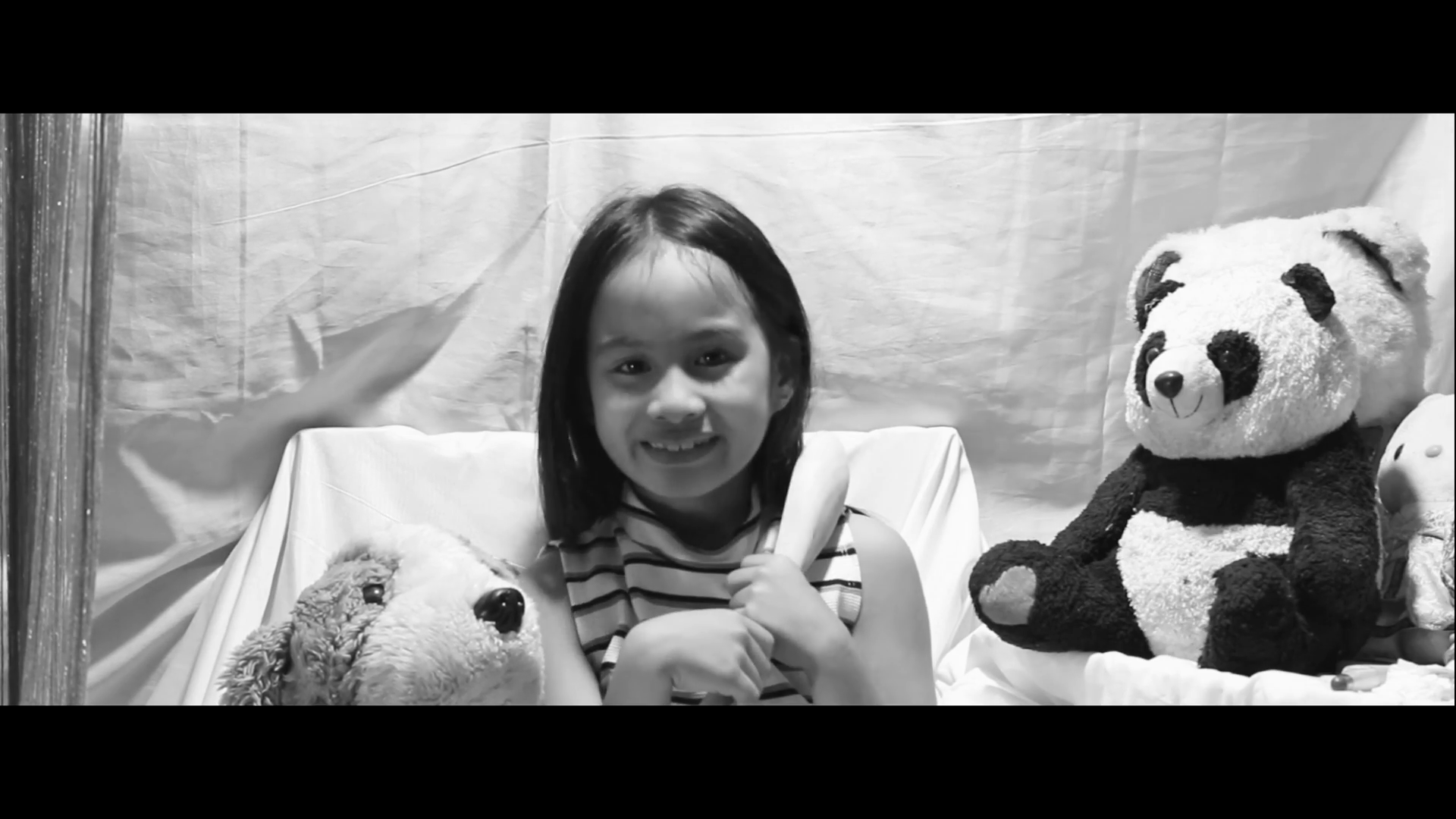
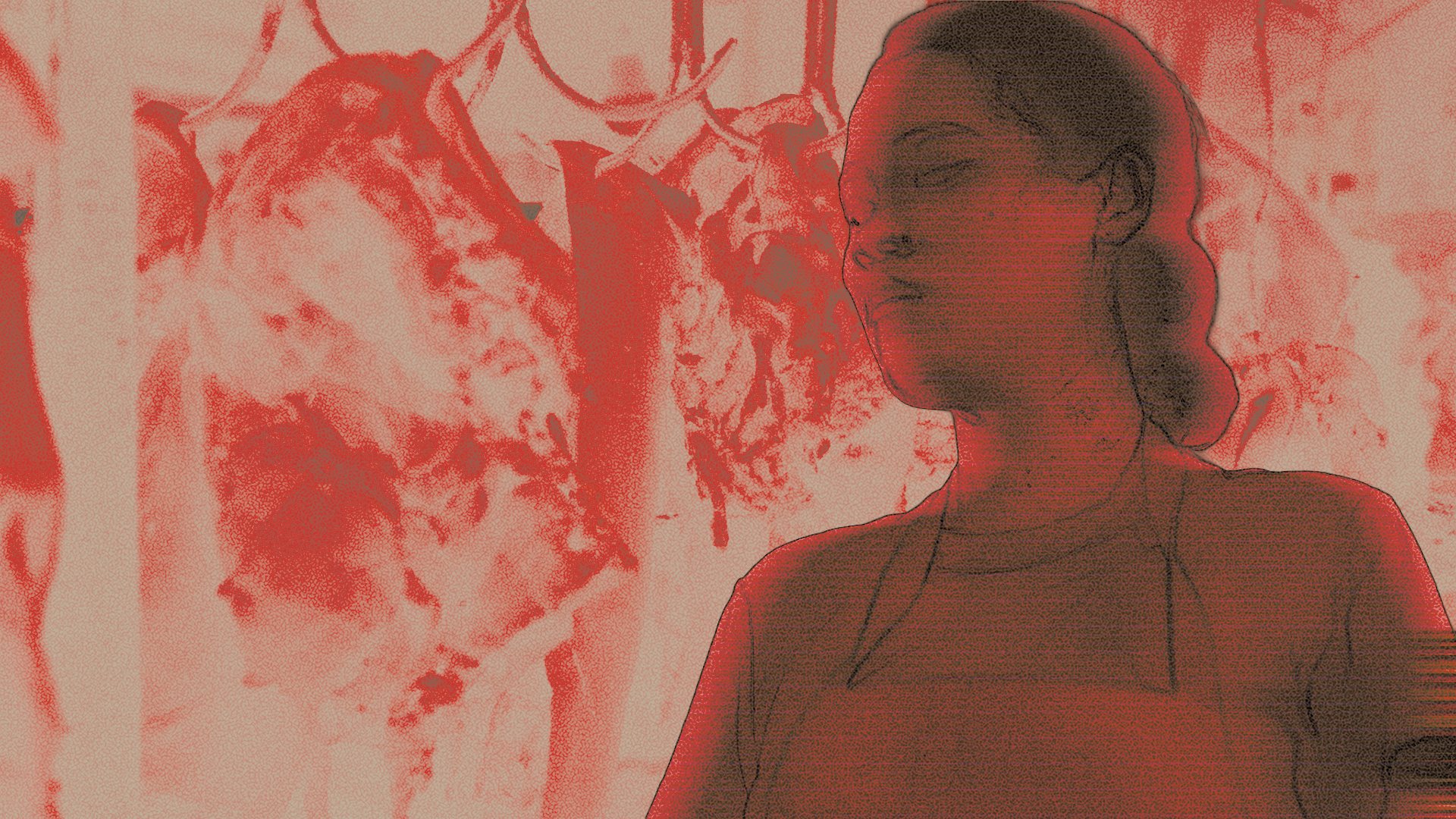
Film still from Ang Bistida ni Ana sa Mata nga Pula
Ang Bistida ni Ana sa Mata nga Pula
Dir. Ma. Luisa Nalupano and Daniel De la Cruz
Ma. Luisa Nalupano and Daniel De la Cruz’s Ang Bistida ni Ana sa Mata ng Pula portrays parental control and sexual exploitation as a necessary survival means for the family, using her own children to be sexually exploited by the people behind the camera. The act of special treatment of giving special dresses, having a more sheltered life, and being unfair to her other sibling, shows that her mother’s favoritism was only to be revealed as a means to prepare her for her next customer. The mother justified these actions of control as brought by poverty that forces her own children to be sexually exploited by the people on the screen just to earn a living. A child’s innocence and validation for their passion to become an actress were manipulated just to achieve this so that she could continue the act. The sheer trauma and brainwashing that children continuously have to face in their homes are all because of poverty.

Film still from Itom nga Bugas Kanaryo nga Ugat
Itom nga Bugas Kanaryo nga Ugat
Dir. Leonard Ian Billones
Leonard Ian Billones’ Itom nga Bugas Kanaryo nga Ugat recontextualizes myths as a metaphor of sexual abuse towards children. Tales of the Tamawo often involved stories of abduction and accounts of rape that occurred during colonial periods. Myths are also used to explain such occurrences, often resorting to traditional concepts to explain social problems rather than investigating what actually happens. Brought by remoteness and provincial innocence, people will instead blame the monsters rather than investigate the actual perpetrators. Children will react with what they know, and would refuse to believe what happened, and would create images to cope with the trauma. Just like when children accept black rice and yellow roots, their innocence will be lost forever. These myths are reinforced by authoritarian figures to instill fear and evade accountability for their actions.
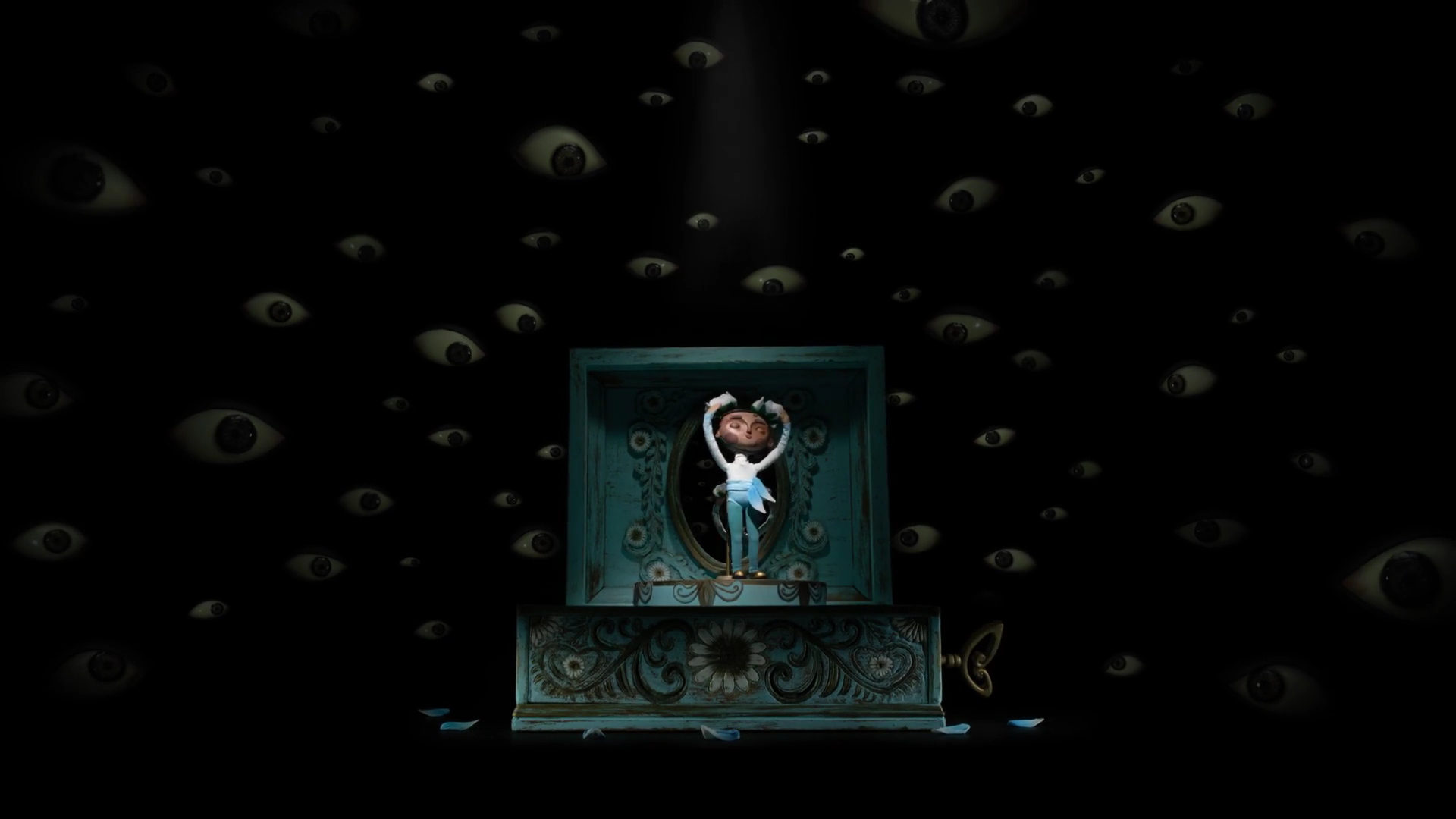
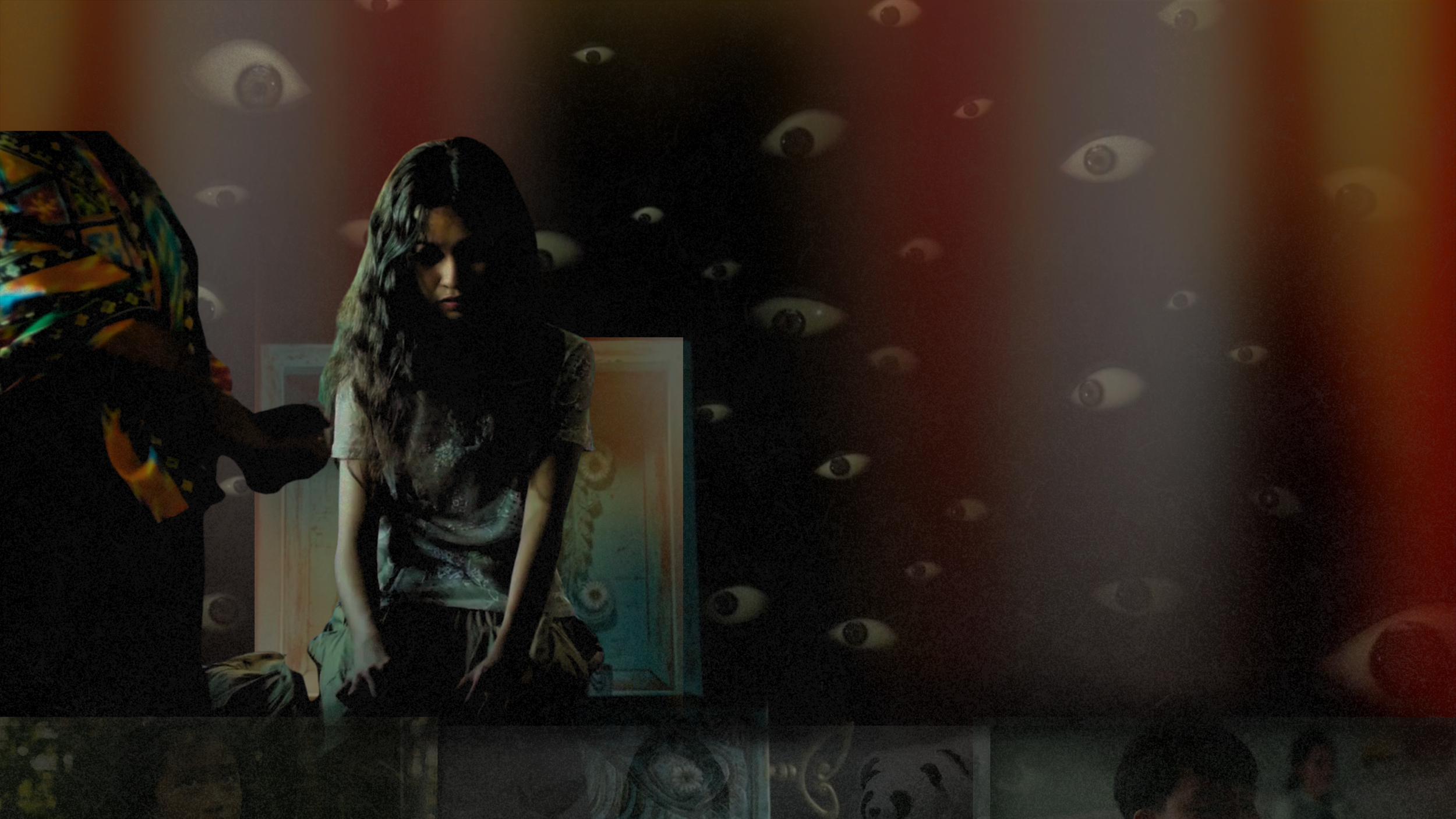
Film still from Daisy
Daisy
Dir. Pepot Atienza, Aditi Dixit, and Shecid Aguilera
Pepot Atienza, Aditi Dixit, and Shecid Aguilera’s Daisy allegorizes the cycle of violence children continuously face through a dancing ballerina in a music box. The young girl dances after hearing the music she can create, which gives her a sense of happiness for herself, but as she continuously dances, eyes start appearing, and the petals from her dress start to fall, signifying how an act of innocence has been exploited for the predatory eyes, how her happiness is now being controlled for their predatory satisfaction. The revelation happens when the ballerina sees the eyes around her, and as she tries to fight, she feels helpless as she is denied escape from this cycle, changing the trajectory of her future and how she’s gonna live life with it. The cycle continues as another music box emerges, signalling how this cycle of violence against children will never end unless accountability and radical change are demanded. To end the cycle means acknowledging the root causes of authoritarianism and calling for a cultural shift that upholds justice for these children for the life stolen away from them.
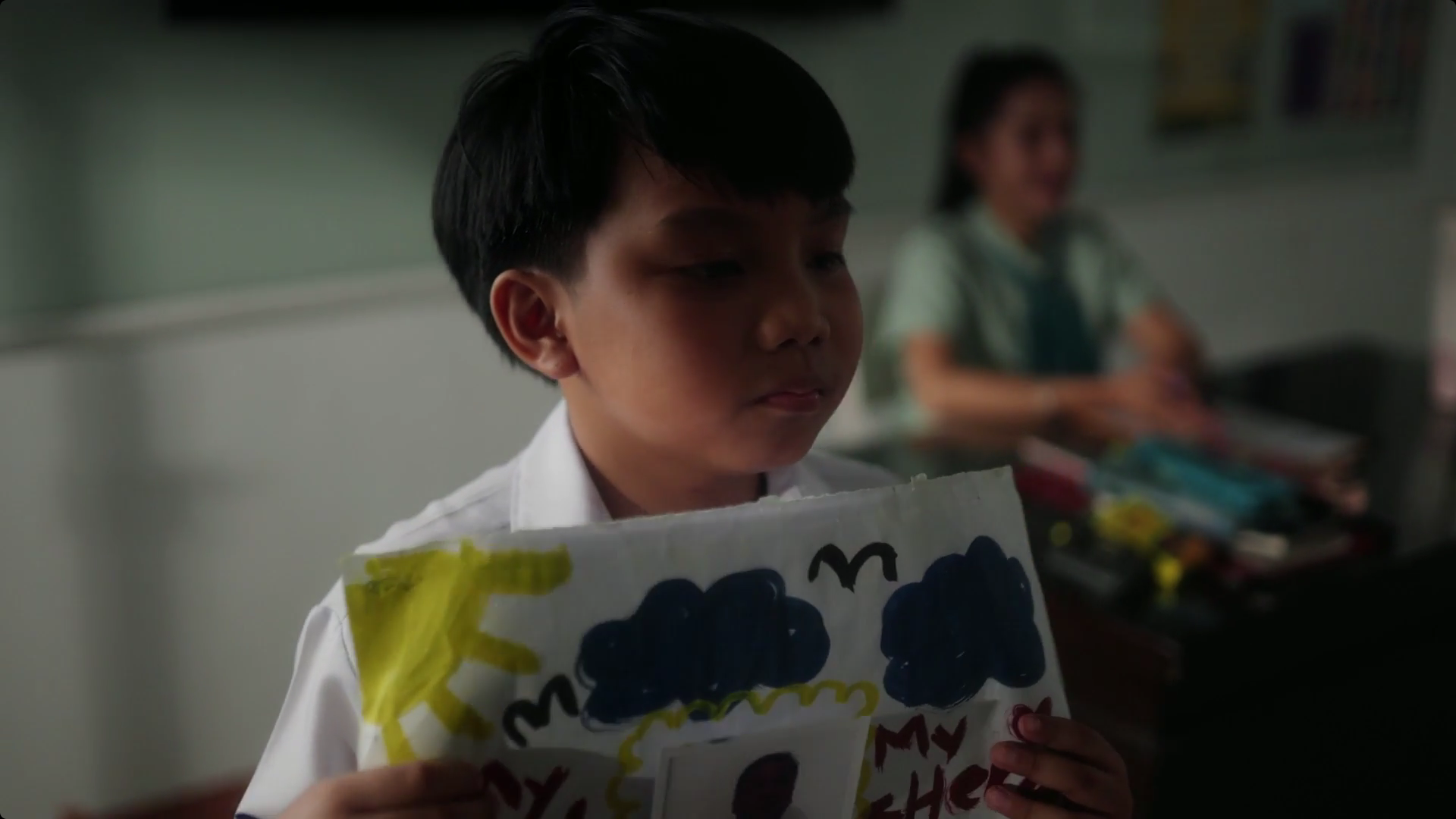
Film still from Sa Mga Mata ng Bata
Sa Mga Mata ng Bata
Dir. Chauncy Cruz
Chauncy Cruz’s Sa Mga Mata ng Bata highlights the experience of children of infamous political figures and how their privilege is exposed to political conflict. Being a child of a political figure has its public identity and privacy being continuously scrutinized, where a child’s ideas and thoughts about their parents will be contested by public opinion, causing an overwhelming experience for them. However, children will always trust their parents to believe what is right and wrong in their definition, and this clouds the children’s own comprehension and judgment of morality, as it is now shaped by political beliefs coming from the authoritarian figure. This becomes avenues of control and manipulation that the children will think otherwise regarding the violence committed as an act of goodwill to maintain peace, or to negatively associate those protecting human rights as bad people. In the end, the child will enact the same beliefs their parents instilled in them, the very same trauma, but this time they now have blood in their hands.
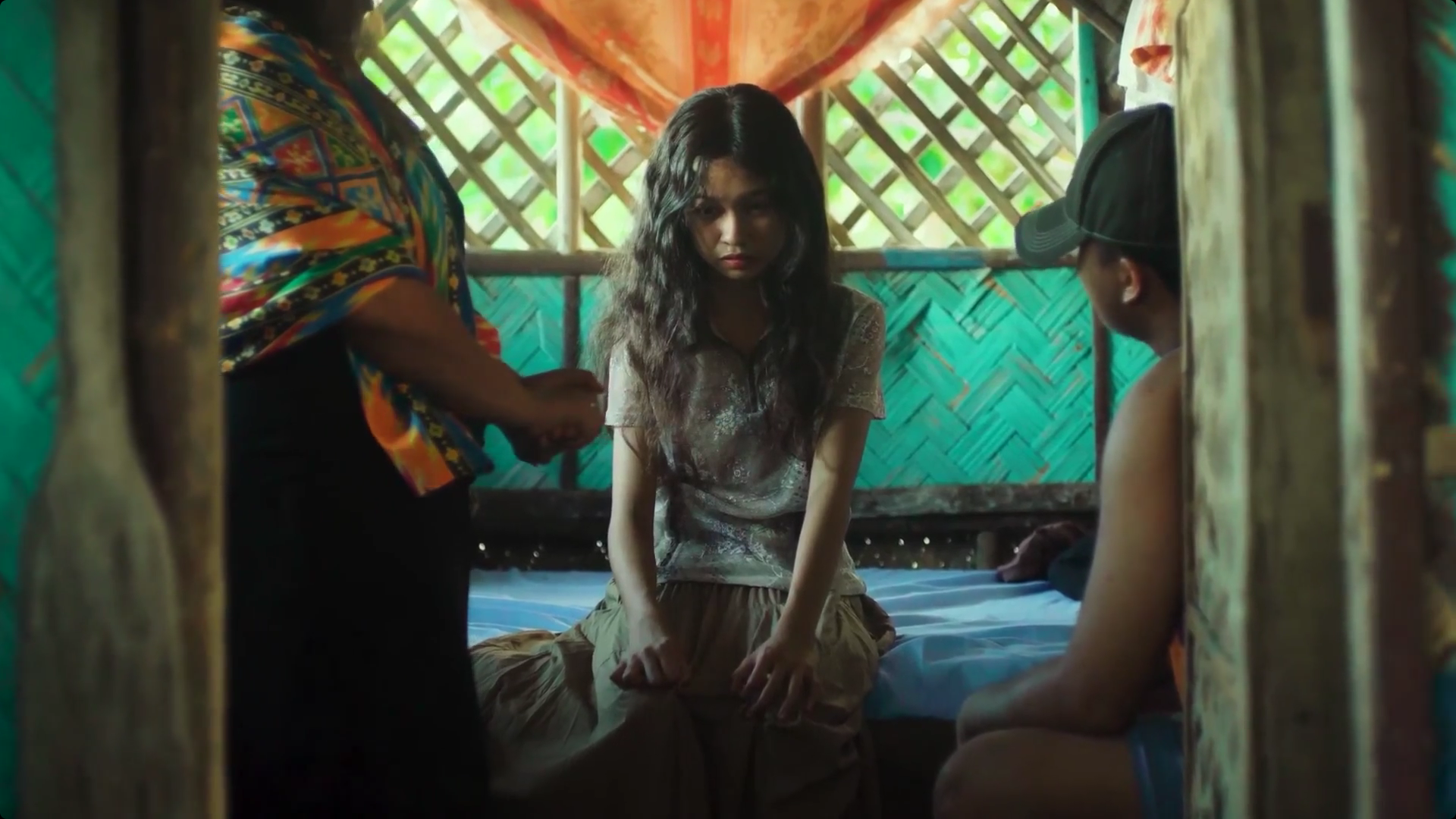
Film still from ang pagbukod ni melmel
ang pagbukod ni melmel
Dir. Nathaniel Amor Turingan
Nathaniel Amor Turingan’s ang pagbukod ni melmel laments how traditions and systems that were meant to protect and preserve communities became the very reason for their agonies, especially for young women. Melmel has her future already determined by being betrothed to an adult man she doesn’t know. Just like her mother, who succumbed to the same traditions that ended her childhood, she has to undergo the pain of being forced to become a young mother. It’s an authoritarian condition wherein traditions are preserved and kept alive just to satisfy the patriarchal wishes and to refuse to acknowledge the wishes of women as more than just objects of traditional value. Not everybody can be like Melmel, who chooses to resist and liberate herself from the very traditions and systems that will trap her and her future, and instead escapes to choose her own happiness.