

‘The Treasure Hunter’ REVIEW: So Out of Touch It’s Terrible

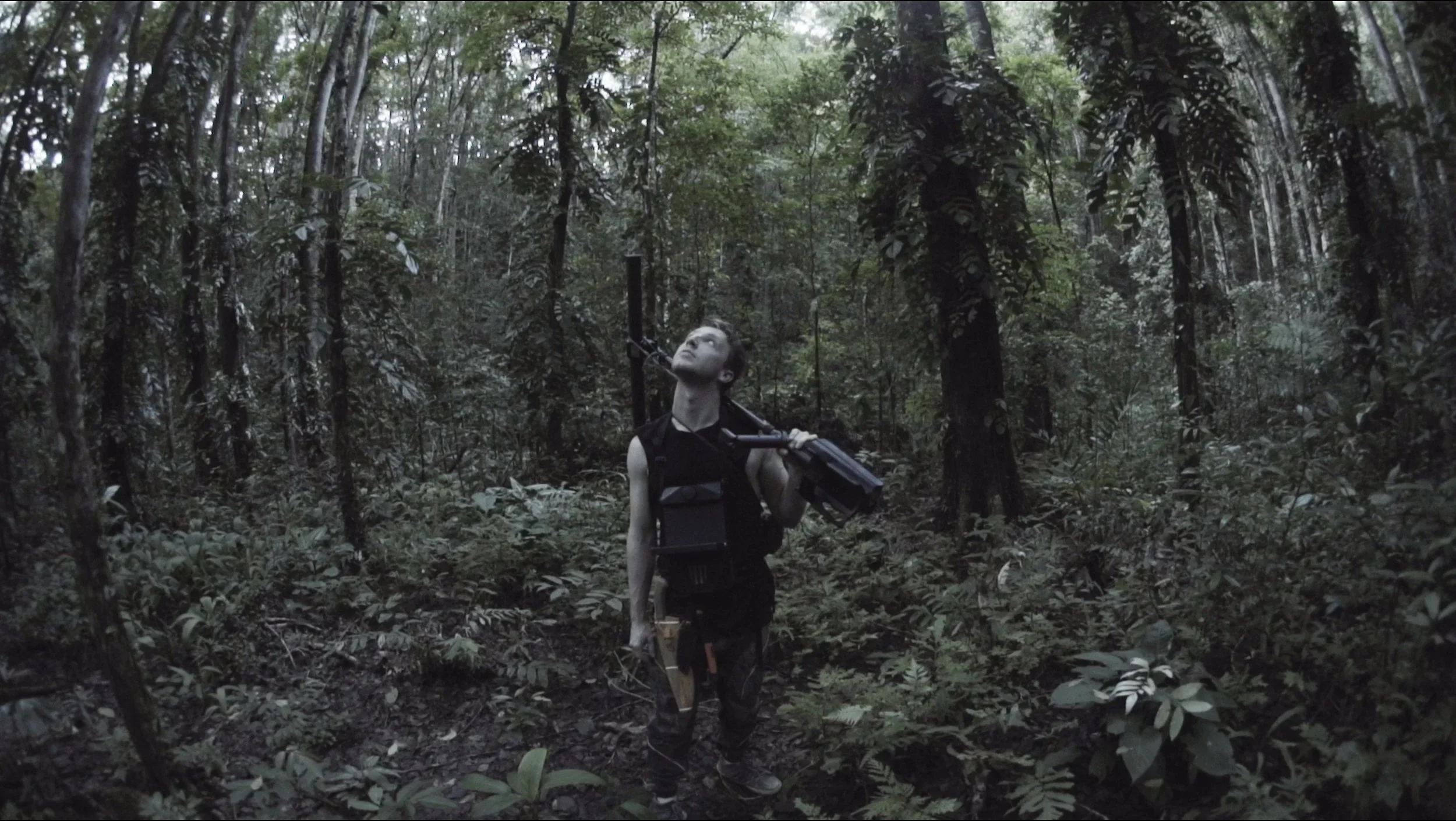
Jack, the protagonist of the documentary.

Giacomo Gex’s The Treasure Hunter is one of the worst documentaries I’ve ever seen. Its premise is interesting enough: a British man named Jack flies to the Philippines after learning about the tales of Yamashita’s gold, the supposed hidden riches buried in the country by a Japanese general at the end of the Second World War, and commits himself to finding it. Over the course of several years he pours all his resources into uncovering this treasure. All of them. Until he’s left broke with a Filipina wife and two children to raise. This could have been an interesting film. In abstract, it deals with themes such as delusion, obsession, and addiction. If I squint I can see what the film was going for, how its narrative could be sold as a film worth funding, making, and even programming at festivals, like it was at this year’s QCinema. So where exactly does it fail? What makes this film so repellantly unwatchable? It starts with how it’s all framed.
The film runs on the assumption that its protagonist is in the right to try to pillage the Philippines for its gold. It takes for granted that any of this is even ethically acceptable. The film doesn’t care about this. It doesn’t care about the Philippines; it doesn’t care about Filipinos. It has no interest in our history, in our complicated relationship with the spectres of Yamashita’s gold, the grand narrative that has propelled the Marcos dynasty for the past half century. It’s never mentioned even once.
Instead it’s myopically focused on one man who assumes that there’s nothing wrong with traveling across the world to take precious minerals from its people, to be enriched by plunder as if we were still living in the “Age of Discovery,” of conquistadors and mini tyrants. In the film’s web of responsibilities that Jack has to balance, to his wife, children, father, and mother, nowhere in the film does it take into account his responsibility to the country he’s taking from. What we see over the film’s runtime is a white man barking at locals to dig for him for 300 pesos a day. That’s well below minimum wage. For such dangerous work too.
But the film doesn’t care about that. It wants us to sympathize with Jack. So what, if the film opens up with him describing the Philippines as “lost in time” and “not in the modern day,” as if we’re some mythical-oriental land waiting for the white man to discover us? So what, if our hidden riches make him “salivate” as if acquiring “the most delicious meal in the world”? So what, if he imagines taking the country’s gold as being the key to “living the high life”? These ideas are not meant to be interrogated. What the film believes is more important is that we feel bad for Jack. Don’t you see, the film shows, the real tragedy here is that he’s addicted to theft. It’s an addiction. And it’s ruining his relationships with his family.
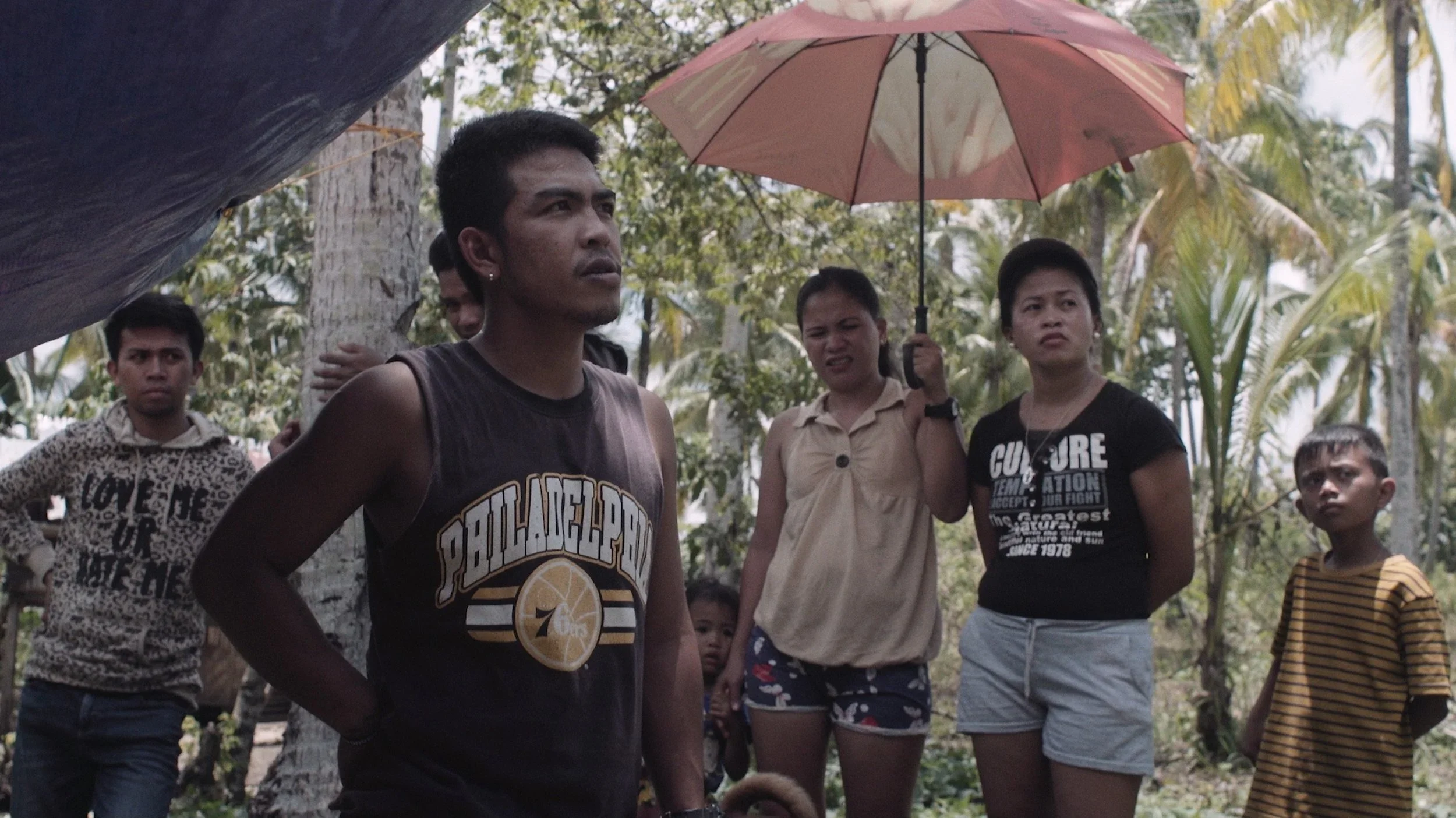
Some of the local workers paid to help Jack find gold.
Early in the film, we meet his father in London. He proudly tells us that he made millions of dollars running a shipyard in Indonesia, where he commanded over 1000 laborers. “Nine ships and six cranes,” he adds. When the market went south he decided to change his business to mining in the Philippines instead. He says that over the years he’d already spent six to seven million dollars on treasure hunting, and that he’ll only give up “when he’s [I’m] lying in a box.” The filmmaker doesn’t seem to realize how difficult it is to sympathize with a family like this. Emotional strings swell when we hear of the tragedy of his parents’ divorce. It displaced Jack and forced him to leave the UK and grow up in Ibiza with his mom, where he had “the happiest years of his [my] childhood.” The audience is shown photographs and videos of his time there. Yes, Ibiza, the idyllic vacation spot that is one of the most expensive places to live in in all of Europe.
The film’s structural or formal elements don’t even feel worth discussing. Once we see Jack pay his workers subhuman wages, the film loses the ball. Once we learn how rich his family was, it’s hard to sympathize with their fall. Four years later, he is presented as “living in the filth” of relative poverty as an English teacher, but still he has a well furnished house and even drives an SUV. Perhaps from the perspective of Europeans, these scenes may inspire pathos. But seeing this in the Philippines, one would know that none of this confers anything close to actual poverty. To own a decently sized house and car like his is a dream for many. He even still has the capacity to rent out large tractors to uproot trees and dig holes in the ground in hopes of finding gold. The most recent excavation was said to cost tens of thousands of dollars. This is supposed to be from a teacher’s salary?
What’s so frustrating about the film is its total lack of self-awareness about how out of touch it is. It doesn’t even attempt to go beyond the surface of its material. It’s possible to make an interesting film about this subject, but The Treasure Hunter isn’t that. It refuses to challenge its subject. It refuses to face head on the imperial nature of what Jack is doing. They sentimentalize grand adventurers as apolitical actors drawn only by their curiosities. Do they not know anything about the history of the colonial project, revolutionized by their own British empire? Do they not know how much native blood was wasted at the feet of greedy foreigners trying to make an extra buck by extracting our resources? Do they not have any respect for us?
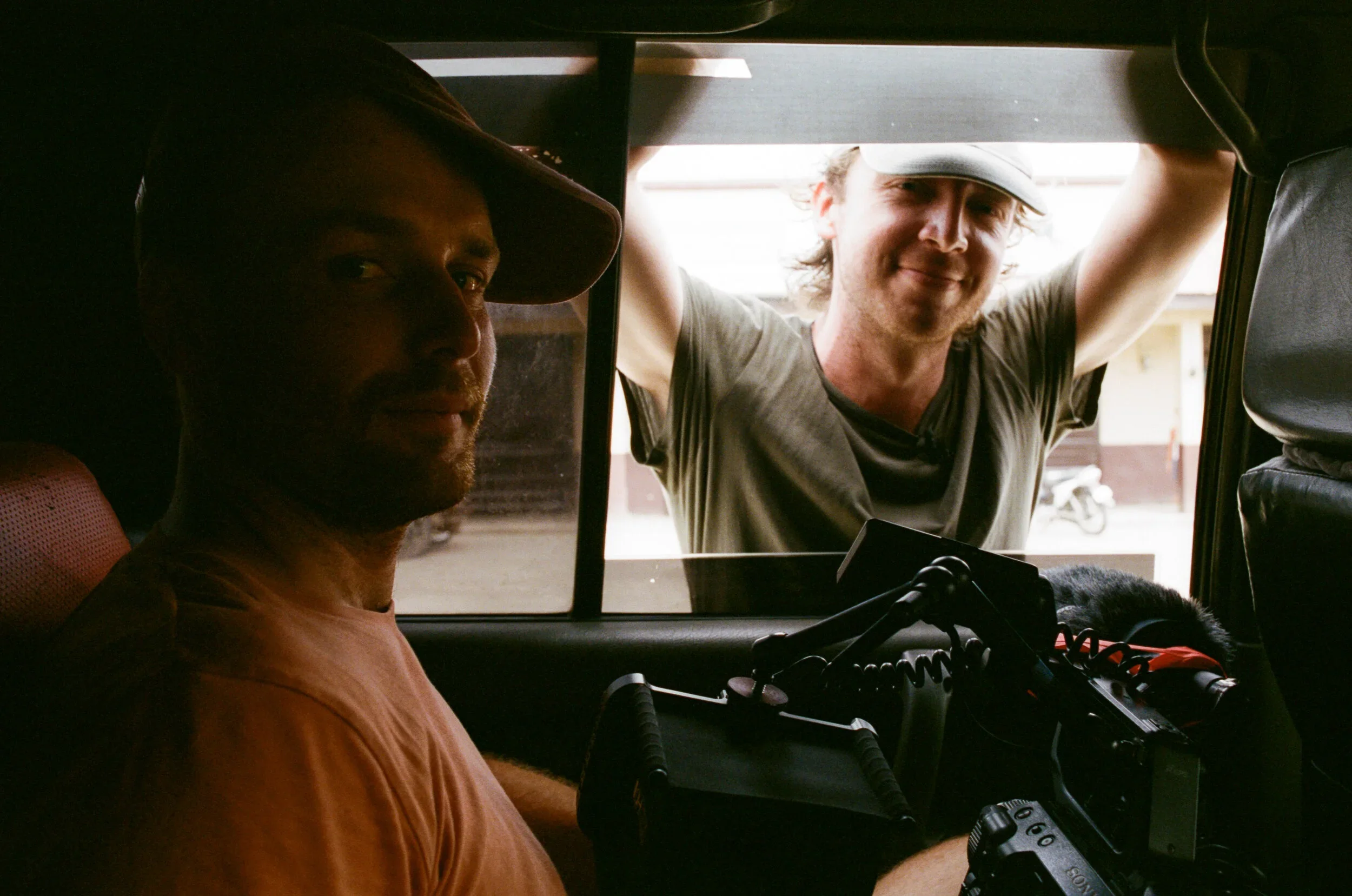
Director Giacomo Gex and Jack on set.
We don’t even learn anything about the perspective of the Filipinos in the film. The workers paid subhuman wages have no voice. They have no point of view. They’re merely tools for Jack to berate and insult (“Everyones’ dying to be f—- Indiana Jones there”). And when we finally get to hear from his wife, all we learn is that he’s a bad husband. When we hear his call with his ailing father, we learn he’s a bad son. And by the end of the film, all I could think was that this is such a bad movie. It miscalculates the audience’s ability to resonate with such an unsympathetic character. The filmmaker was blinded by — no surprise — his friendship with Jack.
Apparently they are old schoolmates and consider each other best friends. It makes sense that he didn’t want to implicate Jack in anything too morally dubious. It doesn’t matter that any discerning audience member would wonder how any of this was even legal. Can foreigners really just show up to the country and dig massive holes for treasure? How did he even live in the country for so long? Sorry, how does he still live here? How is any of this allowed?
This is a toothless by-the-numbers documentary about a British man trying to live out his imperial fantasies in the Philippines, and his director friend trying to film him into importance. Its framing is often disrespectful and out of touch, and its subject has the personality of a cardboard box. Perhaps this film has some value in order to study how much the colonial gaze still lingers today. Or perhaps someone can study how a film like this gets accepted to be screened at a Philippine film festival. But for me, I’d rather move on to the process of forgetting that I’d paid to see this at all.