
'The 15th Binisaya Film Festival' OMNIBUS REVIEW: Binisaya Shorts and Binisaya Horizons
‘The 15th Binisaya Film Festival’ OMNIBUS REVIEW: Binisaya Shorts and Binisaya Horizons

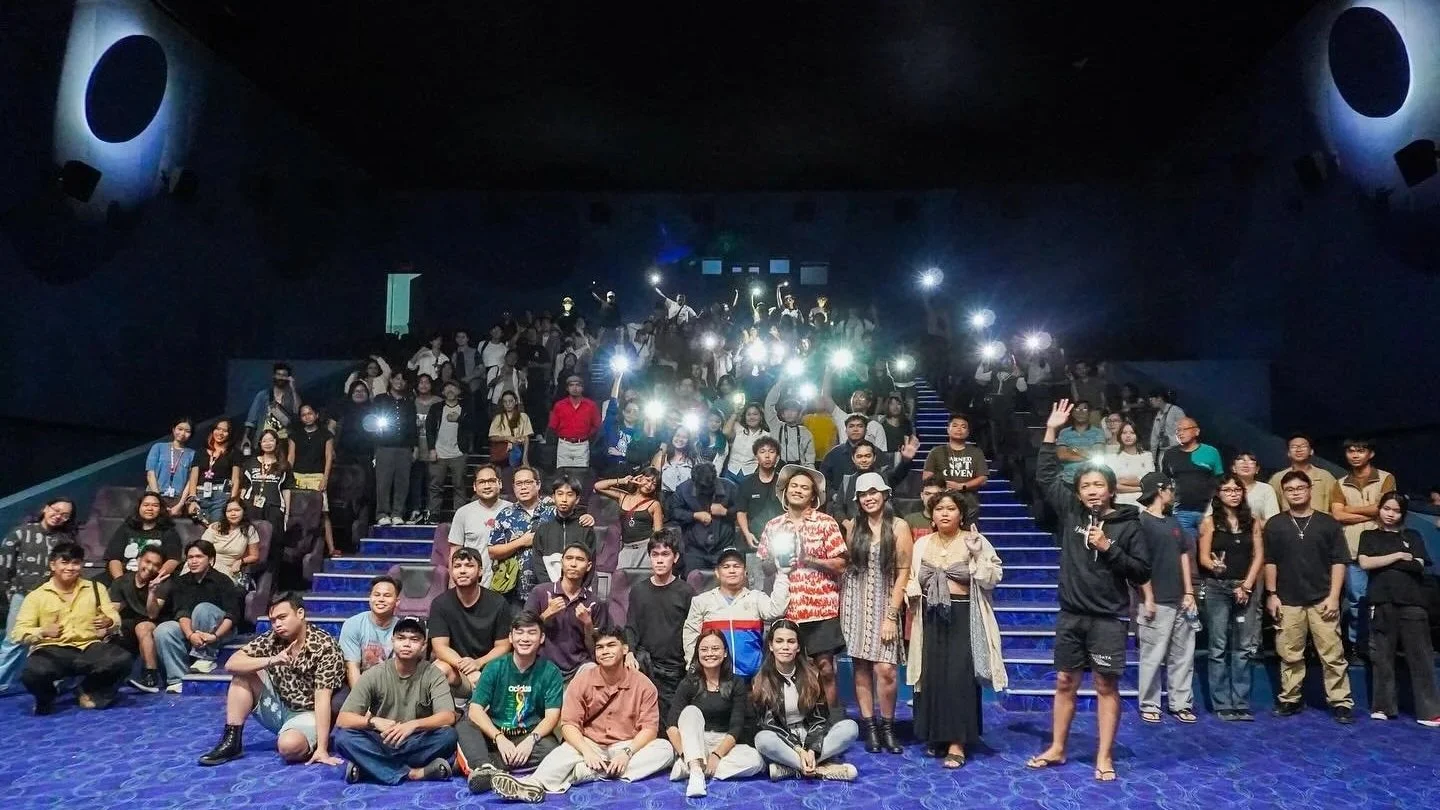
15th Binisaya Film Festival organizers, filmmakers, and festival goers | courtesy of Binisaya Film Festival
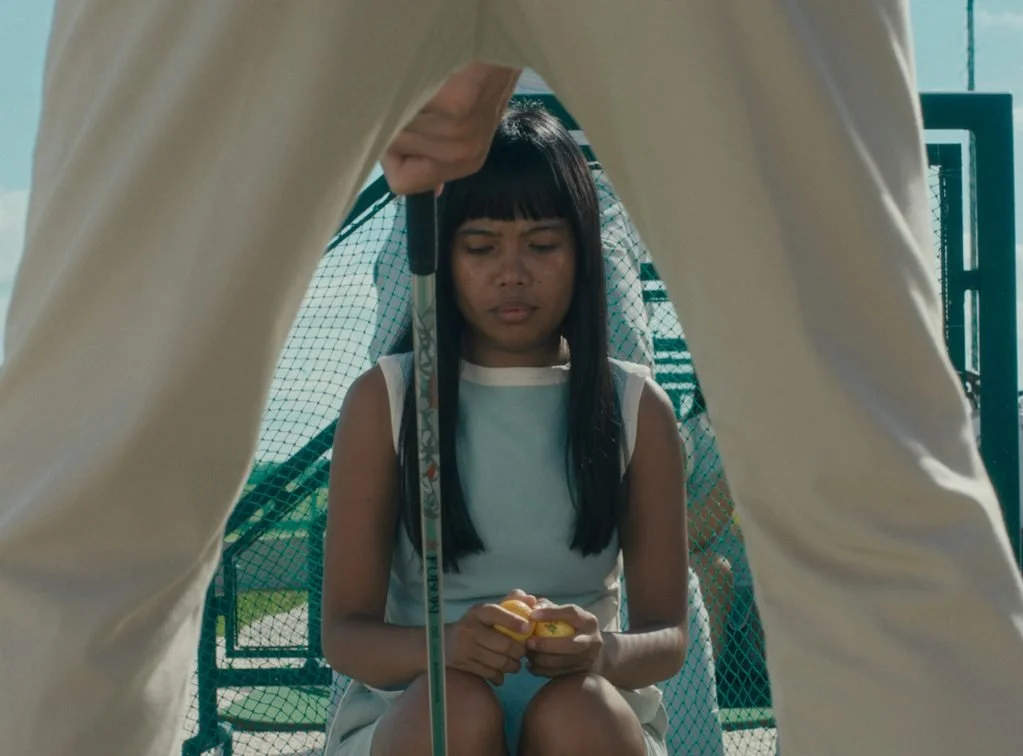
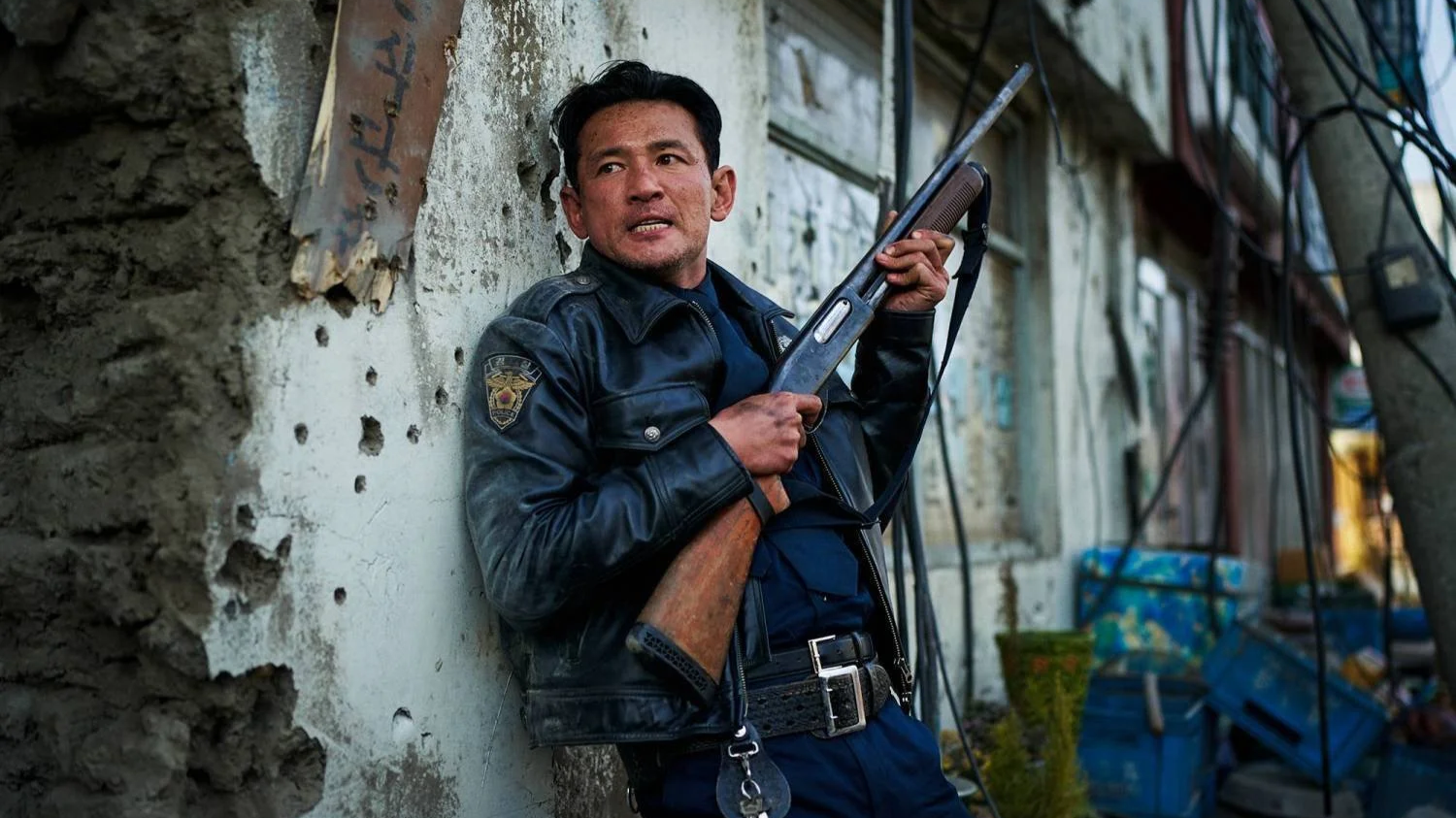
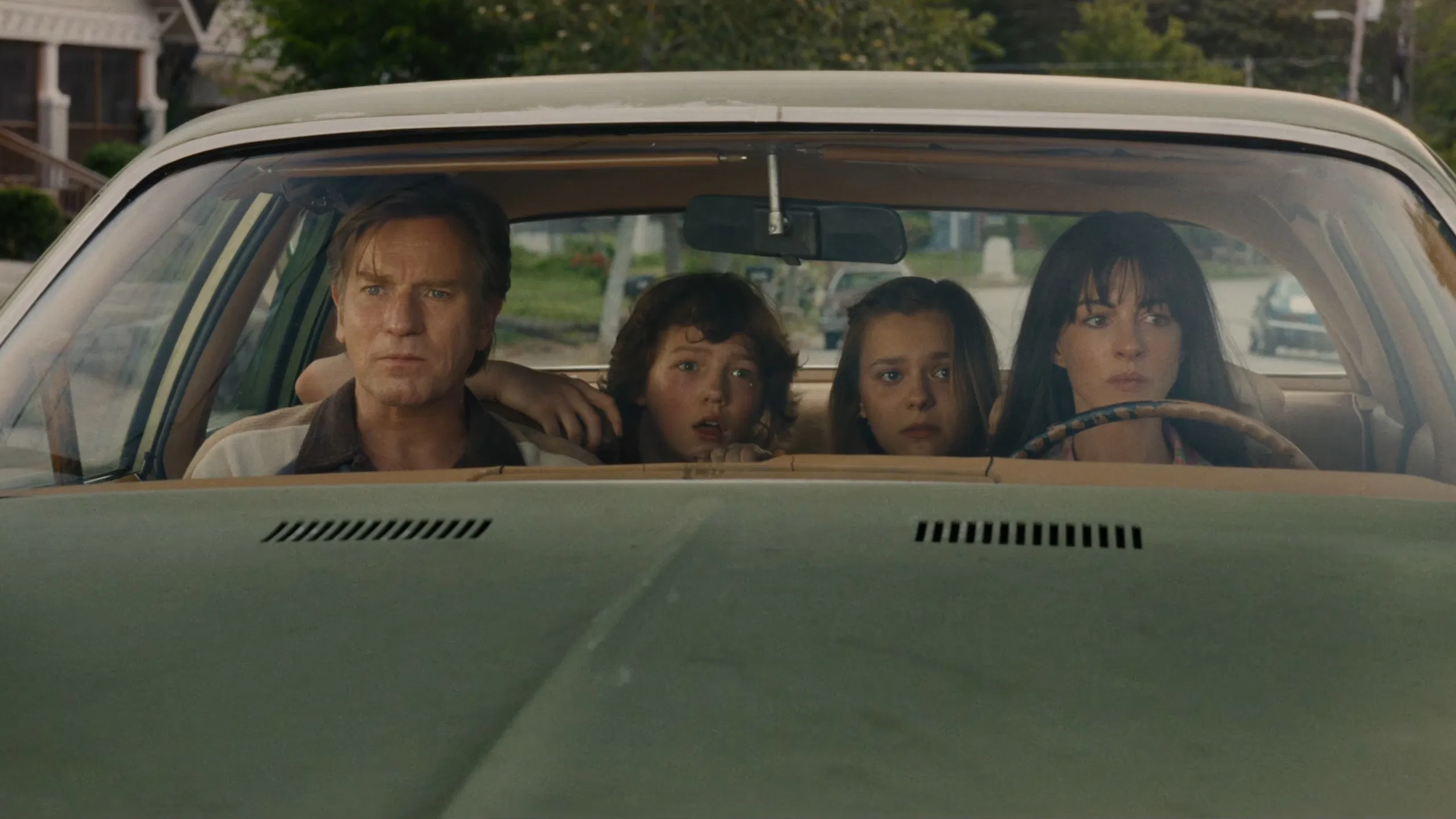
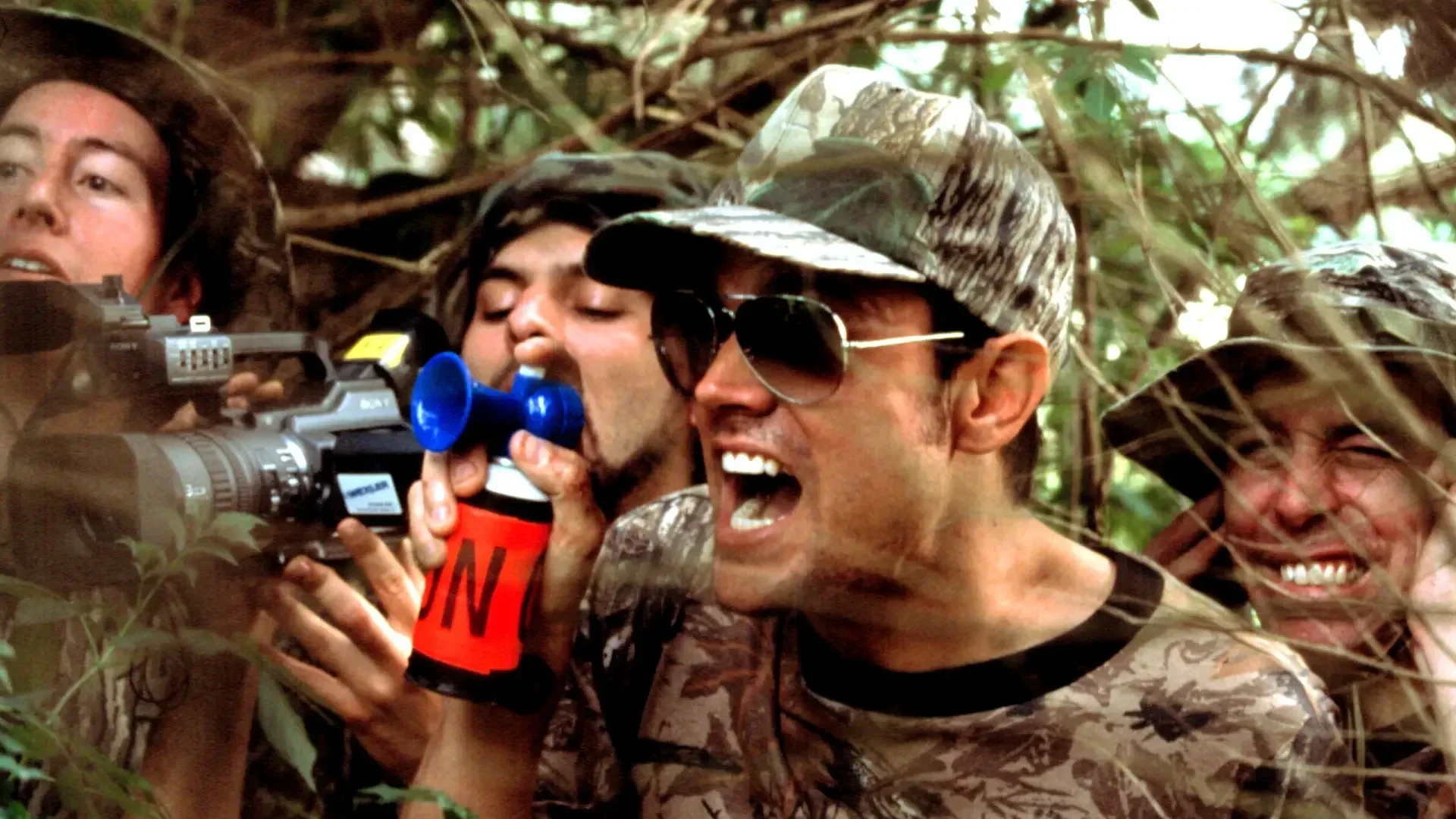
The 15th run of the Binisaya Film Festival continues to pride itself as a cultural hotspot for both Bisaya and global cinema. With a roster of films that are at once surreal, sociopolitically aware, and deeply tender, the festival highlights a talented community of filmmakers and a Bisaya movement that is truly alive. It remains unmatched as a champion for inclusivity with Binisaya Shorts, focusing on films from Bisaya filmmakers and Binisaya Horizons. In this sense, the festival has grown into its own kind of movement and celebration of Bisaya pride.
Here are the official reviews of the Binisaya Shorts and Binisaya Horizons Categories:
Binisaya Shorts

Film still from When the Sun Sets Over Davao
When The Sun Sets Over Davao
Dir. Adrian Lo
Adrian Lo’s When the Sun Sets Over Davao is a haunting and unforgettable film that weaves history, trauma, and spirituality through the lens of women’s struggle and resistance. Set during the Japanese occupation, it follows a Tagabawa woman forced into the dehumanizing role of a comfort woman. Her pain, however, is not shown as silent endurance, but as a prelude to transformation. Her body becomes both a site of violence and a vessel of ancestral power.
Her journey into the supernatural begins inside a large mortar, where she is told to chant, “I will set you free.” Speaking in her native Tagabawa tongue, she summons Mebuyan, goddess of the underworld and caretaker of souls. This moment is more than spiritual — it is profoundly feminist. By invoking a goddess, she claims a lineage of female divinity and resilience, turning victimhood into agency. The darkness, the chant, and the ritual merge into a moment of raw empowerment.
Armed with this power, she confronts her oppressors — the Japanese soldier and the Filipino individual who betrayed her. The killings are brutal yet ritualistic, framed not as senseless violence but as reclamation: a silenced woman seizing back her dignity, her voice, her sovereignty. Here, vengeance becomes justice — a cathartic release not only for herself but for the generations of women erased by history.
It is a radical reimagining of history through women’s power, showing how belief, language, and ritual can become acts of survival and liberation. It lingers long after viewing, forcing us to confront the brutality of oppression while bearing witness to the terrifying and beautiful force of a woman reclaiming her story. – Mylene Del Rosario
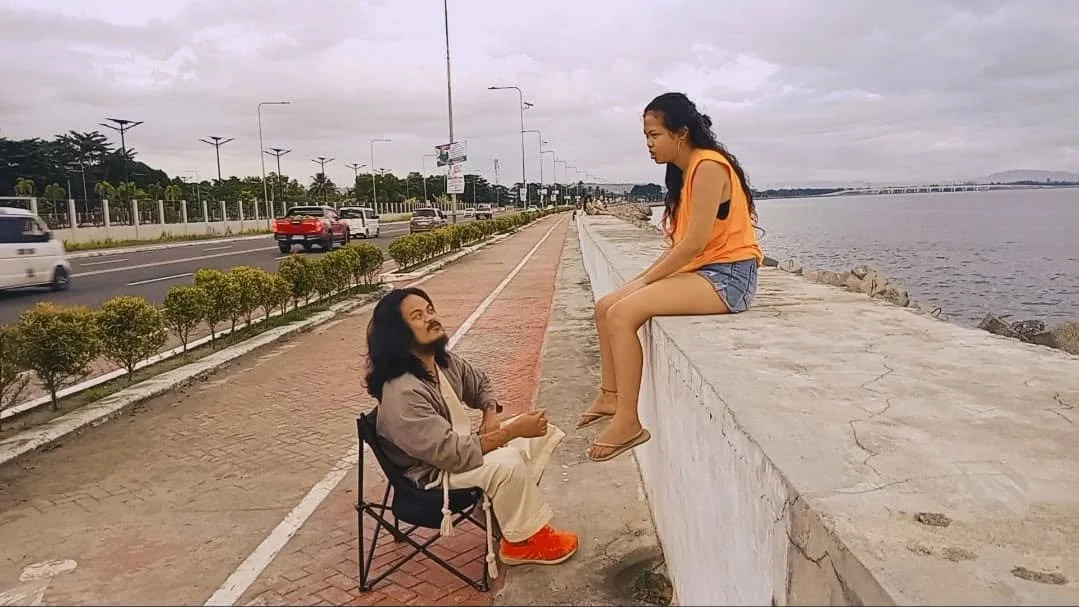
Film still from Walk with Jesus
Walk With Jesus
Dir. Redh Honoridez
People losing faith in their chosen religious figures is a problem with unmet expectations and eventual suffering that causes them to doubt their own beliefs when they believe that these religious figures could help in their most vulnerable moments, and when they need help the most. Redh Honoridez’s Walk with Jesus primarily situates this loss of faith in one’s personal darkest moment, offering a humanized perspective towards drug dealers and eventually even just humans in general in navigating life’s problems as well as finding new personal interpretations of these religious figures.
Just like in the biblical literature, Jesus would always respond to his disciples with compassionate words of advice, just like how Jesus in this short film would respond to Maya in her times of doubt in different circumstances, from love, hunger, and why Jesus even visited her out of all people. Maya knew she had screwed up by being involved, but she sees it as a means of survival, and leaving the trade would also mean blackmail to keep her in line. This difficult circumstance forces the people, especially the poor, to stay, as their safety would be compromised; they are the most vulnerable. Honoridez’s treatment was to humanize these people who still resorted to God as their last hope in these hopeless times, and even interpret them as someone approachable when they needed Him the most. If God were more approachable, then people might still have faith in Him
What’s comforting about the film’s satirical depiction of Jesus is that it is timely in today’s crisis, where the contemporary present is depressed, brought on by capitalist influence that causes people to lose faith and turn to inhumane ways just to survive another day. Eventually, during one’s darkest moment, one cannot help but always ask God if there’s still hope for them. It doesn’t preach that we should return to God immediately, but it’s an inevitable impulse, and sometimes any sign from God, whether interpreted or depicted, offers comfort. – Christ Dustly Go Tan
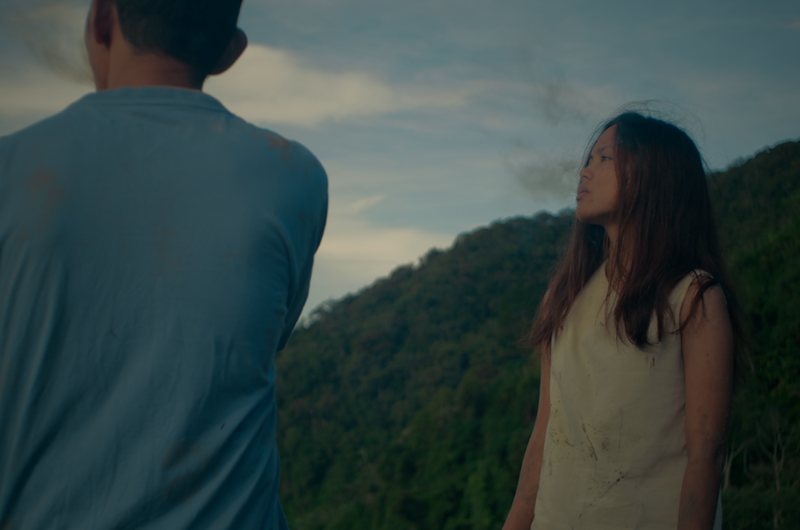
Film still from Sa Ilalum sa Balabal sa Alitaptap
Sa Ilalum sa Balabal sa Alitaptap
Dir. Juvy Ann Clarito
Starred, directed, and written by Juvy Ann Clarito, Sa Ilalum sa Balabal sa Alitaptap weaves a daring narrative of oppression and women’s liberation beneath its veil of silence. Set in the rural landscapes of Davao de Oro, the film follows Joy, a young woman who returns to her remote village to live with her grandfather, only to witness a land grabber’s attempt to seize the land their home stands on.
Strong, jarring, and mystifying, the film employs magic realism as a tool for revenge, offering an authentic and haunting way to tell its story. While Rommel, played by Doydoy Megrino, wields guns and violence to pressure Joy’s grandfather into surrendering their land — threatening Joy in the process — the narrative reimagines mythology, transforming it into the driving force behind Joy’s retribution.
The pace is beautiful. The silence and calmness of the surroundings, set against the weight of the situation, make you grip your seat. Much of the film allows you to empathize with Joy because, even without much context about her past, you can sense through Juvy Ann Clarito’s eyes that Joy has endured more than what’s shown. This makes her present struggle feel even heavier.
The film closes with a quiet, sentimental note, yet justice resonates for Joy and her grandfather. Still, it lingers in your mind: How many more lives are disrupted by land grabbing in the regions? And in reality, what happens to those who cannot afford to walk the same path Joy has taken? That’s what makes Sa Ilalum sa Balabal sa Alitaptap powerful. It provokes, challenges, and ignites discourse. Most of all, it gives women, especially those from the regions, a renewed sense of power. – Mylene Del Rosario
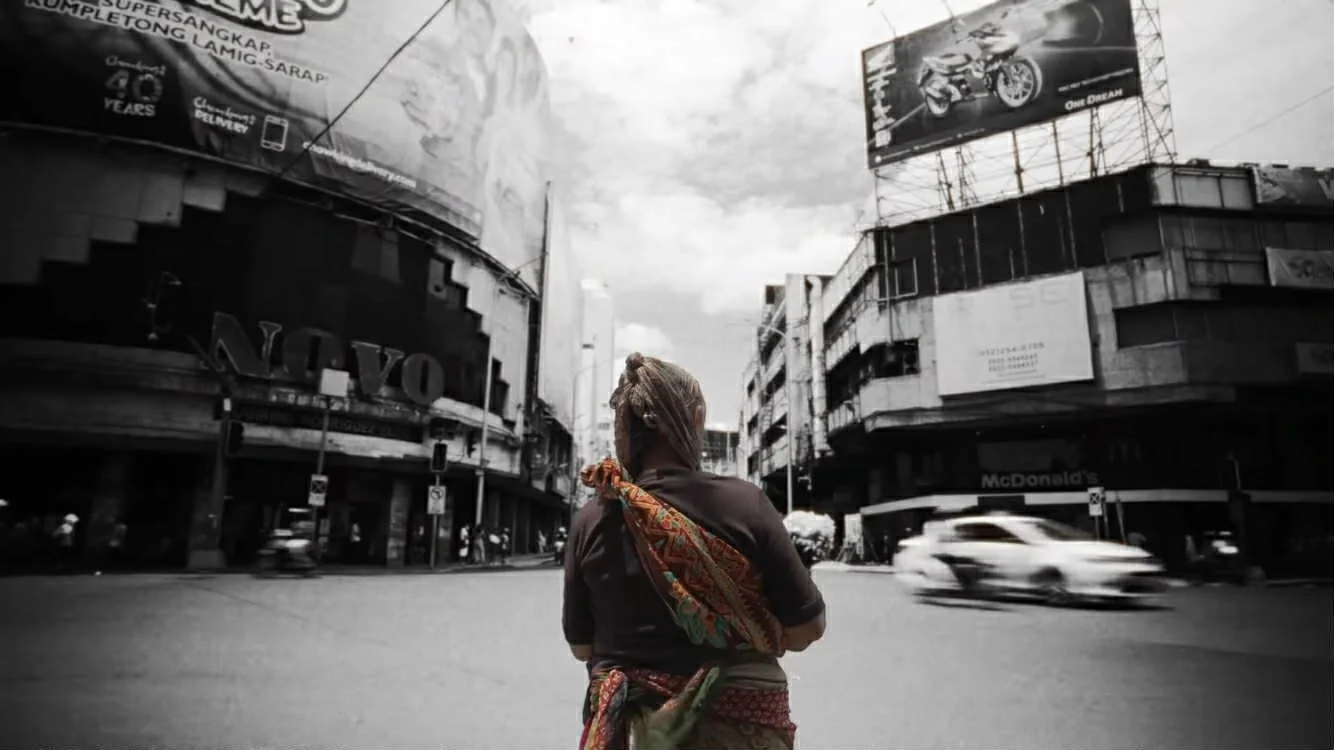
Film still from Dangpanan
Dangpanan
Dir. Stephen Kelly
The word ‘progress’ is usually encapsulated in gleaming skylines and towering malls, but people often forget that behind these facades, lives were uprooted, voices were silenced. Stephen Kelly’s Dangpanan begins not with spectacle, but with quietness, an old Indigenous woman standing in a sunlit field, her presence fragile, grounded, and achingly human. In the next breath, the ground beneath her shifts — suddenly she is swallowed by a city of glass towers and hurried bodies, where no one sees her, no one stops. There’s confusion, there’s fear; she is lost not just in space, but in a world that has moved forward without her. Between dream and nightmare, lingers the question of what becomes of those left behind by progress, whose only inheritance is endurance, and whose haven exists only in memory?
Along the woman’s journey, she is accompanied by strange figures who feel both real and imagined: a man with a burnt head, holding a cat, and a man whose face is hidden under a cap, with a cage in one hand and a bird in the other. These companions embody the scars of displacement and violence, and the strange ways memory and trauma linger.
One of the film’s most heartbreaking moments is when the doll she’s seen holding since the beginning of the film is replaced with relief goods. The gesture is practical, even generous on the surface, but it underscores the cruel reality that when survival is granted, dignity is stripped away.
The film’s final scene is both haunting and devastating. The old woman stands once more in a green field, seemingly far from the city, yet she witnesses fires consuming homes in the distance. The man with the burnt head watches her silently, as if acknowledging both her vulnerability and the relentless presence of destruction. It is a moment of quiet horror and unbearable beauty: the past and present collide, and the world she knew — and the lives of those like her — burns even as she stands rooted in memory.
Dangpanan does not offer easy answers. Instead, it asks us to see, to feel, and to remember alongside its characters. It is pondering on endurance, on watching what you love vanish, and on the quiet, often invisible courage of Indigenous communities and other displaced people. What stays with you is her resilience, the spectral companions, and the painful awareness that progress often leaves the most vulnerable to witness destruction from afar —- powerless yet present. – Mylene Del Rosario
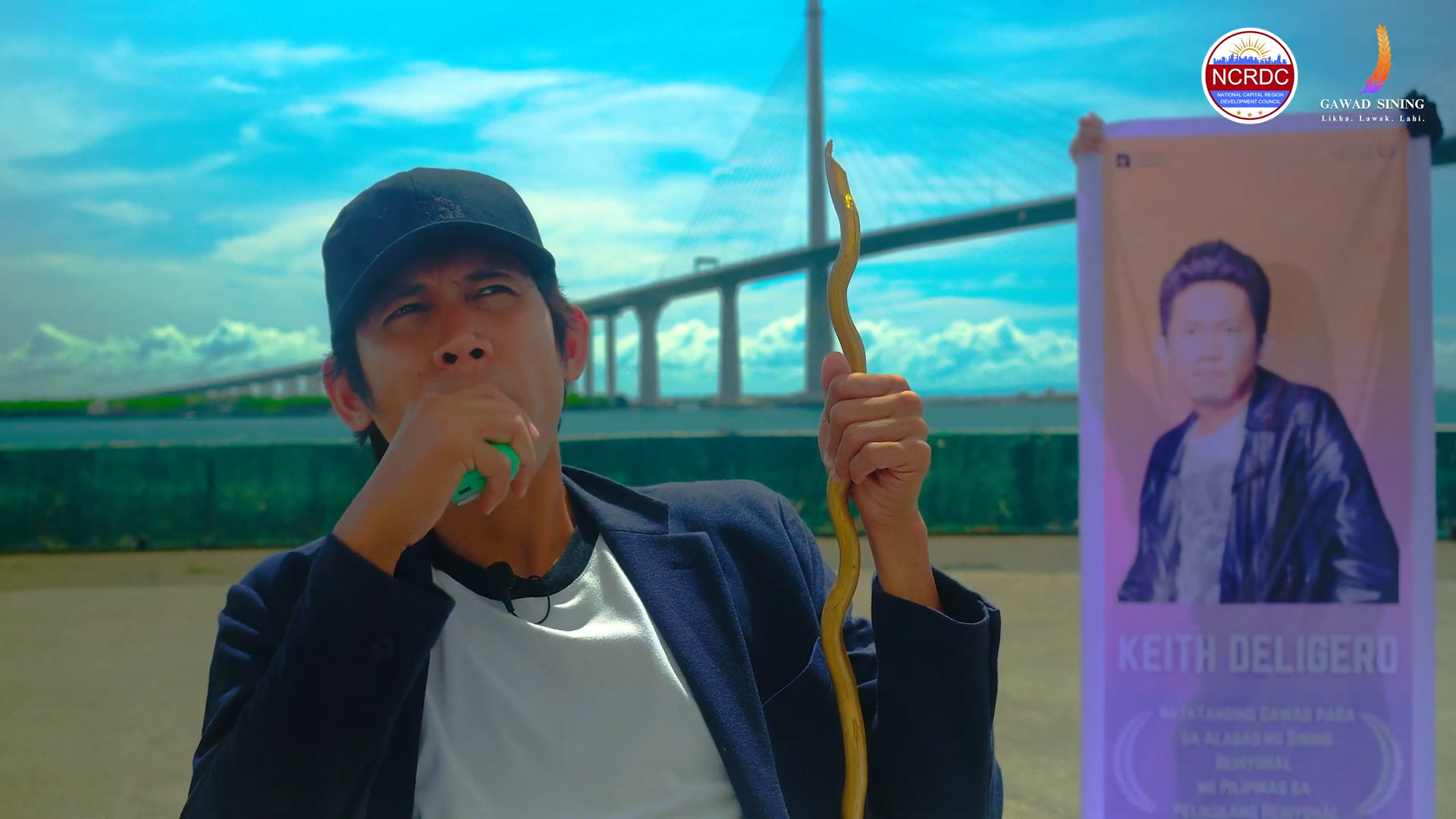
Film still from Ang Noble Savage, Nagpahungaw sa Iyang Emotional Baggage
Ang Noble Savage, Nagpahungaw sa Iyang Emotional Baggage
Dir. Mico Lorenzo Minerva
Discussion on regional cinema has always been debatable, even by the regional representatives themselves that even the Manila-centric fetishization of regional cinema has been perpetrated for inclusivity, that they also want to make films about the regions, causing its definition to be contestable. Mico Lorenzo Minerva’s Ang Noble Savage Nagpahungaw sa Iyang Emotional Baggage centers this crisis through the portrayal of a well-known regional filmmaker, Keith Deligero, as he tries to use AI prompts to define his career and, eventually, regional cinema itself.
What AI provides is based on generalizations on the topic, more often based on predefined factors that shape its definitions. Hence, prompts are used to give a more specific answer, but due to their limitations, their generalizations are not accurate and are baseless, which the film’s subject struggled to define his own career using AI. The repetitive use of the word regional in all of its answers from its prompt, without going deeper than that, while being flashed with AI-generated images of the film’s subject, posits how there is still a complete lack of understanding of what regional cinema is.
Even the sound of Cebuano from AI sounds artificial. Prompt answers revolving around stereotyped ideas on regional cinema, such as social issues, poverty in the city, mestizo A-list actors, or even the thought of unseriousness, push regional filmmakers to question why imperial Manila is so obsessed with stories from the regions. Minerva suggests that this Manila-centric fetishized idea of regional cinema is what keeps Keith Deligero and other regional filmmakers being stereotyped for their idea of what’s regional, and therefore limits their recognition beyond that.
Ang Noble Savage, Nagpahungaw sa Iyang Emotional Baggage doesn’t offer any resolution to how regional cinema is defined, but it aims to shed light on these fetishized ideas of regional cinema. Regional cinema will always be an evolving definition, but what makes ‘regional cinema’ should not be defined by imperial Manila, who always treats such as otherness. When this identity crisis can be resolved, it is only then that regional cinema can stand on its own without Manila’s validation. – Christ Dustly Go Tan

Film still from Asa ang mga Salida sa Leyte?
Asa ang mga Salida sa Leyte?
Dir. Linus Masandag and Lebron Ponce
When regional filmmakers themselves start questioning their own region regarding the current status of their film scene, it’s a crisis. A crisis that is both rooted in the personal and in the historical context that traces back years or decades of violence and neglect towards regional cinema. In the personal sense, it’s a succumbing to grief that causes doubt to regional filmmakers if they should still continue this passion of theirs despite the overall lack of support and foundations in their regions. Linus Masandag and Lebron Ponce’s Asa ang mga Salida sa Leyte? attempts to answer these questions but eventually succumbs to these thoughts themselves.
Where does the problem lie? It’s an intersectional issue rooted in the overall lack of government support and untapped passion from aspiring regional filmmakers themselves, who either have to leave their region to make a name for themselves or stay, but they have to struggle for it, given the material conditions in the region. Leyte is presented here as an inaccessible platform to showcase their films from old movie houses converted to commercial spaces, a regional film festival on hiatus since the pandemic, and a lack of higher education courses that focus on film. These lack of foundations continue to kill the passion of what should have been aspiring filmmakers from the regions.
The regions are a platform to experiment. There are always new stories to tell or old stories to reinterpret. Leyte is rich with stories rooted in the indigenous and ethnic, colonial trauma, historical violence, and even environmental and political issues, or even just about their everyday life that still awaits its storyteller. It’s not to stereotype or limit what regional cinema should look like, but these are stories that they can tell. Stories that they can never run out of.
Regional cinema has always been marginalized, but it is only through the efforts of grassroots communities and organizations that made the film scene in their localities or region thrive, or have communal support that keeps pushing regional filmmakers to still pursue their passion for film. A community of passionate regional filmmakers suffices and compensates for the lack of foundations that the government and industry can’t provide to the regions. Driven by their passion for film, they choose to build everything from scratch.
Asa ang mga Salida sa Leyte? is more than just documenting the crisis, but also a self-reflection among the filmmakers themselves. Even their frustration of finding material for this short film is captured, but the personal struggles are reconfigured as a catalyst, as well as a realization that Leyte is capable. It’s to show that there are films in Leyte, there are regional filmmakers in Leyte, there are those who stayed, but there are those who left, but what matters the most is that Leyte regional cinema exists and is here to stay. – Christ Dustly Go Tan
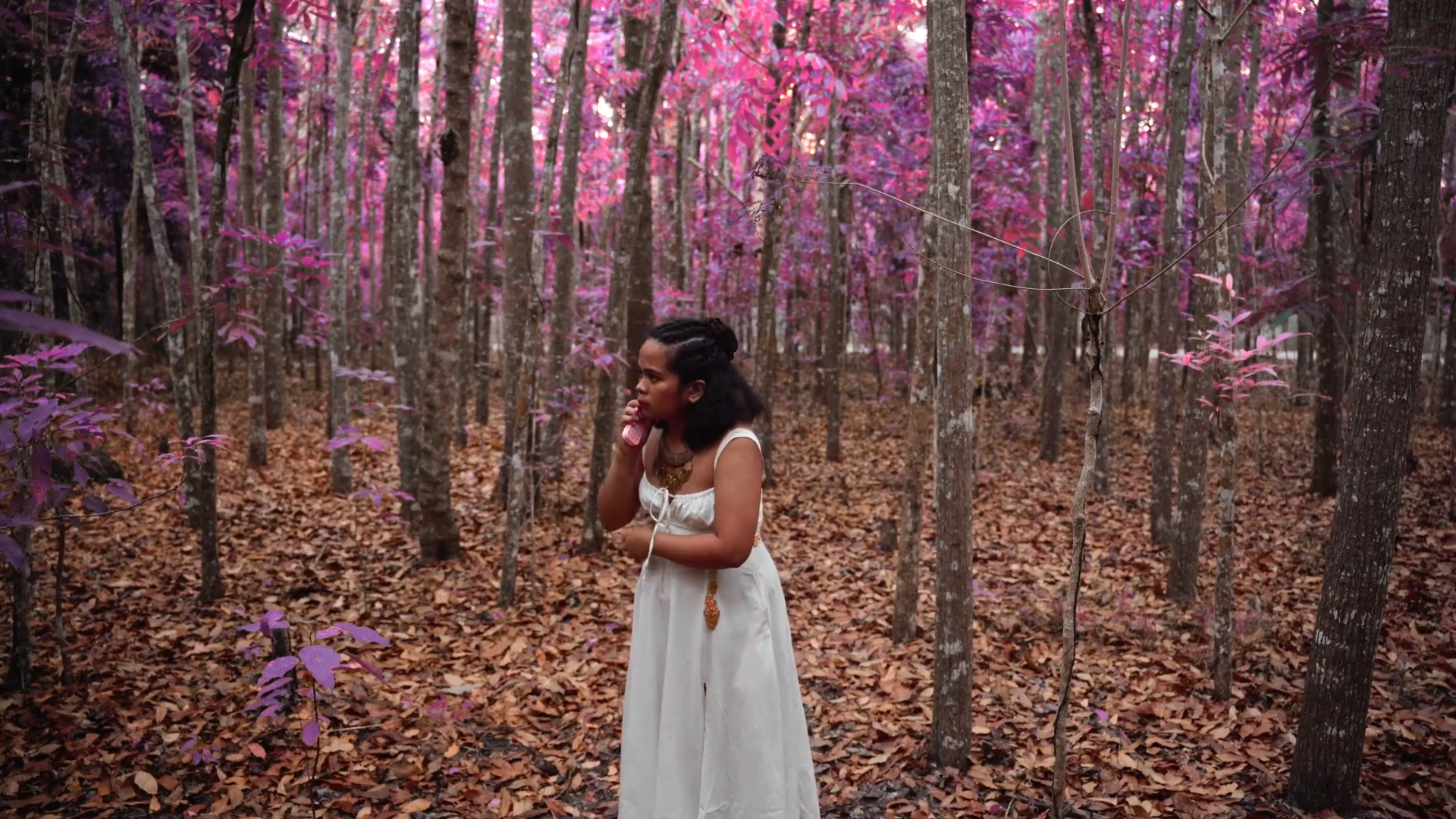
Film still from Padung Langit si Inday Opil
Padung Langit si Inday Opil
Dir. chickenligaya
From Shakespeare’s play Hamlet, Ophelia has always been interpreted and reinterpreted as this tragic figure, coming from feminine innocence to this oppressed victim rooted in patriarchy and social expectations, and as a result, Ophelia is portrayed as this helpless woman in popular interpretations. chickenligaya’s Padung Langit si Inday Opil recontextualizes the same context of Ophelia in the Philippine context and even in the afterlife, as it still reminds Opil of the tragedies she’s been through.
The afterlife is presented with such colorful vividness that it is perfect and paradise-like. The irony of this is how Opil navigated her way through this place, as she is only forced to relive and be reminded of her traumas when she was alive. Opil is already dead, but it doesn’t feel like she is, as the same values and ideas that suffocated and oppressed her when she was alive still reflect and continue in the afterlife. Questioning whether the afterlife is really paradise is a matter of who dictates what is paradise for them, and in the case of Opil and women like her, it’s still patriarchy and religion creeping behind that dictates what is an ideal woman; that promise of salvation is a matter of choosing when it fits and checks the box according to their tastes. Just like Shakespeare’s Ophelia, she succumbed to grief and fell into madness from the combined traumas she had in life. chickenligaya suggests Opil can only be free if she chooses her own paradise.
Padung Langit si Inday Opil shows how the depiction of perfection and beauty is only dictated by those in power and fits in accordance with their taste, an ideal one. Opil, who died from grief, is a result of disregarding marginalized voices who, throughout her life, have always submitted to the societal expectations of a woman. In the end, and in the afterlife, she chose not to follow what is paradise, but instead she realizes and reclaims that she’d rather live a paradise, and be with Yawa, a demonized biblical figure, defined by her than a paradise defined by those in power. - Christ Dustly Go Tan
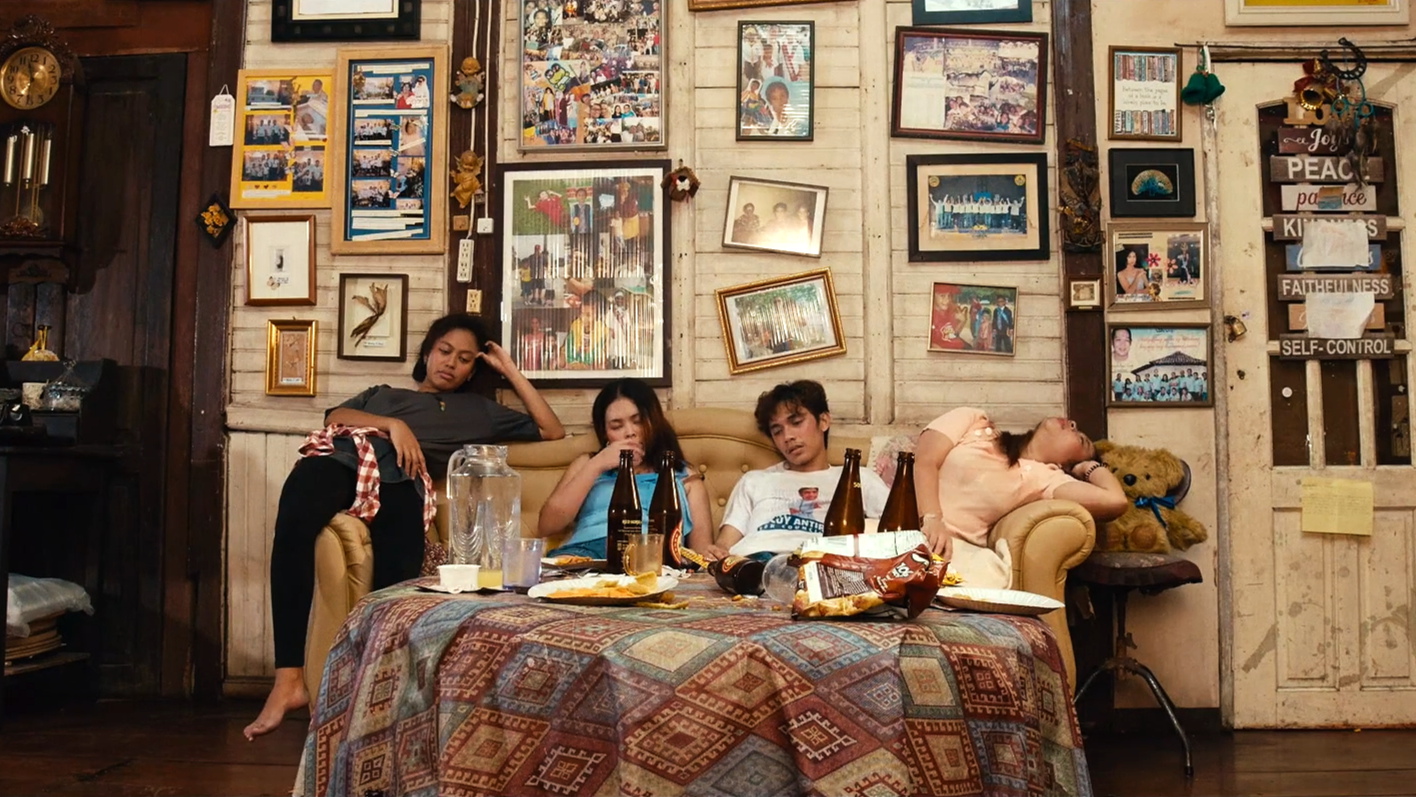
Film still from Jocoy, Jocoy, Jack en Poy
Jocoy, Jocoy, Jack en Poy
Dir. Emanuel Van Paler and Colie Arellano
The truth doesn’t collapse in a single blow; it crumbles quietly — shrinking in silence, in denial, in moments that appear ordinary. Emmanuel Van Paler and Colie Arellano’s Jocoy, Jocoy, Jack en Poy opens with such an ordinary moment, an old woman selling ice, behind her were several tarpaulins of Jocoy, the running politician she’s campaigning for. A girl passes by and casually asks if she recognizes the face on her phone. The woman simply shakes her head and says she doesn’t recognize whoever was in the picture, and the moment slips away — fleeting, mundane, almost forgettable. Yet this small denial unfurls into something darker, more unsettling, and all too familiar in a country where truth can be easily distorted, bent, or erased.
The film then shifts into what feels more like an ordinary scene, four friends drinking, talking, and teasing out their disappointments and dreams. Among them is Jocoy, who stands apart from the memory of his brother — the reckless foil to his own restraint. Even claiming that they looked so identical, Jocoy is framed as the responsible one, shaped by discipline and political ambition, the very opposite of his brother. Yet this image is never stable. The old woman selling ice early in the film reappears, and Jocoy is seen buying from her as if it were happening simultaneously with the drinking scene.
The film begins to fracture the very concept of time itself. Were these events on different days? Was the Jocoy being discussed the same Jocoy we see onscreen — or perhaps his brother? The ambiguity deepens until Jocoy’s identity itself begins to split. In a striking mirror monologue, he faces his reflection as if it were his brother, one side burdened by expectation and shrinks in exhaustion, the other hollowed by resentment and failure. Each version of himself is equally fragile, equally broken.
The depth of this trap is revealed in the conclusion. Jocoy’s face returns, but now lifeless, abandoned on a pavement, holding a cardboard sign marked Drug Pusher. The film never tells us whether it was Jocoy or his brother who died. But within the extrajudicial killing machinery, that distinction no longer matters. Responsible or reckless, well-known or nobody, good or bad — identity collapses into one devastating word.
In the final scene, the girl from the beginning — who once asked the old woman about the photo in her phone — emerges as the one taking a picture of Jocoy’s dead body. The film itself appears inverted, folding back to its denial. The woman who once said she did not recognize him wasn’t lying after all. In the world of EJK, recognition has no meaning; truth is whittled down until it fits on a placard. It is no longer a question of who a person is, but only of what name is written on their body. In Jocoy, Jocoy, Jack en Poy, death does not simply erase life — it erases truth itself. – Mylene Del Rosario
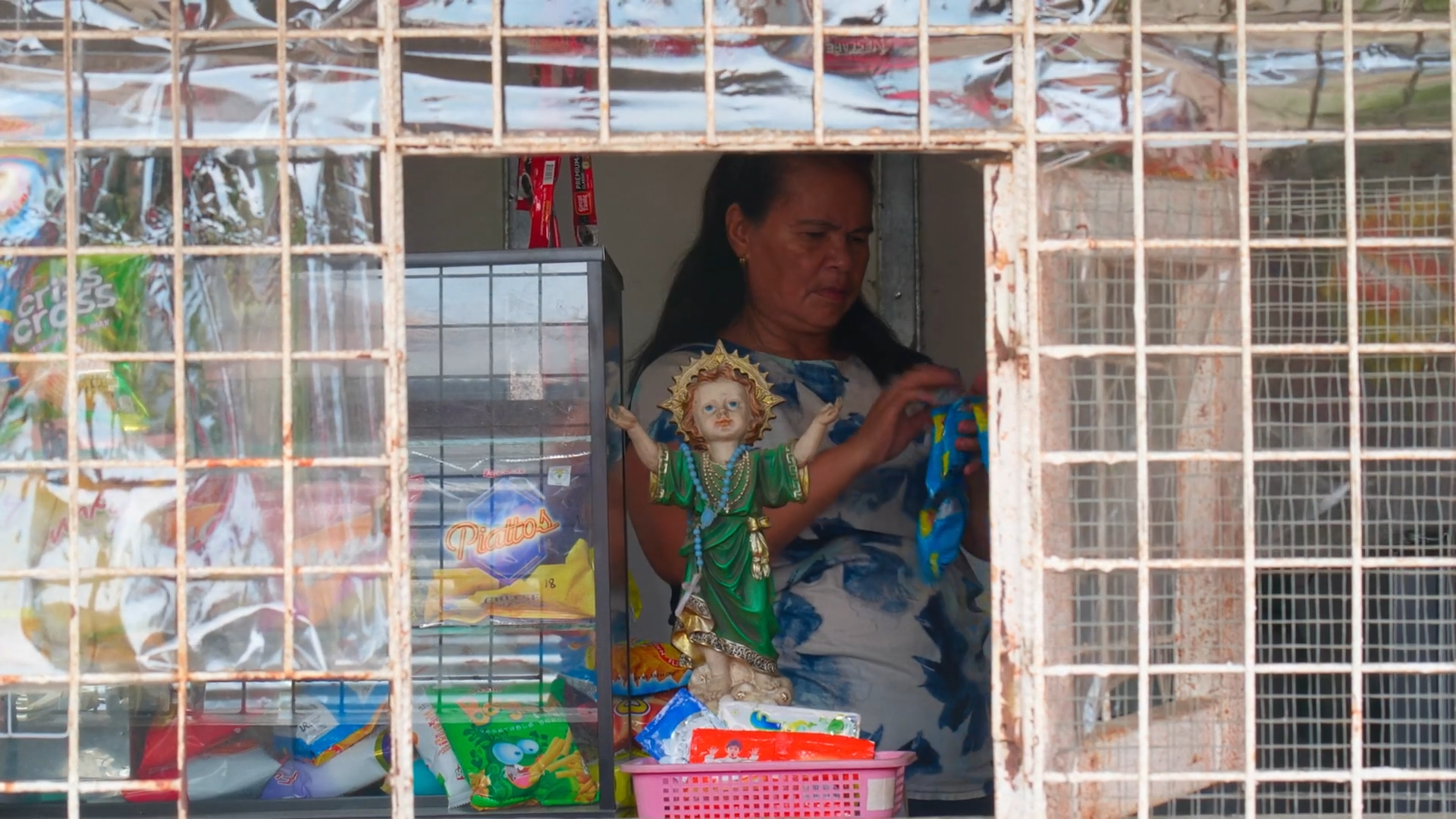
Film still from Sari-Sari
Sari-Sari
Dir. Jam Moreno
What captures Filipino life more vividly than sari-sari stores? These are the dots in every Filipino street, where daily exchanges of goods and stories converge. It is a comfort space, a hangout place, and a snack bar rolled into one. Mornings unfold with the rustle of three-in-one coffee sachets, afternoons echo with children’s laughter as they trade coins for a scoop of bubblegum, and evenings quiet down with the fizz of a soda bottle. Coins clink from palm to palm, stories are shared, and survival feels ordinary. It is within this image that Jam Moreno grounds the heart of his short film Sari-Sari. With his own mother behind the counter, Moreno doesn’t just capture a store; he captures the pulse of Filipino life, where even the smallest transaction carries the weight of a story.
Moreno films her mother as she is — selling, sitting, sighing, enduring. She is no actress, yet her presence carries a truth no performance could imitate. Around her swirls the familiar chaos of family life, acted out by performers who play her children. They quarrel, they complain, and in almost every situation, the same word is thrown her way: “Mama!” It is called out in need of guidance, whined in laziness, or shouted in frustration. The repetition makes clear that to her children, “Mama” is not simply a name but a role — someone to solve every problem, someone ever-present in every inconvenience. Like the sari-sari store itself, a mother knows by heart the rhythm of tending and waiting, of answering every call.
The film’s most powerful moment arrives when Moreno’s mother finally speaks for herself. In her own voice, she reminds her children that the family’s financial struggles are not their burden to carry. Parents, she insists, must shoulder that weight. Children, she believes, should be free to dream, to stumble, and to grow without the chains of worry. In this moment, she ceases to be just a mother behind a counter, surrounded by chores; she becomes the embodiment of sacrifice, turning the sari-sari store into her own stage of wisdom and resilience.
This is the paradox Moreno captures so clearly: a mother who is endlessly demanded, yet endlessly giving. Always called upon, yet always shielding her children from the struggles pressing hardest on her own shoulders.
The film is about the quiet, unseen labor of love — how mothers, even in their exhaustion, remain open like the store itself, always ready to give what little they have. Moreno honors his mother not with grandeur, but through the smallest details: a sale, an argument, a call, an answer. – Mylene Del Rosario
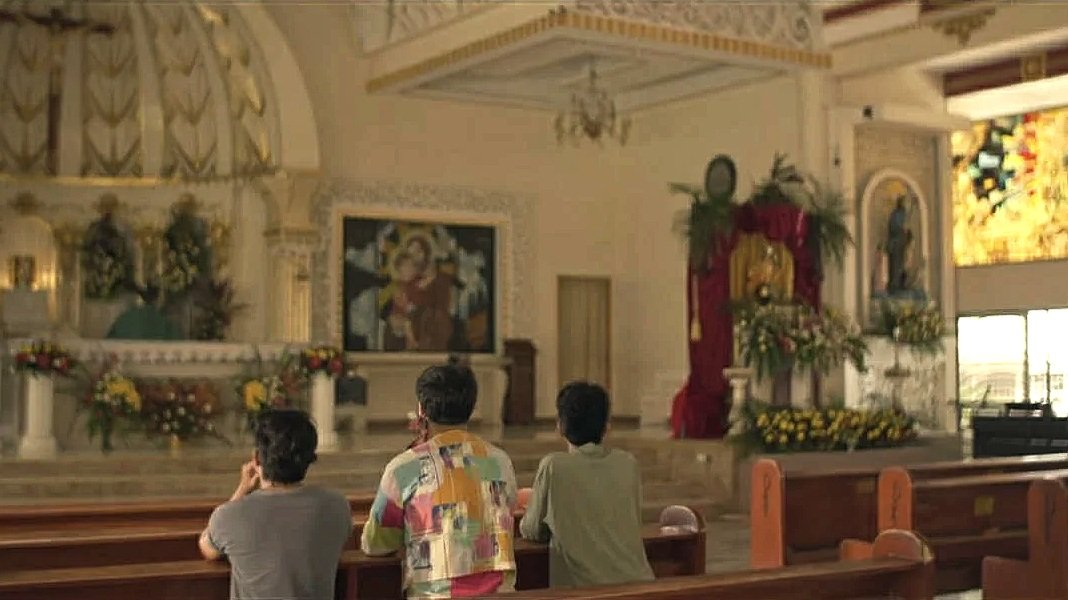
Film still from Usa Ka Libo Sa Tulo ka Mag Amigo
Usa Ka Libo Sa Tulo ka Mag Amigo
Dir. Ichael Cenabre
What does one thousand pesos mean in a city that eats money for breakfast? For the trio in Usa ka Libo para sa Tulo ka Mag-Amigo, it is hope, adventure, and survival packed into a thin wad of bills. But what feels enough at first quickly dissolves, as the city and their own choices remind them how thin the line is between laughter and regret.
Ichael Cenabre’s short yet piercing regional film begins with one night of reckless joy. The 1,000 pesos is gone in a bar before the sun even rises. By morning, two of them are on their knees asking for God’s mercy, while the third, lost in the memory of a girl he met, is already chasing another adventure. The story spins into other misadventures that test not just their pockets, but their conscience. A wallet full of cash outside a church — maybe an answered prayer or a temptation itself. One friend drowns in drink, another squanders it to impress and is humiliated, while the last drifts through the city, spending lightly yet finding joy in the simple act of being alive. By the end, he still carries 1,000 pesos in his pocket — a symbol of both restraint and possibility.
The film’s strength lies in its balance: humor laced with harsh truth, tenderness shadowed by survival. The city is a playground, but also a trap. Money does not measure happiness alone; it is perspective, connection, and the choices we make that define us. The ending is left uncertain: will the last friend build something from his 1,000 pesos, or waste it on another fleeting night? That ambiguity is the point — because survival, in the city and in life, is as much about freedom and hope as it is about responsibility.
Usa ka Libo para sa Tulo ka Mag-Amigo is a sharp, tender tale of small fortunes and fleeting joys, of friendship tested against the hard truths of poverty and choice. It leaves us asking ourselves, what would one thousand pesos mean to you? – Mylene Del Rosario
Binisaya Horizons
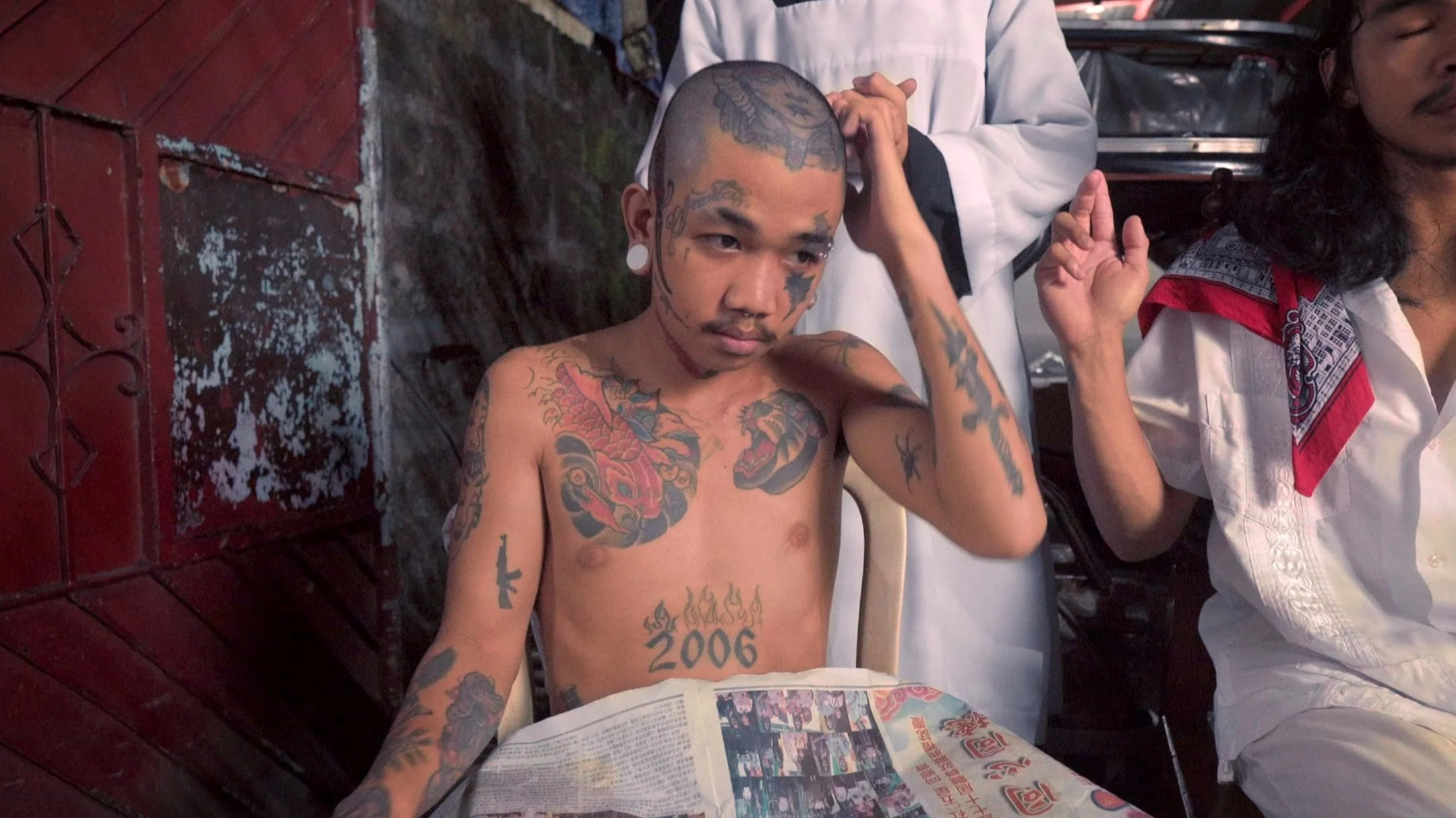
Film still from Maryosep
Maryosep
Dir. Miko Buan Acuña
In a country with a deep-seated inclination for the practices of Christianity, how are we able to know which ones are rooted in the cause of better morality, or which come from a performative underlying intention in the journey of finding the truth? Miko Buan Acuña’s Maryosep depicts Hesus as both divine and human, but not in the solemn, distant sense we often see. He is flawed and unabashedly partakes in human activities — a breathing contradiction in the human figure.
The religious entity, in this context, Hesus, is characterized here as a free-flowing figure — someone people freely spend time with. He is human. Here, he comes down to Earth and blends into everyday life; he hangs out with everybody with no judgment that even the morally corrupt are at their table. He drinks with these people, smokes with them, and shares in their banter. He even attempts a miracle, trying to turn water into hard liquor, but fails to deliver — an ironic gesture that grounds him in imperfection. Much of the film unfolds like a familiar Filipino gathering, where liquor, humor, and contradiction mix freely.
Yet beneath these playful scenes is a biting satire. Hesus’s humanness is not just comic relief; it becomes a mirror for society’s moral fractures. He urinates on walls, then orders someone to vandalize the very “Bawal Umihi” signage he defied. He asks others to spread the Word of God through a megaphone, and the people willingly oblige with the expectation of something in return. These contradictions show faith, removed from its essence, is now a commodity — a means for self-interest rather than moral grounding.
The film ends with Hesus at the dentist, undergoing oral prophylaxis — a cleansing not of the soul but of the mouth, which serves as a striking metaphor: religion reduced to surface-level purification; the journey to finding the truth has turned to nothing more than a mere performance. Maryosep reveals to us that the tragedy is not in Hesus’s failure to inspire his neighbors, but in how morality itself has failed, distorted by politics, survival, and exploitation. – Lovely Ventures
Film still from Bisan abo, wala bilin
Bisan abo, wala bilin
Dir. Kyd Torato
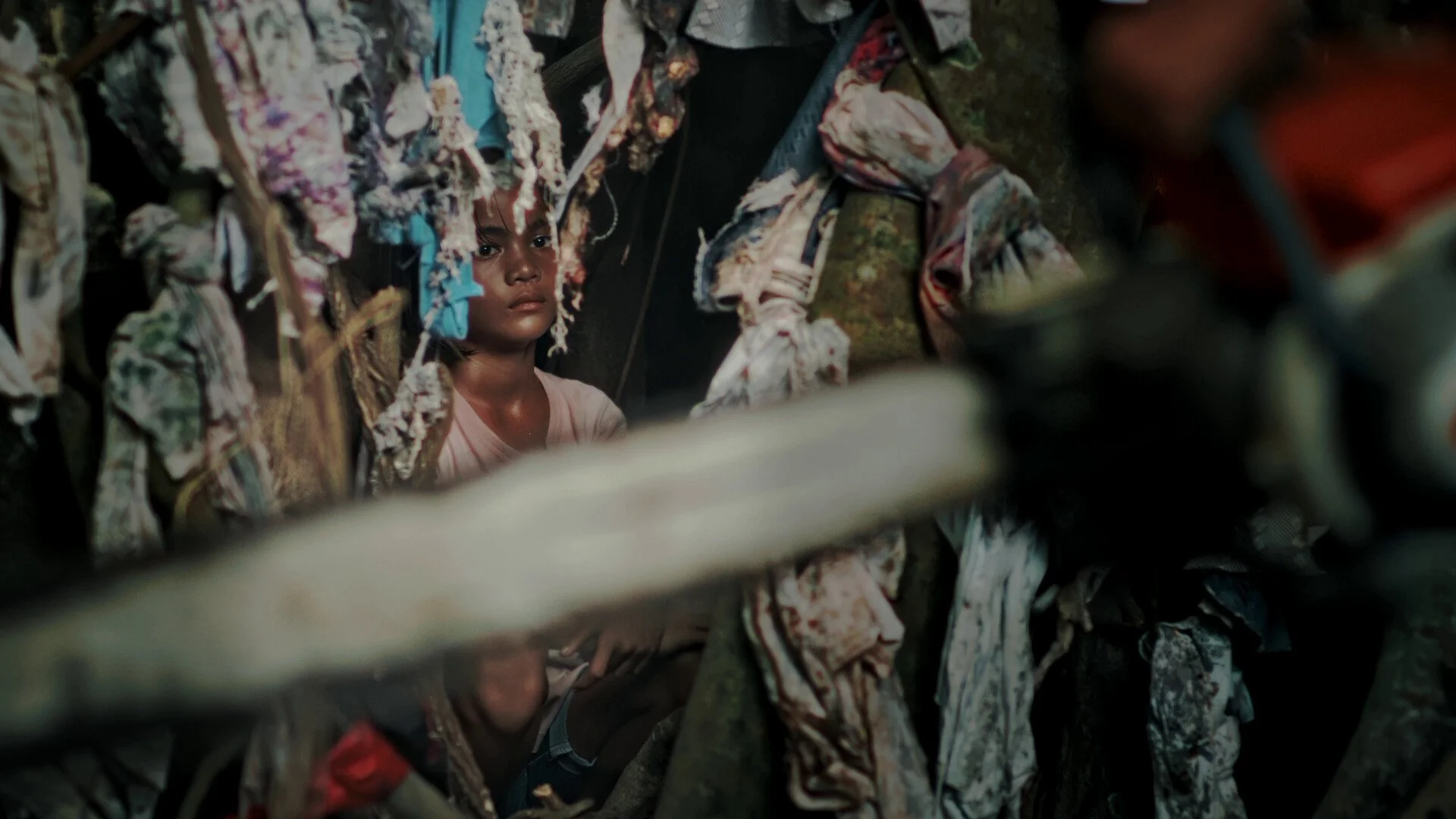
How can a community safeguard its cultural lifeblood when it also holds the power to diminish it? Kyd Torato’s Bisan abo, wala bilin confronts this paradox head-on, weaving a narrative that may initially feel elusive but ultimately pulls viewers deeper into its layers. The ambiguity is never a weakness; instead, it sparks curiosity and a need to interpret.
The film is a remarkable short that achieves depth within its brevity. It is a haunting reflection on the dislocation of culture and the scars it leaves in its wake. Through meticulous sound design and carefully framed imagery, the film culminates in an ending that shocks and lingers, imprinting itself long after the viewing ends. It grips its audience not with clarity but with resonance, asking them to sit with its mystery.
At the heart of the story is the question of what it means to lose cultural identity. The destruction of the tree emerges as a searing metaphor for heritage erased. It represents more than just nature; it embodies shelter, history, and a collective memory that once safeguarded belonging. Its disappearance reflects the gradual erasure of indigenous traditions and the fragile threads that bind communities to their roots.
The film deepens this exploration through its embrace of magic realism, intertwining myth with lived reality. By drawing upon Capiz folklore, Torato crafts a world that is grounded yet dreamlike, highlighting how stories and legends can function as vessels of preservation. Folklore, in this sense, is not a relic of the past but an act of resistance that defies forgetting.
What makes Bisan Abo, Wala Bilin so striking is its refusal to dictate meaning. It invites the audience to assemble its fragments, to dwell in uncertainty, and to carve out their own interpretations. In this openness lies its greatest strength: a recognition that cultural loss is never a single story but a multitude of silences, absences, and memories that linger like ghosts. – Jon Owen Lepiten

Film still from Sleep On It
Sleep On It
Dir. Hix Murakami
What happens if even rest isn’t gentle to you? Hix Murakami’s Sleep On It is a psychological horror that follows a woman tasked with bringing her sister’s gown to the wedding. She bumps into a fixated man in a grocery store who off-puttingly looks at her and leaves the store first. As the woman drives again, her car is now found in a broken-down state. The man whom she encountered earlier on proceeds to offer her help. He endows her with a place to stay for the night. She accepts the offer with a much hesitant tone, not knowing the horrors that are about to unfold.
Murakami frames sleep as a way to reveal internal breakdowns that come from an endless state of restlessness and unproductive days. The man’s desire to have a wife and his act of imprisoning her in the house he provided serve as a metaphor for how we often feel trapped and restless. There is always a part of us that wants to escape and achieve certain things, like any urgent task. The film reminds us to embrace sleep and unlearn productivity so it does not lead to a downward spiral into something worse.
When she discovers that the man has other plans for her, she tries to escape, but he catches her as she attempts to leave. The man sees her as an opportunity to achieve his dream of having a wife. The horror works as a metaphor for collapse. It shows burnout, dissociation, and rest in an unsettling setting — one that reflects the horrors women face in a patriarchal society.
The scene where she beats the man to death while wearing her sister’s wedding gown is shown through the man being pounded on — a way to externalize the breakdowns happening from within. Eventually, she saves herself, but the remnants of what happened remain visible: the red blood spattered across her dress, the wedding gown torn into pieces, and the face of despair. Sleep On It is a powerful visualization of burnout, that no matter how much we want to sleep on such occasions, some scars continue to weigh on us, even long after the experience has passed. - Lovely Ventures

Film still from Hasang
Hasang
Dir. Daniel de la Cruz
Trauma and decades-long changes in the environment have shaped and intersect with one’s personal wishes and desires, especially when processing grief, even to an absurd extent. Older generations have witnessed how developmental aggressions have shaped their own perceptions of the environment, from being accustomed to the lush greenery of trees to seeing only a dull, open pit, and along with it come the memories of growing up displaced, now fading and hard to recall. Daniel de la Cruz’s Hasang positions grief into a desire to turn into a fish, a reflection of something they longed for that they didn’t get to experience again until their death.
Of all the animals Lola chose, she chose a tilapia; a symbol of memories lost through changes in the environment, from when her husband used to court her by the river, when she last saw a fish, and how life was for her back then. The tilapia becomes a manifestation of all of Lola’s wishes, her absurd chosen symbolisms, of moments lost. Boni can only apologize to his Lola for not fulfilling her last wish, as the river has already dried up. Even in her transformation, she still can’t fulfill her wishes. De la Cruz suggests that grief can manifest absurdly as an intersection of the personal and political interpretations of environmental degradation.
Hasang shows how environmental degradation brought by capitalism is also a personal crisis invading their intimate spaces. One can only passively observe as their home changes drastically, from how it once was to what it has become. There are always those brief moments in time where they long to remember and return to that state, but they just can’t. In the end, the way generations pass their trauma and experiences to the next is a reflection of how justice isn’t achieved for those that have already passed. – Christ Dustly Go Tan

Film still from Red
Red
Dir. Aries Ferrer
Who are we without the memories of the past that continue to knock at the depths of our subconscious mind? For Red, it is the pragmatic evidence of one’s childhood. Aries C. Ferrer’s Red is a beautiful and quiet contemplation on a forgotten past — on places we quietly remember but have long lost to the passage of time. With a provincial landscape, Red returns home. Finding a way to cope with the recent loss of his mother, he finds himself stepping back into a series of places in search of his previous life. As the protagonist visits familiar places in his own town, he is confronted with the grating reality that things are no longer what they used to be.
One of the beautiful capabilities of the human mind is its ability to attach memories to places and objects. For Red, he finds his past in the seemingly familiar shape of the leaf and in the oddly shaped, sour taste of the fruit of a mango tree. Red recalls certain moments upon remembering that tree: Isang’s confession, Manong Dagul’s wedding, nighttime card games, lessons on Pusoy, and even playful fights — the taste of nostalgia sours inside his mouth.
Red is first shown catching up with a friend while sharing food — green mango paired with salt. Their conversations circle people from their hometown who migrated, who moved through different cities, and those who eventually left for good. Everything is seemingly about leaving.
As the film nears its end, the protagonist is seen riding a bicycle in search of something. He goes out to relive some of his days as he looks for a sense of familiarity. Yet he does not find the tall, picturesque stature of the mango tree; instead, he is faced with a brick wall attached to a triangle-esque structure on top — a house. Red stands there now, coping not only with the loss of his mother but also with the loss of his childhood. The anchors of his memories and innocence are now erased by urbanization.
Now, there is no physical form of his past anymore, only a mental photograph of what he can keep. There he stands within a void, a space forged in time, a quiet echo resonating in the constant movement of his heart as he navigates life through loss and remembering, begging to find them in spaces that no longer exist. Red serves to preserve such feelings. – Lovely Ventures
Film still from Brownout Capital
Brownout Capital
Dir. Pabelle Manikan
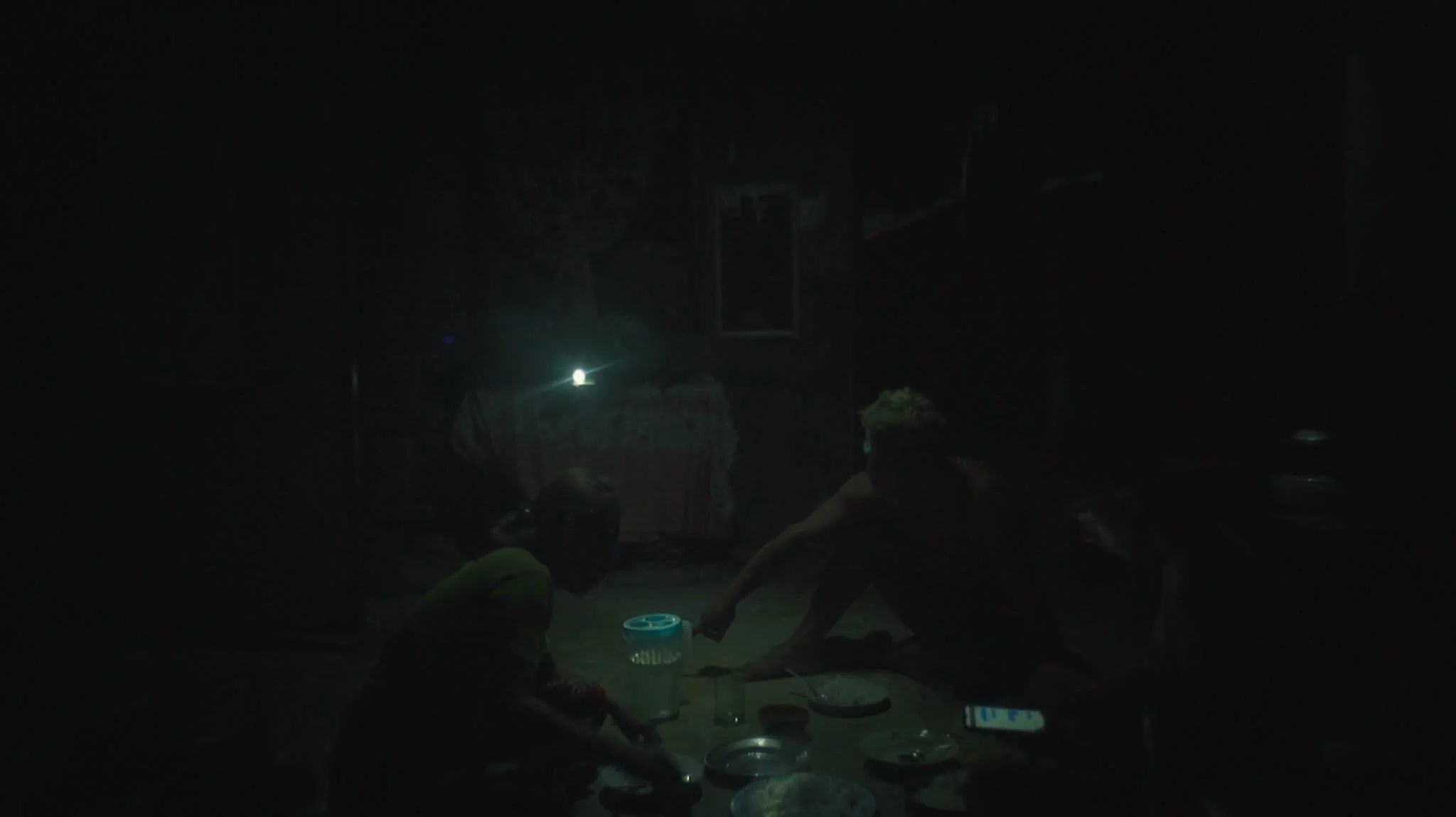
Somewhere along the outskirts of Palawan, nothing ever changes, nothing ever progresses — out of forced resiliency, people work as much as they can before night comes tapping in again. Pabelle Manikan’s Brownout Capital depicts the reality in which darkness has become a communal friend in most Filipino households. It portrays the unwanted, stagnant lives of the townspeople, who are forced to adapt to such living conditions.
Searching for ice, not only to find a way to quench their thirst but as a way to supplement their livelihood, the people scour from city to city, looking for ways to preserve the fish that they catch on those days. The people of the town traverse to nearby cities to acquire such a common and basic good as ice. Manikan, in their film, shows how people come to navigate life as a way to cope with the given resources. Due to the government’s continued privatization of electricity, people are forced to live in such conditions. In an interview from the film, one townsfolk says, “Nothing ever changes around here. It’s only the powerful that progress.”
There are no alerts, no grand reactions, and some even find ways to cope with this through communal dance. In the end, everything is about resilience. The government, which is responsible for this, remains quiet, but the people play songs, dance certain tunes, voice out their concerns — they try to live. In the end, time and time again, this unknowingly becomes the norm, a living testament to the realities of survival in the continuously re-lived days of a city that is forced to embrace darkness — in their sharing of food, in having conversations, in their longing for a household that hopes to see the light again. Brownout Capital is a sobering reminder of how much of the government’s incompetence affects the lives of Filipinos, for better or drastically worse. – Lovely Ventures

Film still from Matira, Makapit
Matira, Makapit
Dir. Goldwin Reyes
What does it mean to fight for survival, and what is truly gained at the end of such a struggle? Is the prize at the end of the battle ever what we imagine it to be, or is it simply another illusion we cling to? Matira, Makapit by Goldwin Reyes takes those questions and transforms them into a visceral experience, placing its white beings in a brutal contest where strength, determination, and desperation collide. Each competitor believes they are destined for a particular life, and yet the closer they get to claiming it, the more uncertain the outcome becomes.
At first, the narrative seems straightforward, a survival game driven by instinct and desire. But as the story unfolds, it becomes clear that what lies beneath is not a simple test of endurance but a meditation on longing and futility. The “prize,” once revealed, unsettles the entire framework of the film, turning what seemed like a linear contest into something far more elusive. In doing so, the film suggests that survival itself may not be the ultimate goal but rather an ever-shifting construct shaped by hope, illusion, and loss.
What gives the Reyes' film its staying power is not just the narrative but also its visual language. The production design deserves special mention, with choices that are both inventive and intentional. Every detail feels tuned to the director’s vision, building a world that is at once stark and symbolic. The design is never ornamental; it grounds the story, deepens the atmosphere, and heightens the stakes of the contest.
The result is a film that balances clarity with ambiguity. It offers enough narrative direction to keep you engaged but leaves room for interpretation, inviting you to dwell on its meanings long after the credits roll. Its imagery lingers, not because it provides answers, but because it asks questions we cannot easily shake.
By the end, we are left with a haunting provocation: in our relentless pursuit of survival, what do we truly win? And perhaps more urgently, what do we lose along the way? – Jon Owen Lepiten
Film still from ESKOBA
ESKOBA
Dir. Sherwin De Leon
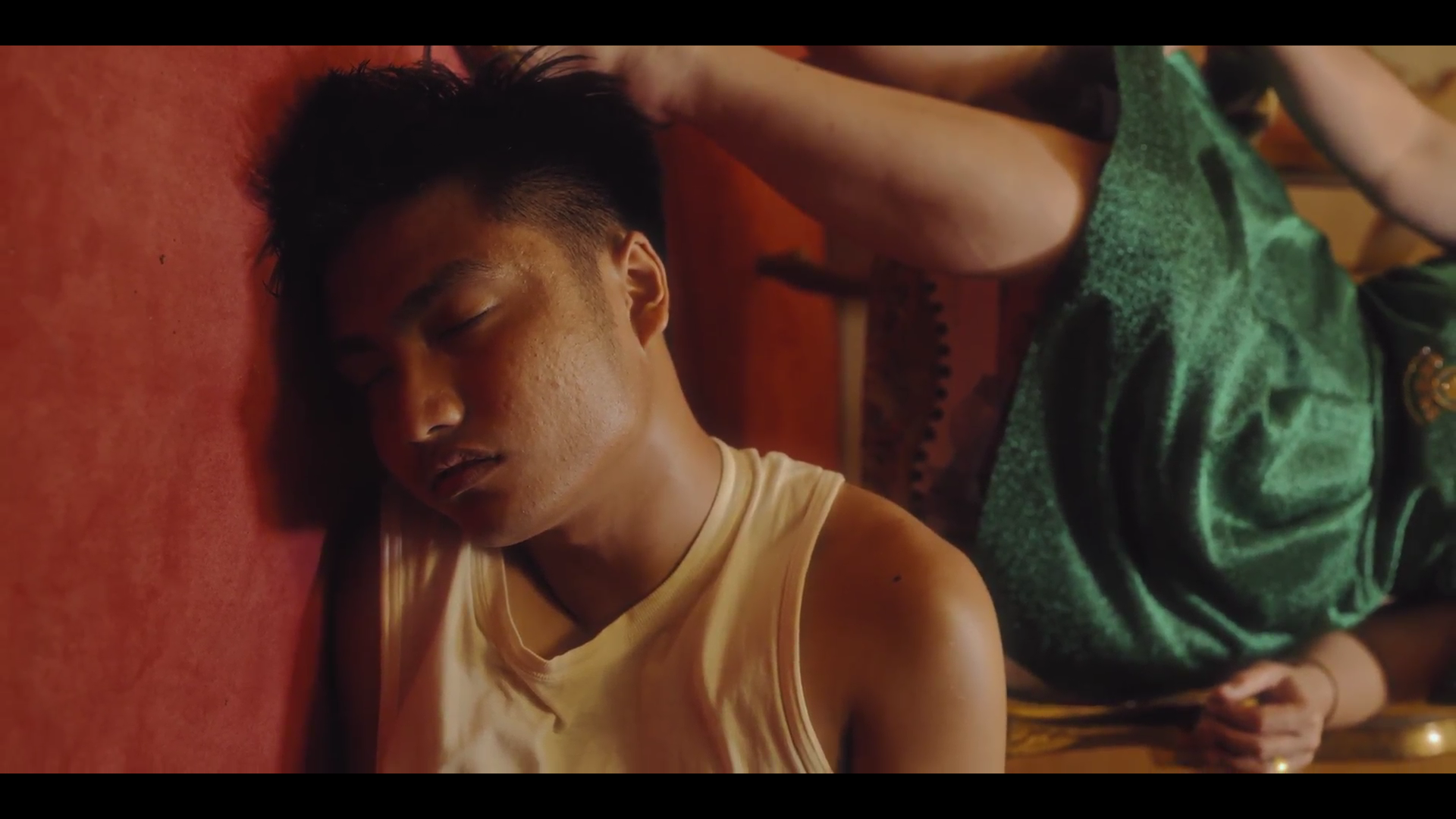
How easy is it to believe in empty and false promises when people are distracted by different vessels of empty rewards? Sherwin De Leon’s Eskoba reimagines the lived realities of Filipino labor as a hopeful dream through the lens of a hardworking cobbler who believes that through hard work, life could one day change.
Told through animated visuals, the story begins with a maligno (evil spirit) who loved shoes and became angry because everyone who wore shoes had to leave. To prevent this, the maligno made everyone who wore shoes vanish so they would no longer have to leave. The film also introduces a Diwata, who provides hope and protection to the people. In the story, Totoy is scolded for wearing shoes; his Lolo warns him that people, including his father, leave once they start wearing them.
Totoy and his Lolo find themselves in a dark situation. His Lolo is sick, and without any money for proper treatment, Totoy tries to care for him at home, looking for existing medicines, hoping that one of them might work. Before losing all hope, Totoy encounters the diwata (fairy), who manifests in the likeness of an infamous Philippine political figure. She offers him the golden shoe brush. With the cobbling business having very few customers, Totoy sees this gift as his winning ticket in the lottery. Later, however, the film reveals that the diwata was a maligno in disguise. Totoy, unaware, has now fallen into the spiraling trap of false promises.
This serves as a striking metaphor for how the government instills in people the promise and dream of labor. They provide measly capital — in this context, a golden shoe brush — that appears as a prize but in reality brings nothing to the table. On the surface, it looks as though they are giving the people what they need, like short-term government programs; they are provided services even more than they expect, but as time passes, their true intentions are unmasked. It is not until we are deeply entrenched in the system that we realize that such actions have only catered to the betterment of the rich.
This is a film that speaks directly to the Filipino people. It tells us something important — about the government and the way it treats its people. Eskoba warns us that these promises, no matter how gleaming they seem, are nothing more than illusions meant to keep people obedient and hopeful, that these false rewards exist and persist in today’s political activities. – Lovely Ventures
Film still from Tomorrow, To Feel
Tomorrow, To Feel
Dir. Maki Makilan
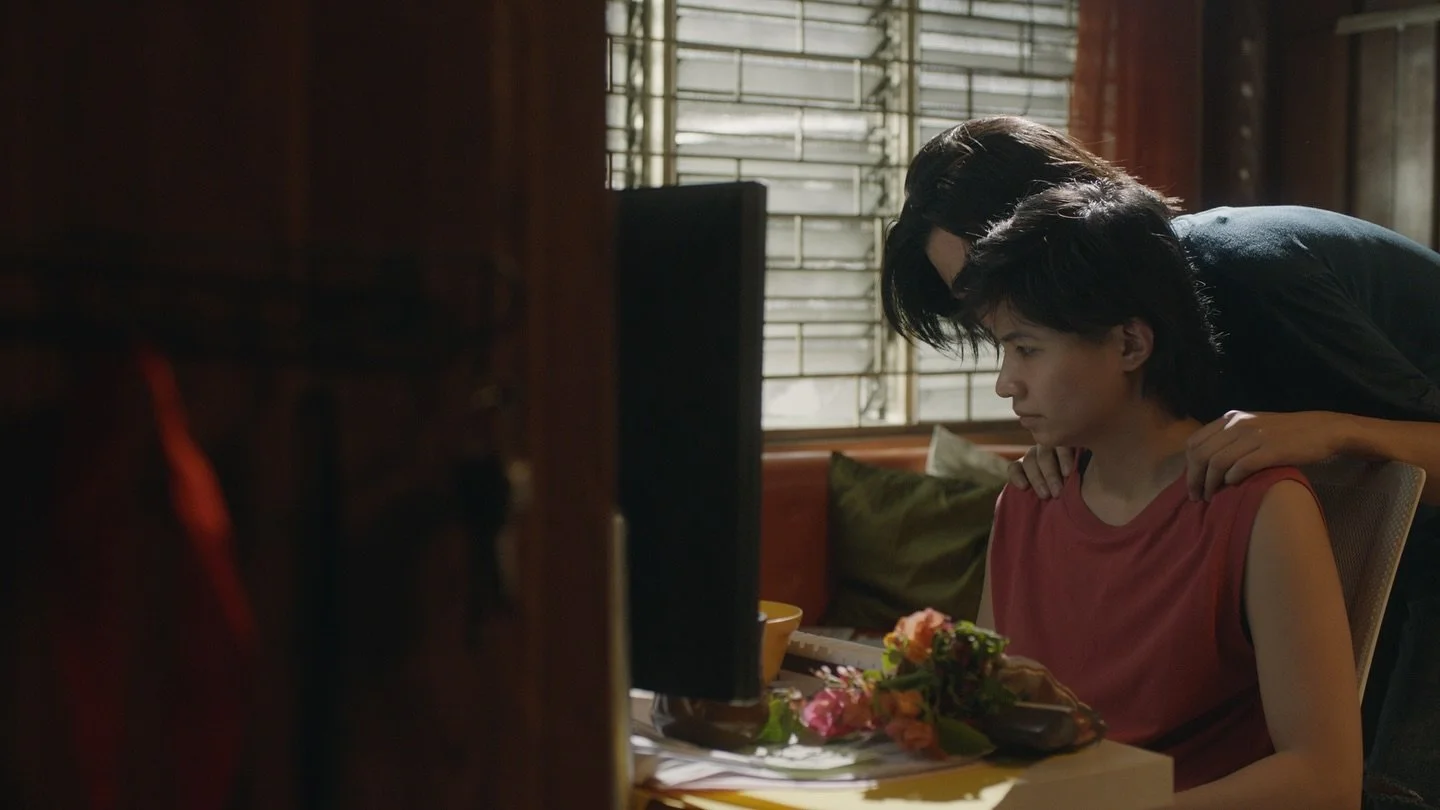
Directed by Maki Makilan, Tomorrow, To Feel is warm yet confrontational. It follows a couple navigating the quiet fractures of their relationship under the shadow of an environmental crisis. This post-apocalyptic short thrives in the silent nuances of conflict, showing how intimacy persists amid decay.
What’s commendable is how resonant it becomes despite its dystopian frame. Set against the remnants of a city collapsing under environmental ruin, the film draws parallels between a fractured ecosystem and the fragile bonds of love. Wax and Phil’s story is less about surviving a ruined world than surviving each other — wrestling with distance, memory, and longing. The sudden reappearance of a relative unsettles their stagnant routine, opening a window to long-buried vulnerability. The film lingers with a tender provocation: in a world on the brink, what does it mean to still yearn, to still desire, to still feel?
Makilan’s sensibilities as a storyteller seep through the visuals in their work as writer, director, and cinematographer. The film encloses the viewer in the corners of Wax and Phil’s home, mirroring the confinement of their lives. Their connection is strained not only by emotional distance but also by the world outside — the constant blackouts that interrupt their work and weigh heavily, particularly on Wax. Yet these very blackouts, while disruptive, also offer unexpected time and space. With the arrival of Al, however, even that fragile space becomes charged, pushing Wax and Phil to confront the truths they’ve long shut out.
In the end, the film leaves us with a spectrum of emotions — desire, warmth, and most importantly, hope. Though we never see where Wax and Phil ultimately go, one thing is clear: they emerge more open, more vulnerable, more alive to the possibility of feeling. – Jon Owen Lepiten

Film still from a tender awakening
a tender awakening
Dir. Daphnee Ferrer
Polycystic Ovary Syndrome (PCOS) lived experiences vary, as women experiencing this and seeking help always feel misunderstood and dismissed, to the point of saying that PCOS is not fully understood yet. It is more than the physical changes in the body; it is also the unexpected mental toll it brings, which adds more emotional weight to living and coping with these unexpected changes in the body. Daphnee Ferrer’s a tender awakening turns these lived experiences into experimental expressions of how one would live life with PCOS.
The abstract portrays PCOS as a never-ending cycle of nightmares, where these changes in the body are recurring as if battling one’s own body and its sudden changes. It’s made clear that pain can occur in any part of the body, but is more often than not misunderstood for something else. This pain can be remediated or even uncontrollable, which can give violent thoughts of scratching it out or just ripping out the pain of the body for the accumulation of frustration and discomfort it has brought to women. Instead of portraying the negative experience of living with PCOS, Ferrer suggests that these lived experiences can be reinterpreted as a form of collective resilience, where each woman discovers her own form of coping mechanisms.
a tender awakening shows that these lived experiences, despite the physical and mental toll they bring, demonstrate how women are resilient in their own ways. Battling something that is often misunderstood leads to uncertainty about how to proceed afterward, but the constant effort to find support and ways to understand one’s body is already a testament to resistance. Even for someone who doesn’t have experience with PCOS, Ferrer manages to portray this collective pain and shows how women’s bodies are a form of resistance. - Christ Dustly Go Tan