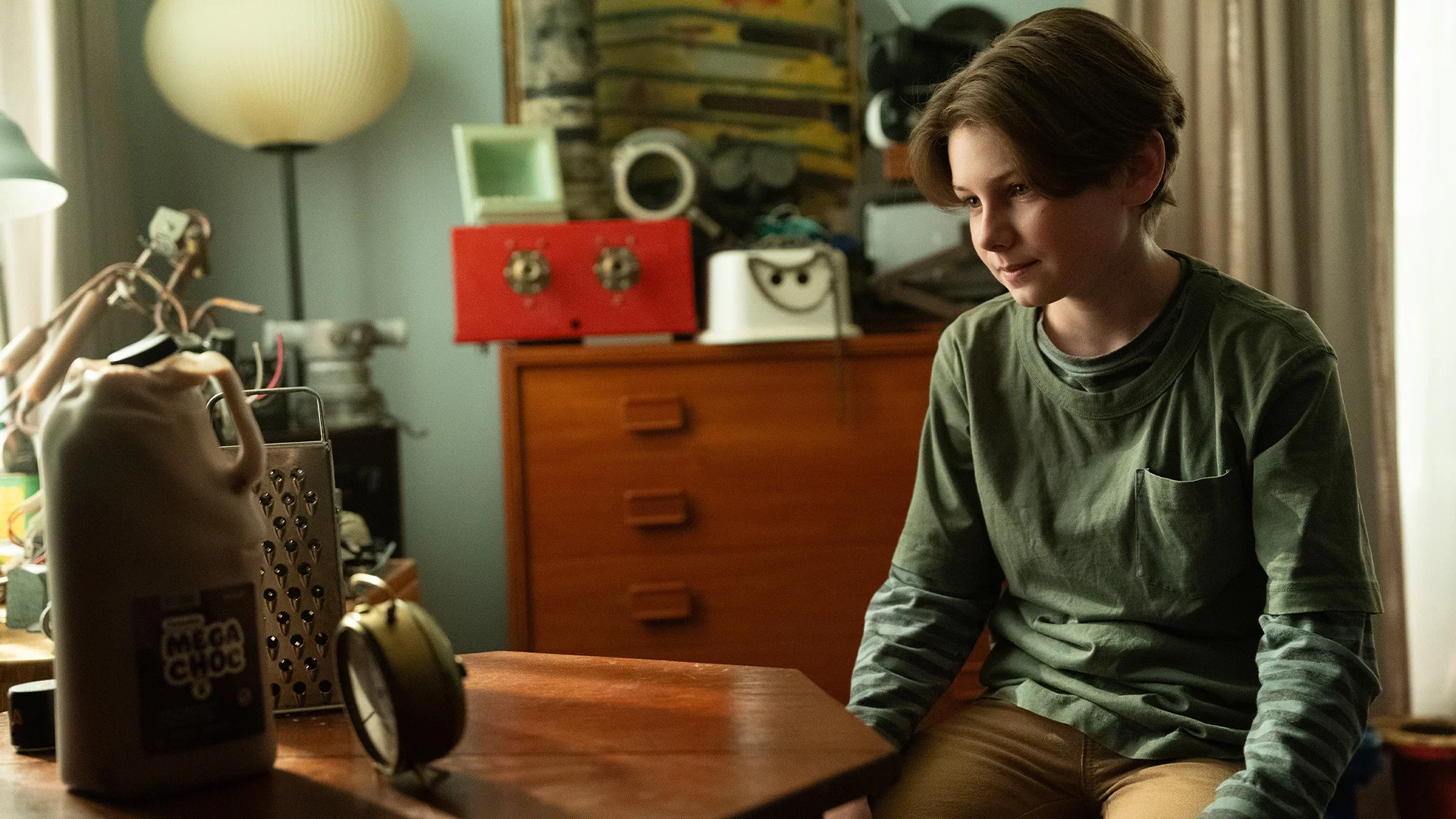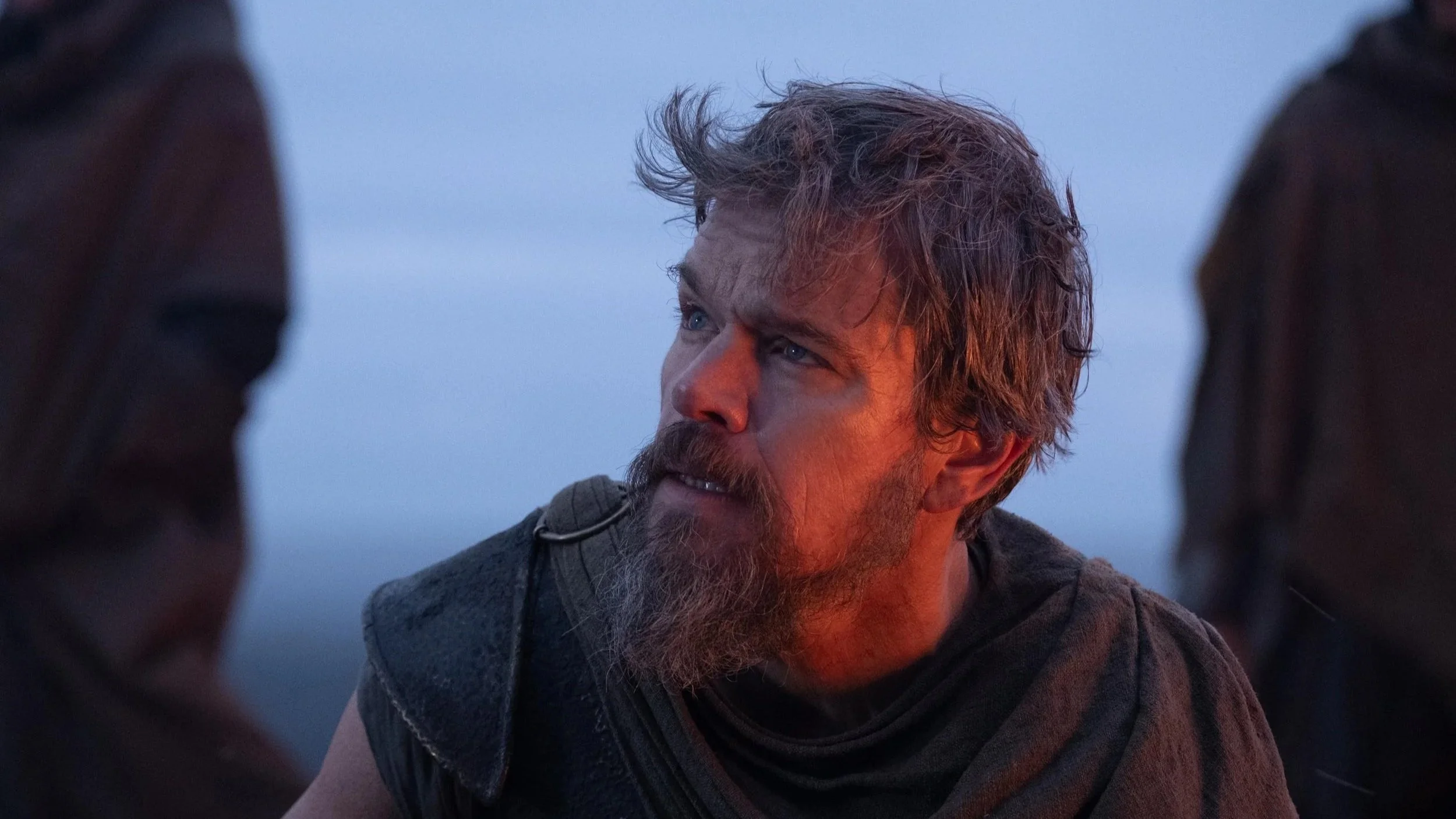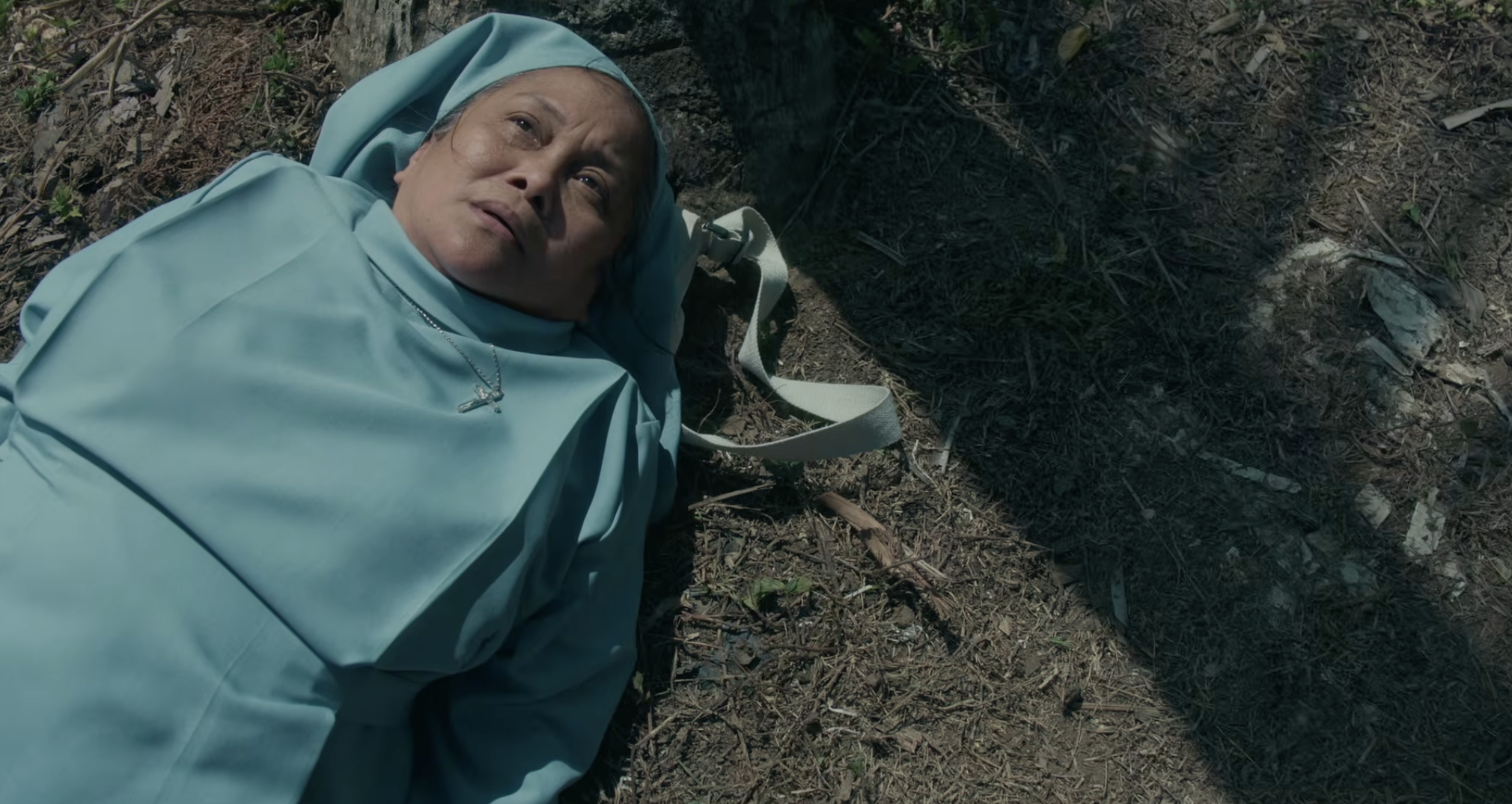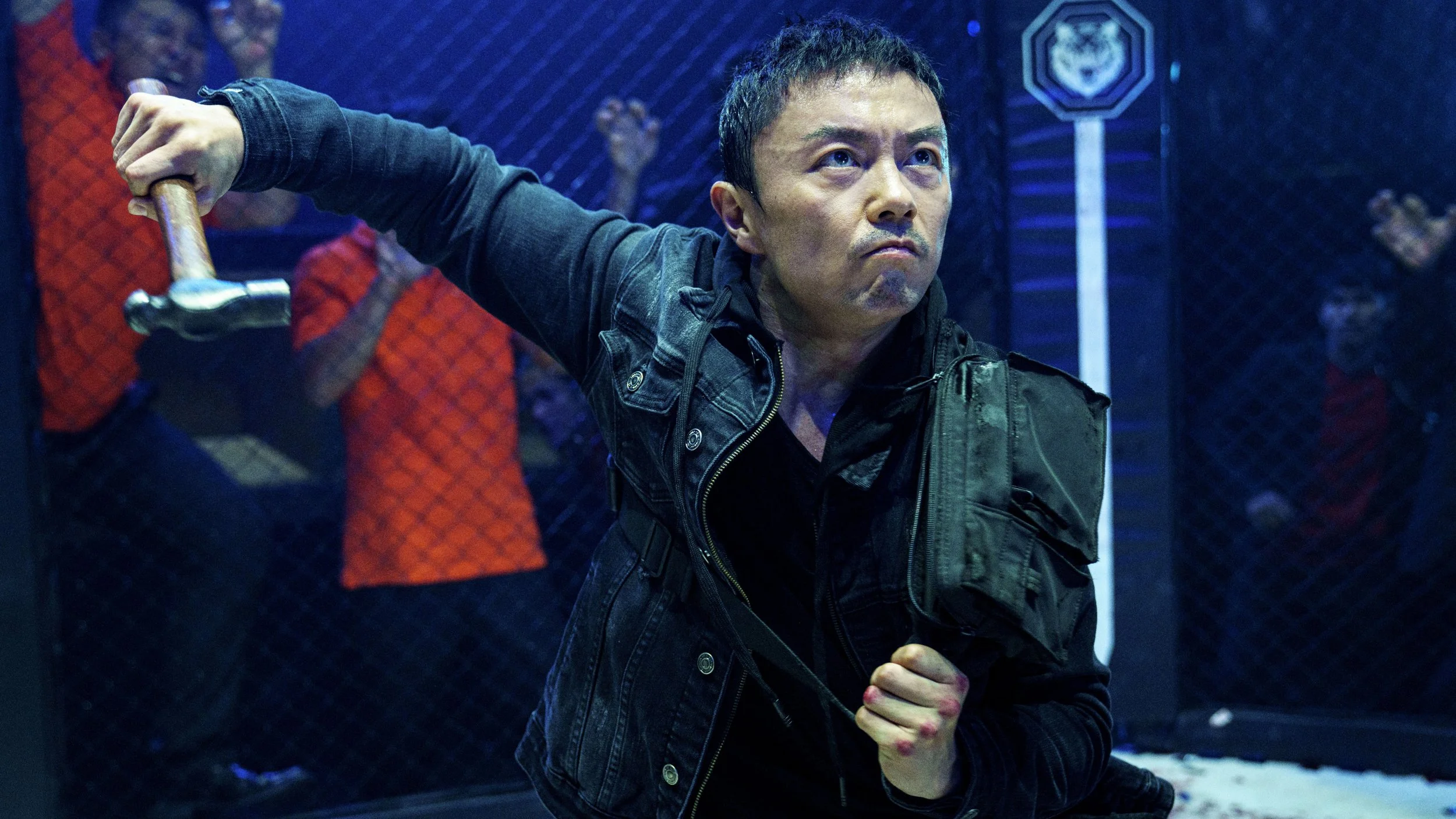

‘5th Oroquieta Film Festival’ OMNIBUS REVIEW: Lumayagan and Habagatan Shorts
‘5th Oroquieta Film Festival’ OMNIBUS REVIEW: Lumayagan and Habagatan Shorts

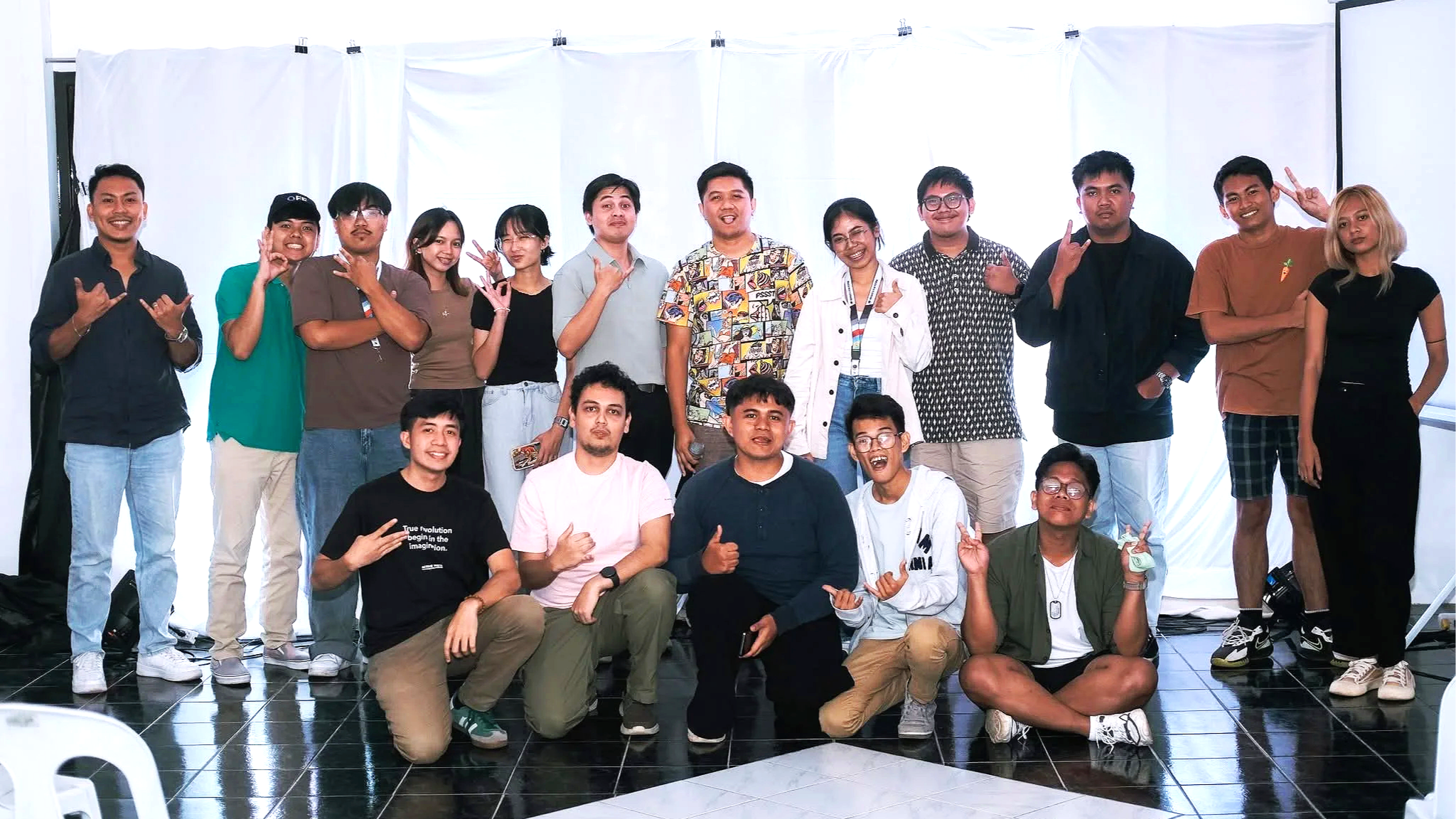
5th Oroquieta Film Festival organizers, filmmakers, and festival goers | Courtesy of Oroquieta Film Festival
The 5th Oroquieta film festival made an impactful comeback after a three-year hiatus, providing the big screen to stories from Misamis Occidental and nearby regions.
The Lumayagan and Habagatan shorts became the highlight of the festival, projecting films about pressing social issues, the rich culture of Misamis Occidental, Mindanao, and Visayas, the power of transformative media education, and the dreams of the young filmmakers. These short films may be simple, but they carry the sense of mission of communities that want their narratives to be seen, playing a part in Regional Cinema. Here are the reviews of the Lumayagan and Habagatan Shorts:
Lumayagan Shorts
Film still from Ang Kabug aton sa Nangabilin
Ang Kabug aton sa Nangabilin
Dir. Ma. Katrina Rustia & Herald Christian Guillena
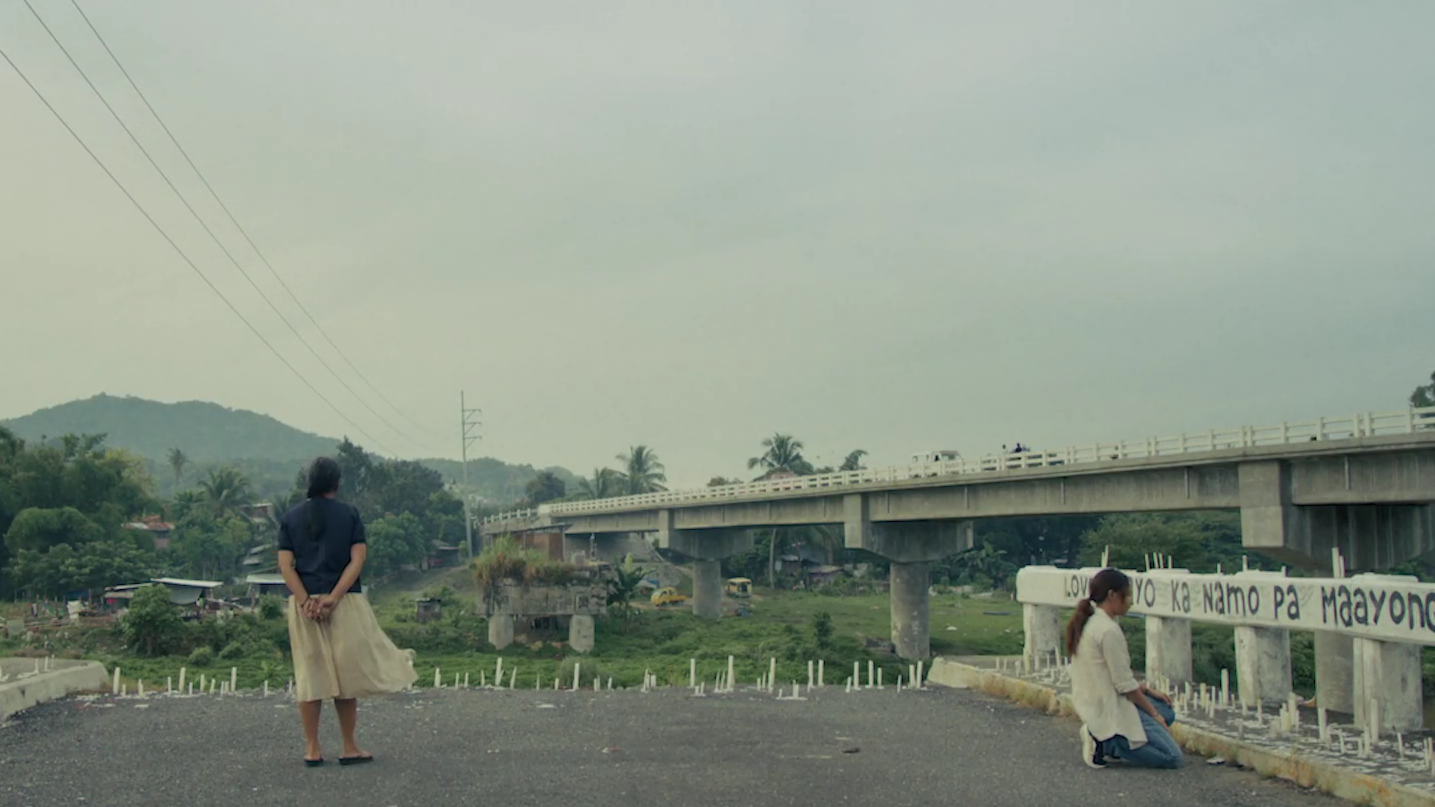
Home is where we grow before life pulls us onto different paths. For Majo, however, home is marked not by nostalgia but by loss: her father taken by the floods, her childhood house washed into memory, and the weight of returning to what remains.
In Ang Kabug Aton sa Nangabilin, Directors Ma. Katrina Rustia and Herald Christian Guillena recall Typhoon Sendong (Washi), which devastated Iligan City 14 years ago, despite it not being a usual path for storms. Majo’s mother, sick yet firm, sent her to Manila in hopes of a better future, leaving a wound between them that never fully healed. Their reunion brims with anger and distance, but also the unspoken grief of a father whose absence lingers in every silence.
The film concluded at a shrine and the broken bridge, a reminder of the scars the city has yet to mend from the many lives that were lost. The directors capture not only the emotional fracture between mother and daughter, but also the unresolved damage of Iligan itself, a city still vulnerable in the absence of sufficient flood-control projects. The short film is both intimate and political, urging us to ask whether rebuilding is enough if we do not also prepare, lest the next storm wash away what little remains. – Meckhan Tagarda
Screencap from Prince of Tides
Prince of Tides
Dir. Giomer Gulferic and Aveguel "El" Sinangote
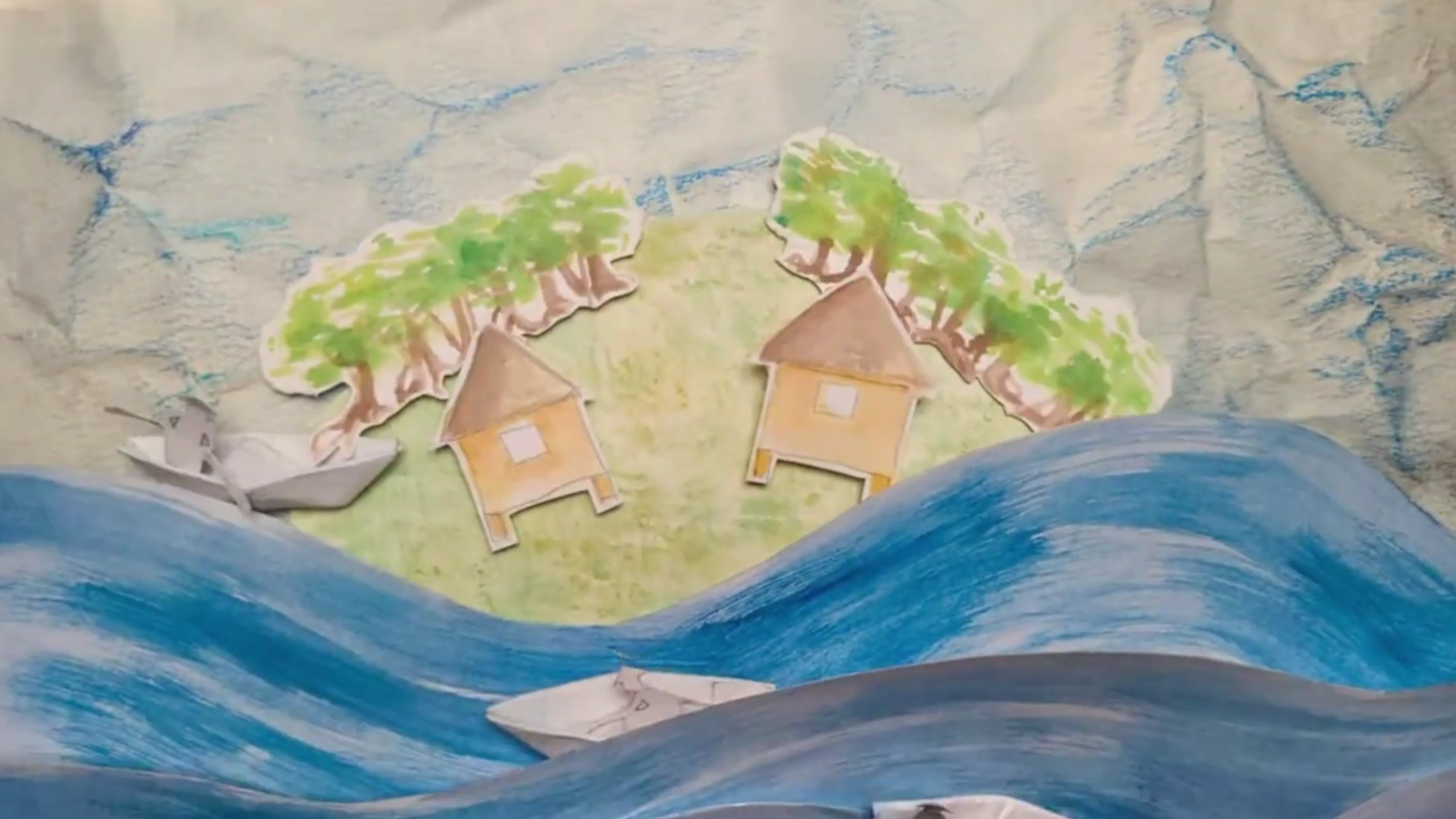
If the environment has reached a threshold of abuse, it will respond by bringing natural disasters to communities. No one is exempt from these disasters, as everyone can serve as victims brought by capitalistic greed that causes the environment to degrade. Natural disasters are now more than just destroying the environment, but also displacing communities and the memories along with them. Giomer Gulferic and Aveguel “El” Sinangote’s Prince of Tides position the folktale in understanding the innocence of children towards natural disasters.
Kiko and Lolo Kaloy converse about times past and also the uncertainty in moving away from where they used to live. These discussions show how the natural disaster has forced communities to be displaced and abandon their homes and the memories along with them. Kiko’s wish to fight the Prince of Tides shows his innocence in understanding the environmental crisis and initially sees it as antagonistic, as spaces and people special to him were taken away by the Prince of Tides.
Prince of Tides shows the need for balance and appreciation of the environment. No child would have to fear seeing their intimate spaces being taken by the wrath of nature. And no child would have to leave their home and friends if the environment were well taken care of. – Christ Dustly Go Tan
Film still from Lawod
Lawod
Dir. Bea Allado
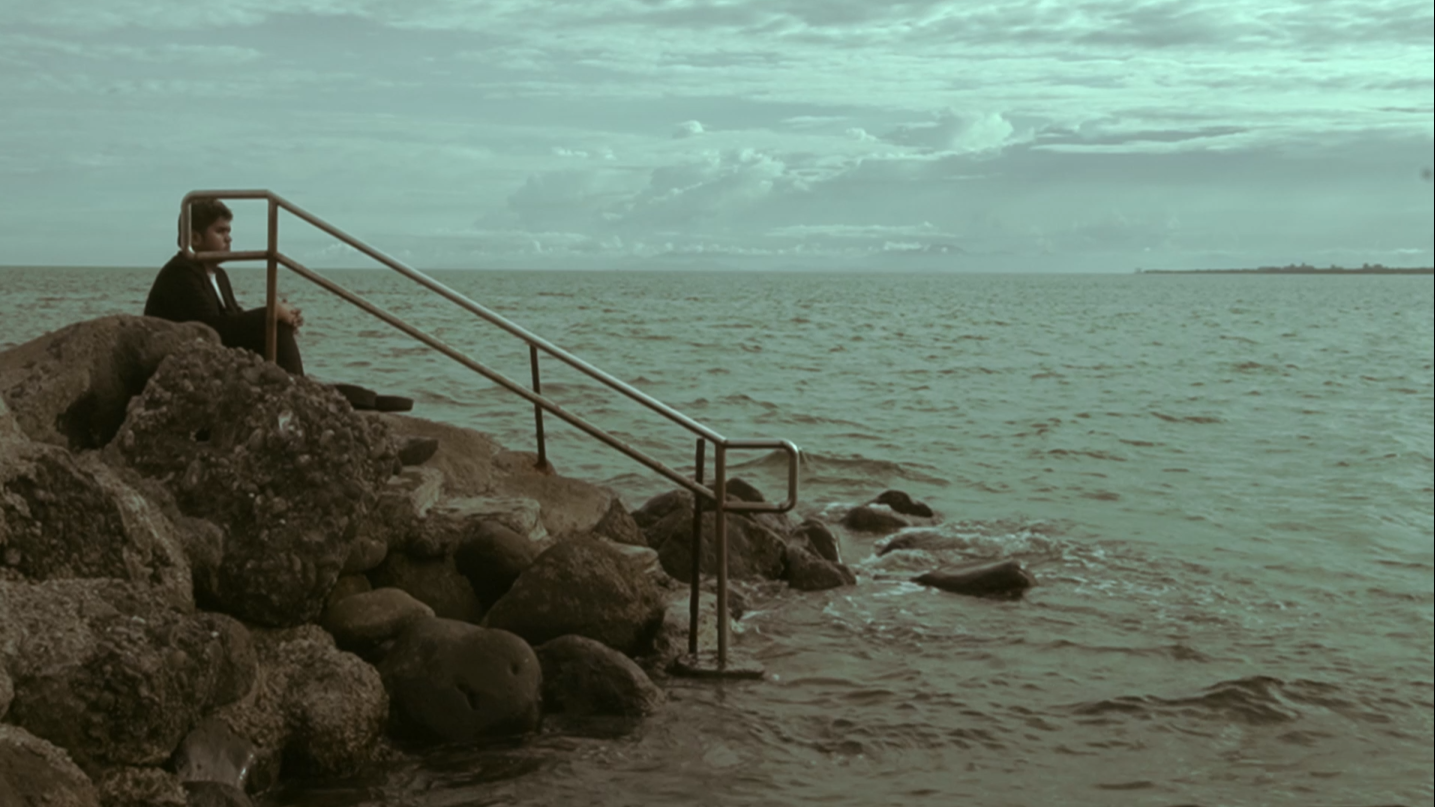
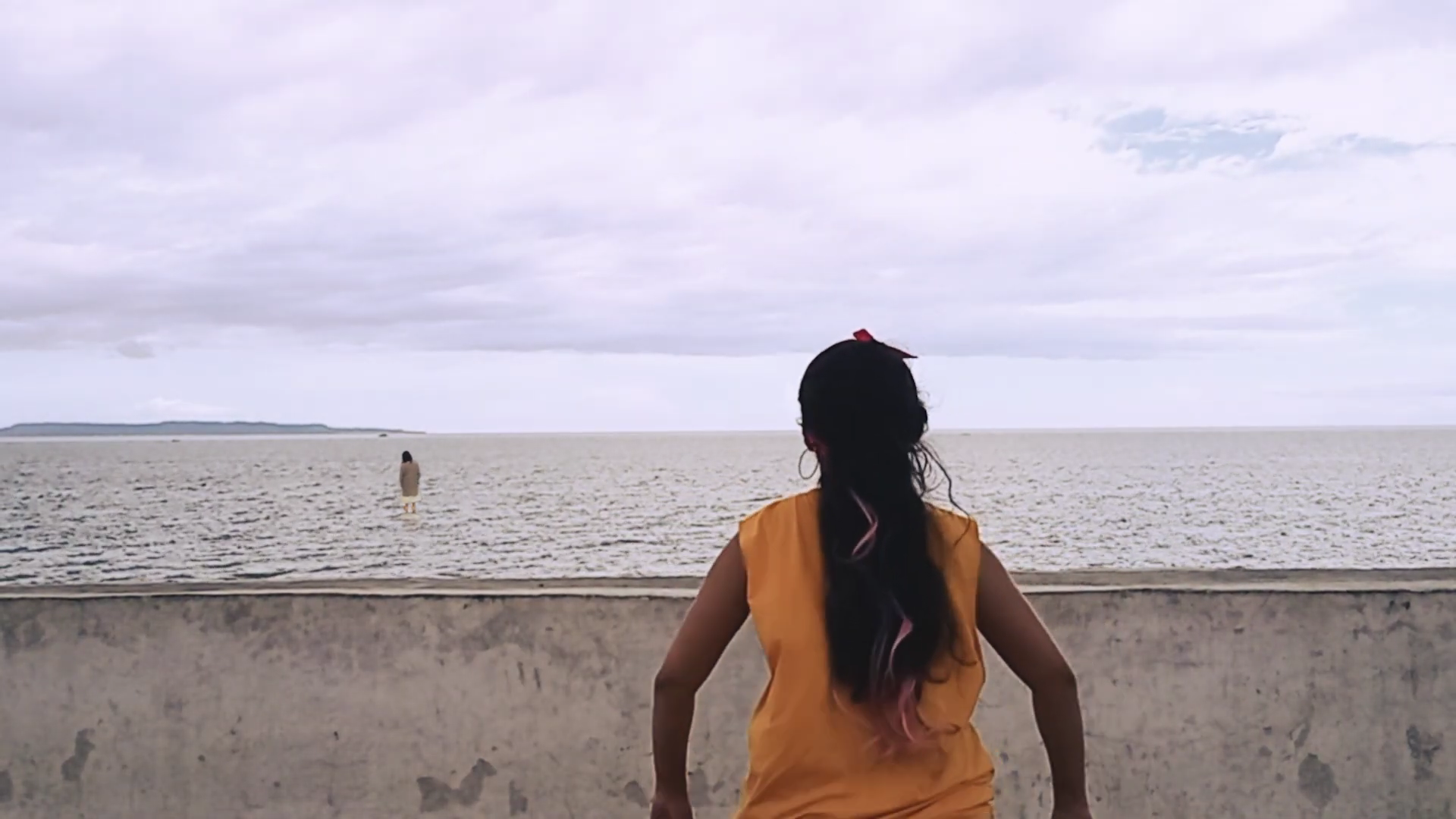
What is music to our ears can often clash with the voices of those we love. Director Bea Allado tunes into one of the challenges of a creative community bound by a traditional structure of perfectionism; an old dialect colliding with the modern language of progress. Lawod follows a young man at the shores of Davao, seeking solitude in the soothing notes of his instrument. The waves provide a sanctuary of white noise, but his mother insists on another sheet of music, one composed of demands and expectations.
Her jarring notes force the young man into dissonance, playing off-beat until his song becomes a cacophony. The conflict unfolds as a duet of clashing visions: a traditional love expressed through strict expectations against the yearning for a more compassionate melody. Yet for the mother, it is her own music that matters most.
For Director/Screenwriter Allado — the beach, often a place of rest, imposes two meanings; it is both a site of solace and a point of despair, mirroring the young man’s bond with his mother, where comfort and pressure, life and death, exist side by side.
Uneasy, symbolic, yet hopeful, Lawod frames creativity as a language gap between generations. Director Allado’s film does not linger on the music industry itself, but instead offers a reflection on mental health in parental relationships: do we stay bound to the rhythm of the past, or do we dare to turn the page to a new harmony? – Meckhan Tagarda
Screencap from When The Sun Sets Over Davao
When The Sun Sets Over Davao
Dir. Adrian Lo
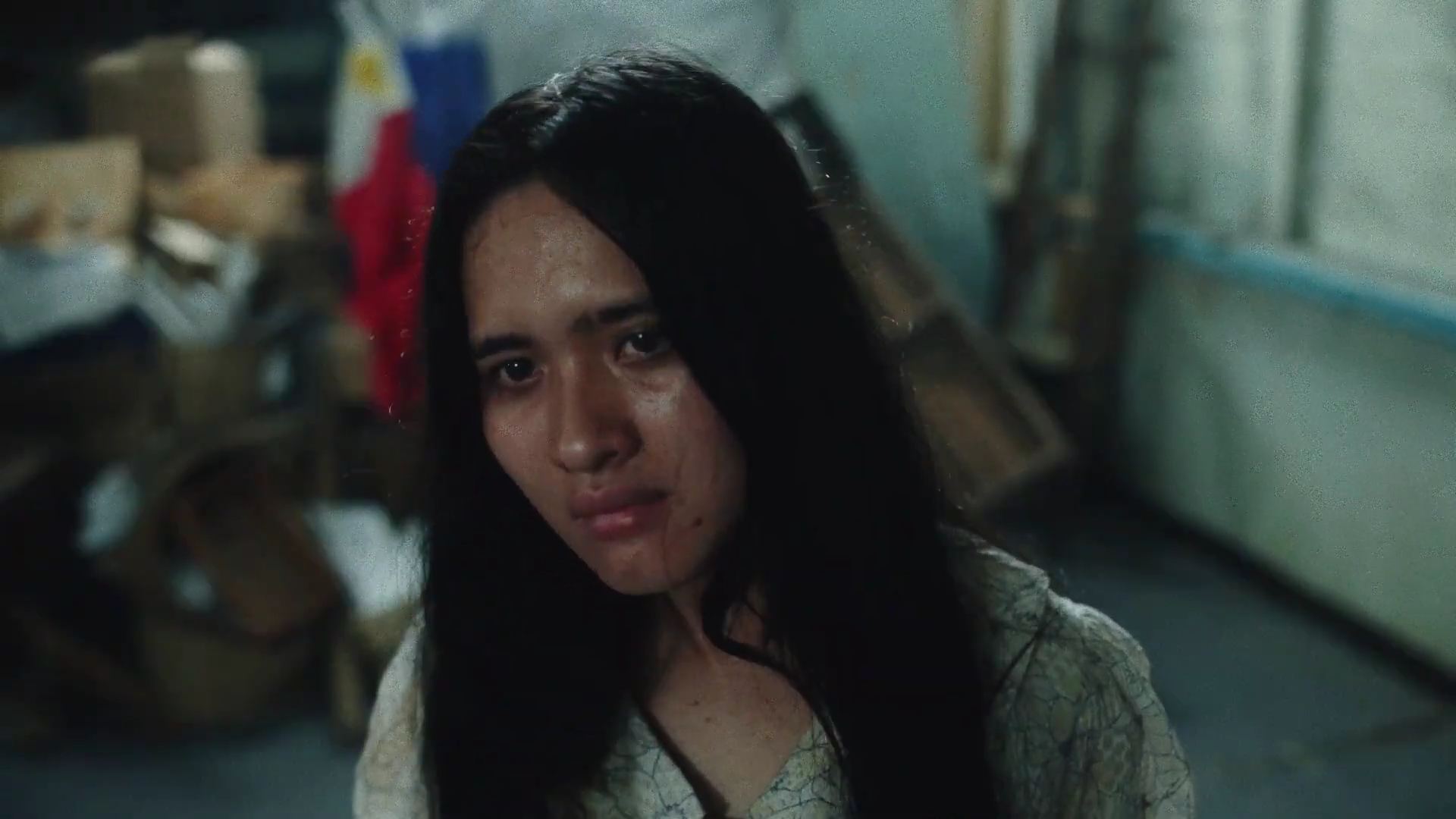
Popular comfort women narratives always described women as oppressed and helpless, as they are in each account in history. Speculating a form of women’s resistance allows possible narratives to reclaim identities. Adrian Lo’s When The Sun Sets Over Davao speculates on women’s resistance during the Japanese period through the perspective of a Tagabawa woman, a Mindanao native.
Women’s resistance is manifested by embracing their cultural heritage. She calls upon her goddess Mebuyan, and she empowers her to confront the Japanese soldiers, killing each one using her newfound powers. More than just confronting their colonial enemies, but also confronting fellow Filipinos who took advantage of Mindanao despite not being colonized since the Spanish period. Their confrontation also sparked a discussion on the historical violence Mindanao has faced throughout history.
When The Sun Sets Over Davao is more than a woman’s resistance story, but also a metaphor of Mindanao’s historical violence. However, narratives like this only live until today due to their bias against women in history; hence, speculation is a form of resistance. – Christ Dustly Go Tan
Screencap from Lila, Lingkud Sa
Lila, Lingkud Sa
Dir. Ethan David S. Gipanao
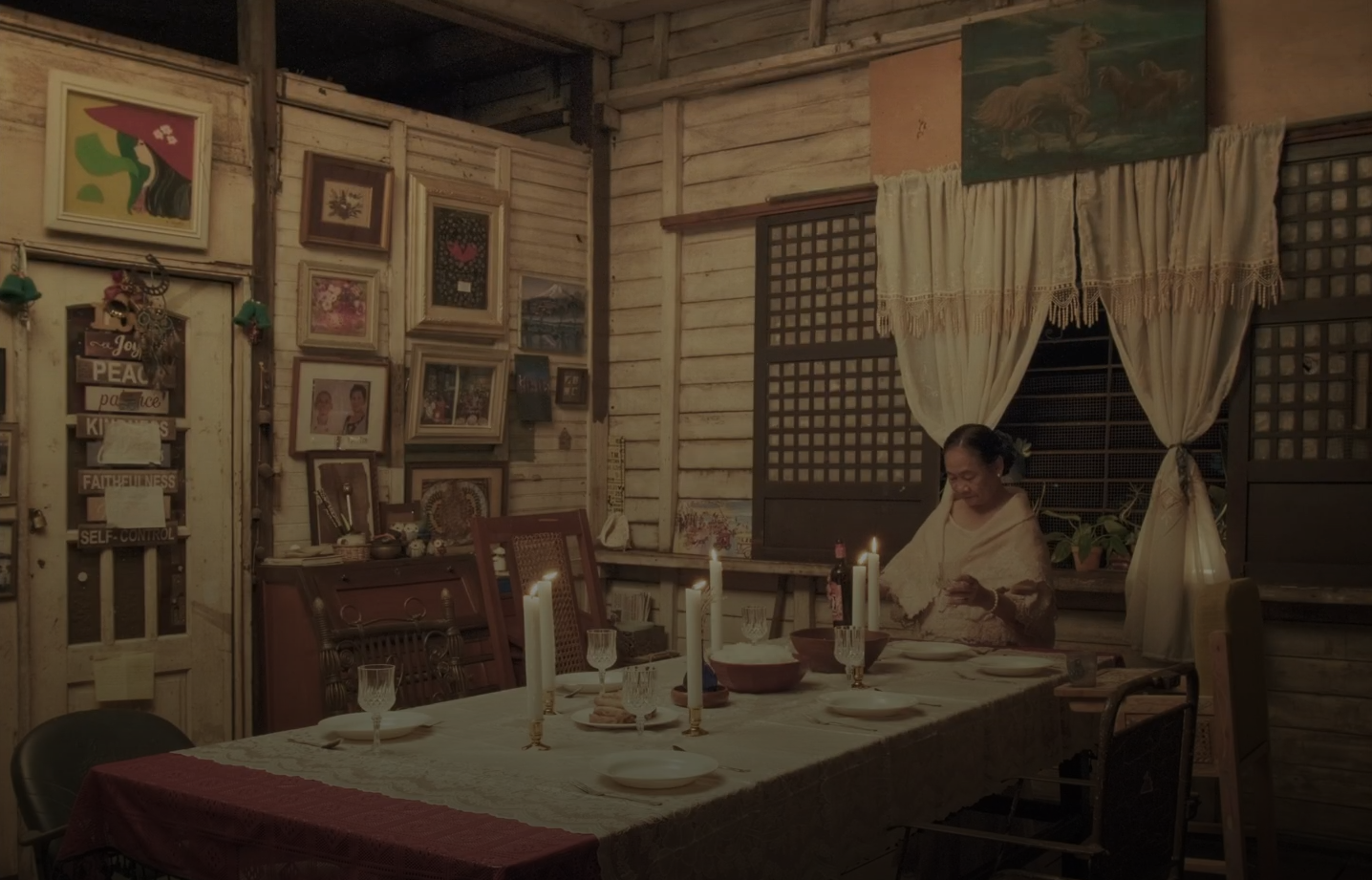
Different chairs, different characters, each carrying different chronicles of stories to share. Ethan David S. Gipanao’s Lila, Lingkud Sa symbolically portrays the life of an old woman, with her past lingering in every chair of her home.
This story explores themes of motherhood, grief, generational trauma, and solitude through the story of Lila, a 65-year-old widow living in an old house. The narrative begins with the quiet intensity of her emotions, drawing viewers into her world. As Lila faces each chair — from the table once set for six to a collection of mismatched seats — she revisits moments of care, loss, and inherited pain. Each chair becomes a vessel of memory, reflecting fragments of a past she had long refused to acknowledge. In the end, she sits upon a chair and hums a song, an evocative symbol of telling her story.
In essence, this short film resonates deeply with the realities faced by many elderly people, particularly in the Philippines. Senior citizens, especially women, often encounter challenges such as ageism, neglect, inadequate social welfare, and the isolation brought on by widowhood or living alone. By shedding light on these struggles, the film serves as an eye-opener, reminding us that the elderly should never be silenced or dismissed. More importantly, it calls for families and communities to strengthen their role in care and support, ensuring that stories like Lila’s are heard and honored. – Bea Allado
Screencap from Larsian?
Larsian?
Dir. John Sy
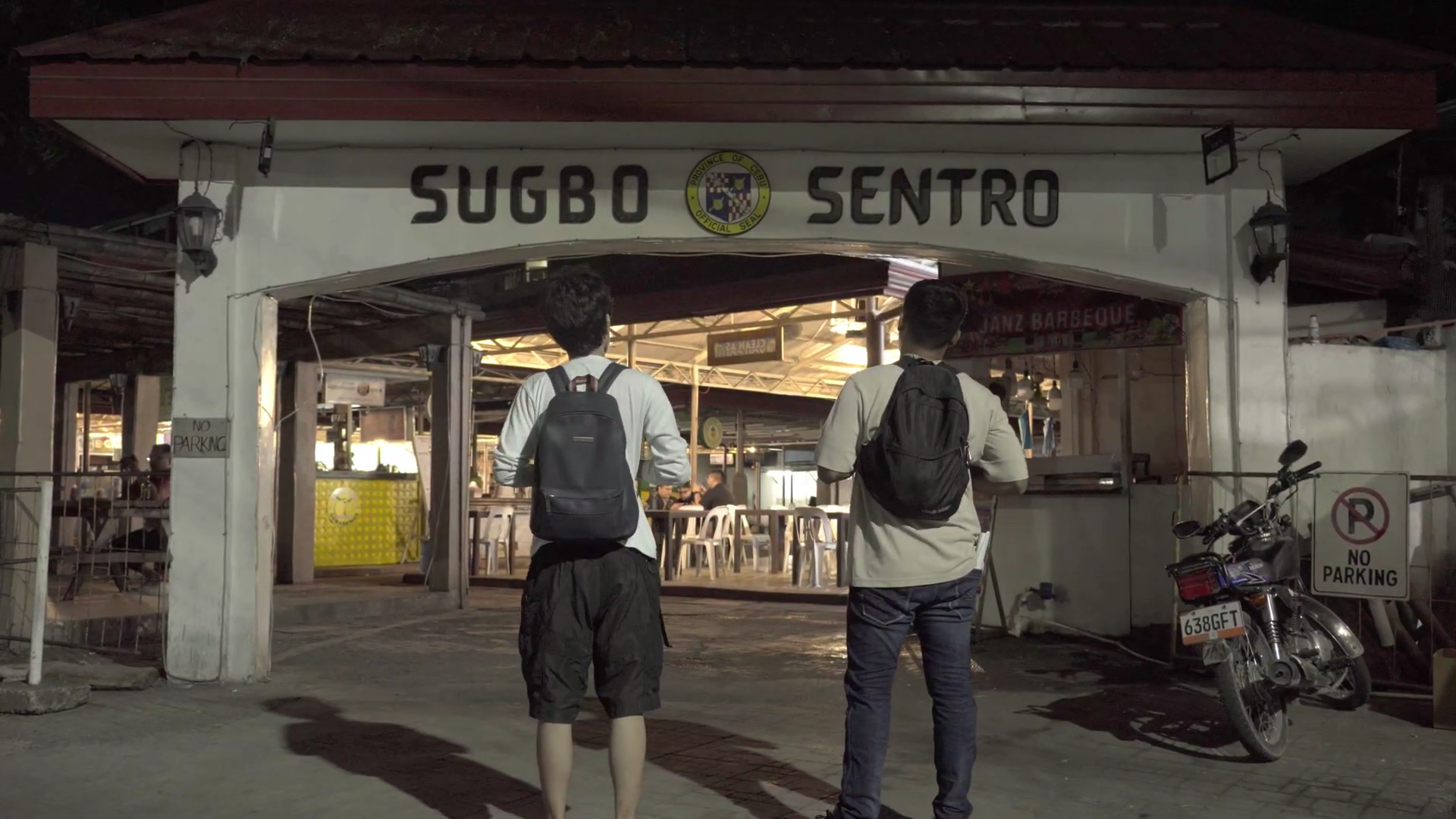
Spaces and places once shared by the community are now slowly being challenged to be displaced and removed by development aggressions. Once thriving communal spaces that are open to everyone and highlight local delicacies are now challenged by popular and foreign tastes. Only memories of those spaces are the only accounts that keep them from being erased from communal memory. John Sy’s Larsian? situates this narrative in Cebu City, where it also faces heavy development aggression.
The film is also an exploration of spaces in Cebu City that are faced with development aggression. Buildings and structures are now getting too unfamiliar, but they just can’t help but look at their presence as it was different back then. The social life and culture of the people are heavily affected by this demand for change in lifestyle. They discussed what Larsian was back then, and based on their conversation, it was a happy time for them. In the end, they didn’t find Larsian, as it was already displaced or had probably changed into a different place that didn’t replicate the same feeling one used to have. – Christ Dustly Go Tan
Screencap from Interogasyon
Interogasyon
Dir. Leonel Quillo Uno
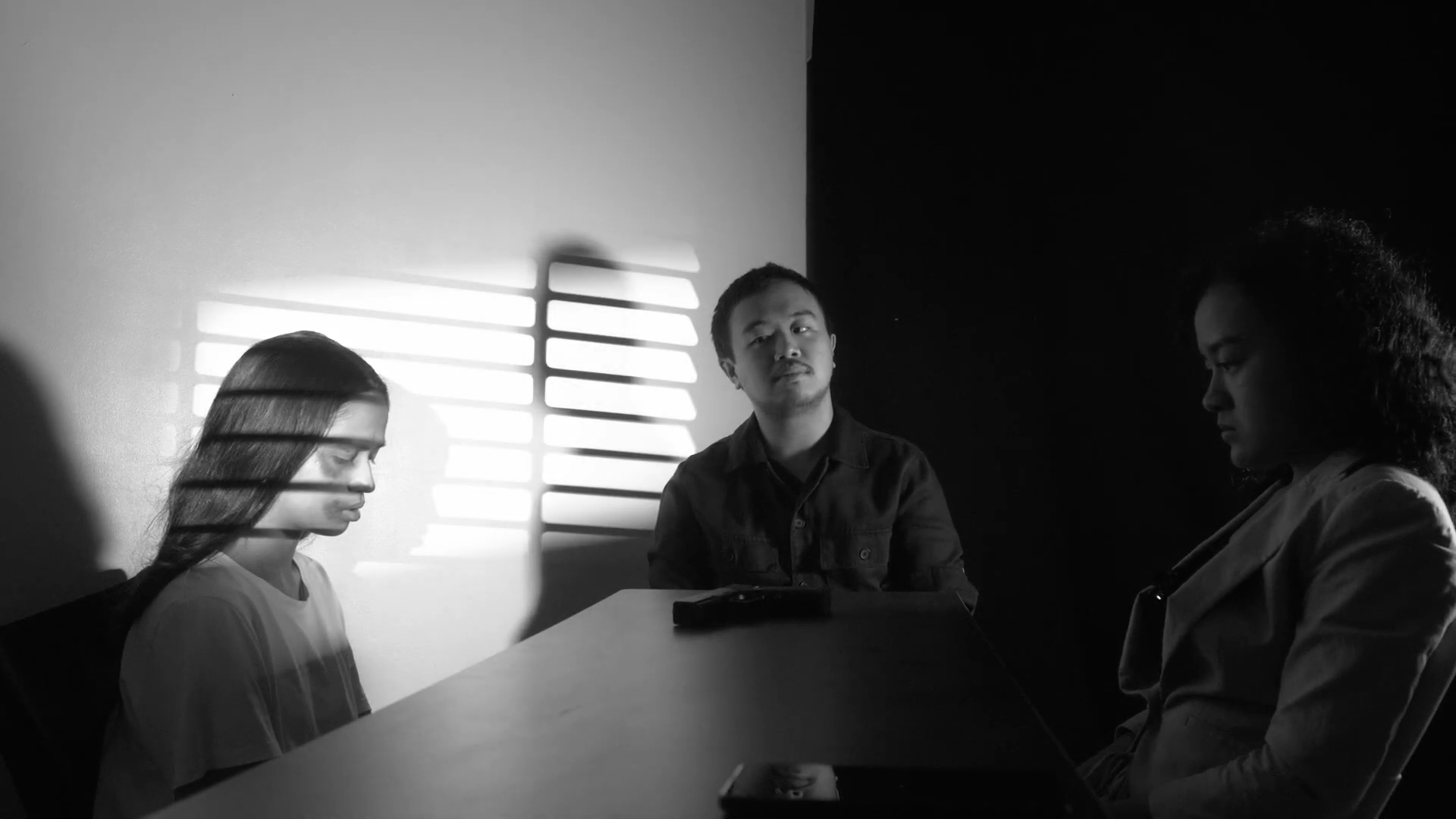
The black-and-white visuals don’t just set the mood; they press down on it, pulling the characters into a space where nothing feels clear. Without color, the room looks stripped bare, cold, and almost hostile, while the shadows suggest forces we never fully see. Even the gun feels less like a prop than a reminder of what’s at stake: authority, fear, and the urge to fight back.
The Accused never speaks, but her absence of words says more than any dialogue could. You feel her presence in the stillness, in the shadows on the wall, in the weight of everything she refuses to give away. Across from her, a young Lawyer tries to stand firm against an Interrogator who leans on intimidation and the gun itself to hold control. Their conflict isn’t about answers: it’s about power, who has it, and who dares to resist it. – Uno Arsoler
Screencap from Walk With Jesus
Walk With Jesus
Dir. Redh Honoridez
What would you do if, as an imperfect person, Jesus suddenly appeared — especially in today’s world? In this film, Redh Honoridez’s Walk With Jesus offers an amusing yet thought-provoking take by weaving a biblical narrative into a modern context. The story follows Maya, played by Agatha Libera, a struggling drug user hiding from a pursuing death squad. Just when it seems like all hope is lost, she encounters Jesus, portrayed by Doydoy Megriño, who invites her to walk with Him.
Through her walk with Jesus, Maya, who is lost, begins to see life in a new light. Despite her circumstances — and the inhumane approach of the death squad — the presence of Jesus becomes a symbol of mercy, compassion, and sacrifice. He stays with her, even sacrificing His life for Maya.
In the biblical context, Jesus was crucified to bear the penalty of humanity’s sins. Crucifixion, a common punishment in ancient times for crimes and transgressions, became the ultimate expression of His sacrifice. In this modern adaptation, Jesus takes the bullet for an imperfect woman, embodying the same selfless love and saving grace in today’s setting.
While the film carries satire, its essence remains profound: even though people are imperfect and sinful, Jesus willingly sacrificed Himself to save them. At its core, it reflects timeless themes of selfless love, redemption, and grace that transcend both time and culture. – Bea Allado
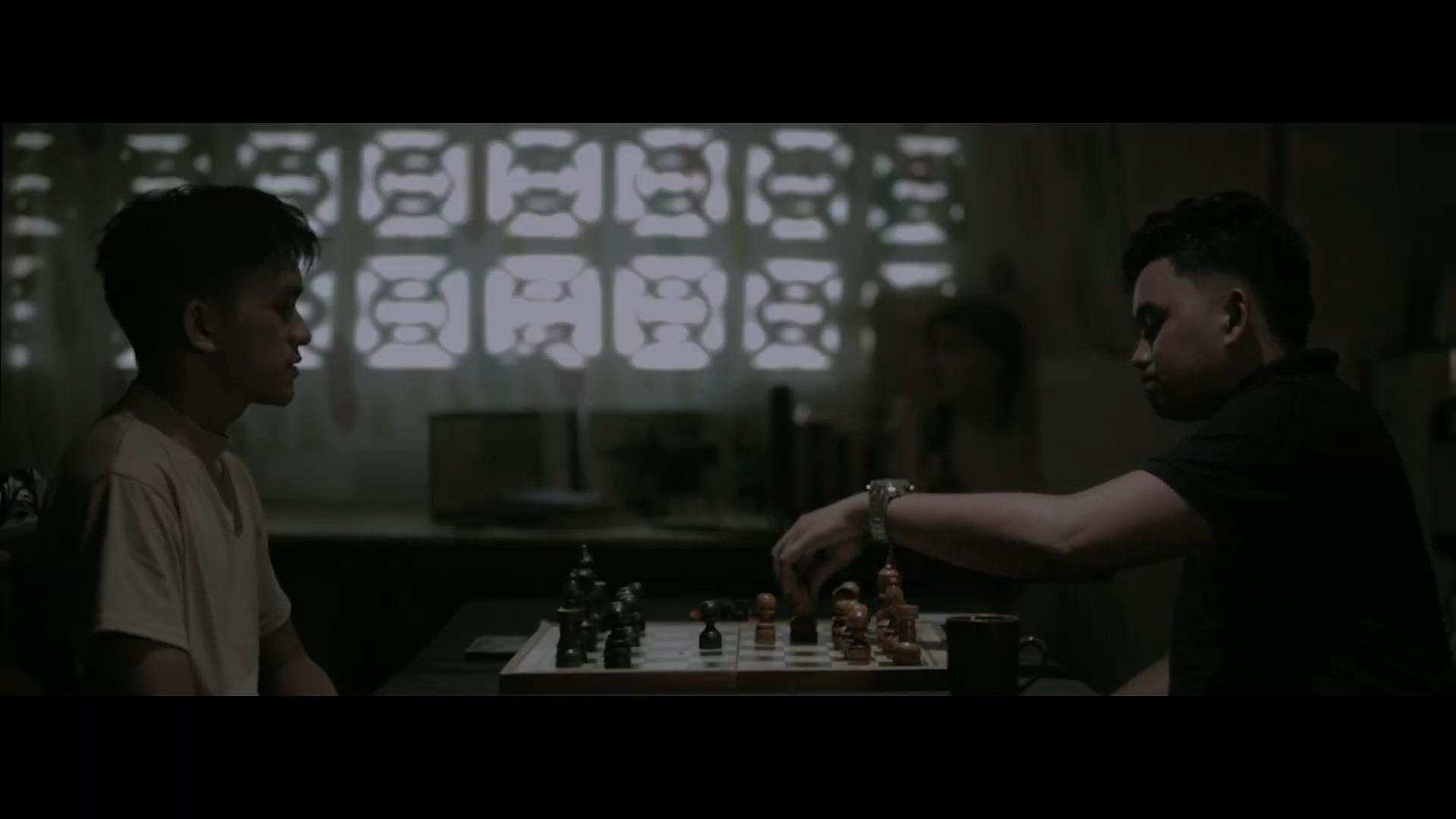
Screencap from Hulagway og Pagsagmuyo
Hulagway og Pagsagmuyo
Dir. Joel Leonardo Amacna
Joel Amacna’s Hulagway og Pagsagmuyo doesn’t need big moments to make an impact. It keeps things simple: a chessboard, two leaders, and a conversation about power, responsibility, and the weight of guiding others. Yet within this simplicity lies a powerful reflection on what leadership really means.
The film opens with Alexander the Great’s words: “I am not afraid of an army of lions led by a sheep; I am afraid of an army of sheep led by a lion.” It’s a striking reminder that leadership isn’t just about being strong: it’s about direction, influence, and how one voice can shape many.
The dynamic between the two leaders mirrors the chess game they’re playing. One leader takes the role of answering, defending his belief that leadership is about keeping order, even if it means not being liked. The other leader keeps questioning, challenging whether leadership has value at all when people feel disconnected from it. One pushes for stability, the other presses for meaning. Their exchange feels strategic, thoughtful, and at times confrontational, much like the careful moves across the board.
What stands out is that the film doesn’t force a conclusion. It doesn’t tell us which perspective is right. Instead, it leaves us with questions worth carrying: Is leadership about control? About the connection? About peace? Or is it all of these, held in fragile balance? – Uno Arsoler
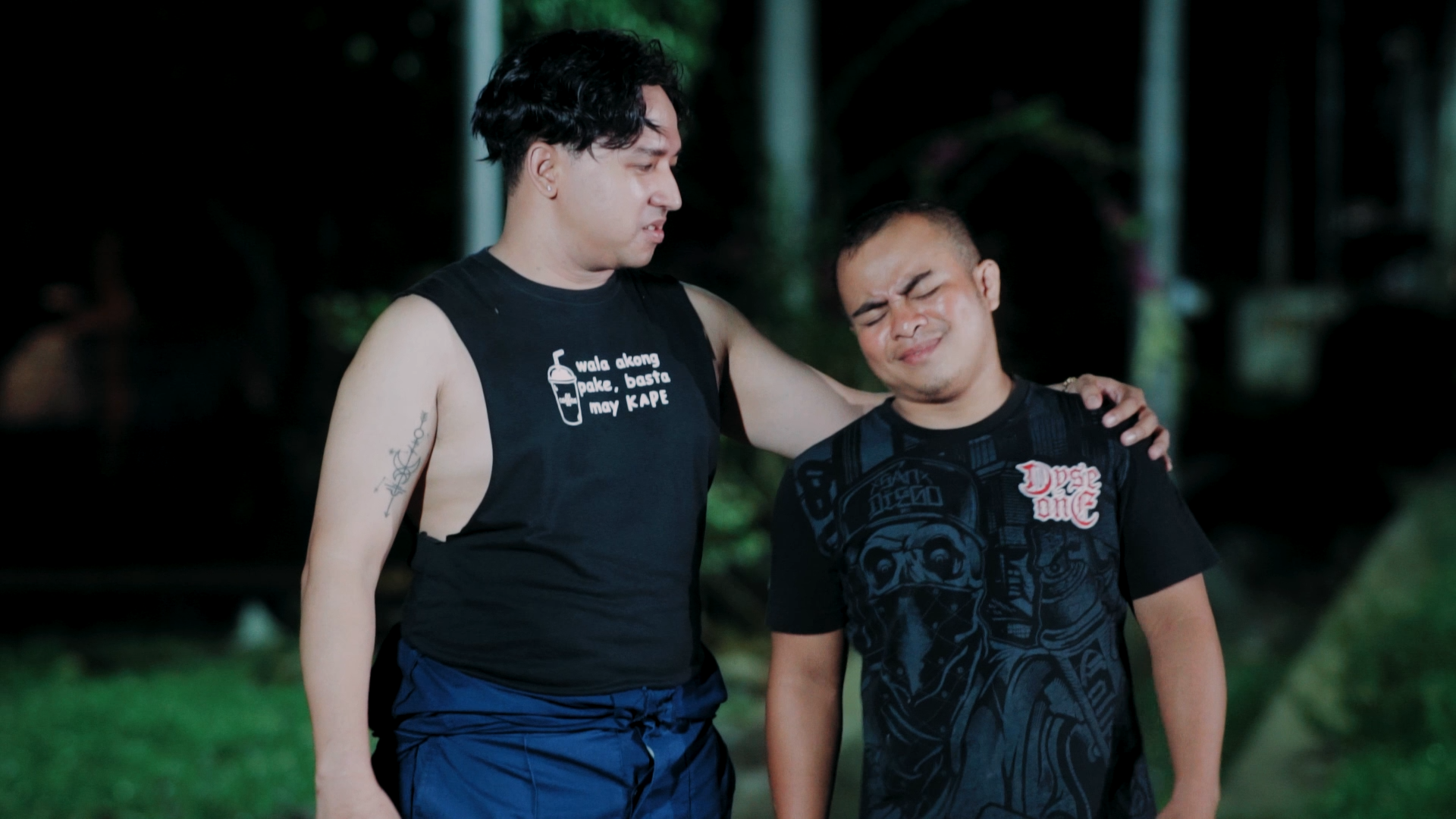
Screencap from Holi Sh*t
Holi Sh*t
Dir. Kez Fuentes and Marion Ybanez
Kez Fuentes and Marion Ybanez’s Holi Sh*t embraces the vulgar and the absurd to capture something painfully true about Philippine politics. On the surface, it’s about three drunk friends on a ridiculous quest to find a “sacred poop” said to grant wishes. But beneath the laughter and the drunken banter, the film holds up a mirror to the way Filipinos often find themselves both mocking and worshiping the same corrupt figures who ruin their lives.
The conversations feel familiar, like the kind you’d overhear at a sari-sari store during a late-night inuman. Loose, playful, sometimes nonsensical, but always circling back to politics. The name Tim Dungkan, a mayoral candidate who became rich off drugs, becomes the butt of the joke, but also the object of obsession. By turning him into the “sacred poop,” the film leans into the metaphor of malalaking tae, big sh*ts in power who are treated as if they’re untouchable, even holy. It’s crude, yes, but also frighteningly accurate.
What makes the film stick is how its humor and satire feel so rooted in the Filipino experience. We laugh because it’s absurd, but also because it’s real. Elections in the Philippines often carry this mix of spectacle and despair, where the choices feel like different shades of the same rot. The sacred poop becomes both a literal punchline and a symbol of how low we’ve allowed our expectations to sink, how normalized it feels to accept leaders who embody filth yet are treated like saviors.
By the time the laughter fades, the audience is left with an uneasy truth: the absurdity is not just in the story, but in the country it reflects. Holi Sht* makes you laugh, but it also makes you wonder if maybe the biggest joke is on us. – Uno Arsoler
Habagatan Shorts
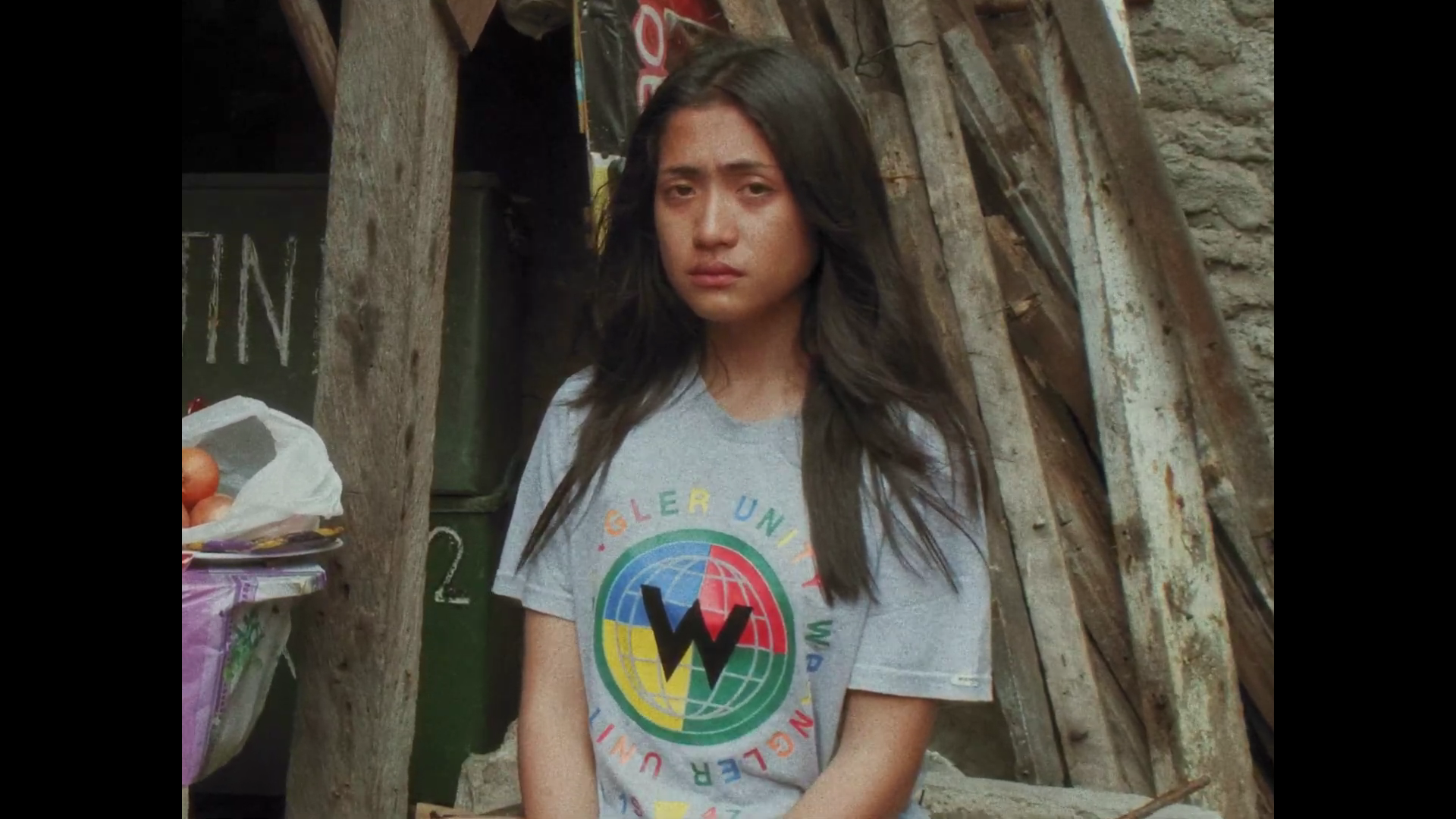
Screencap from Text FIND DAD and Send to 2366
Text FIND DAD and Send to 2366
Dir. Kent Michael Cadungog
The entertainment industry used to position itself in providing escapist entertainment coming from high-budget epics or top-billed stars on screen, away from the harsh social realities of life, so that they tend to temporarily distract the masses for a brief period of the day. With the lack of content to entertain the masses and the need to diversify attention, the industry now seeks other sources of entertainment, and this time, coming from the masses themselves, but in their own vision. Kent Michael Cadungog’s Text FIND DAD and Send to 2366 portrays this fetishization of the entertainment industry through an all-too-familiar parody format of Pinoy Big Brother.
Discussions throughout the film are focused on ideal and marketable representatives of the masses, representatives that will win over the hearts of the people because of how supposedly relatable they are to the public perception. Despite not being authentic representations of themselves in real life, they are forced to take on this identity to sell themselves and win the masses. They even have to screen individuals and find them if they are better fitted for the ideal representation of the masses, and if they’re not, they’re molded into a fake person. This also makes the portrayal of poverty stories questionable, just to make themselves relatable, all for their own capitalistic interest.
Text and FIND DAD and Send to 2366 exemplifies this cycle of fetishization for the sake of its spectators to continue supporting their capitalistic interests. – Christ Dustly Go Tan
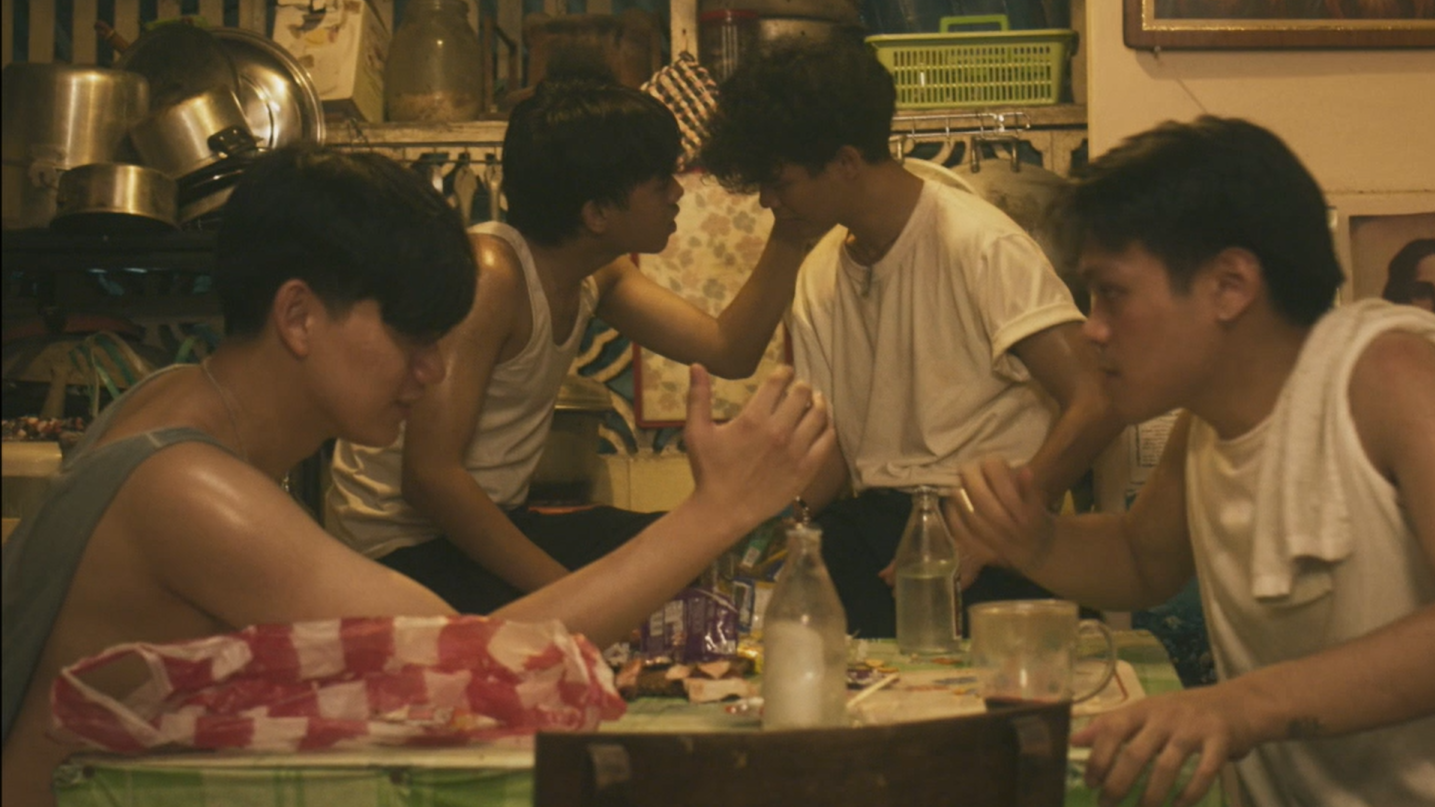
Film still from Ang Halikan sa Water Fountain
Ang Halikan sa Water Fountain
Dir. Clyde Cuizon Gamale
In a society bound by conservatism, can two male friends share an intimate friendship? Is it simply a bond of brotherhood, or can it grow into something more? Clyde Cuizon Gamale’s Ang Halikan sa Water Fountain delivers his film with sensitivity and insight, crafting a narrative that resonates deeply within the LGBTQ+ community in the Philippine setting.
The film captures authenticity through its immersive storytelling, reflecting the everyday camaraderie of Filipino high school boys after class. Maki, played by Timothy Morales, expresses his unspoken affection for Kaloy, portrayed by Jeremy Mayores, not through words but through subtle gazes, fleeting gestures, and quiet moments of closeness. Their jokes, playful touches, and brotherly banter carry a deeper meaning, hinting at emotions left unsaid. As the narrative unfolds, it challenges misconceptions about gender expression and the pressures of hypermasculinity during reckless nights of drinking with friends.
The tension between Maki and Kaloy slowly builds — never fully spoken, yet lingering in every shared glance. This culminates at the water fountain on campus, where a tender, ambiguous moment reveals their connection, leaving both the characters and the audience suspended between friendship and something more.
By the film’s end, we are left to wonder: was there truly a kiss at the water fountain, or is it a metaphor for the unspoken struggles of queer identity? In a society where acceptance remains a challenge, stories like this urge reflection and empathy — opening doors to conversations often silenced in conservative cultures.
And as we honor this film, we also mourn. Timothy Morales, who brought Maki to life with such grace, left us far too soon. His passing, just before the 5th edition of the Oroquieta Film Festival screening, makes his role even more poignant — a lasting reminder of his artistry and contribution to Philippine cinema. – Bea Allado
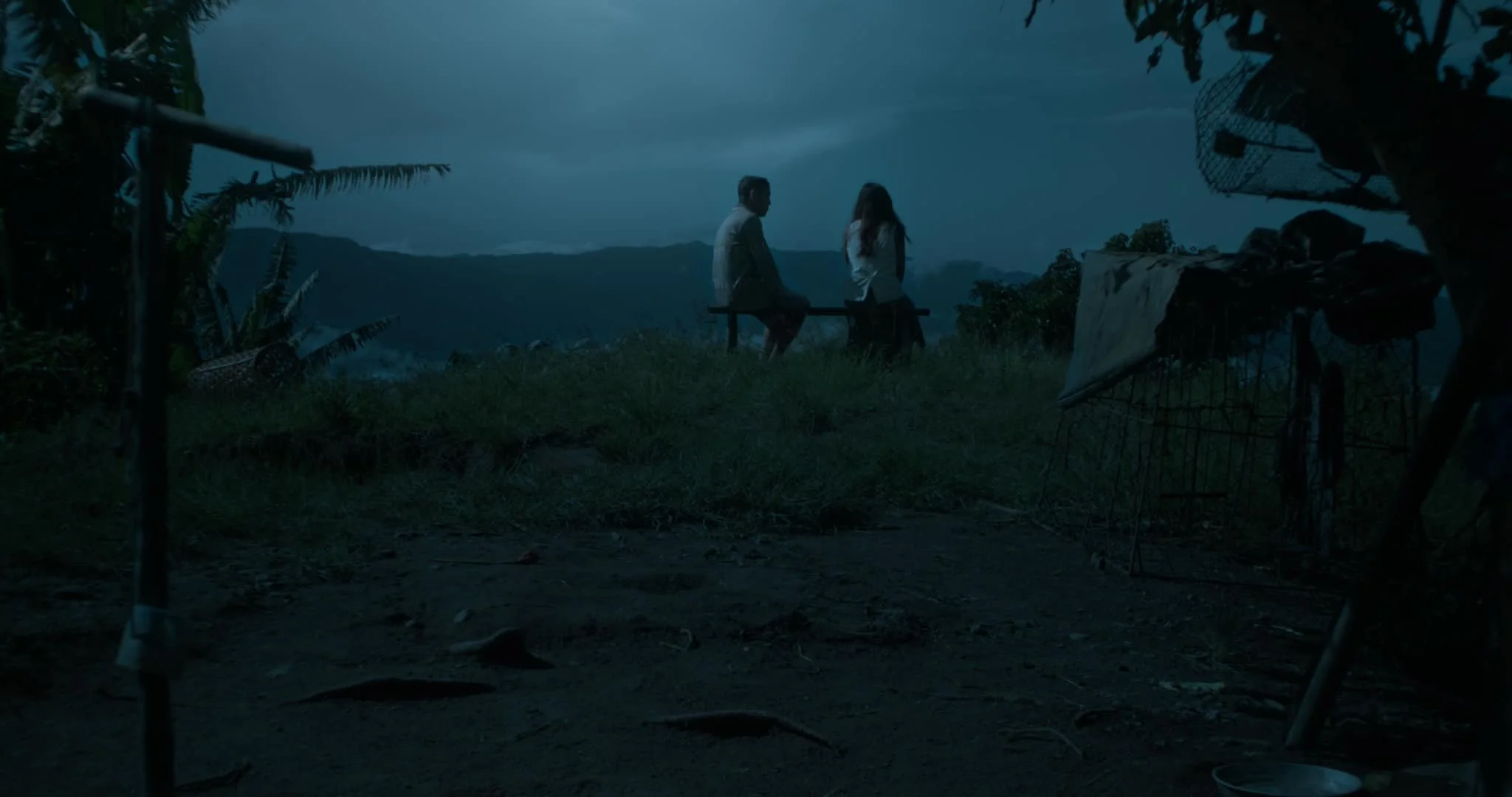
Film still from Sa Ilalum sa Balabal sa Alitaptap
Sa Ilalum sa Balabal sa Alitaptap
Dir. by Juvy Ann Clarito
The land, with its breathtaking scenery, appears pure and untouched—preserved through the care of the ancestors. Yet within its shadows dwells a hidden threat: those who wish to seize what has long been protected. Juvy Ann Clarito’s Sa Ilalum sa Balabal sa Alitaptap presents her own film with compassion, shedding light on the pressing issue of land grabbing, especially within a regional context that gives minor voices space on a major platform.
As the story unfolds, Joy — portrayed by the film’s writer and director, Juvy Ann Clarito — emerges as a quiet yet determined guardian of their ancestral land. Opposing her is Rommel, played by Doydoy Megriño, who violently pressures her grandfather into selling their property. The act of protecting their land is depicted as both mythical and mysterious. The film closes with a satisfying scene of Joy smoking alongside her grandfather, a gesture with layered meaning.
This regional short film serves as a wake-up call to the urgent issue of land grabbing. Beneath the enchanting beauty and serenity of the land lies a hidden darkness that must be confronted. Now more than ever, the ancestral land must be protected and preserved — not only for the present but for generations to come. The film also urges vital conversations about justice, identity, and the rights of those bound to the land. – Bea Allado
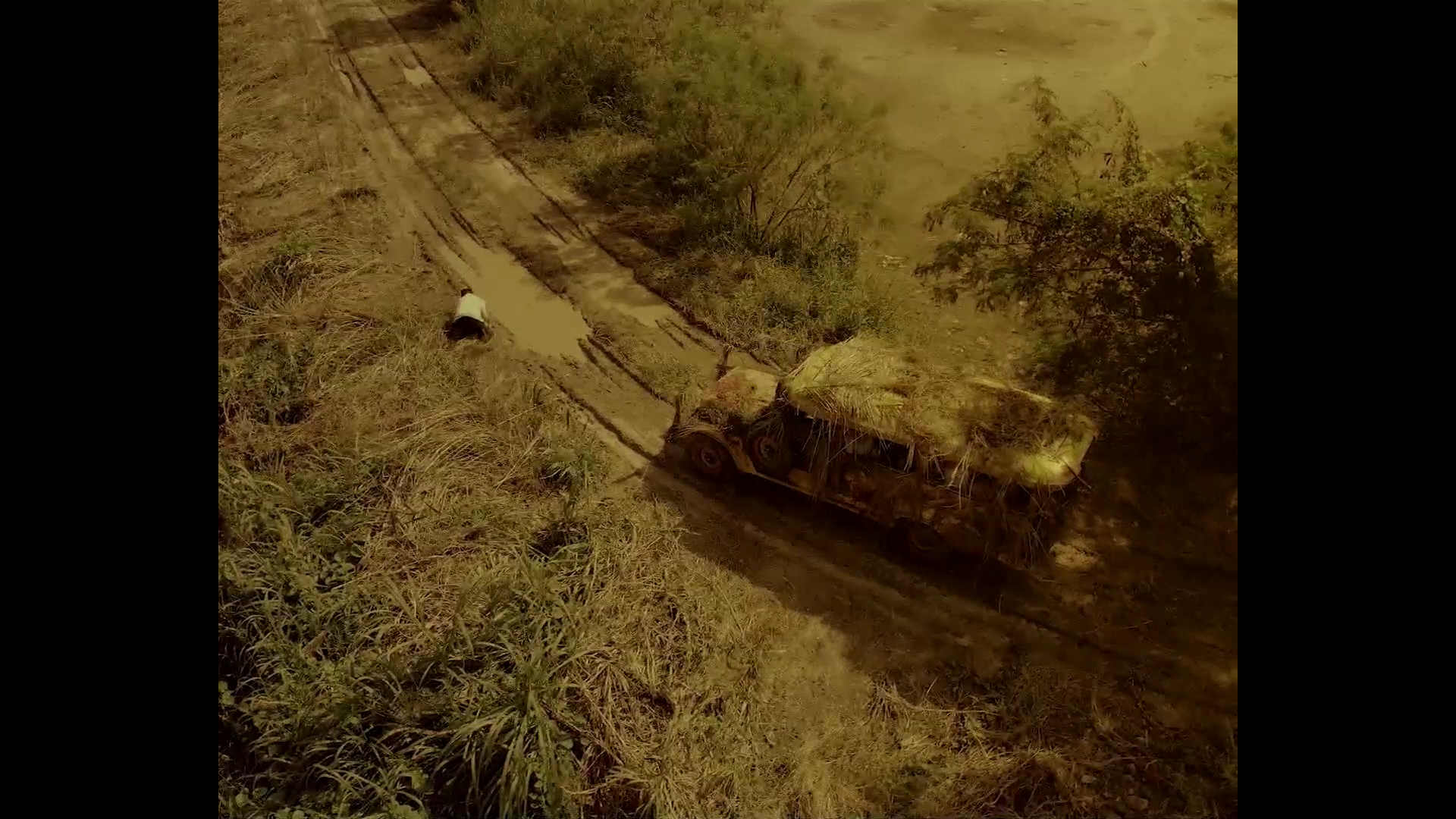
Screencap from PARAPO
PARAPO
Dir. Jhonny Bobier
when people hear “Philippines,” what often comes to mind is diversity, yet alongside it are the country’s deeply rooted societal issues. Director Jhonny Bobier confronts these realities through a visual allegory, a silent short film centered on the country’s most iconic vehicle — the jeepney. Once a symbol of ingenuity and everyday resilience, the jeepney here becomes a stage that gathers Filipinos of different kinds, exposing the fractures of a society weighed down by harmful cultural practices.
At the center of the story is a dilapidated jeep traveling without direction across an empty landscape. The driver, blindfolded, accepts not money but organisms as fare, an image that underlines corruption and the devaluation of human life. Inside the vehicle sit passengers embodying various social realist allegories, from indifference and complacency to exploitation, yet none take notice of the danger they are in. Only the child, seated at the deadliest part of the jeep, begins to cry. This moment deliberately breaks the rules of silent cinema, but in doing so, it strikes at the heart of Bobier’s intent: to jolt the viewer with the urgency of the issues often left unspoken — “PARAPO”
The film concludes on a bittersweet note. A salute to the Philippine flag briefly sparks hope, only to dissolve into the somber weight of the national anthem’s final line. This ending embodies what Bobier calls the “deadliest culture” of the nation: a collective defeat, where the spirit of bayanihan is stifled before it can truly shape the bayan the people deserve.
PARAPO is unsettling, symbolic, and uncompromising. By turning a national icon into a vessel of critique, Bobier not only highlights the failures of society but also asks whether Filipinos will continue riding along blindly and silently, or finally reclaim their voice for their own future. – Meckhan Tagarda
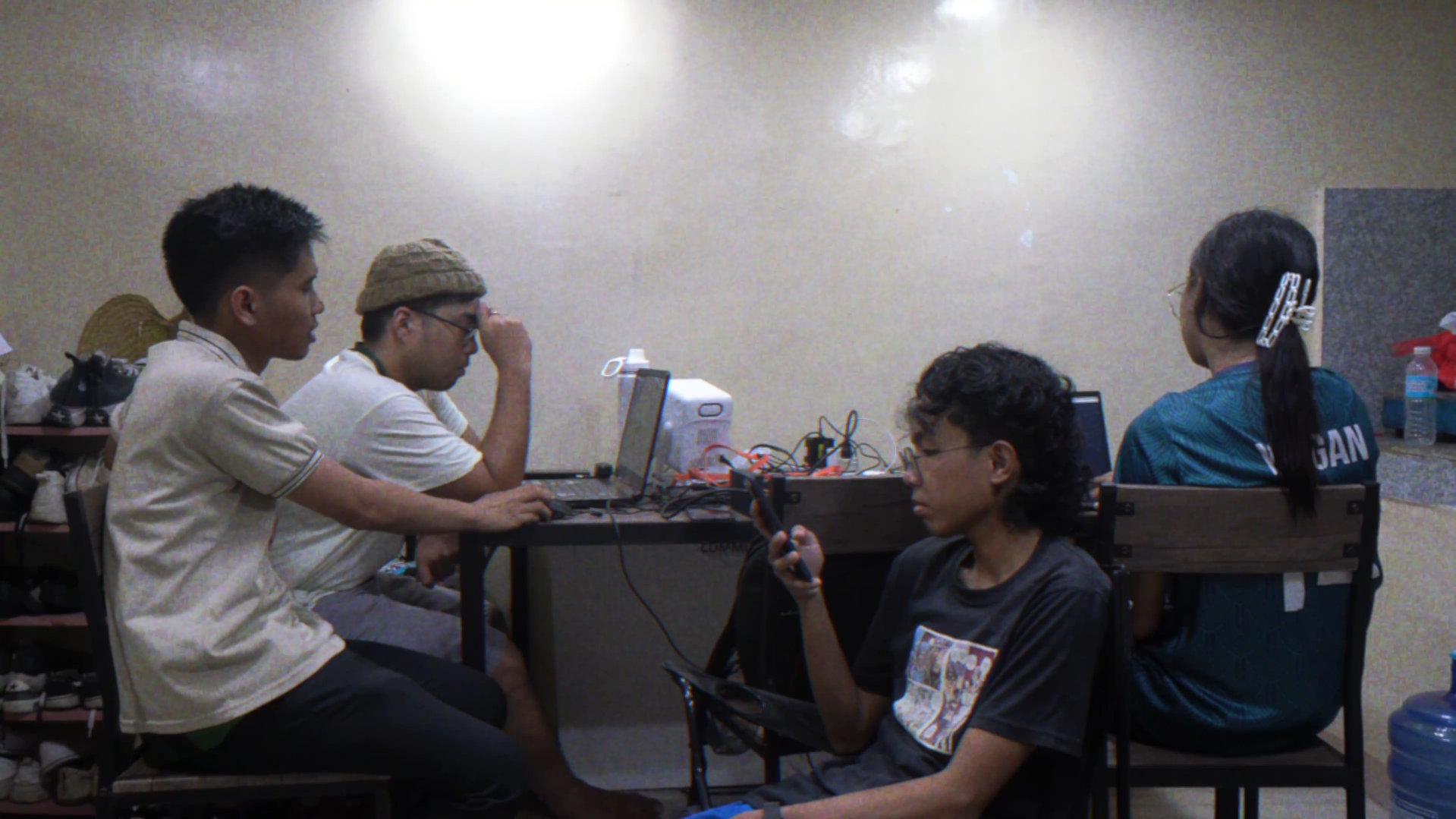
Film still from Asa ang mga salida sa Leyte?
Asa ang mga salida sa Leyte?
Dir. Linus Masandag and Lebron Ponce
The mission to find the films of Leyte exposes the land shaped by war, faith, and resilience through the lens of cinema. In a province where the Waray-Waray language was born, the meaning itself, “none,” yet embodies “anything but empty,” the film reflects on the scattered yet enduring fragments of Leyte cinema.
Through conversations with local filmmakers, the short documentary pieces together the history and fragile present of the Eastern Visayas film scene. What emerges is both a portrait of passion and a lament on the lack of support for the arts in the region.
Masandag and Ponce guide us through faded cinemas, unarchived reels, and long-forgotten storytellers — an experimental, meta-documentary that questions what it means to define a local cinema.
The film ends on a note of cautious hope: that Leyte, with its history and its progressive voices, continues to shape a cinema defining its cinéma vérité. – Meckhan Tagarda
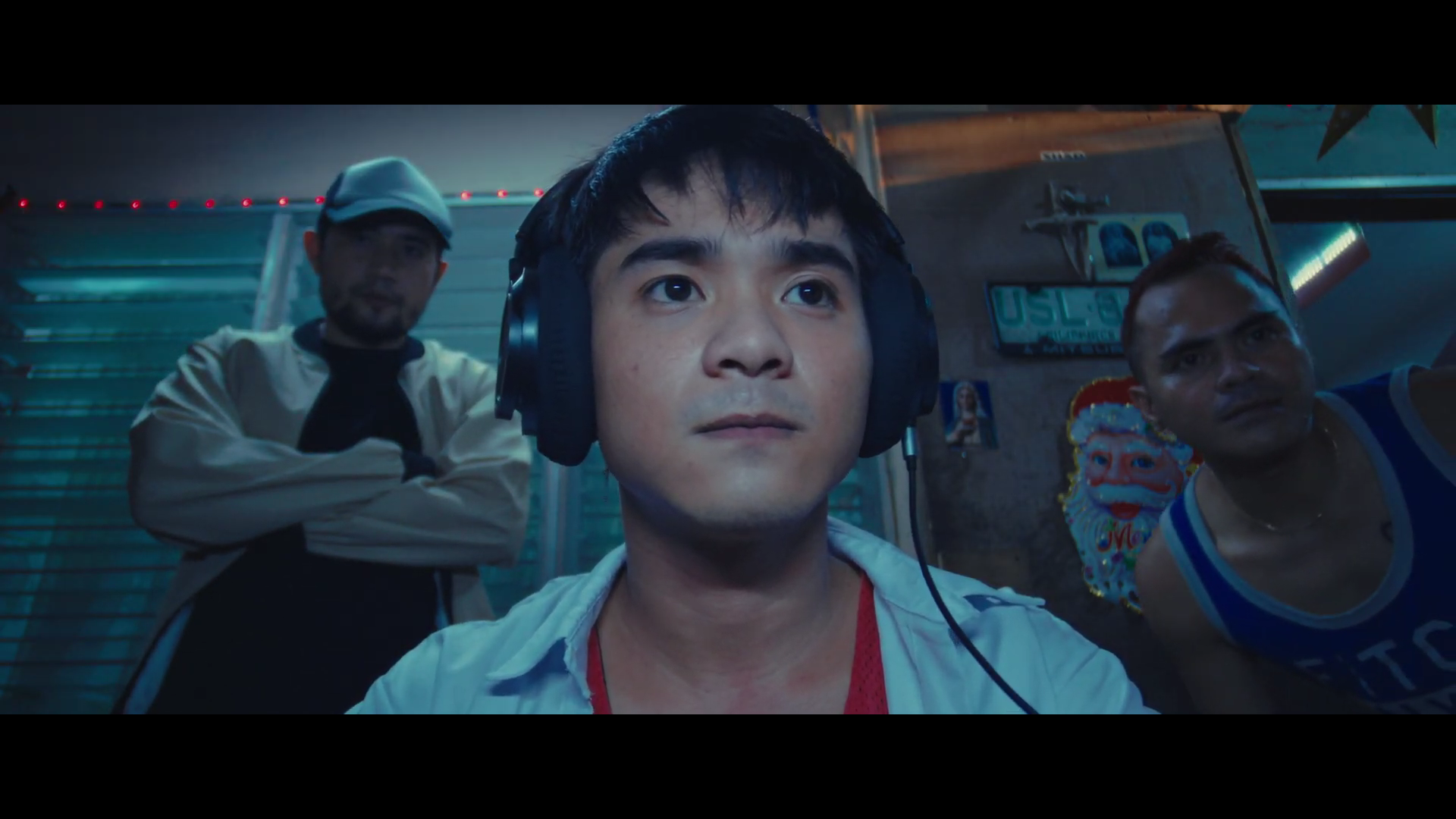
Screencap from G!
G!
Dir. Jose Andy Sales
Esports culture had its share of negative limelight with dominant narratives centering on gaming addiction among the youth and its deemed irrelevance towards its more physical counterpart, which had more support from institutions. Because of these narratives, this has shaped household and public perception of how they view this culture, and eventually affects how they communicate to the youth who also participated in this culture. Jose Andy Sales’ G! offers a narrative that there is still a life and future in their chosen passion.
Mateo is determined to prove a possible future in pursuing esports as a career despite his disapproving father. Coming from their background, there is sense in his father’s words, as pursuing this kind of career also means a shift in the direction he planned for him. But what matters is that Mateo is driven by his passion for esports, that he is willing to make the most out of it, and is aware of the risks he is about to take for pursuing this kind of passion. G! tells a story with a heart for those who are willing to try for their passion in life. – Christ Dustly Go Tan

Screencap from the night is drunk when we suffer
the night is drunk when we suffer
Dir. Rian Simon Magtaan
The strength of the film lies in its voices. The mother speaks plainly, recounting years of sacrifice, betrayal, and survival. Her words are rooted in the everyday struggles of many Filipino mothers: selling food on the streets and finding strength despite heartbreak. The son, by contrast, narrates in poetic fragments, transforming memory into metaphor: rice steaming like snow, silence as war, food as both nourishment and burden. This contrast, the mother’s blunt truth and the son’s lyrical remembrance, reflects the way trauma and resilience are passed down, lived in the present yet remembered as a story.
The film doesn’t separate private struggle from national reality either. The mother’s candid remarks about her circumstances, work, poverty, and Duterte’s presidency reflect the way politics seeps into daily life in the Philippines. In a society where migration is often seen as the path to survival, and where economic hardship shapes family dynamics, her words feel both personal and collective.
What makes the film so human is its refusal to resolve these contradictions. The mother forgives yet still suffers; the children inherit both wounds and love; silence hurts but also binds. The final moment, the son saying “cut,” the mother chuckling through tears, captures this duality. It’s a release, however brief, and a reminder that Filipino families, despite hardship, still carry humor, resilience, and a capacity to endure. – Uno Arsoler
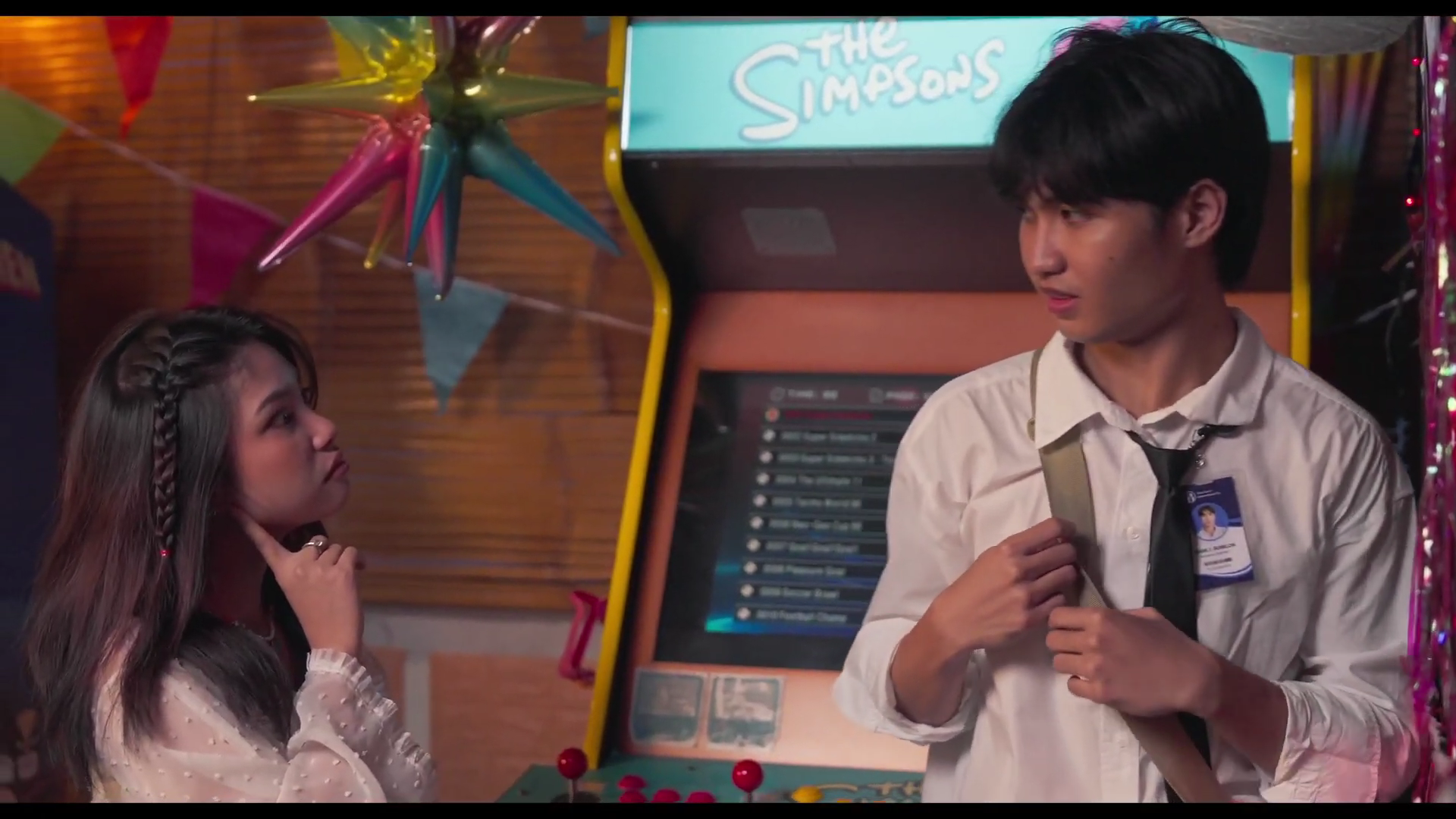
Screencap from Daog/Pildi
Daog/Pildi
Dir. Johannes Tejero
Another addition to the esports narrative, but this time focusing on relationship and gender dynamics. Esports culture is more than just the gaming competition, it also creates a community that caters towards it, and eventually, mutual bonds and relationships are formed, and will spark into something more. Johannes Tejero’s Daog/Pildi offers this narrative on how esports is positioned in everyday life and eventually in each other’s future.
How the esports culture became the catalyst of their relationship, and at the same time, how it also became the struggle of their relationship, allows depth for these kinds of stories. Esports has now intersected into the everyday lives of people, and it is not easy to avoid it. There are still dominant narratives centering around esports culture that still affect the community that enjoys this kind of culture, but some still flourish and eventually form special kinds of relationships, such as how Mark and Lexie started and ended in the film.
Another highlight is Lexie’s resistance to the expectations of her gender and how her presence is initially not welcomed due to stereotyped expectations, but eventually she resists and makes a name for herself. Daog/Pildi gave esports culture depth, and it should be taken seriously, as other cultures and relationships are. – Christ Dustly Go Tan
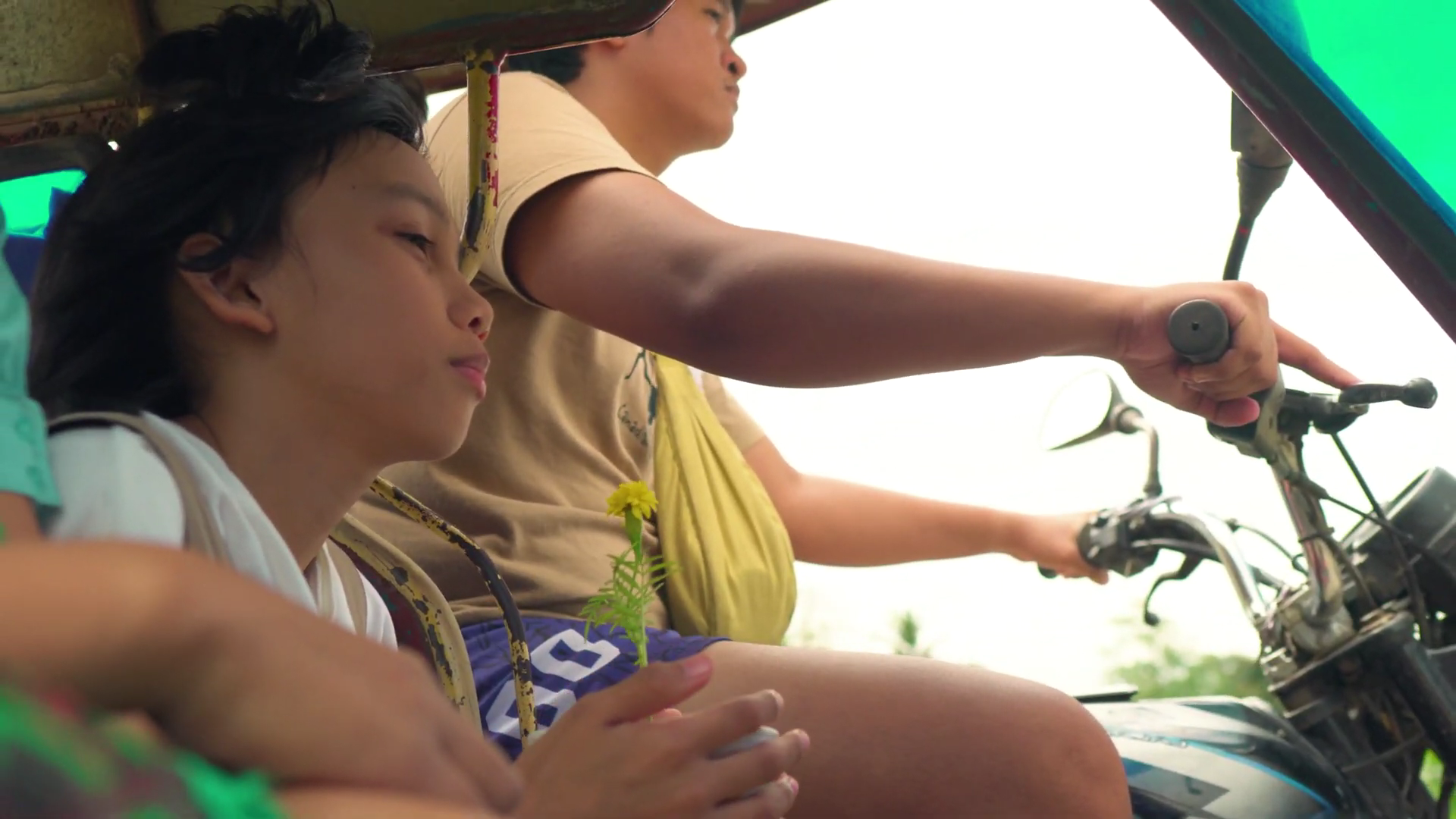
Screencap from What The Flowers Don’t Bloom
What The Flowers Don’t Bloom
Dir. Rafael Christian Soquiña
Grief is very complex, and when put into the perspective of children, it makes understanding their pain more difficult. Children form special bonds with someone, and the idea of them passing away is quite an overwhelming process. They cling to their last memories or objects they associate with as a way to connect to the ones who have passed away. Some things just can’t be explained and solved overnight, especially if they don’t know how to process it. Rafael Christian Soquiña’s What The Flowers Don’t Bloom offers a story on how children process their grief.
It’s difficult to tell children to just move on. especially if they cling to someone who holds dear to them. It’s not even easy to fake it, like how adults used to just move on with life. Children need the space and time for them to process their grief, just like how Inggot clings to the flower pot his grandmother gave to him and promised to take care of it. Simple promises like this are avenues for children to bond with those who have passed and still allows them to connect with them. He still needs to move on from his grief to continue with life, but he should be provided the support he needs to do so. What The Flowers Don’t Bloom tells us that moving on is not that easy and fast, and sometimes, it needs time to do so. – Christ Dustly Go Tan
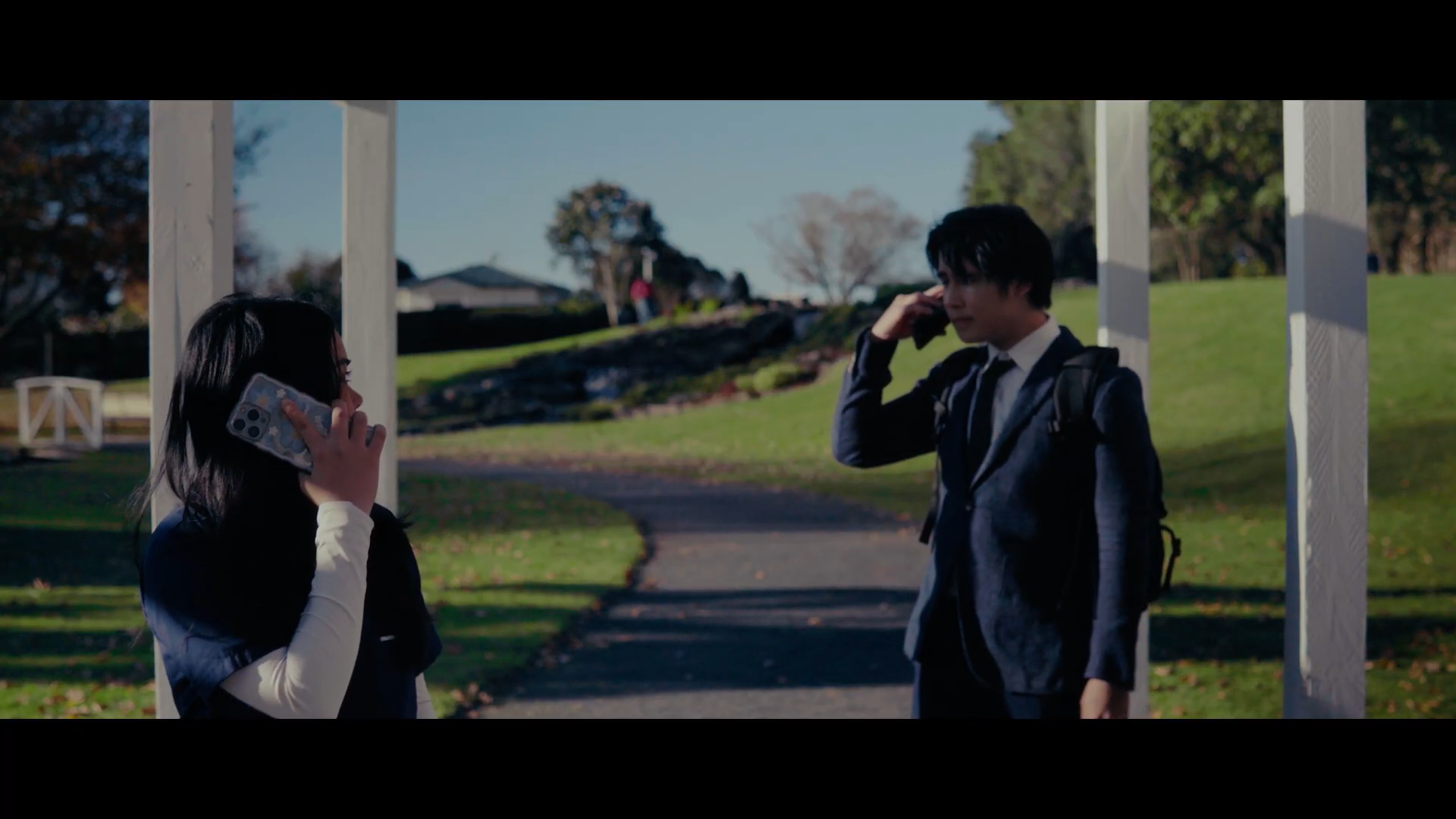
Screencap from We’ll Be Okay
We’ll Be Okay
Dir. Hermes John Condinato Uno
A heartfelt lyrical short film, We’ll Be Okay, delicately fuses drama and music to capture the fleeting tenderness of young love on the edge of separation. Set in the simplicity of an open park, the film creates a stage that feels both ordinary and timeless, a fitting backdrop for two characters caught between presence and absence, reality and dream. Their appearance alone already tells a story: the girl in a nurse’s uniform, the boy in a suit with a backpack — responsibility and caregiving on one side, mobility and opportunity on the other. Through an exchange of dialogue and a series of lyrical songs, the film explores the joy of imagining a future together, the hesitation of unspoken fears, and the painful reality of parting when migration and ambition threaten to pull them apart.
As the characters express a wish to stay together and a fear of not having another chance, they reassure themselves with the gentle promise, “We’ll be okay.” It is a line that carries both hope and fragility, leaving the audience suspended in the same uncertainty as the characters. Rather than offering closure, the film embraces ambiguity, allowing viewers to project their own experiences of love, distance, and memory onto the story. In this way, Condinato’s short becomes less about answers and more about capturing the fleeting warmth of connection: a moment that, though brief, feels infinite.
What makes We’ll Be Okay memorable is not the scale of its production or the complexity of its narrative, but its ability to distill a universal emotion into a poetic encounter. It captures the bittersweet ache of youth and the push and pull between love and ambition. – Uno Arsoler

Screencap from Taga-Taga
Taga-Taga
Dir. Trini Archie V. Garcia
What is love without its conformations to gender expectations? But what is love, also with the dilemma it brings from conforming to those ideas and sacrificing one’s own dignity and mental health space? Love had its share of causing trauma, especially to women who now begin to doubt themselves of ever loving again due to the pain it caused, and with society constantly pressuring them to do so as their obligation. Trini Archie Garcia’s Taga-Taga recontextualizes the mating behaviors of praying mantis through the existential dilemma of love.
It’s an absurd treatment of love, but it makes sense as female praying mantises eat their partner after mating, and this is recontextualized as trauma for the female praying mantis if she wants to love someone ever again. The killing of her partner also meant the pains she had to go through all over again. This made her question whether viewing love as loving someone would also mean killing them, too much love will kill you literally. The male praying mantis begins to question what love is, not knowing what would have become of him. In the end, the weight of the world rests upon the female praying mantis, just like society continuously puts pressure on women to mold to their expectations.
Taga-Taga captures the fear of loving again, as visualized in the death of their partner, and if they could love again, society has to change its perception of love, and one should love another, which allows healing from trauma. – Christ Dustly Go Tan
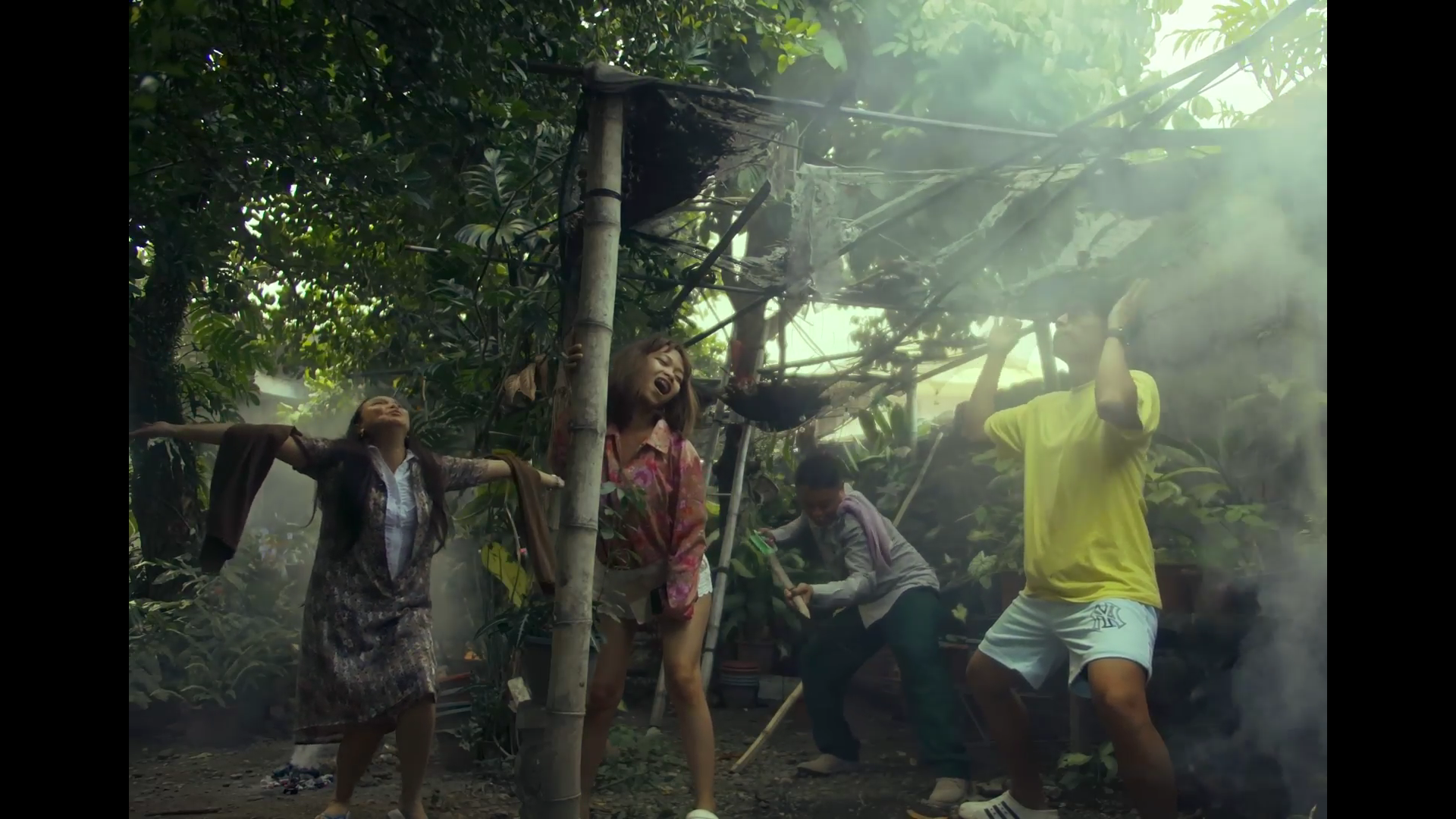
Screencap from Ang Pamilya Maguol
Ang Pamilya Maguol
Dir. Jermaine Tulbo
Dysfunctional family stories are not without their dramas and heavy themes that also surround generational trauma and expectations of parents towards their children. However, in the context of Filipino families, most families tend to hide this dysfunctionality just to appear as if they are one simple and happy family in the neighborhood. The pressures to appear like that can be exemplified in hosting fiestas or, in this case, funerals that appear more than just a respect for the dead but now a communal gathering where even non-related friends can go. All of these are done for the facade in fear of society knowing their dysfunctionality. Jermaine Tulbo’s Ang Pamilya Maguol satirizes this culture of meeting societal expectations of a Filipino family.
Each family member has their own flaws and resentment towards each other that they try to hide from the public. The pressure to look good allows them to deepen this resentment and not have space for healing. The act of putting on a funeral for their Nanay Glo for everyone to come is one mechanism to hide this. They were only driven by the grandmother’s surprise at a probable wealth, and that allowed them to reconcile their traumas and bond as a family. Although not directly seen on screen in how they overcome their hatred for each other, it is seen in the end that their grandmother reminds them of what it is like being a family.
Ang Pamilya Maguol is self-aware of attacking Filipino customs, but its approach made people aware of why this kind of culture persists until now, and why it is now used differently from what it initially aimed to be. – Christ Dustly Go Tan
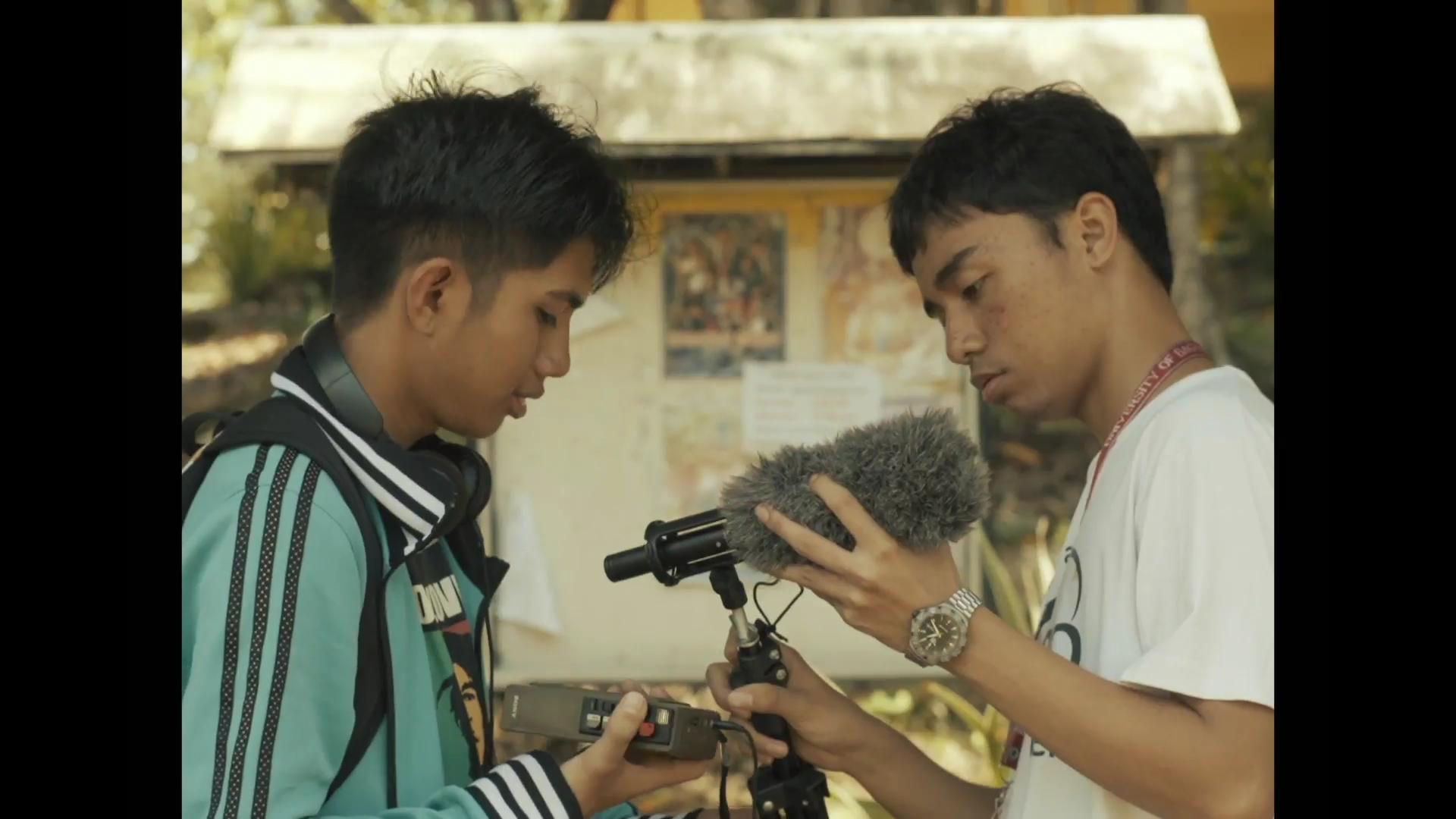
Screencap from Ambot Wa Ko Kabalo Unsay I-Title Ani
Ambot Wa Ko Kabalo Unsay I-Title Ani
Dir. Rey Anthony Villaverde
The desire to capture your dreams through cinema often begins in classroom film projects and phone cameras, but not all students have the same privilege to pursue and chase the arts. Rey Anthony Villaverde's Ambot Wala Ko Kabalo Unsay I-Title Ani depicts the daring actions from the lens of Luis and Lorenz, exploring cinema from its objective technicalities to its subjective meanings.
The short film frames the various elements of filmmaking as the two young dreamers evoke us with cinema's establishment, while framing contrasting rhythm: Luis moving forward in a steady gallop toward film school, while Lorenz marches to the heavy drumbeats of responsibility, his dreams slowed by the weight of reality. Yet together, their friendship becomes the score that carries them through the struggles of production — reminding us that cinema is not only what appears on screen but the bonds produced behind it.
The rhythm speaks to a larger truth, aligning the setting with Mindanao. Unlike Luzon and the Visayas with their film schools and institutions, young filmmakers here have little support — they rely on instinct and persistence, making a cinema that survives more than it is sustained — and in the end, the short film begs the question of whether cinema can be both an escape or survival, especially for those who dream without a safety net.
The short film fittingly ends without a title, a reflection of the uncertainties that shaped their paths. Cinema, like their journey, resists a single definition; and rather than narrowing it down, Luis and Lorenz embrace the process, finding meaning in their friendship more than in the film itself. – Meckhan Tagarda
SINEGANG.ph is an official media partner of the 5th Oroquieta Film Festival held last August 21 to 23.