
The Films That Found Me
The Films That Found Me

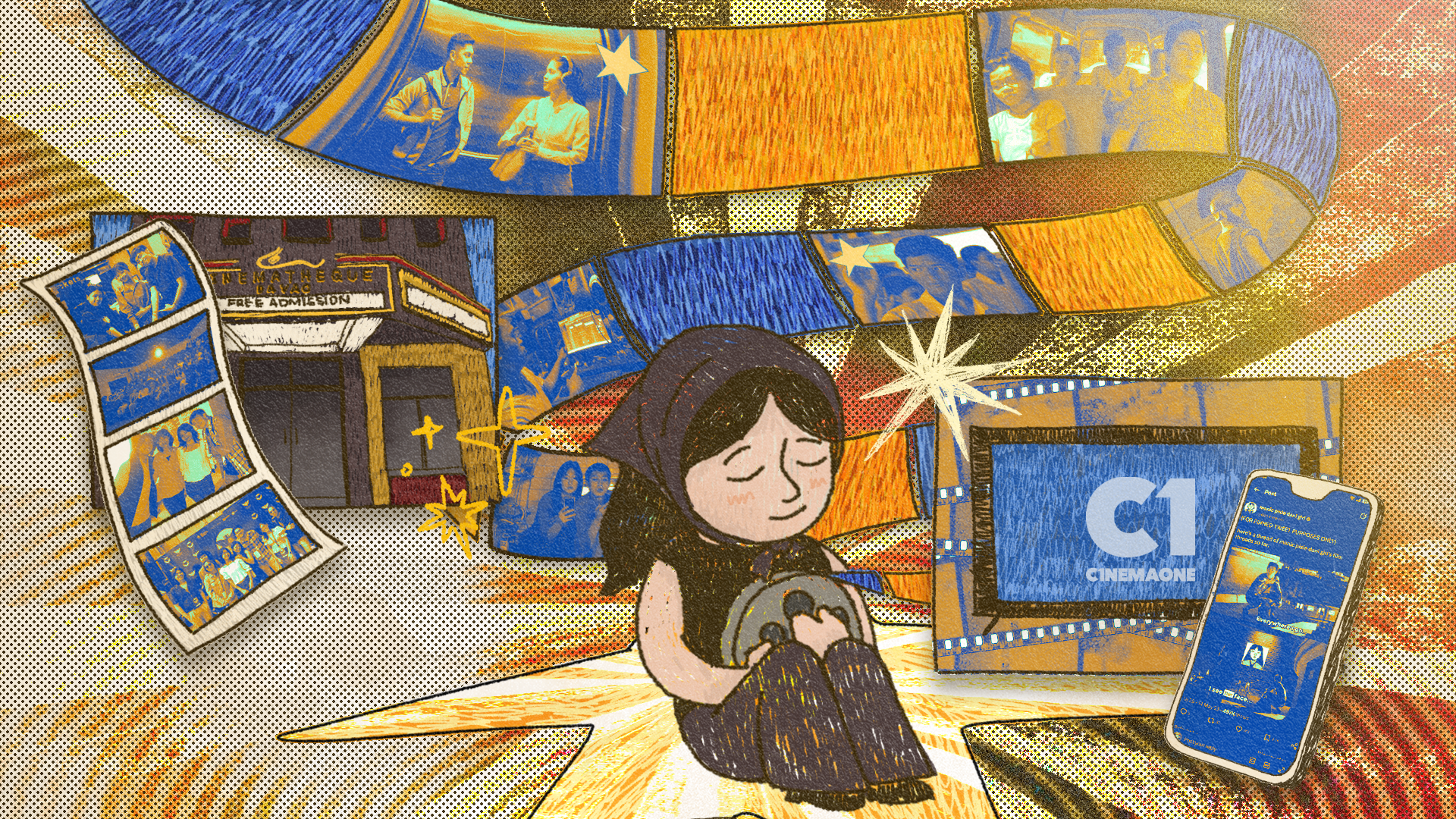
Feature art by Abigail Manaluz
My relationship with Philippine cinema has been shaped by discovering it from afar. If you had encountered me online on X (Twitter) as manic pixie dani girl, you probably would have assumed I lived somewhere in Metro Manila. But in reality, I am 22, born and raised in Davao City.
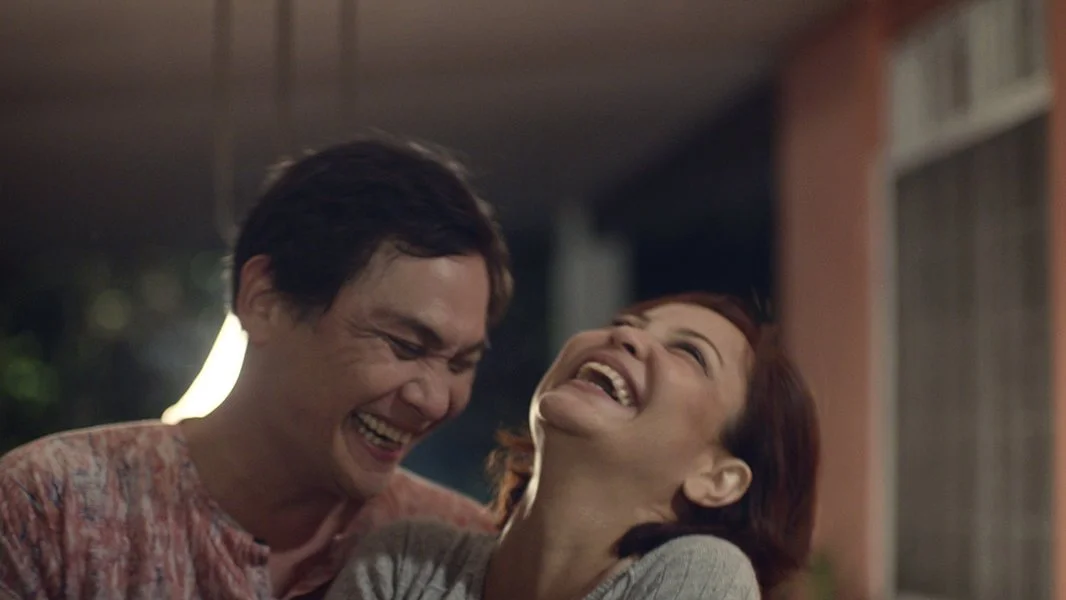
My cinephile journey started during the early months of the COVID-19 pandemic, and my mom banned me from using my phone for an entire month. With nothing else to do, I resorted to watching our old cable TV until one night I landed on CinemaOne, which happened to be airing Prime Cruz’s Isa Pa, With Feelings (2019). At the time, I was a rather snobbish film buff who only watched Hollywood films, but something about its cinematography immediately pulled me in. I watched it until the very end, then caught every encore screening over the next few weeks.
When my mom finally returned my phone, the first thing I did was open Netflix and search for more Filipino films. Before I knew it, I was exploring the filmographies of Irene Villamor, Antoinette Jadaone, and Jason Paul Laxamana, all in search of more stories that carried the same feeling.
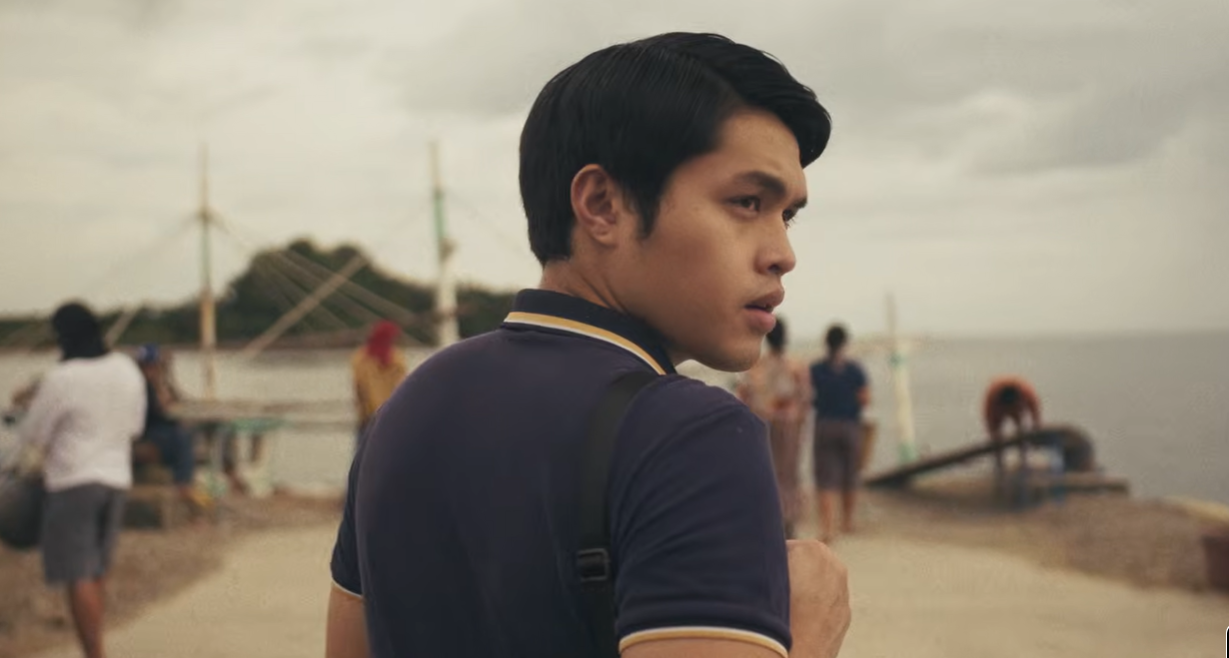
Curiosity eventually pushed me beyond what streaming platforms could offer. I discovered independent Philippine cinema through, let’s just say, less-than-legal websites—don’t come at me, I already told Direk Arden Rod Condez about this! The first Filipino independent feature film I watched was his film John Denver Trending (2019), which follows a young boy whose life changes after a video of him goes viral. He [Direk Arden] didn’t mind it at all; in fact, we just laughed it off.
I vividly remember it as the first Filipino film I encountered that I could not understand; not because the storyline was unfamiliar, but because it was spoken in Kinaray-a, the native language of Antique, Western Visayas. It was also the first time I had to sit through English subtitles for a Filipino film.
What surprised me was that the subtitles never became an obstacle. If anything, they opened the film up to me. I did not need to speak Kinaray-a to understand John Denver’s story because the film gave me a way into its world.
Looking back, that ordinary night watching cable TV became the beginning of a much bigger journey.
On X, manic pixie dani girl started simply as a personal account where I shared whatever films I was watching and obsessing over. As I discovered more of Philippine cinema, I found people who were just as eager to talk about these films, recommend others, and introduce me to stories I might have otherwise missed. What began as a way of sharing my own discoveries eventually became a community that shaped how I watched, talked about, and understood Philippine cinema. It also made me realize how much of film discovery depends on simply having someone point you toward a story.
Ironically, every film I watched, every recommendation I posted, and every conversation I joined are not as local as it took place hundreds of miles from where much of the Philippine film industry is concentrated.
What began as simply watching films eventually became a more active role in Philippine film culture. Through my work as Head News Managing Editor at SINEGANG.ph and the film communities I joined, I found myself not only watching and discussing films, but also helping share news, recommend stories, and create opportunities for others to discover them. Much of this happened digitally, allowing me to participate in film culture even from hundreds of miles away.
The cinema that was already here
That search for more regional films eventually led me to discover that regional cinema wasn’t as distant as I had once imagined. It was already being nurtured by communities around me.
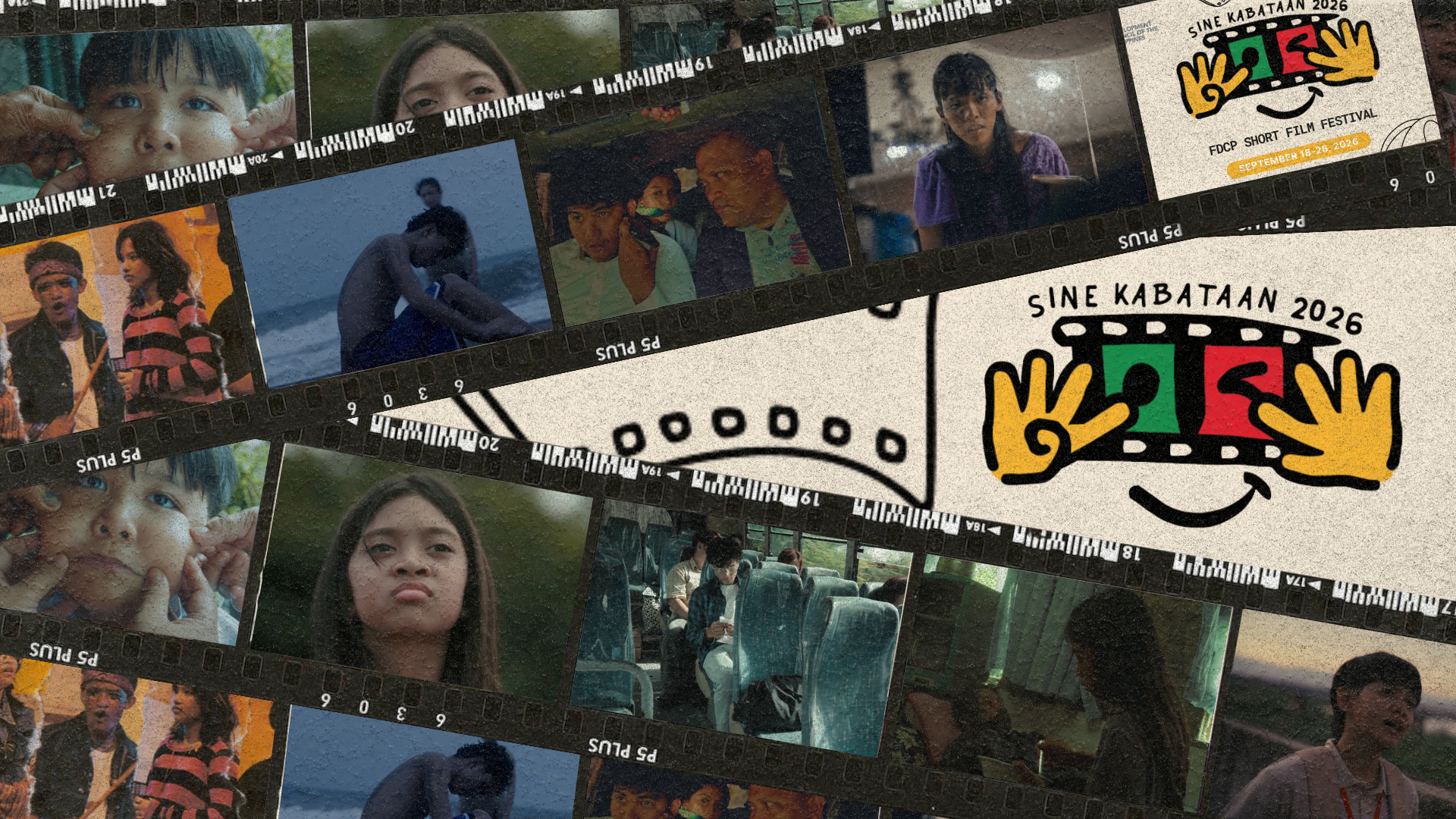
I’ve been fortunate to be part of a local film community that continues to thrive despite its size. The Cinematheque Centre Davao, run by the Film Development Council of the Philippines (FDCP), has become a second home for many passionate film enthusiasts. Through it, we have been able to experience FDCP programs and curations such as Pelikulaya, Sine Kabataan, and World Cinema.

A gathering of Davao’s film community, reflecting how regional cinema continues to grow through local spaces, festivals, and passionate audiences. | Feature art by Abigail Manaluz
I’ve also had the privilege of attending the Ngilngig Asian Fantastic Film Festival here in the city, held every October by the film collective Pasalidahay, which provides an important platform for horror, fantasy, and experimental cinema within the independent film scene. The Green House Cinema, established by local filmmaker Bagane Fiola and writer Melona Grace Mascariñas, has likewise become a space for screenings, conversations, and connections within the local film community.
These spaces changed the way I understood accessibility in Philippine cinema. Regional films have never existed in isolation. They have always found ways to reach audiences beyond their own communities through festivals, independent screenings, and online circulations. Most of these films already come with English subtitles, which allow viewers who do not speak the language to enter these stories and understand them.
I deeply appreciate these spaces because I know many communities across the country do not have them at all. They are reminders that meaningful film culture can exist beyond the capital, but they also exist because people have worked hard to build and sustain them. Their presence is a testament to communities that continue to make room for cinema despite limited resources and opportunities.
At the same time, their existence made me realize how uneven access to Philippine cinema remains. For many audiences, the barrier is not a lack of interest but simply a lack of nearby spaces to watch, a platform to discover these films, or an easy way to find out they exist in the first place.
Over time, I learned that discovering Philippine cinema was not only about finding films but also about finding the communities that keep them alive. In addition to my work in SINEGANG.ph’s News Department, I led the establishment of our Regional Department along with co-writers Linus Masandag, Christ Dustly Go Tan, and Jea Nicole Jacot, encouraging the publication to recruit more writers from across the country to cover local film events and festivals in their respective regions. For the first time, we were able to bring regional film festivals and communities to readers who might never have encountered them otherwise.
I began this journey searching for stories beyond what was immediately accessible to me. Along the way, I found a community and became part of one that helps others discover these stories, too. It also made me wonder: if audiences are already open to stories beyond their own languages, what else keeps regional cinema from reaching them?
‘Subtitle’ generation
The irony is that many of us crossed the language barrier long before we realized it.
At the 2020 Golden Globe Awards, filmmaker Bong Joon-ho famously described subtitles as a “one-inch-tall barrier” that audiences could overcome. His remark came in response to the international success of Parasite (2019), a Korean film that reached viewers far beyond its home country. Years later, that barrier feels smaller than ever. For many audiences raised on streaming platforms, subtitles are no longer something to overcome. They are simply part of how we discover stories.
I would often half-joke that I genuinely cannot watch anything without subtitles anymore. As someone with weak hearing in my right ear, the subtitles help me catch dialogue I might otherwise miss. But beyond accessibility, I think I’ve simply grown used to them. I’ve gone out of my way more times than I’d like to admit just to scour the internet for an .srt file that actually syncs properly with my VLC Media Player. If the timing is even a few seconds off, I will keep searching until I find one that works. At this point, I don't know whether I can still blame my hearing or if I've simply conditioned myself this way.
And I know I’m hardly alone in this. Whether it’s Korean dramas, Japanese anime, some avant-garde French New Wave films I stumbled upon through a Letterboxd rabbit hole, or even local releases, reading subtitles has become part of the viewing experience for many people my age.
That is why I wish Philippine theaters would subtitle all English-language films as well. When I saw Sinners (2025) in theaters, I struggled to catch certain lines because of the characters’ thick Southern accents. The same happened with Christopher Nolan’s Oppenheimer (2023) and The Odyssey (2026), as well as Project Hail Mary (2026), where rapid dialogue, historical references, scientific jargon, and dense exposition reminded me that subtitles are not only useful when a film is in another language. Sometimes, they are basic necessities that allow us to fully experience a story.
I guess that is why I’ve started noticing something quietly ironic. Filipino films today are often screened with English subtitles, whether in Tagalog, Cebuano, Hiligaynon, or other Philippine languages, on streaming platforms, in commercial cinemas, and at film festivals. We are already reading subtitles while listening to languages we hear and speak every day. Rather than distracting audiences, they have become almost invisible. They are simply part of how we watch.
I began seeing this openness not only in my own viewing habits, but also among the audiences I reached through SINEGANG.ph and my platform on X. When I shared the 2024 short film Taga-taga, a whimsical Hiligaynon romantic comedy, more than 200 people flooded my DMs asking where they could watch it. Seeing that kind of curiosity around a film in a language unfamiliar to many of my followers made me question whether language was really the barrier we had assumed it was. If audiences are already willing to cross language barriers, why do we still assume that language is what prevents regional Philippine films from reaching wider audiences?
When regional stories reach wider audiences
Eventually, I realized the challenge was not whether audiences would embrace regional cinema. It was whether they had the chance to discover it.
That was true for me. I had to become a cinephile first.
I searched for films. Dug through Letterboxd recommendations. Found communities that were already talking about them. But what about the ordinary viewer who has not yet fallen into that rabbit hole?
I often wonder how different my own relationship with Philippine cinema would have been if regional films had been as easy to encounter as the Korean dramas, Hollywood films, and Tagalog productions I was already consuming. Would I have discovered them sooner? Would I have realized earlier that Philippine cinema was spoken in more than one language? Would I have spent less time searching and more time watching?
I still think about the time my mom and I watched Victor Villanueva’s Patay Na Si Hesus (2016) on Netflix. A Cebuano-language film about a mother and her children who embark on a journey across Visayas to attend a funeral. Barely a few minutes in, she turned to me in surprise and asked,"Bisaya lagi na?" (“They’re speaking Bisaya?”)
I think her reaction captured something I’d never really questioned before. We had spent years watching Star Cinema films together. So, hearing the characters speak Cebuano immediately caught us both off guard. Somehow, hearing our own mother tongue felt unexpected on screen.
That feeling came back to me after John Denver Trending (2019), when I searched for more regional films and eventually stumbled upon the short documentary Budots: The Craze (2019). It was the first time I heard Binisaya spoken throughout an entire film while seeing the very streets I would only pass by in downtown Davao. It felt surreal.
Looking back now, none of it should have felt extraordinary. Yet it was memorable precisely because it still felt rare. And perhaps that says as much about Philippine cinema as it does about me.
Stories waiting to find us
Maybe that is why I keep returning to the same question: if these stories already exist, and if streaming has changed how we discover films, why do so many regional stories still require viewers to seek them out?
I am lucky to have discovered and have access to platforms like Cinemata and JuanFlix. Along with film festivals, local collectives, and independent curators, they've made it possible for people like me to discover these films. Yet I still wonder what would happen if they weren't limited to spaces that only already-interested viewers know to look for.
But why do these stories still feel like hidden gems instead of stories that naturally reach audiences? Can discovering a Cebuano, Ilokano, or other Philippine-language films become as effortless as stumbling upon the next Korean drama? For many young viewers today, discovery happens through algorithms that place stories directly in front of them. If streaming has changed how we encounter films from around the world, why can’t it also change how we encounter stories from our own country?
To me, this has never been just about making regional films easier to find. The stories we watch become part of our memories, our conversations, and the people we share them with.
Before she passed away last June, my mom and I would bond over watching Filipino movies at home and at the cinema, and I will forever treasure that. I hope other Filipino families can one day experience the same kind of intimacy through films in their own mother tongues, so that those stories feel less foreign and more like home.
I hope mainstream streaming platforms and commercial cinemas make more room for regional stories, whether by producing them, distributing them, or giving them the same opportunity to be seen as any other Filipino film.
The stories are already here. Maybe the next step is making sure they can find us, too.
SEE ALSO: In the Green House Cinema, Cinephilia Blooms Amid the City’s Noise by Bea Allado, Emmanuel Paymalaon, & Meckhan Tagarda