
Filipino Short Films and Their Folkloric Monsters

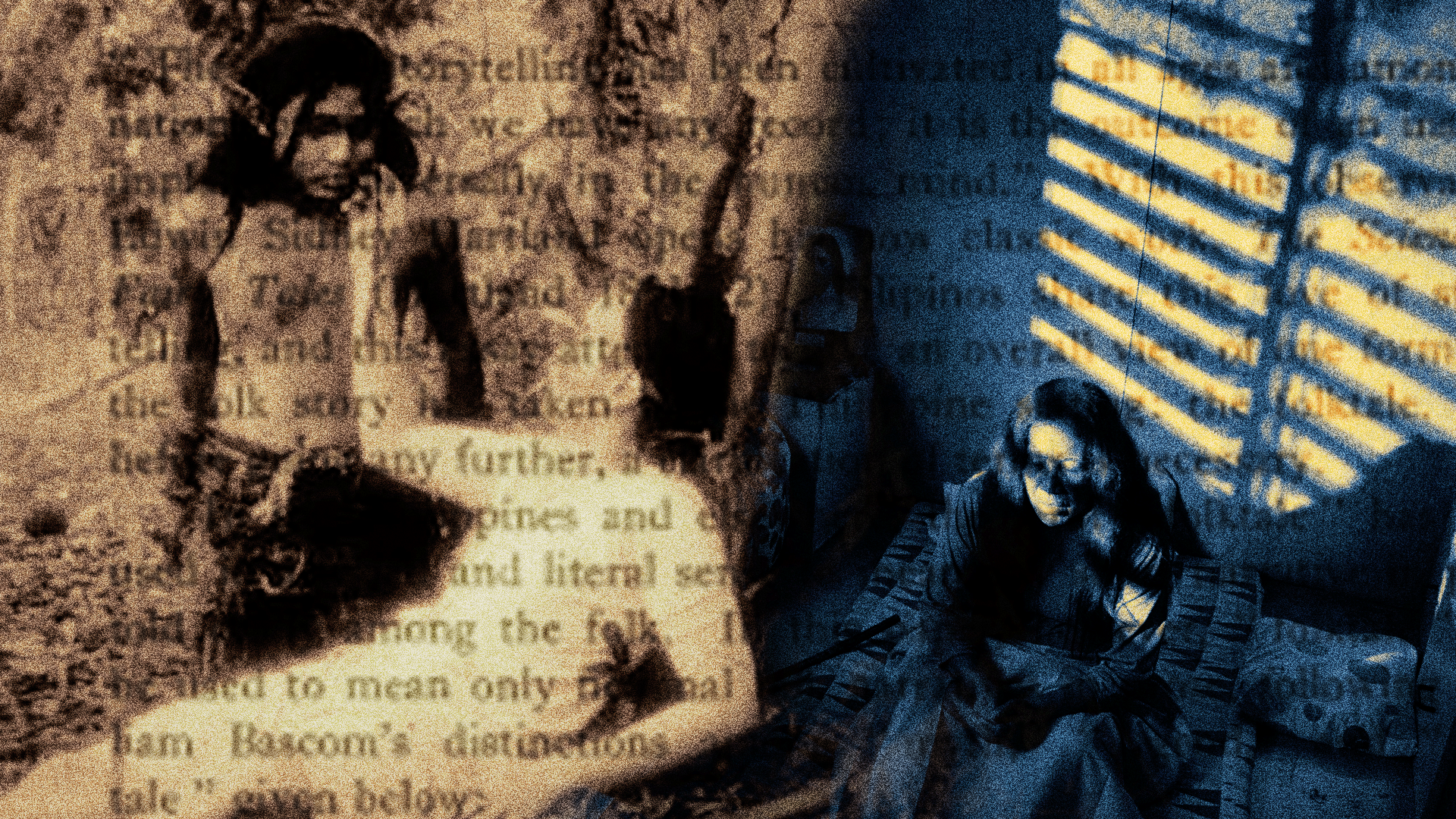
Feature art by Abigail Manaluz
With the recent release of DreamWorks Animation's latest animated film Forgotten Island, it’s undeniable that the online reception for this film, especially coming from Filipinos who have been constantly waiting for their stories to be seen on the global stage, is overwhelmingly positive. It becomes another addition to the “uy Pilipins” phenomenon when recognition is only established if it’s set on the global stage. In recent pop culture moments, we have Bini performing at Coachella, Liza Soberano and Dolly De Leon breaking through in Hollywood, Alexandra Eala’s tennis career wins, and the recent Olivia Rodrigo wearing a Filipiniana in a Vogue Philippines editorial, all women, by the way, always blasting those Filipino pride comments. There’s always that Filipino mass audience waiting to reclaim when their names become recognized in the international scene.
This is also not a discussion of whether what makes them Filipino or less of it.
What Forgotten Island does differently is that, more than the cast and crew mostly having Filipino ancestry, it puts Filipino culture into the spotlight, specifically our folkloric monsters, which is what big animation studios have been doing for the past decade, putting cultures from the Global South into the international spotlight, from KPop Demon Hunters, Raya and the Last Dragon, Encanto, Coco, and even Mulan, and it’s about time the Philippines has its share of the spotlight. But it’s interesting how the recent resurgence of Philippine folklore results from foreign and imperial powers taking interest in our own culture, further amplifying that colonial mentality. Where was this support when our own local Filipino artists and filmmakers were making works about our own culture?
I find it baffling that Forgotten Island, with its diasporic and orientalist lenses, rather conforms to the colonial demonization that occurred with our ancestors, limiting how our folklore is represented to Western stereotypes to make it relatable to a global audience rather than offer a means of decolonization of how these folklore monsters came to be. Nonetheless, this is Hollywood, and its hegemonic influence on how they also view cultures from the Global South will always be rooted in orientalism and diaspora. Forgotten Island allows itself to be interrogated and opens the door for Filipino stories to be enjoyed by an international audience.
There are a lot of cinematic works that feature folklore creatures, such as the Shake Rattle and Roll franchise, which helped sensationalize and legitimize the imagery of the most popular folklore creatures as horror and monstrous beings. Modern works like Irene Emma Villamor’s Ulan, starring Nadine Lustre, allegorize folklore of the tikbalang, which uses its sunshower archetype for the protagonists’ navigation of trauma with love. Folklore is more than just scary stories to tell in the dark but is retold as allegories of contemporary society.
This essay doesn’t aim to provide an historical account of cinema and its intersections with folklore but is more of an appreciation and highlight of recent works that have represented the nation through its use of allegories via its cinematic imagination of folklore, specifically coming from works by alternative filmmakers. Most of the short films I mentioned here are available to stream legally online thanks to the archives of Gawad Alternatibo and Cinemata.
Cinema As Making Sense of Contexts
Cinema and folklore are so similar to each other that they have transformed societies. These stories served as their own moral compasses in society. Folklore like mythologies became the template archetype in various forms of culture, from visual arts, literature, and even cinema. Instead of borrowing their narratives, they are reinterpreted to represent modern-day contexts. So much of today’s storytelling is a reinterpretation of folklore. In the context of the Philippines, being a colonial country before, this reinterpretation also serves as a form of decolonization, reclaiming those identities as part of Filipino culture and society that once were used to haunt us by the Spanish colonizers. Just as these folklores carry important moral values for society, filmmakers used cinema to reinterpret these stories to make sense of what is happening around us and also as prophetic archetypes to warn us of the future.
The Philippines, being an archipelago, is rich with folklore in its own many regions. However, viewing these works as part of regional cinema may be contestable, as regional cinema nowadays tends to be transregional and diasporic. Katrina Ross Tan, in her book Regional Cinema in the Philippines, proposes the framework of archipelagic imagination, which already acknowledges the Philippines’ diversity, challenging its linear and homogeneous historical imagination towards a more diverse, alternative imagination of the nation. In this way, folklore creatures can still be reinterpreted in their respective regions, as their contexts and narrative archetypes can be applied and felt in other regions and the whole nation. Filmmakers can use the many folklore creatures as allegories and make sense of the current political climate, just as these folkloric monsters were created to create narratives that have haunted the nation. What mostly composes regional cinema is also short films.
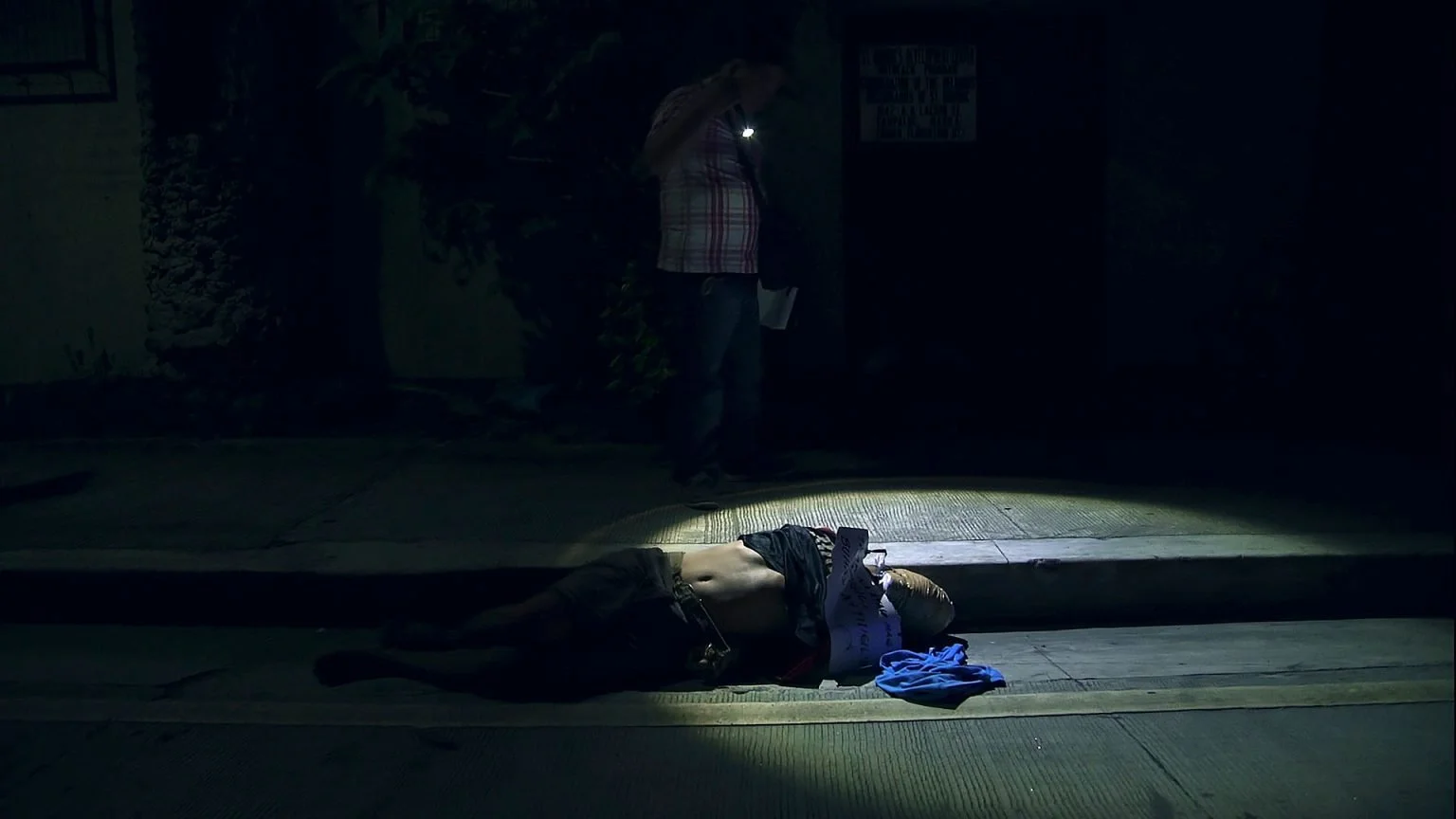
Absence of a physical monster | Film still from Aswang
A popular modern use of folklore is the recent award-winning documentary Aswang by Alyx Ayn Arumpac, which reintroduced the popular folkloric creature aswang but reinterpreted it in modern-day contexts, specifically during former President Rodrigo Duterte’s war on drugs, a pivotal dark period in recent Philippine history that has normalized state violence. These modern-day aswangs, disguised as police officers, roamed the streets and urban spaces at night, awaiting their next target, similarly to how the aswang would prey on its next meal at night. The mass state violence that has desensitized the nation is similar to how our past Spanish colonial masters also used this method of causing fear to convert our paganistic roots to Christianity. Most victims of these were the Babaylans who used to have equal power in society but were turned into evil monsters by the Spanish missionaries. Other methods of causing fear were rampant in postcolonial periods, where even our own state government and its military arm would display, in their most graphic ways, what looked like their top prizes: lifeless bodies of insurgent rebels. Probably the most vicious, especially after the implementation of the Anti-Terror Law, is the red-tagging and killings of activists, journalists, and leaders that have caused fear to the point of legitimizing state violence, destroying every ounce of credibility of justice, democracy, and human rights. This is where the aswang is more than a metaphor for state violence but now a legitimized state force.
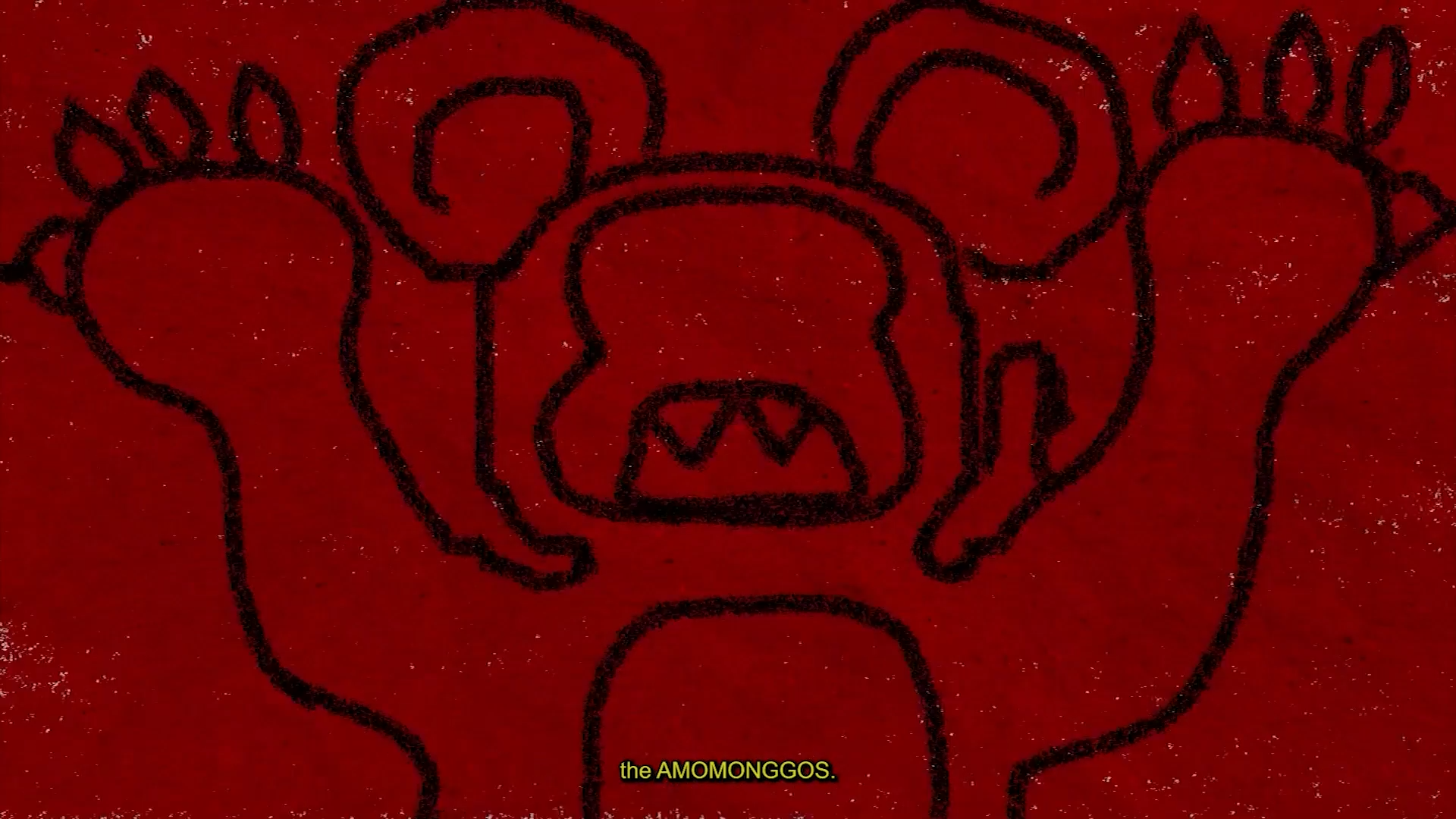
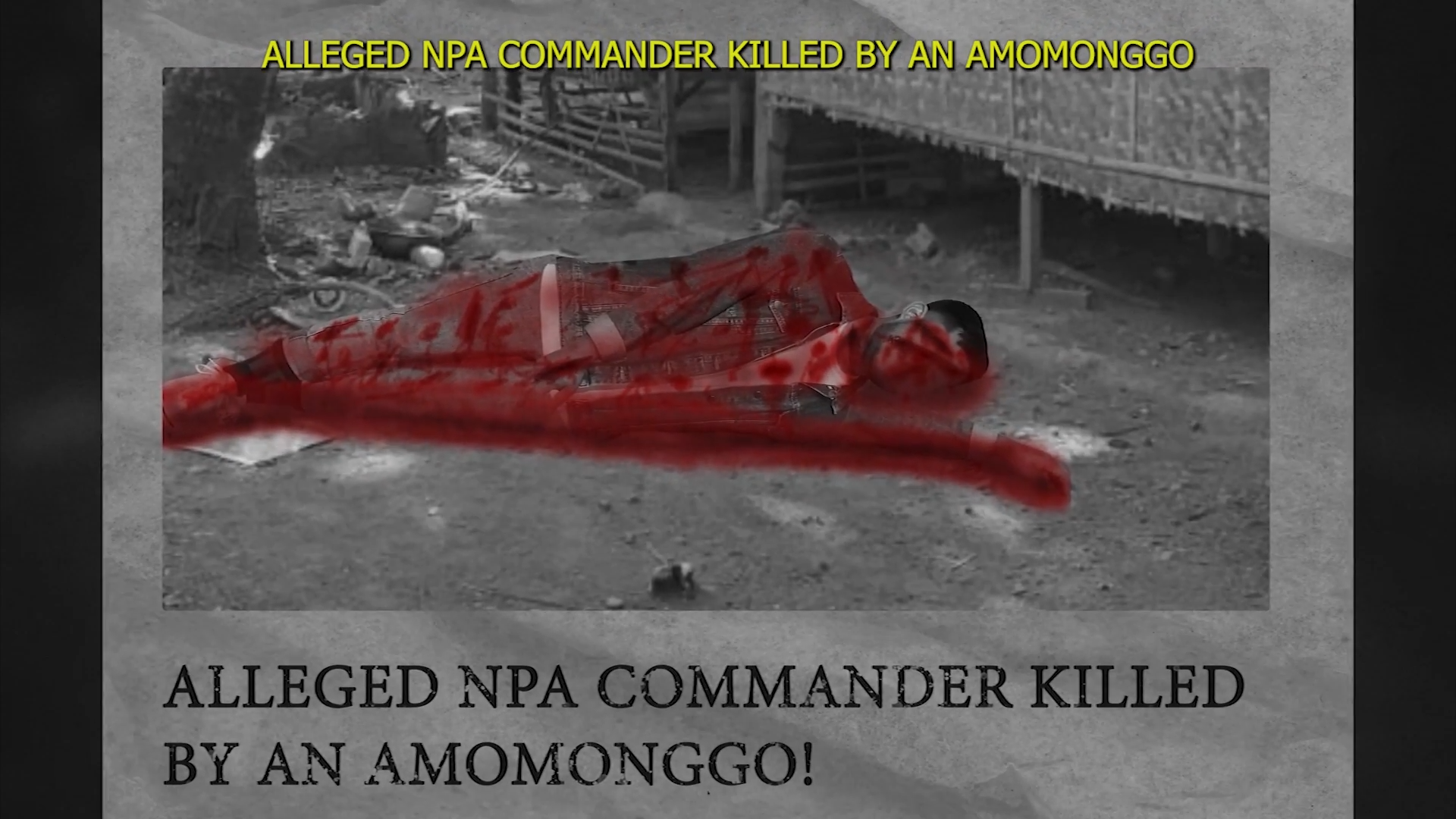
Weaponizing Amomongo folklore | Film stills from Ang Amomonggo sa Aton
Ang Amomonggo sa Aton by Vinjo Entuna borrows similar methods from Aswang in how the folklore of the Amomonggo is used to create fear in their own local communities, specifically on Negros Island during Martial Law. Protestors and insurgent rebels were killed by what they called the Amomonggo, which, in personal accounts, are the military soldiers. The graphic display and blotter across media created this sensation of fear that anyone who resisted the martial law regime would be killed by the Amomonggo. Amaw by Timothy James Sampang also follows similar methods but more so reflects rural terror during the war on drugs, showing that the Tokhang operations also extend beyond the urban city and into the regions, using the folklore of the Amaranhig. Both folkloric monsters have their roots in Western Visayas and were used to weaponized state’s agendas, showing how they are also imagined and can be applied to specific contexts in their local communities, but still reflect the status quo of the nation during their respective times.
Folklore is used as a political tool to create fear, similarly to how creating myths can put people into power like the propaganda film Iginuhit ng Tadhana that propelled the late dictator Ferdinand Marcos Sr. to the presidency. Reinterpreting the folkloric creature known to roam in rural areas but now in urban spaces forces us to rethink our role in this narrative of violence, as the creature is roaming near us in the city. By causing fear, it makes the fictitious feel real. The aswang doesn’t have to manifest in physical forms to legitimize its presence, as the documentary already provides a series of montages that reflect the aftermath of its killings and its looming presence, similar to its shapeshifting form. The absence itself is the manifestation of impunity. In this way, folklore has become more than just stories to cause fear but now a reflection of contemporary realities.
Also read Jason Friedlander’s article on the Marcos propaganda film Iginuhit ng Tadhana!
Folkloric creatures can also be reinterpreted as cohabitants of the land but imagined as cursed beings, forced to be isolated by society’s prejudice. Dikit by Gabriela Serrano turns the Manananggal into a misunderstood creature longing for a presence in the real world but limited by her circumstances. Through a double portrait of two women, a mananggal and a human, we are put into a spectator position of the contrasting but also similar lives they’ve been through. When the Manaananggal witnesses acts of domestic abuse of her human neighbor, she then confronts her nature and is transformed into a hero to save the human. The Manananggal here is no longer a monster feared by society but now a person longing for connection. This, in the process, humanizes the Manananggal as also a cohabitant of the land we share. Si Sir Kag Gamay nga Bata by Seb Valdez reimagines a Kapre and its attempt to coexist in the human world. Kapres also have their own sets of rules and limitations of their own nature, which, in this modern world where violence becomes rampant, begins to question who the real monster is between humans and the folkloric monsters they created into a philosophical deep dive in how monstrosity is constructed, similarly to Mary Shelley’s Frankenstein. This challenges and humanizes how folkloric creatures are imagined as cohabitants of the land, prejudiced by society. Daligmata Delivers One Last Time by Minnesota Flores also reimagines the folkloric creature Daligmata in its attempt to coexist with human society by delivering lost precious items to their human owners, similar to how they aid in wandering souls' return to their mortal bodies. However, their purpose is now being challenged when the very items humans used to cherish that Daligmata finds are now replaced with those of materialistic value, challenging their very existence.
It’s also worth considering how filmmakers imagine most folkloric monsters in films, even in accounts by Spanish friars, bear a near resemblance to human bodies, and only in bodily anomalies in certain parts of the bodies, like elvish ears, as well as how they communicate is too similar to human communication rather than a different living being altogether, material conditions aside, suggesting there’s not much difference between a man and a monster. How these folkloric creatures were imagined to attempt to coexist with human society only leads to further displacement because of how their nature is prejudiced, showing how human society continues to be haunted by the very narratives of the folklore they created.
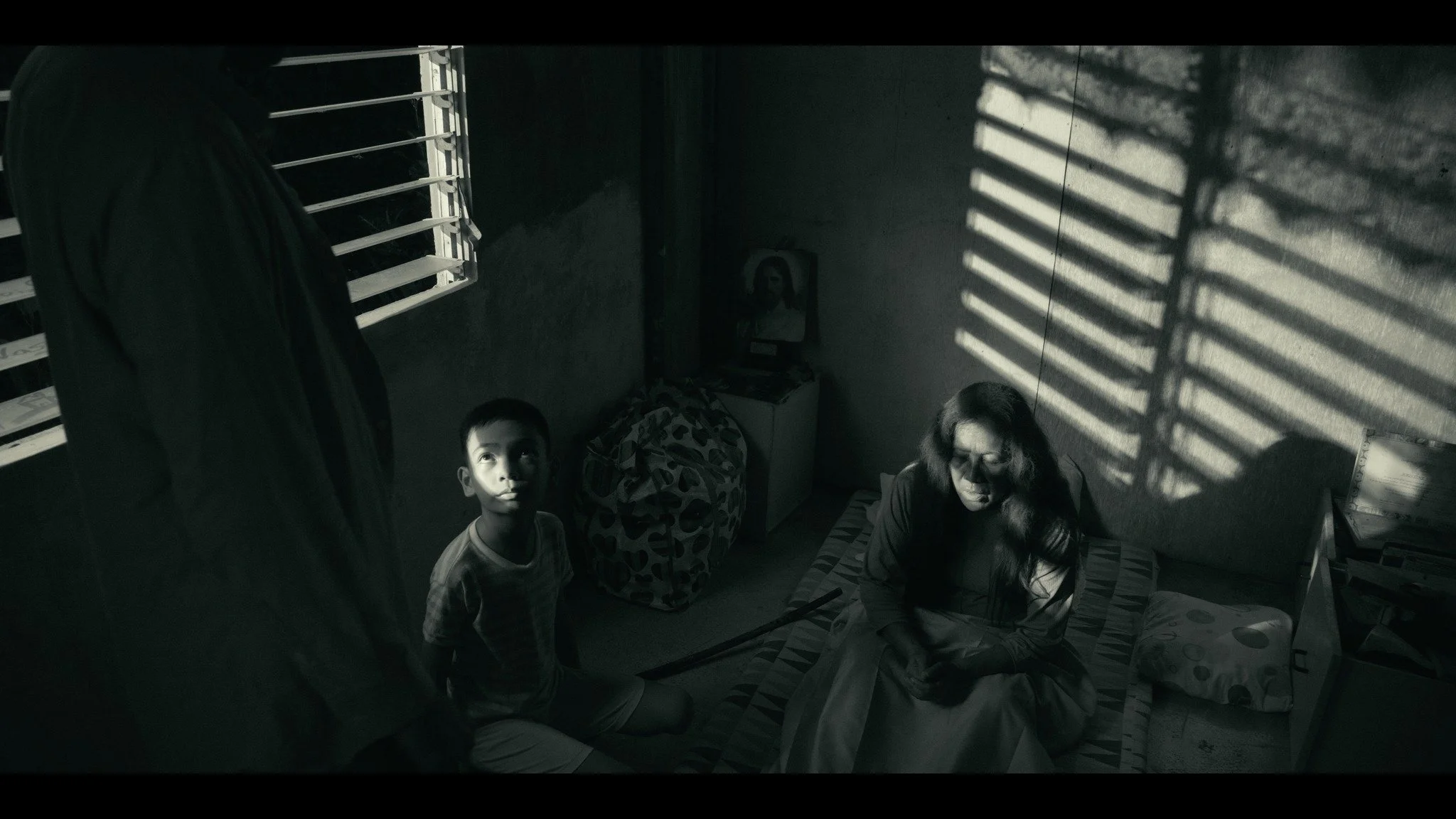
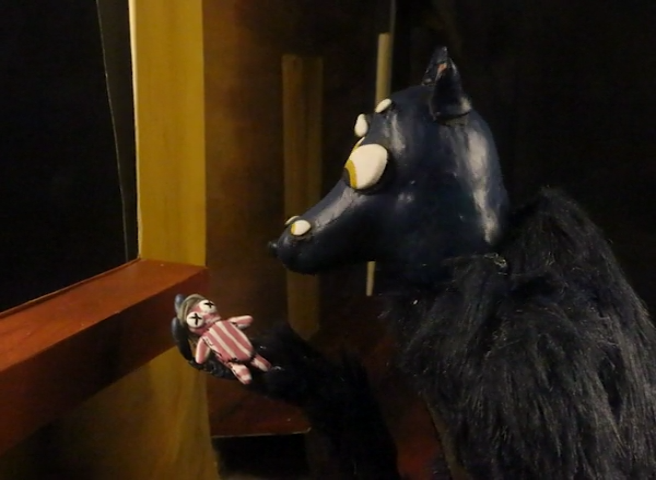
Kapre and Daligmata attempting to coexist | Film still from Si Sir Kag Gamay nga Bata and Daligmata Delivers One Last Time
Symbolic Multiplicities of Folkloric Icons
An Kamaturan by Kyle Justin Rebutica challenges the linear identity of the local Bicol myth of Oryol in the Ibalong epic. Oryol is not described as half-human and half-snake but as a human who turns into a snake, which allows for many depictions of her role in the epic. Oryol can be depicted as a god, a force of nature, or any complexity of being a woman. The documentary shows that mythological creatures have plural identities, and these depend on their reinterpretations. This plurality can be observed through the popular forms of the Bakunawa and Tikbalang and their respective representations.
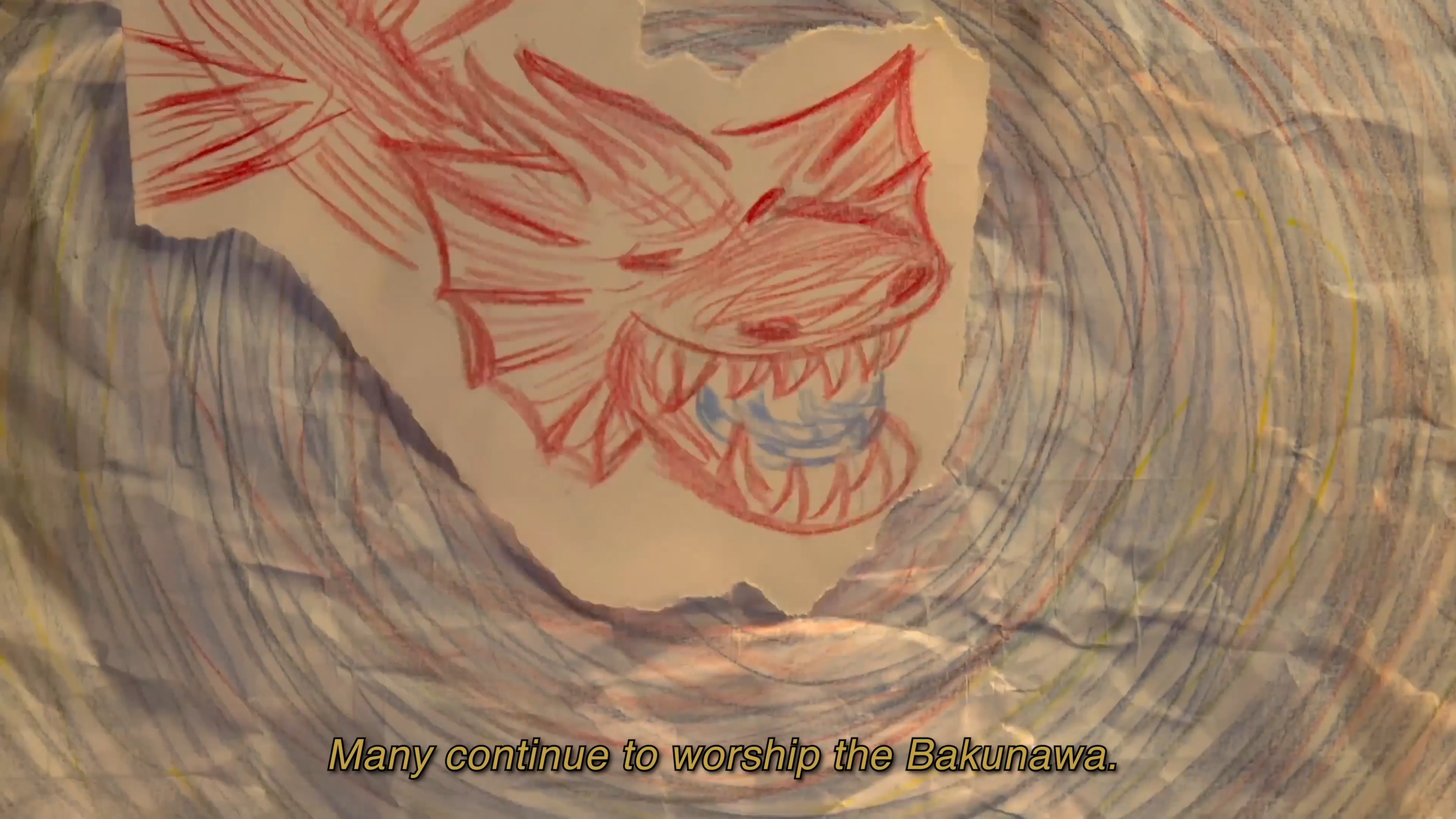

Bakunawa and its many forms | Film stills from Lingkis and Ang Liwanag ng Bakunawa
The Bakunawa is known to be a moon-eating dragon and is widely believed to be the cause of eclipses and other phenomena in most myths. The eating-the-moon phenomenon of Bakunawa has been widely reinterpreted, especially when it means that the darkness has consumed the world. It could mean many things, and most modern interpretations lean toward political allegories of corruption and power. Lingkis by Yvonne Elizabeth Salazar and Isabel Margarita Valenzuela used it as an allegory of a shapeshifting regime where evil in the seat of the President continued after martial law, and every moon-eating event, disguised as the elections, would only mean that it shapeshifted to continue its power. Similarly, Rumbles of the Earth by Carl Joseph Lara allegorizes the phenomenon caused by the Bakunawa as similar to the acts of normalization of phenomena present in society, from earthquakes to even sudden disappearances of missing persons. When the world collapsed into darkness, it became a powerful allegory of the tyranny and violence that the Bakunawa has caused. However, for some, the Bakunawa is also reinterpreted as the guardian of nature. Ang Liwanag ng Bakunawa by Alvin Joshua Gasga and Elisha Shem Domingo reinterprets the Bakunawa as an unexpected close friend to outcasted people of society. The friendship they made comforts those who see it differently, as more than just a monster. It allegorizes our relationship with the land and our taking for granted the protection it gives us during calamities in present-day society.
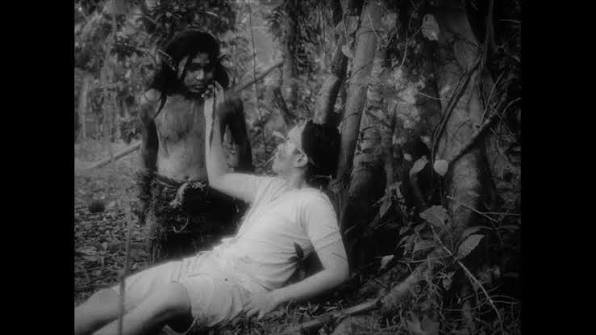
Queering of the Tikbalang | Film still from Alingasngas ng mga Kuliglig
Tikbalangs are creatures known for having heads of horses as well as hooves but have a humanoid body. Although horses aren’t native in the Philippines, their import from neighboring traders has also increased their presence in our lands and in folklore. Tikbalangs were also known for being guardians of nature, protecting their trees and their kingdom from trespassers. Justine Polanco’s Ang Paghilak sa Kasalangan reinterprets this archetype in the context of the killings of environmental activists. Tikbalangs and activists are imagined to be the same, as both are environmental defenders, and both follow similar demonization tactics: the folklore of Tikbalangs and the red-tagging of activists, coming from state powers, all for defending the rights of the land in the name of capital greed. Tikbalang became an allegory that even in colonial times, the same phenomenon still occurred for our environmental defenders. Another popular characteristic of the Tikbalang used in many modern stories is the sunshower that signals a Tikbalang’s marriage. Vahn Leinard Pascual’s Alingasngas ng mga Kuliglig and James Fajardo’s Looking for Rafflesias borrow this archetype for its depiction of queer love intersected with a coming-of-age narrative where an imagined society in the film’s setting prejudices such unions. These alternative representations are necessary to challenge heterosexist depictions of the Tikbalang as well as other folkloric creatures. This is similar to how queering Duterte’s war on drugs in Jun Robles Lana’s Big Night! challenges the binaries the war on drugs depends on, and how queer people can only liberate themselves by being part of the system. Queering reimagines folkloric creatures more than the folklore they are that are used to haunt Filipinos, but as misunderstood, lonely creatures, prejudiced for their otherness, and displaced from their habitation.
The multiplicity of representations of the Bakunawa and Tikbalang from many alternative filmmakers show how these folkloric creatures are reinterpreted and reimagined, borrowing from their archetypes to represent premonitions and reflections to make sense of different contexts of what’s happening in society. Instead of using folklore to weaponize the state’s agendas, it became a platform for understanding the current state of the nation and how its allegories mimic social realities.
Folklore as Political Critique
Building from what we left earlier, alternative filmmakers used folkloric monsters to allegorize the state of the nation. Folklore is a testament to history, and carried along with it are the stories that have transpired since colonial times and still manifest in many forms today. The persistence of folklore in many alternative films shows how folklore is no longer used by the state to legitimize its agendas, but is now used as a form of political critique of a social issue close to the filmmakers, such as using the folklore of the aswang in the documentary Aswang. Borrowing from the folkloric monster’s archetypes, these are reimagined to understand personal and political critiques.
Popular interpretations of the Batibat manifest themselves in nightmarish forms, often in dreams where they are trapped and are often depicted suffocating their victims. Carlo Gula’s Batib/t reimagines the nightmare as childhood trauma, as being chased by the Batibat in an endless loop as the young girl’s reality and dream begin to blur. Jam Lising and Oliver Abaño’s Bangungot also borrow this archetype of a trapped, suffocating nightmare but in the context of political corruption, as the young man aspires to have a better life only to be suffocated by the Batibat, drowned by the floodwaters in real life. Batibat here is now reimagined as the folkloric monster that haunts us, but this time in a context that isn’t used to weaponize but more so to give enlightenment that through a folkloric archetype can only explain our current nightmares.

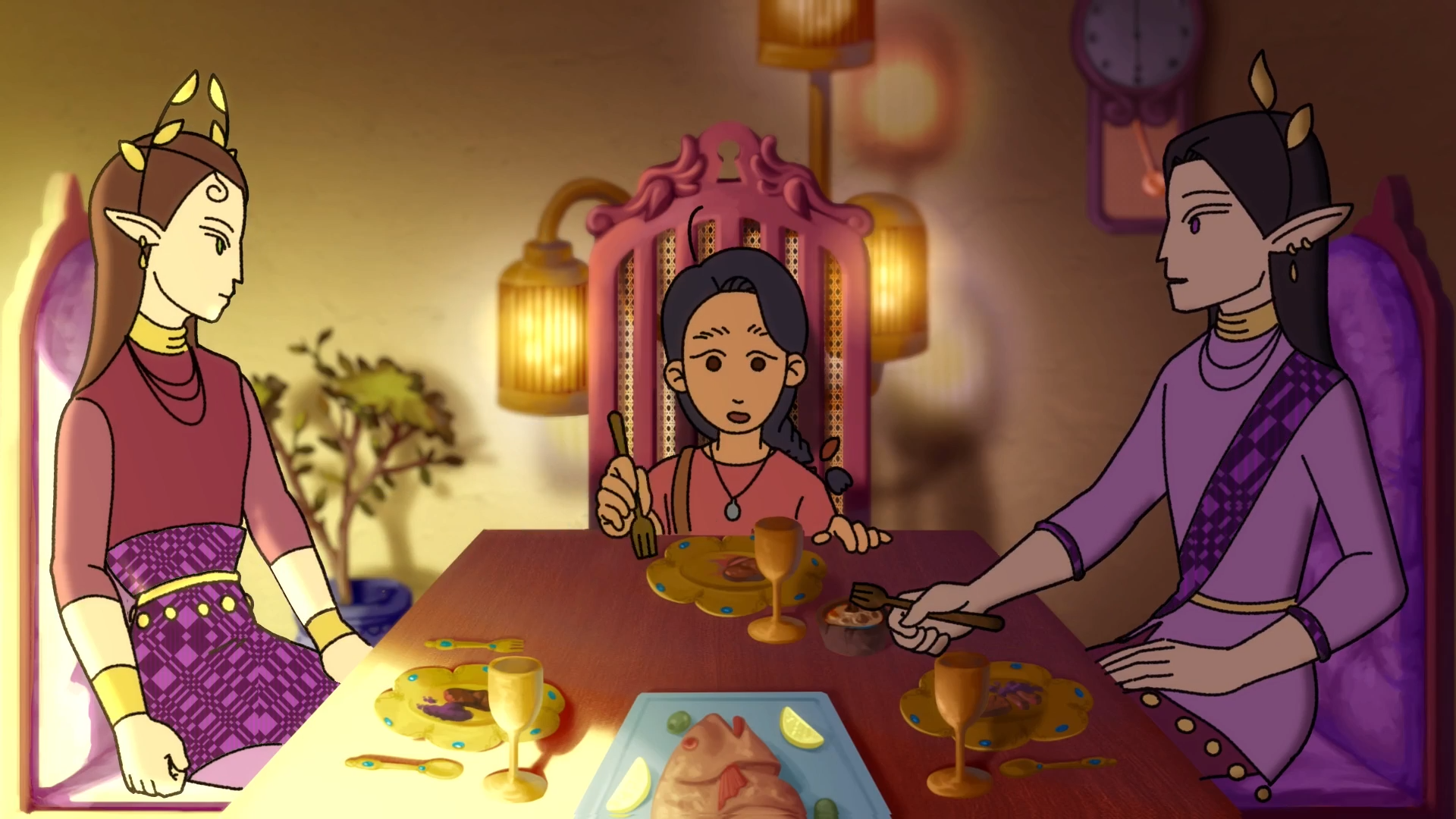
Scenes of eating Black-rooted rice | Film stills from Ang Itom nga Kanaryo nga Ugat and Biringan: Fear of Black Rice
Black-rooted rice is known in folklore as enchanted traps because when they are eaten, they trap you, and you can never return home. These are usually offered by folkloric creatures such as the engkanto, who prey on lost humans in the forests themselves to trap their victims. These kinds of offerings are also interpreted, such as Mercy De Felix’s Biringan: Hanapan ng Nawawala, where eating the black-rooted rice traps you in the Biringan City. However, given the film’s context of familial trauma and dealing with losing a family member, eating black-rooted rice is imagined as escapism from reality’s pains, from being constantly terrorized by the military that led to her father’s disappearance. Contrastingly, in Leonard Ian Billones’ Itom nga Bugas Kanaryo nga Ugat, black-rooted rice is also used as an offering by the Tamawo to abduct children but is put into the film’s context of sexual abuse of children. The eating of the black-rooted rice is reimagined as trapping the children in an endless nightmare in the aftermath of the sexual abuse. Folklore such as the Tamawo are more powerful narratives than blaming the perpetrator, as rural communities, such as in both films, only grapple with what they know and would often resort to folklore to understand what’s happening around them rather than finding accountability. Eating the black-rooted rice in many of its modern interpretations still serves the same purpose as an enchanted trap for its victims, but how it is offered and the purpose of its offering is now reimagined to reflect the modern political climate of the times.
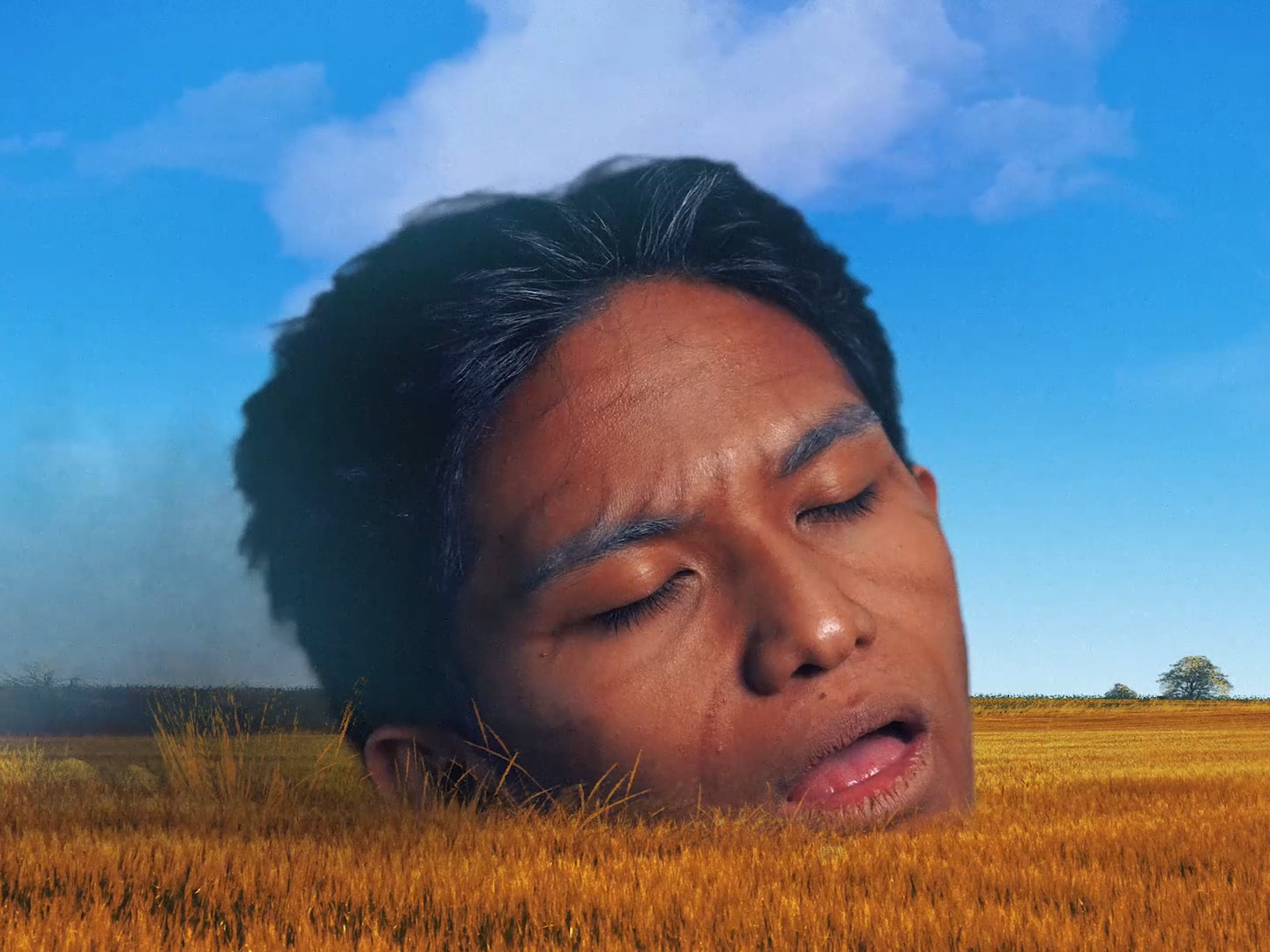
Sleeping Nuno | Film still from Nakakapagpabagabag Kapag Kinakabag Ka
A recent standout of alternative films is Earl Justin Cruz’s Nakakapagpabagabag Kapag Kinakabag Ka, which uses the folkloric creature Nuno to be a visual spasm on how the invasion of Chinese on Filipino land is utmost the worst disrespect towards it, reflecting the wrath of nature towards its imperial invaders, and Melver Ritz Gomez’ Nagmanto, which uses the folklore of the Paoay Lake and reimagines it to show how it represents the nation’s problem of fanaticism and blind following towards its strongman leaders, borrowing similar allegories with the biblical Gomorrah City. Its use of a regional story harrowingly becomes an alternative imagination of a Filipino society, not only constrained in one region’s context but in the overall nation. It can be interpreted that these behaviors of Filipinos still predated the pre-colonial era and continue to shape society today, only enabled by a capitalist and fascist state. However, this doesn’t overshadow how pre-colonial Filipinos had more progressive societal values than modern society, just like how women also used to go to war with men in the legend of Kapitan Tercero as imagined in Jade Evangelista’s Wetsitales: Mengal Kapitan Tercero. The lessons we learned from reimagining folklore have now become a reflection of a decaying democracy.
What this essay tries to produce, rather, is to develop more appreciation for works that are from Filipino filmmakers. If people are really looking for works that are “malalim,” then they should start looking at Filipino short films. Alternative works are deprived of the political economy that dictates them; because of this, short films truly reflect the personal and political intents of the filmmaker. With the many regions in the nation, each with their respective stories and contexts, alternative filmmakers continue to make many films about the current status quo, rooted in their regional and personal histories. Folklore is not just archetypal but it also becomes avenues for how one would understand the world around them. Folklore is no longer weaponized but is now used to challenge imprints of colonial trauma. With regional cinema and folklore, they continue to disrupt how the nation is imagined into the many alternative imaginations that are of the archipelago. All that’s waiting is an audience to watch them.