
Revisiting ‘Final Wars’: The Party at the King of the Monsters’ Funeral

Feature art by Arri Salvador
The Millennium
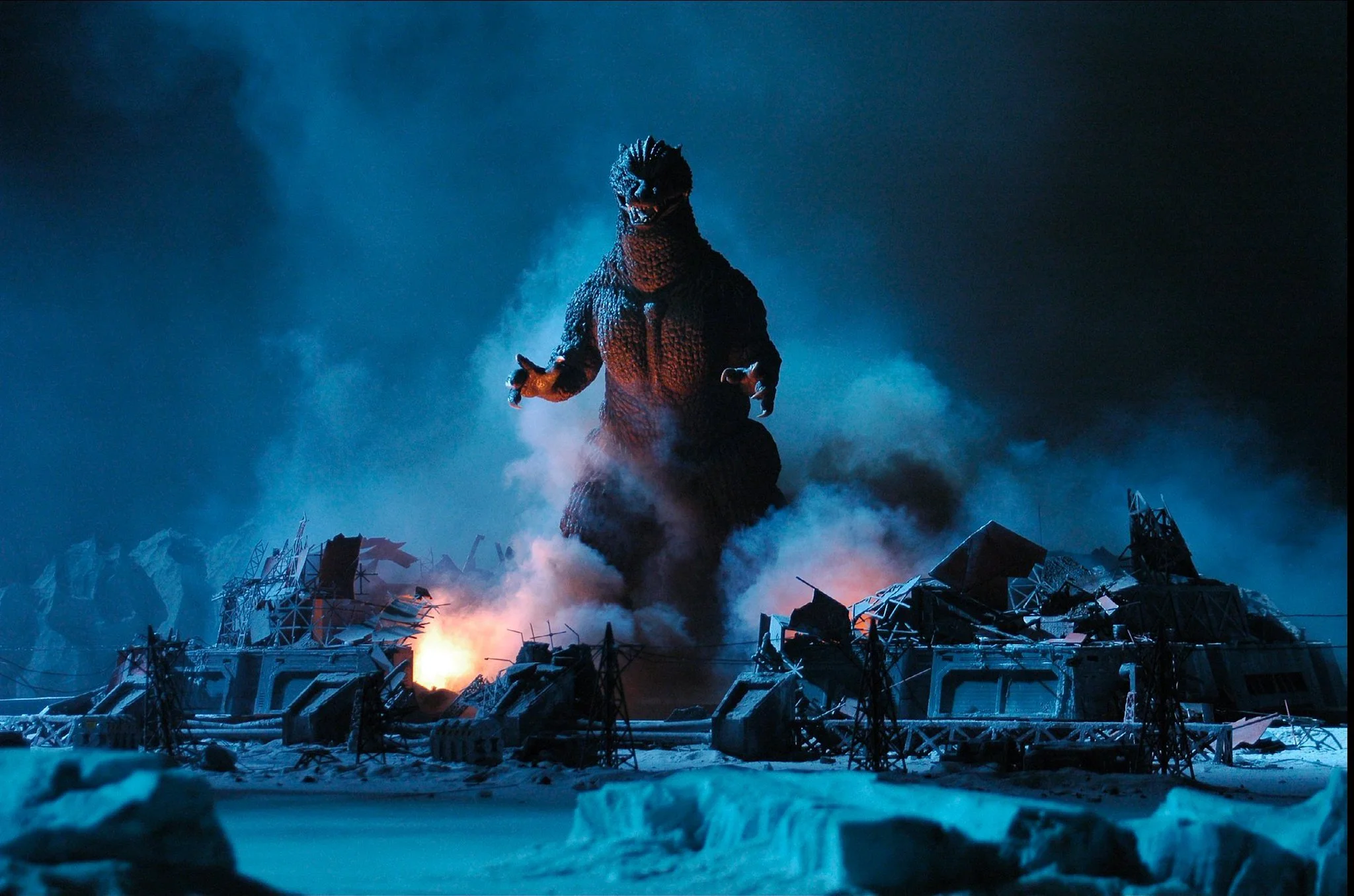
Godzilla in Final Wars / Toho
Godzilla didn’t leave the Heisei era quietly—he went out in flames. 1995’s Godzilla vs. Destoroyah was sold as the end of the King of the Monsters himself, and audiences showed up for the funeral. The film grossed roughly ¥3.5 billion in Japan against a reported budget of around ¥1 billion, sending off the series on a commercial high rather than burying something already unwanted. Toho was content to leave him there for a while, giving the floor to Hollywood, which was preparing its own American Godzilla. The studio had no plans to bring the Japanese incarnation back for a decade after Destoroyah. For once, the King would be allowed to sleep.
He only slept for four years.
Roland Emmerich’s Godzilla arrived in 1998 and transformed Toho’s lumbering atomic monster into something leaner, faster and conspicuously more animal than god, not to mention a lot more computer-generated than handmade. It made money, but the reinvention was widely panned by critics and bitterly rejected by many fans who had spent decades with a very different idea of what Godzilla was supposed to be. The creature ran from the military. It reproduced. It died under conventional military fire. Whatever else it was, to those protective of the original, it was something wearing Godzilla’s name without his spirit. Toho suddenly faced the prospect that this giant CGI lizard might become the image people carried whenever they heard the name Godzilla. So the studio made an abrupt decision: resurrect the King of the Monsters.
Godzilla 2000: Millennium feels, in hindsight, like a movie born as much from reclamation as reinvention. Toho wanted its Godzilla back, but bringing him back was easier than deciding what a new Godzilla should actually be. The film gave him a redesigned body, digital effects and a coat of turn-of-the-century polish, yet beneath it all remained the familiar machinery of Japanese tokusatsu: the man in the suit, the miniature cities, the pyrotechnics, the carefully constructed illusion of something enormous moving through a world made small.
None of that was the problem. If anything, the handmade quality of these films is part of their enduring beauty. The problem was that the world around them was changing faster than Godzilla was: Jurassic Park had already made the boundary between practical creatures and computer-generated ones seem almost invisible; Independence Day turned model cities into apocalyptic spectacle through miniature work and digital compositing; then The Matrix made action itself feel newly elastic, bending bodies, cameras and time into shapes blockbuster audiences had never quite seen before. These films were not abandoning practical effects. They were finding new ways to make old techniques speak a new language. Toho, by comparison, seemed to be just adding new words to a grammar it had been speaking for decades.
By then, the audience’s idea of what blockbuster spectacle could look and feel like had shifted considerably, and Godzilla was having a harder time keeping people in their seats. Godzilla vs. Destoroyah had drawn around four million moviegoers in Japan. Four years later, Godzilla 2000 managed only two million, while Godzilla vs. Megaguirus fell further to 1.35 million. Shusuke Kaneko’s Godzilla, Mothra and King Ghidorah: Giant Monsters All-Out Attack briefly interrupted the slide with 2.4 million, an important exception because it suggests the old tools themselves were hardly the problem when placed in the hands of a filmmaker with a strong enough vision. But the momentum vanished again, with Tokyo S.O.S. drawing just 1.1 million. By comparison, the seven Heisei films averaged more than three million admissions each. The Millennium films were now playing to roughly half that audience.
By 2004, even Toho seemed ready to admit defeat. The studio had spent the early Millennium years rebooting continuities, resurrecting familiar monsters and leaning on decades of nostalgia, yet none of it had solved the problem that mattered most. For all their differences, the films often moved and felt very similar to one another. Longtime Toho producer Shogo Tomiyama acknowledged the larger problem when he admitted that, despite everything they had tried, they simply were not attracting new fans. Godzilla was turning fifty that year, and Toho had decided that his anniversary film would also be his last for the foreseeable future.
So another funeral was being prepared. But if Godzilla was going back into hibernation, Toho had no intention of letting him go quietly. This was still his 50th birthday, after all, and the studio wanted one hell of a party before putting him back to sleep. And for that, they found exactly the right madman: Ryuhei Kitamura.
A Madman Emerges
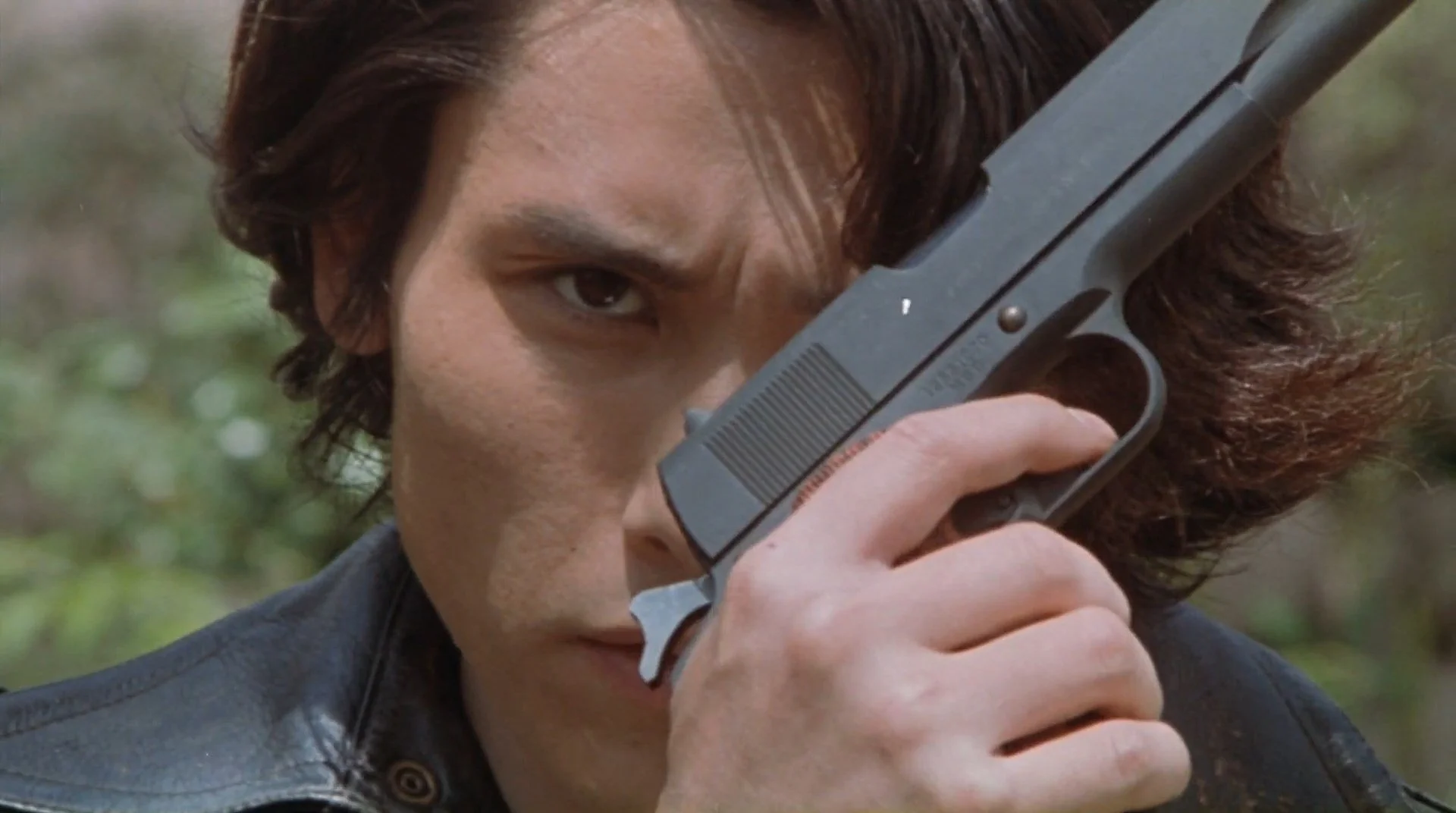
A still from Versus / Distant Horizon
By this point, Kitamura had already built a cult following and a reputation as a filmmaker who refused to behave. His breakout indie action horror film Versus plays like the work of someone who looked at the boundaries separating genres and decided they were getting in the way of his amusement. Zombies, yakuza, gun-fu, kung-fu, horror and comedy all collide with the restless enthusiasm of a filmmaker trying to cram everything he loves into one movie. The filmmaking moves with the same energy: cameras rushing into the action, rapid cutting, exaggerated poses and bursts of physical movement that turn simple confrontations into live-action anime duels.
Frustrated by what he saw as the lack of real entertainment in Japanese cinema at the time, Kitamura drew from filmmakers like Sam Raimi, John Carpenter and George Miller, whose work reflected something he valued deeply: the feeling that somebody had physically put the thing together. He has spoken about preferring the handmade power of films like Mad Max and Raimi’s early work to the sterility he sometimes felt in computer-generated spectacle, and about being drawn to movies where the sweat and lunacy of making them somehow survived into the finished image. That philosophy seemed perfectly at home with Godzilla’s tradition of men in rubber suits stomping through miniature cities. The difference was that Kitamura had no interest in treating tradition like something too precious to rough up.
By the time Toho came calling, he had already taken that sensibility into larger productions like Azumi and the hyperstylized cutscenes of Hideo Kojima’s Metal Gear Solid: The Twin Snakes. Shortly after Azumi opened, Tomiyama asked to meet him and offered Kitamura a chance to step into what he called the “Godzilla ring” for the monster’s 50th anniversary film. Kitamura had never spent his career dreaming of directing Godzilla, but as he later put it, who could possibly resist?
What made Tomiyama’s choice of Kitamura so fitting was that the director walked into the job carrying many of the same complaints Toho had finally been forced to confront. He thought the Millennium films had become too similar, too slow and too comfortable with the same rhythms. He wanted more action, more speed and a much harder break from what had come before. Tomiyama didn’t disagree. He told Kitamura that the franchise had hit a wall and needed new blood. There was little point in bringing him aboard only to ask him to make another conventional Godzilla movie, and Tomiyama was willing to let him swing. The movie would be aptly titled Godzilla: Final Wars.
And Kitamura swung hard.
Operation Final War
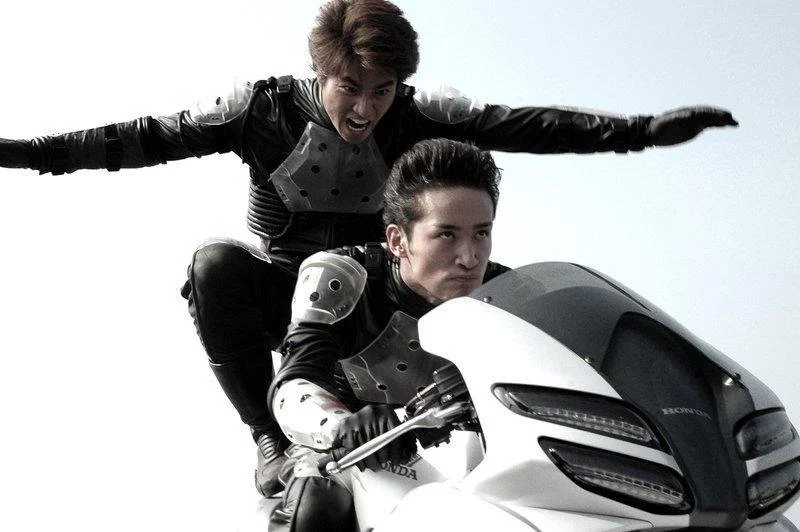
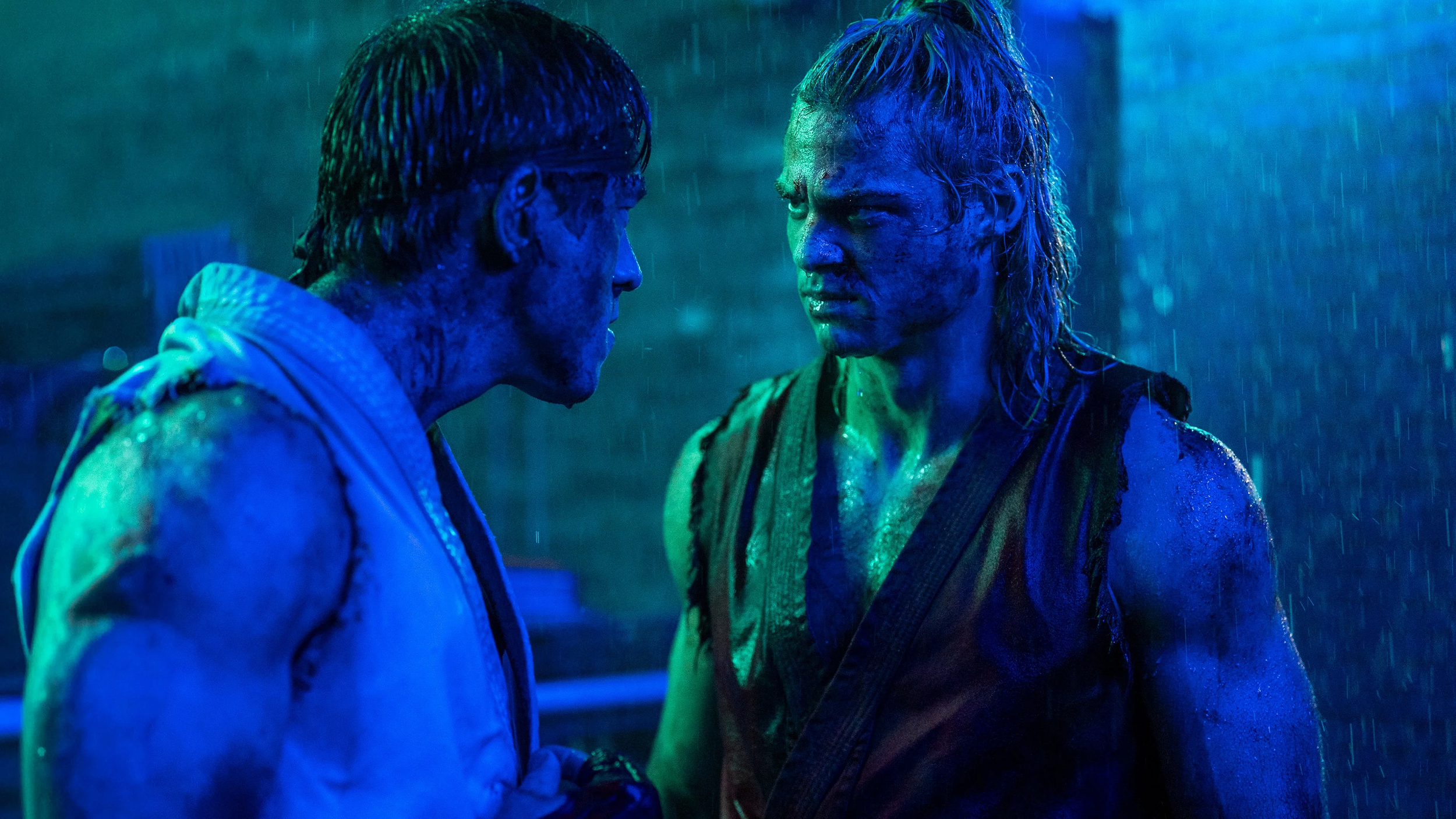
Masahiro Matsuoka and Kane Kosugi in Godzilla: Final Wars / Toho
Working with a reported ¥2 billion budget, the largest Godzilla had seen at the time, Kitamura joked that his job was to somehow make ¥2 billion look like ¥5 billion. That sense of scale is all over Final Wars. The story sprawls across the globe, monsters from across fifty years of the franchise come pouring back in, and familiar Godzilla imagery freely mingles with martial arts, leather-clad aliens, mutants, and enough explosions to make the whole thing feel almost too big for the frame containing it.
Kitamura later recalled sitting around a table with Tomiyama and screenwriters Wataru Mimura and Isao Kiriyama, literally moving Godzilla toys around as they debated which monsters should make the final lineup. It is difficult to imagine a more appropriate image for the film taking shape: 50 years of franchise history spread across a table, waiting to be played with again.
What Kitamura does with all those toys, however, is what really separates Final Wars from the Millennium films before it. There is a liveliness to the film that they rarely had. It doesn’t settle into the measured rhythm of people sitting around control rooms waiting for the next monster attack. The camera seems more eager to move, the cutting has more urgency, and bodies rarely seem content to simply walk somewhere when they could sprint, flip and slide instead.
That energy extends well beyond the kaiju material. Hong Kong martial arts, wire-fu, anime, video games and the broader superhero tokusatsu language of Kamen Rider and Super Sentai all bleed into the movie. Mutant soldiers leap through the air, motorcycles become weapons, and tiny humans armed with rocket launchers and laser guns charge towering kaiju before striking exaggerated anime poses over their victories as if the difference in size never mattered. Kitamura had already been playing with that vocabulary in Versus, Azumi and Metal Gear Solid: The Twin Snakes. Now he had an entire Godzilla movie to play with.
All of this makes Final Wars perhaps the Millennium entry most unmistakably plugged into the 2000s. Its wire work, speed-ramping, rapid cutting, stylized lighting and Matrix-era action absorb the filmmaking moment around it in a way the earlier films rarely did. That difference is especially clear in the camera. Traditional tokusatsu filmmaking had good practical reasons to favor controlled compositions, since miniature sets, suit performers and visual effects all had to coexist within carefully constructed frames. Kitamura pushed against those restrictions even when VFX supervisors warned him that tracking shots and wider framing would make the digital compositing harder, bringing the camera closer to the action and giving the miniature sequences the same intensity as his human fights. The camera no longer feels like an observer outside the arena but a participant inside it.
The score reinforces that shift. Kitamura, a lifelong Emerson, Lake & Palmer obsessive, recruited Keith Emerson and encouraged him toward a more aggressive, synthesizer-heavy sound that could make the blood pump. Completed with Nobuhiko Morino and Daisuke Yano, the score is a wild collision of progressive and symphonic rock with hard industrial techno, full of synthesizers, guitar riffs, pounding percussion and pulsating electronic rhythms. Where Godzilla had so often arrived with stately brass and orchestra behind him, Final Wars sounds like someone plugged the whole franchise into a rave and a rock concert at once. It doesn’t simply sound louder. It sounds younger.
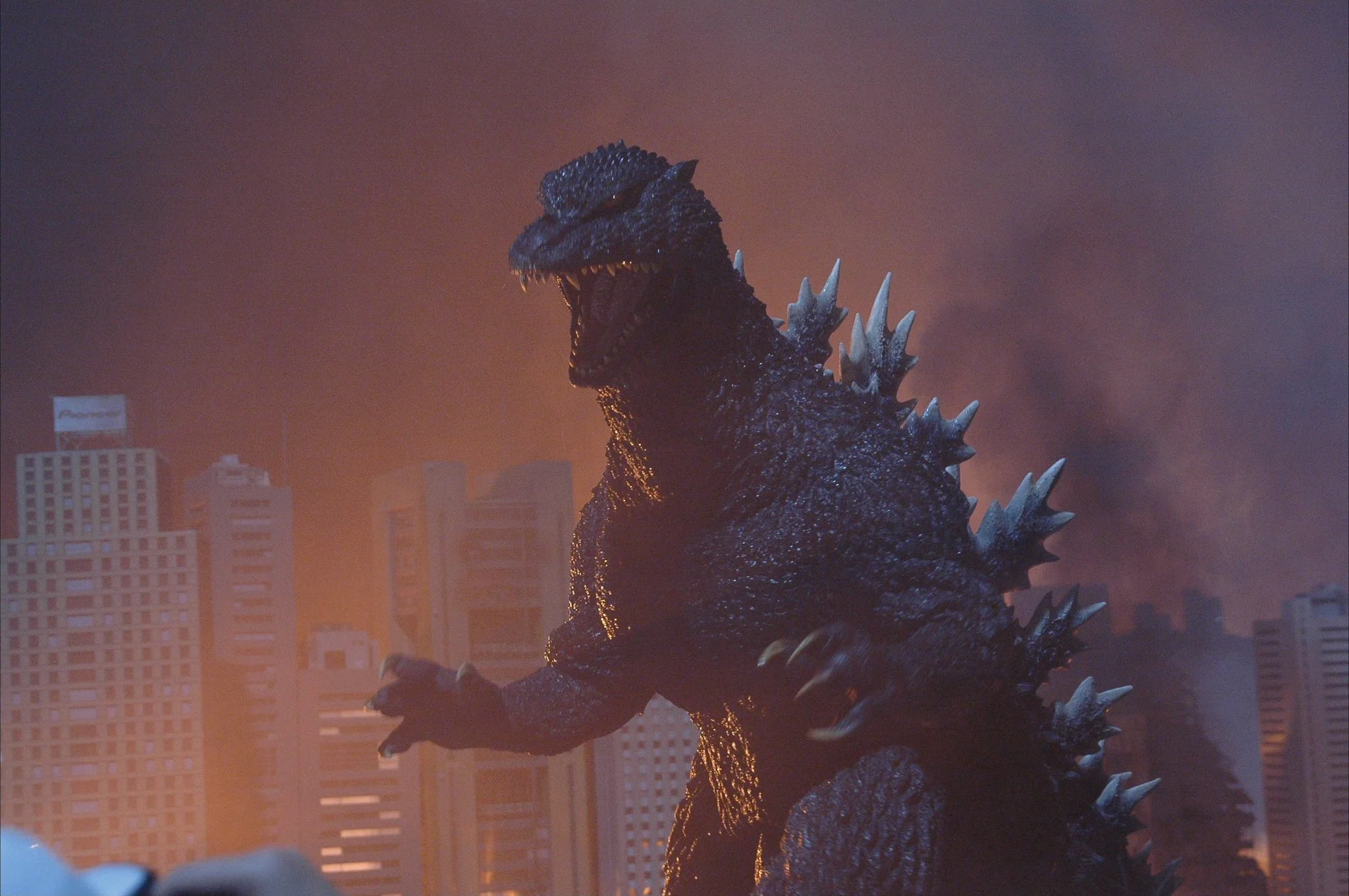
The same thinking changed the monsters too. Kitamura wanted more speed and athleticism, so suit designer Shinichi Wakasa redesigned Godzilla around a leaner, more mobile frame. The result is less monster slapping and sumo and a whole lot more WWE: Godzilla runs, he tackles, he throws heavy haymakers and chucks monsters across the battlefield. This was hardly the first time Godzilla had been limber; the Showa films routinely had him punching, kicking and wrestling his opponents with an almost cartoonish looseness. Final Wars taps into that same physicality but gives it a much harder edge. Kitamura treats the monsters like performers, asking the bodies inside those heavy suits to move with the intensity and force of action stars.
He also reconsidered how those suits were photographed, rejecting the bright, even lighting of some Millennium films in favor of deeper contrast and stronger shadows. For all its stylistic upheaval, though, Final Wars never stops being tactile, handmade Godzilla. The suits, miniatures, pyrotechnics and physical collisions are all still there. Kitamura does not modernize the series by sanding away what made it Godzilla in the first place. He takes those old tools and gives them a new swagger and kinetic charge.
The machinery was the same, but the voltage was completely different. If you have spent enough time working your way through decades of Godzilla movies before reaching it, the shift is unmistakable. You can practically feel the electricity coursing through the film. For a franchise that had spent years struggling to feel new again, Final Wars had finally found a different gear. The cruel irony was that, by then, the audience had almost disappeared.
Postwar
Godzilla roars / Toho
Toho had been hoping for at least two million admissions, enough to push the cumulative audience for the entire Godzilla series past the 100-million mark. Final Wars barely made it halfway there. Only around 1.04 million people saw it in Japanese theaters, the smallest audience of any live-action Godzilla film in the Millennium era.
The money told much the same story. Against its reported ¥2 billion production budget, Final Wars finished with roughly ¥1.26 billion at the Japanese box office. That does not tell us whether the film ultimately turned a profit once distribution, overseas sales and home video are taken into account, but theatrically there was little ambiguity. Critics and audiences were just as divided. Some embraced its manic energy and anything-goes spectacle, while others found the two-hour barrage exhausting, overstuffed and far too interested in its human action. The biggest, most ambitious and most expensive Godzilla film Toho had ever made was a complete bomb.
Its disappointing turnout seemed to confirm Tomiyama’s diagnosis: Godzilla had hit a wall. The audience was shrinking, and despite everything Toho had tried, the series no longer seemed capable of attracting new fans. At least, that was what the numbers could tell them.
But Tomiyama’s wall was only real if you froze Godzilla in December 2004. While Toho was wondering where the next generation of Godzilla fans had gone, somewhere in a small barangay in the Philippines in 2006, at least one of them was sitting in front of a boxy Panasonic television hooked up to a DVD player his father had sent home from overseas. And playing on the screen was Godzilla: Final Wars—and he was about to become a fan.
The kid could barely understand beyond second grade English and knew absolutely nothing in Japanese, so whatever Don Frye was saying might as well have been Xilien. But it didn’t matter; he was locked-in. Godzilla was throwing hands with other kaijus. Buildings were crumbling under their weight. Mutants were doing flips and wall-running like characters in a video game. Emerson’s score was pouring through the television speakers. He had no idea what the plot was doing half the time, but the movie moved with such speed and conviction that understanding it almost felt beside the point. Its sheer kinetic energy crossed the language barrier on its own.
He had no idea the movie had disappointed at the box office. He didn’t know Toho thought Godzilla was failing to attract kids like him. And he certainly didn’t know who Ryuhei Kitamura was. He only knew that this ruled. It became a core memory he carried into adulthood. Twenty years later, he walked into a cinema showing Final Wars for the Philippines’ first Godzilla Film Festival, bought his own ticket and finally saw it on a screen big enough for the King of the Monsters. Big and loud, the way a movie this ridiculous deserved to be seen.
That kid was me. And, as it turns out, I was hardly alone. Over the last few years, Final Wars has found a strange second life, not through some grand critical canonization but through something much more fun: people showing up. Its 20th anniversary screening at G-FEST in 2024 sold out, Kitamura appeared at a special Beyond Fest screening the following year, and in 2026, the film sold out again at San Francisco’s G-FEST. The movie that once divided fans has become the kind they quote, meme and apparently know well enough to turn a screening into a sing-along.
I recently saw a video of an entire theater singing along to Sum 41’s We’re All to Blame during the scene where Godzilla faces Zilla, Toho’s name for the creature from the 1998 American film. The fight lasts only a few seconds before Godzilla launches the poor bastard into the Sydney Opera House and incinerates him, because yes, Toho apparently hated that lizard that much. But the funniest part was the audience. Everyone knew the cue and what was coming. Twenty years after Final Wars supposedly failed to find enough people, here was an entire room that knew it like the back of their hands.
Maybe that video was partly why I wrote this. I want to be in that room, and I want more people to discover this ridiculous, ecstatic relic of 2000s filmmaking so that the next time somebody puts Final Wars back on a theater screen, there are more of us there. More people hearing Don Frye drop his one-liners, watching Godzilla throw haymakers, rocking to Sum 41 while Zilla gets smoked, maybe even feeling some of the same mania I felt all those years ago in that tiny room. If this feature gets even one cinephile curious enough to seek out Final Wars, then maybe the next room gets a little louder. The party’s still going, so consider this your invitation.
Godzilla: Final Wars was screened as part of the 2026 Godzilla Film Festival, which ran from October 14 to 20 exclusively at SM Cinemas.