
‘Sandy’ REVIEW: Slipping Through My Fingers

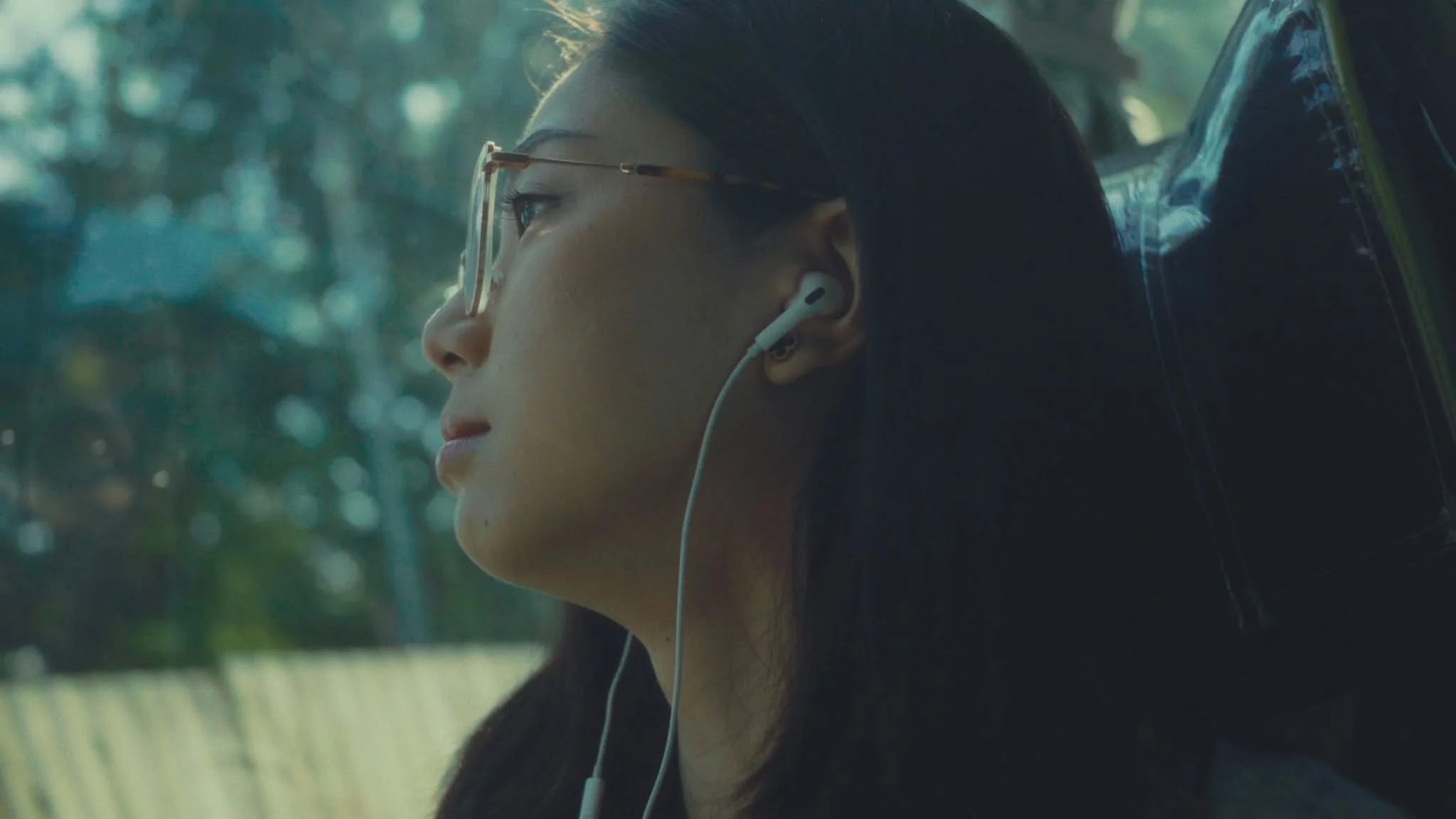
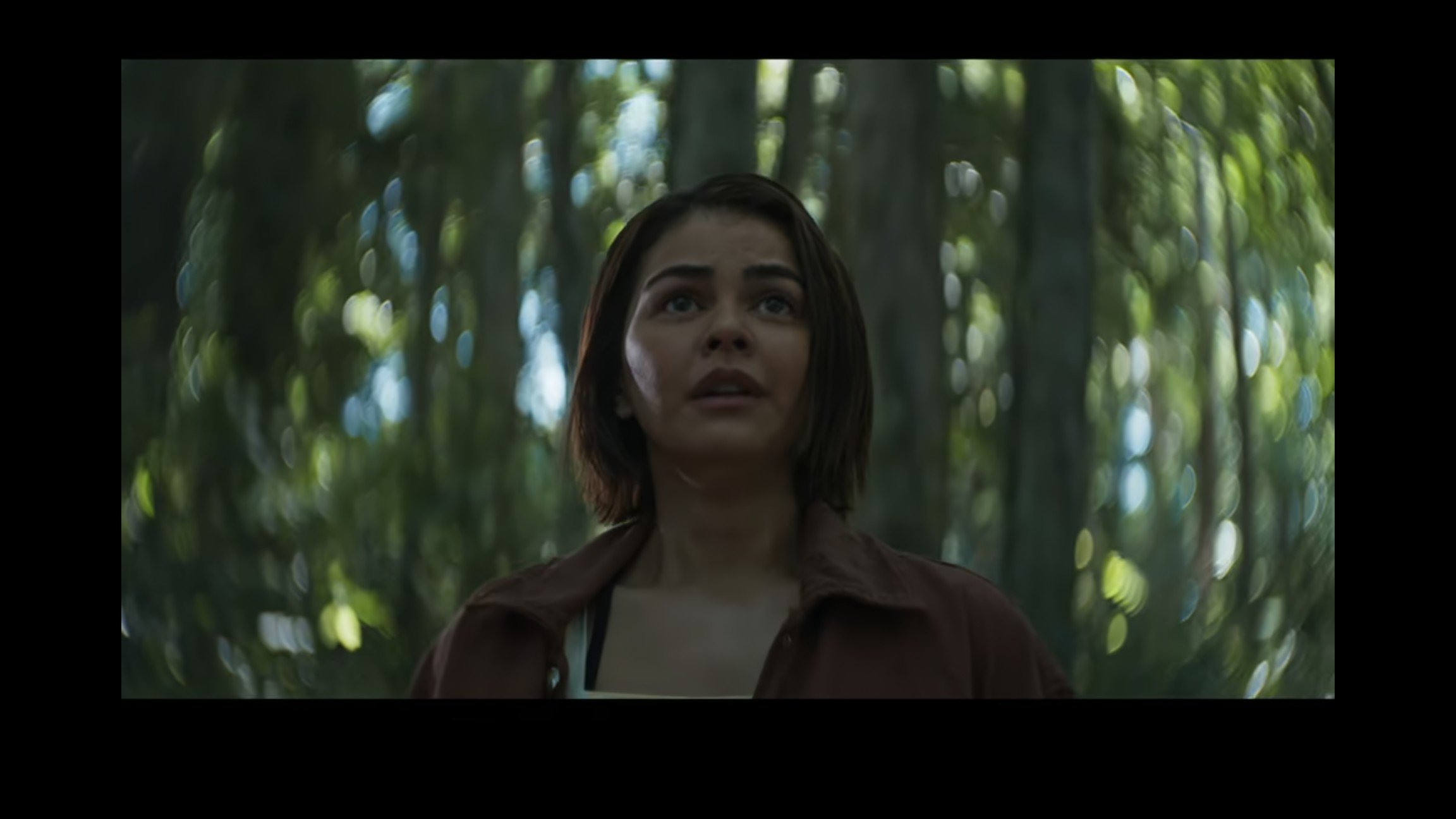
Sandy going back home after dropping off Michelle at the airport
WARNING! This review contains spoilers.
Migration and diaspora stories have recently been a favorite narrative in recent Filipino feature lengths from Cinemalaya 2026: Status: Rejected’s on an aging woman longing for love from a foreigner, Pinikas’ love triangle between an AFAM and a local, and now Neo Bryce Larga’s Sandy. Unlike the former film titles whose narratives on aspirations of leaving the country are intertwined with complicity, as they view it as a means of escaping socioeconomic hardships, Sandy’s more concerned with its tender exploration of holding on to a special someone you can no longer hold on to as her migration to the US is now inevitable.
Neo Bryce Larga’s Sandy follows the titular character (Christabel Erica Nicolas) and her last remaining days of spending time and leisure with her best friend Michelle (Agatha Libera) before she leaves and migrates to the US. The story is rather simple and deprives itself of melodrama commonly associated with migration stories, as they tend to overdramatize the idea of the inevitable end of a special someone’s departure to another city or country. Sandy’s silence more so reflects the titular character’s overwhelming internal bargaining that she chooses to hide, and this becomes her character struggle throughout the whole film and how she deals with it.
The film doesn’t glamorize or romanticize itself much on that neocolonial lie of living a better life in the US, as we are put in the perspective of those who are left behind. Michelle has her share of perspective in her scenes, but they mostly reflect her contemplating Sandy’s reserved behavior. Sandy’s dealing with life’s uncertainty and balancing responsibilities while her best friend is leaving in a few days is asking us about our privilege of time and how we can’t always afford it, even though we want to. And even though we have, we tried to make the most of it, just like Sandy and Michelle spend their last days doing what they wanted to do. Growing up makes us realize that we can’t always hold on to everything
It’s very interesting how its execution of a mockumentary approach doesn’t satirize the whole experience but instead uses it to the film’s advantage, capturing the raw emotions and energy, mimicking how actual documentaries capture and frame real truths, and how Sandy is feeling throughout the whole film is her truth. How the shots are framed and angled also reveals a discomforting perspective that feels like we are gazing into the lives of two best friends, and how its metacinematicness puts us as a silent witness to their intimate relationship.
This kind of cinematography informs us that we are looking into their personal lives, and in some way the filmmaker character in the film is using their story for his own narrative in how he views migration. The film rather exudes authenticity than performance. It’s also very comedic in the characters' self-awareness of a camera and their tendency to insert it into their conversations and ask for consent every time before they start a conversation.
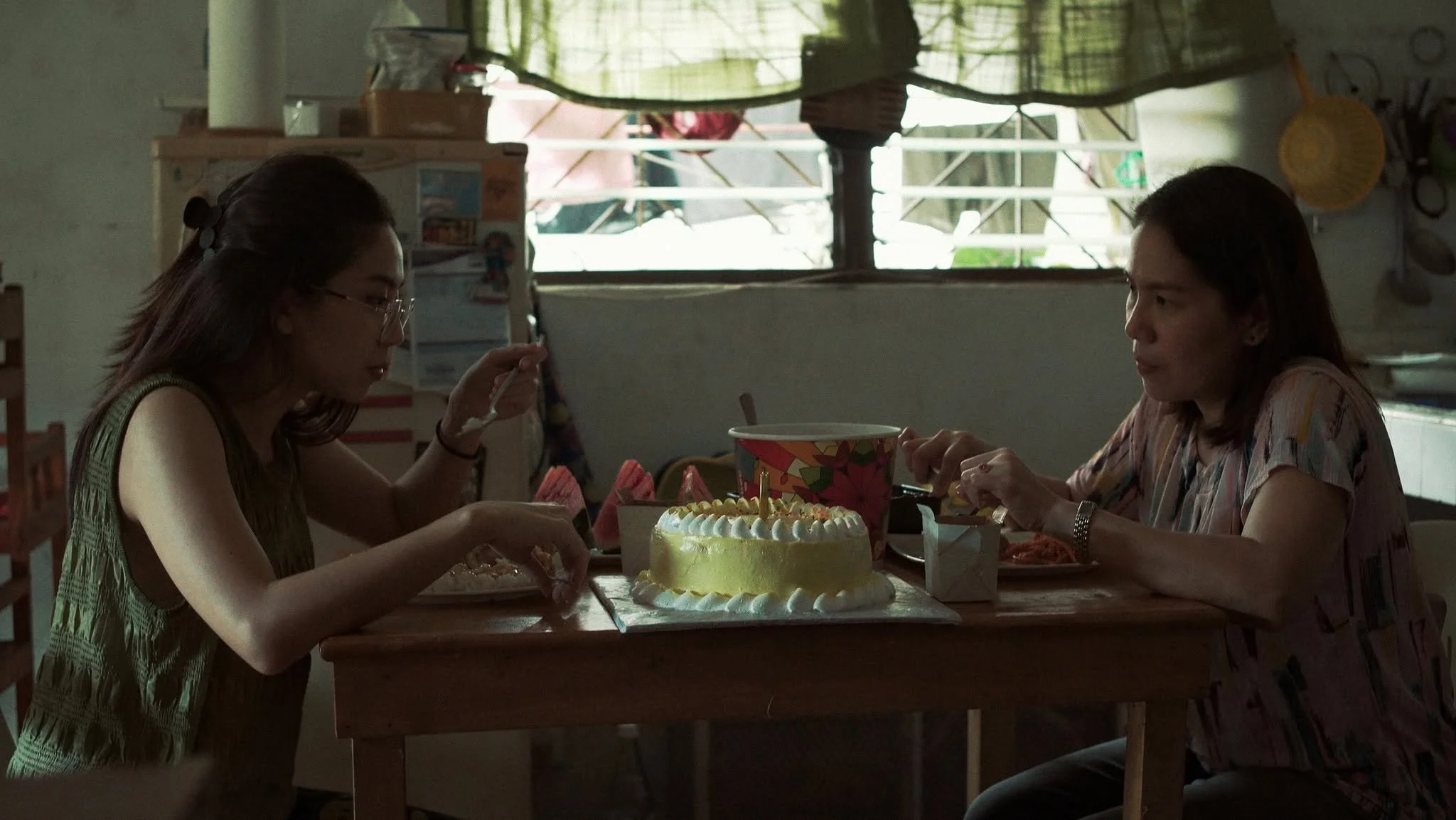
Sandy and her mother at the dining table
The film wouldn’t work without the charming performances of Nicolas and Libera, the two leading actresses, whose portrayal of Sandy and Michelle brought life to the tension of friendship challenged by time and one’s departure. Their contrasting personalities make up most of the film’s colorful storytelling and how they complement each other to fill in each other’s narratives. Sometimes they are distant, and sometimes they are also close. Their moments together are both awkward but also intimate but this clash reflects rather heavily on the deeper relationship between them, as they feel safe only within each other and Sandy’s resistance to accepting the truth of Michelle’s leaving.
Sandy’s exposition of her character, from her broken family, her academics, and her beliefs, shapes how Sandy would grapple with dealing with things that she’s newly exposed to or can’t control. Even in her bedroom scenes where she is in her silent lone moments where she expresses some sigh of frustration and disappointment in how Michelle would always insist to hangout but her priorities would always become an obstacle, but Sandy is aware of the time running out before Michelle’s eventual departure and it must be overwhelming for her as if she doesn’t know how to feel. Sandy’s grip on accepting reality is now slowly slipping away.
Sandy’s emotional suppression is the cinematic highlight of the whole film. We don’t see her expressing much at the start, and she performs stillness rather than showing emotions. And the only time we see her crying is at the end of the film, when she finally realizes that it’s all too late now. Her lone moments on the bus become her catharsis. While the camera slowly gazes, we not only see a character crying but also how everything finally sums up and catches up to her in that emotional breakdown. She would have persisted in telling Michelle to stay, but she didn’t. Sandy has her regrets, but she’s still grappling with life, and her silence is her means to understand the world that she could no longer hold on to. It may be bittersweet for Sandy that all of the things are now left unsaid.
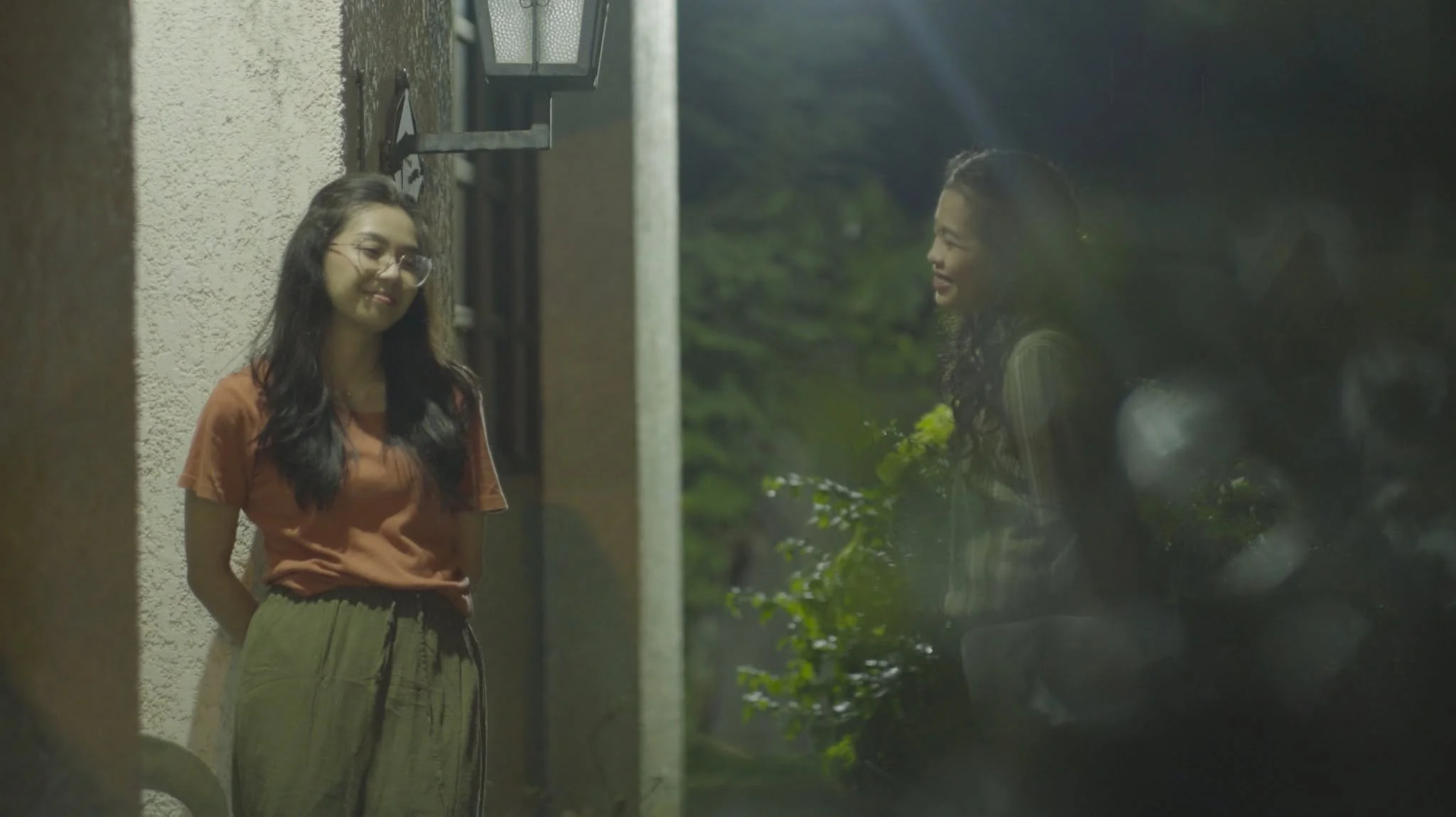
Sandy and Michelle spending their last night together
But maybe Michelle’s departure also makes a catalytic point for Sandy to appreciate what’s left at home, just like her mother, who is her only remaining family, and her hometown, and the people in it.
The film was made in two years and is mostly self-funded, similar to most regional films like Pinikas that have taken years for their production before finally premiering. What we know of regional cinema is mostly short films because of the material conditions that limit regional filmmakers from making longer films.
We no longer have to abide by mainstream studio expectations to take interest in stories from Mindanao with their orientalist lenses, as we already have filmmakers here who can make it and capture that regional perspective better. Making Sandy is proof that films are made possible because of love and the community that cherishes regional cinema.
‘Sandy’ was the opening film of the 6th Oroquieta Film Festival and the closing film of the 16th Binisaya International Film Festival.
Follow the big twist Facebook page for more updates and upcoming screening dates.