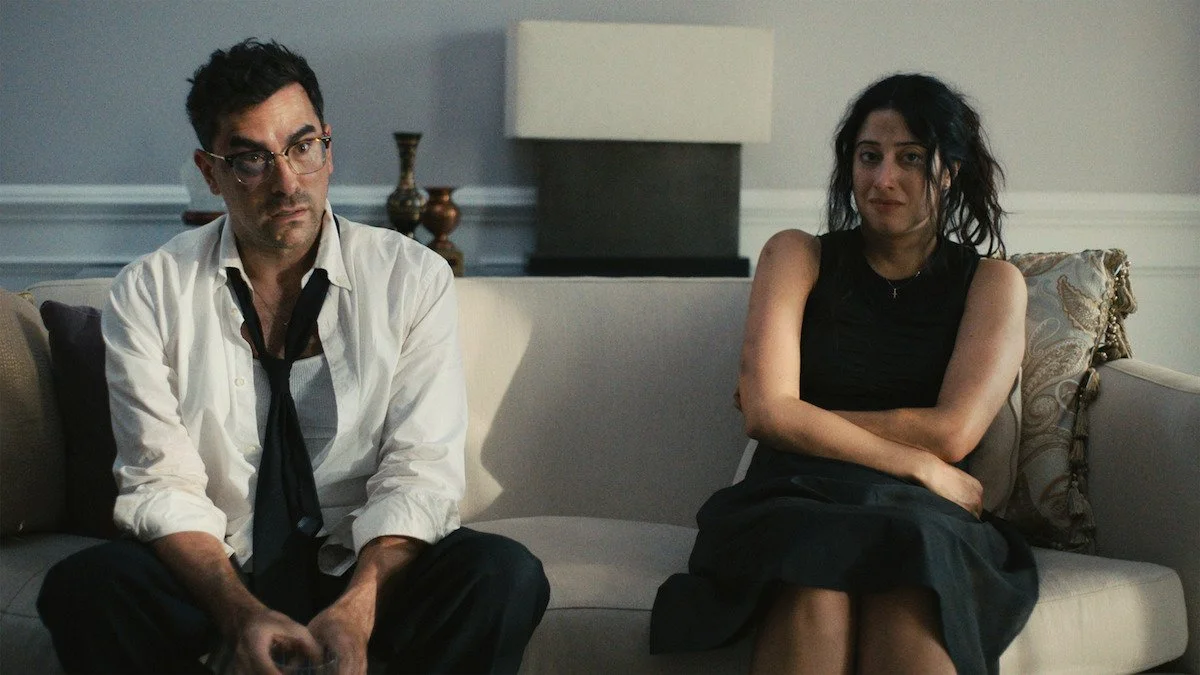

‘Possible Love’ REVIEW: Living On

Possible Love establishes, from its title alone, a tension between promise and precarity. As one laid-off worker mourns, it is almost as though happiness itself attracts punishment. From afar, Ye-ji, an aspiring film director working on her first documentary project, captures this admission through a camera outwardly calibrated to identify what is interesting or, to use a less loaded term, something definitive out of other people's grief. However, such a description risks overstating the clarity of her intentions, or perhaps glossing over what remains difficult to articulate about them. But difficult to whom?
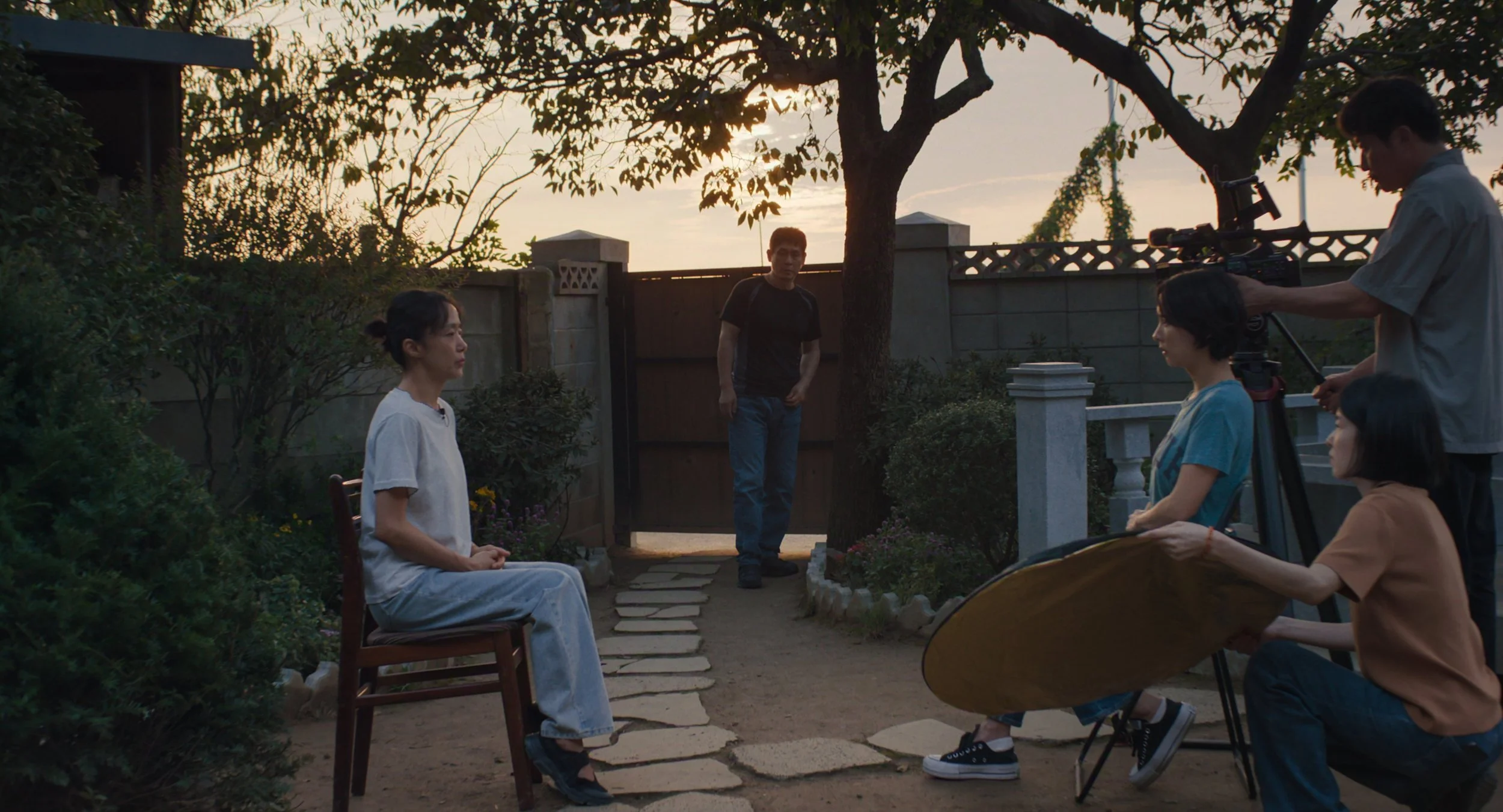
Mi-ok (Jeon Do-yeon) is interviewed by Ye-ji (Cho Yeo-jeong) while Ho-seok (Sul Kyung-gu) tries to keep himself out of the frame | Still courtesy of Netflix

There is something characteristically unresolved about the questions Lee Chang-dong brings to cinema. His latest film, following the festival success of Burning, continues this tradition, arriving after an extended interval and carrying the anticipation that has accompanied his previous works. Here, he turns his attention squarely toward urgent realities of labor that have transpired in South Korea while simultaneously interrogating his own position as a filmmaker who dramatizes stories of such a kind, with particular focus on the relationship between subject and representation.
Possible Love is among the most important films of our time, a sobering account of the insidious violence of everyday existence, enabled by a system in which the means to inflict cruelty becomes the same as the means to endure it. Lee Chang-dong aims to make the invisible visible. And yet, as the film explores with measured sensitivity, the act of exposing does not always amount to revealing.
This dilemma takes on a different, visceral dimension through Mi-ok's participation in Ye-ji's documentary. Whether or not Mi-ok has something to gain from this arrangement, she does not seem decisively concerned with the distinction. At least, not so early on. Despite the ongoing difficulties, she retains a bouncy energy that stands in contrast to her husband, Ho-seok, a man who appears more accustomed to staring into the distance than honoring the promise he made to her wife not to drink soju in public. But can we reasonably expect otherwise of him?
The couple has been laid off following a corporate restructuring prompted by a private equity acquisition, with the company subsequently slated for acquisition by a foreign buyer. Their displacement is only the beginning of a far bleaker struggle, one that brings labor unrest into a confrontation with state repression that trickles downward to collective trauma. And even amid this dire predicament, victims are readily condemned, despite having themselves acknowledged that it was not the police who failed them, but the very justice system meant to protect them.
Their circumstances, then, make for compelling material and, naturally, a subject for Ye-ji's handheld camera, or, more often than not, one mounted on a tripod with an entire crew behind it. If the logic of capital reduces laborers to numbers, making them expendable in the pursuit of profitability, the logic of filmmaking, in this case, is not completely dissimilar: their misfortune becomes something to present, pitch, and ultimately sell.
There is, of course, another story playing out behind the camera, one that concerns the very conditions under which this story is being told. Sang-woo, Ye-ji's supportive husband, asserts that the project is an independent film, one that exists outside the bounds of capital. The declaration, rather fittingly, comes from inside a white Porsche. Meanwhile, Ye-ji's efforts to build rapport and argue for the importance of documenting individual turmoil following the layoffs, placing it on equal footing with the subject of AI replacing workers, lend the project a certain gravity. So much so that it seems to call for a performance of its own, one that requires Ye-ji to resort to "method acting."
In essence, the film is as much engaged with performance, not least in the ways we are conditioned to perform our place within the economic divide, as it is with the unease its actors are tasked with conveying. Jeon Do-yeon's Mi-ok is nothing less than absorbing, embodying a character whose concrete motivations remain largely elusive, even as a clear sense of rage courses beneath her composure. Sul Kyung-gu's Ho-seok might be one of the year's finest performances, if not its very best. There is such crippling sadness in the spaces between his pauses and his halting movements that, by the end, you find yourself almost entirely responsive to the trajectory of his character.
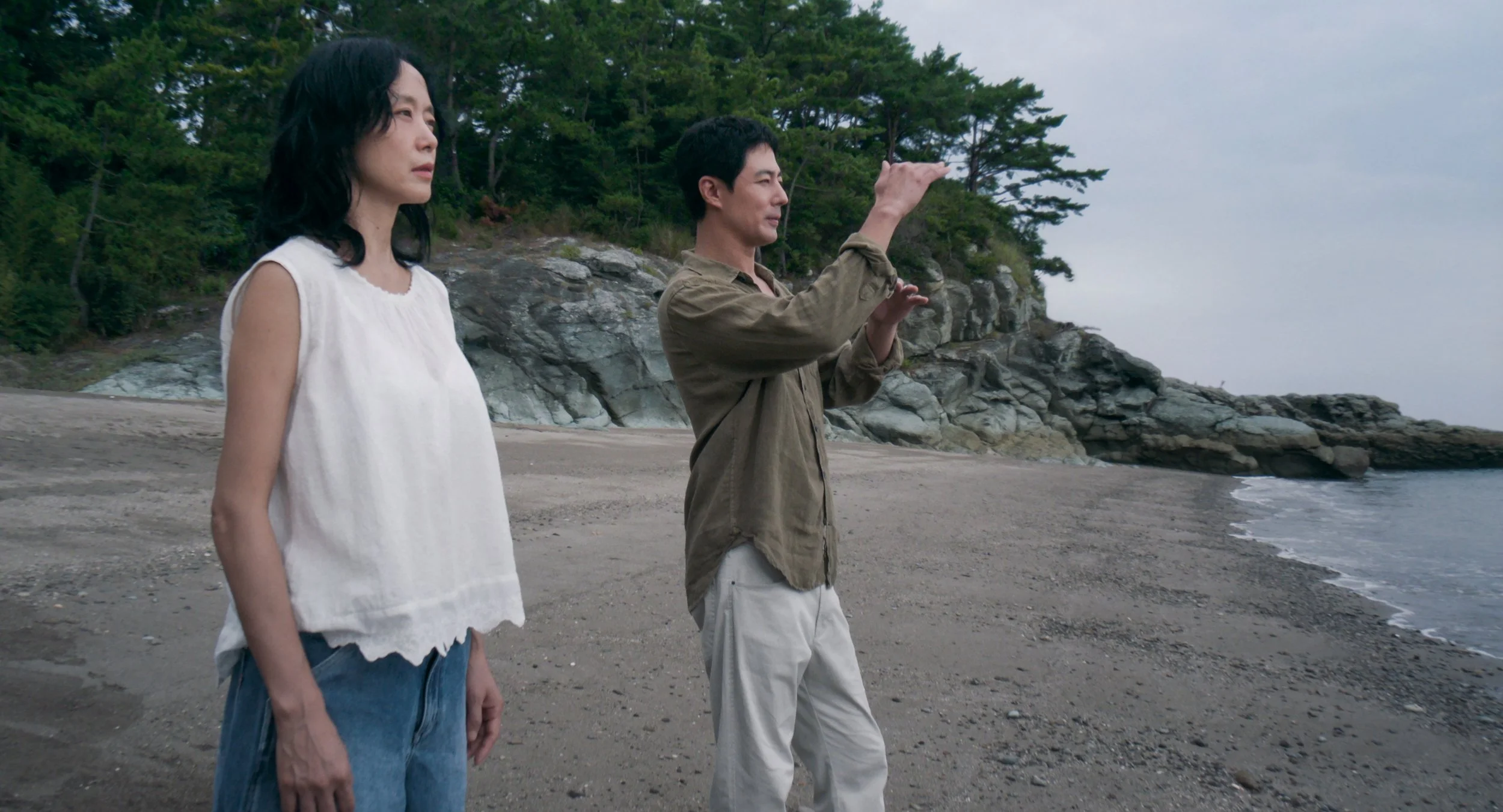
Sang-woo (Zo In-sung) speaks with Mi-ok by the sea | Still courtesy of Netflix
For those familiar with Lee Chang-dong's filmography, Jeon Do-yeon and Sul Kyung-gu are no strangers to his work, having both delivered phenomenal performances under his direction. Possible Love thus marks a reunion of sorts, with both actors having expressed their desire for Lee to revisit a screenplay that had been gathering dust for a decade. They meet the occasion with performances that more than justify bringing the project back to life.
That same excellence finds its way into the film's other central pairing. Cho Yeo-jeong's Ye-ji, who bears a striking resemblance to her wealthy-mother character in Parasite, is so lacking in self-awareness that she sees no problem interrupting an intimate conversation to retrieve her camera for an interview. She is difficult to sympathize with, though not entirely undeserving of it, much as she would like to believe otherwise. Her intrusiveness, along with her earnest eyes, is, after all, instrumental in bringing Mi-ok's past into view. But when it comes to recollecting her own, the similar vividness does not apply. The same goes for Zo In-sung's Sang-woo, who effortlessly scrolls through his phone while eating sumptuous meals, all the while having the audacity to downplay his project's success in front of someone earning barely a fraction of his salary. Each performance proves to find its footing in relation to the others, which makes their interactions all the more affecting.
The film's achievement lies in its characterization, in the chemistry between its actors, and in the little vile ways their characters' inner lives bear upon one another. Both couples covet what belongs to someone else, but what they stand to lose in pursuing those desires is where they diverge and, more importantly, in what they choose to do about it.
Characters continually exchange thoughts, confront their differences, and disclose more of themselves in the process. Conversation is never in short supply. To name what makes a film novelistic is one thing; to explain it is another. Lee Chang-dong and Oh Jung-mi's screenplay bridges this separation through the dignity it affords its characters and the indeterminate psyches that intersect throughout the narrative. They are not simply coordinates on a map, fixed by where they come from and where they are headed.
Possible Love offers no easy answers. It is aware that people arrive at their convictions through different histories, contexts, and ways of understanding the world around them. What ultimately emerges is a more tilting question: what have we lost along the way and what must we recover?
The film's richness, however, extends well beyond what its characters say. Its visual vocabulary carries its own narrative weight, with recurring motifs that build upon themselves, overlap, and recontextualize the relationships between characters and the coinciding conditions that inform their lives. Lee finds little need to aestheticize what is already so expressive, extracting meaning from images that might otherwise pass unnoticed. A wedding ring beneath a car or a bag of chips floating away might hold surprising significance.
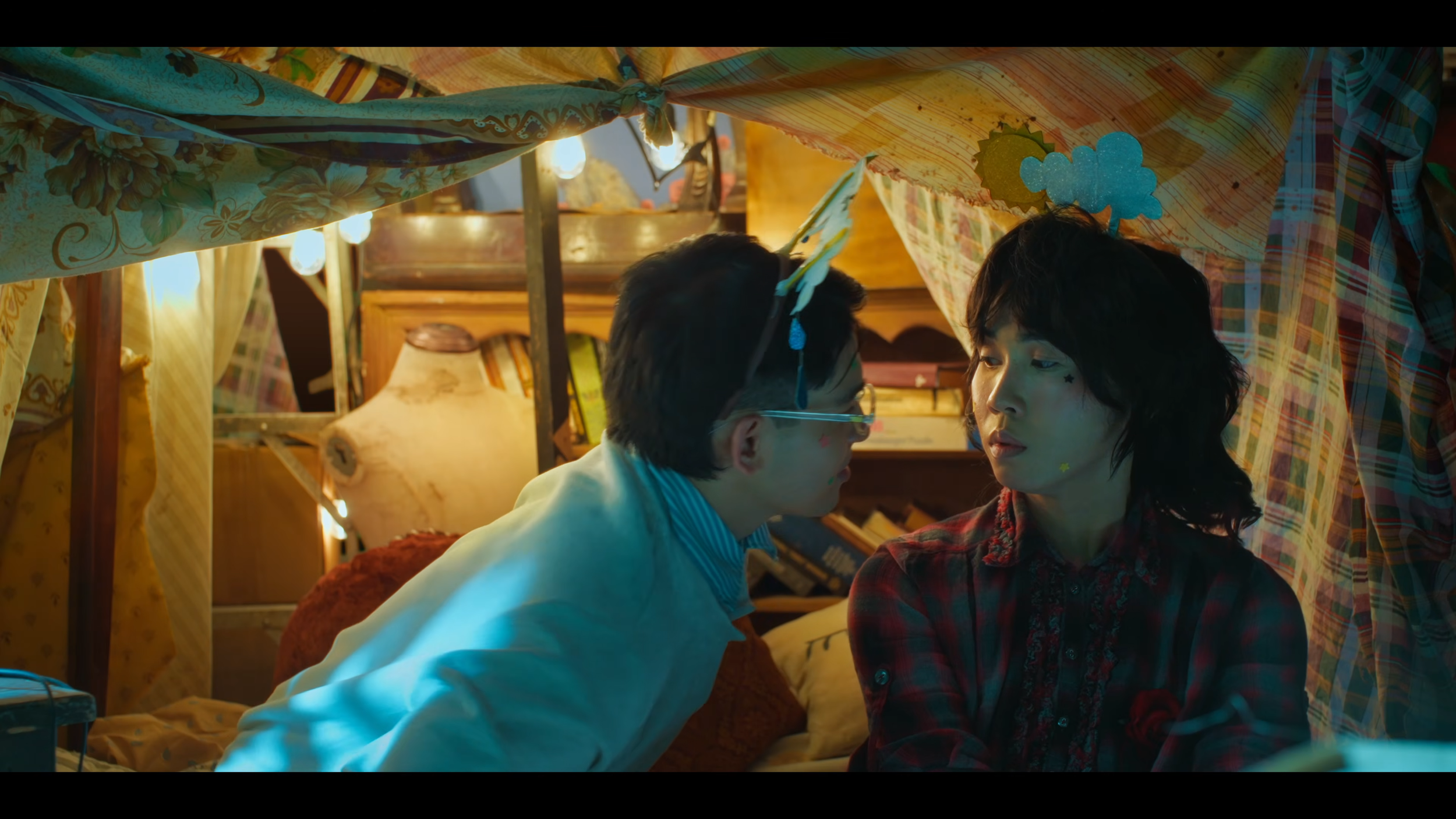
As in Lee Chang-dong's other films, his observational acuity ensures that subtext is never incidental. Airplanes landing on American military bases on foreign soil, a whistle on display, and passing references to life abroad are anything but coincidental. Nothing exists in isolation. Even moments of levity (my favorite ones involve an elephant magic trick and a little dance number) become opportunities for Lee to gesture toward more latent questions, which allows the film's subtext to seethe in ways that are as playful as they are probing.
There are so many standout scenes because of this. In what might be one of the year's most eerie and haunting sequences, apprehension that has been accumulating throughout the film finds its most unsettling register in a scene where silence itself becomes saturated with an overwhelming swell of anger and confusion, as well as an empty chair and a birthday cake. Moments of similar emotional intensity recur throughout the film, including one in its latter half, where an unflinching moment of honesty is laid bare with such heartbreaking resonance that you begin to feel as though you're no longer simply watching a film.
And Possible Love also moves in the opposite direction. Given its preoccupation with documentary filmmaking, the boundary between intimate moments captured under the gaze of a camera and those outside of it becomes more and more blurred and examined. One almost begins to anticipate the presence of a camera somewhere, even when none is visible. It is a curious tension: just as the film draws us so deeply into the emotional lives of its characters that we momentarily forget we are watching a work of artifice, it also reminds us of the distance between ourselves and the people we observe.
The camera becomes an almost inescapable presence. A specter hell-bent on haunting. It raises questions about what it means to witness another person's suffering, what makes capturing necessary, and what inevitably remains beyond the reach of an image. In this sense, the film's emotional immediacy and its awareness of the act of observation are far from being irreconcilable. They speak to the same concern from opposite ends. It manages to give justice to the weight of these lives while never allowing us to forget the conditions under which we are made to witness them.
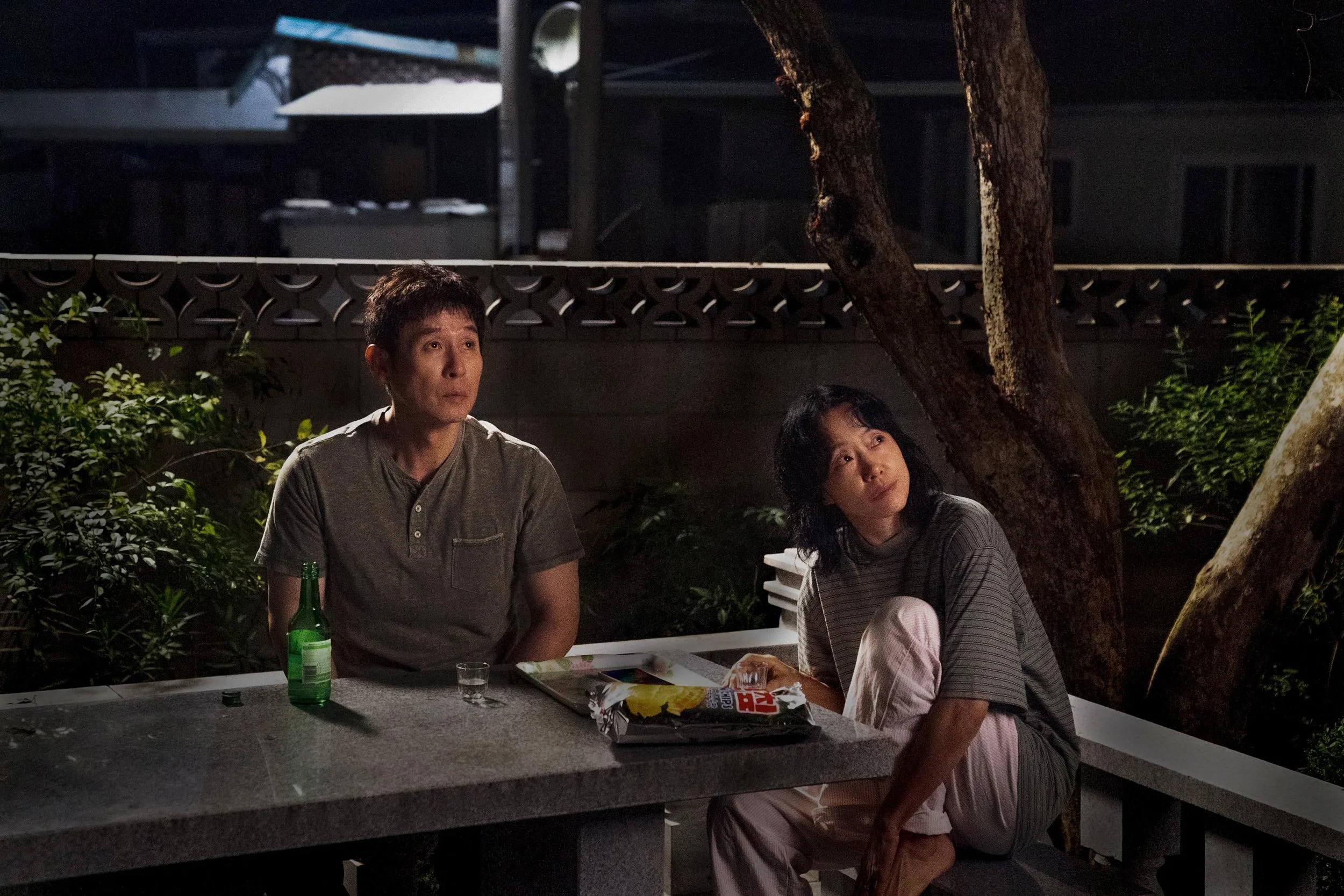
Mi-ok and Ho-seok look above the night sky | Still courtesy of Netflix
In this regard, while Ye-ji positions herself behind the camera, observing Mi-ok and Ho-seok, she and her Apple keynote-presenter-looking husband, Sangwoo, are not exempt from the gaze themselves. They, too, become subjects under the watch of Cheol, the laid-off couple's son, whose very presence exposes something conspicuously missing in the other couple. If the film insists on the presence of a soul, it is equally attentive to the absence of one.
It is in this contrast that the film becomes most opaque yet revelatory, finding a way to place two couples from vastly different backgrounds on comparable ground, without exempting either from their hypocrisies, misgivings, and conflicting desires. Like profitability, temptation derives its appeal from the prospect of acquisition. Unsurprisingly, its most willing accomplices are men whose integrity is readily negotiable.
And so, what initially presents itself as an exploitative arrangement gradually gives way to reversal and catharsis, upending the familiar dynamics of possession. Wealth may afford considerable power, but it cannot purchase intimacy or supersede another person's dignity. Lee achieves this not by flattening their material differences but by showing plainly that social standing alone can never account for the full breadth of one's inner life.
Ultimately, Possible Love meets these social realities head-on, mindful of the psychological depths through which they manifest themselves in the individual. It carries a presence that outlasts the immediate experience of watching it. The film offers no easy consolation, nor does it entertain the convenience of straightforward reassurance. Nevertheless, the possibility of imagining something better is never foreclosed. It asks a great many questions and is in no hurry to furnish us with answers. It understands that recognition alone cannot undo the conditions that give rise to our shared suffering, that making these circumstances visible is not the same as overcoming them.
And yet, in extending such faith to those left to contend with these ordeals, the film affirms the necessity of looking, listening, and remaining present for one another. Possible Love begins with the impulse to covet what lies just out of our reach but, in time, turns toward the certainties of what is already ours. It asks that we not hold happiness accountable for its fleeting nature. Even the moon knows better than to remain full forever. There is, after all, still so much possibility to hold onto.
‘Possible Love’ is now showing on Netflix.