
‘Naza’ REVIEW: The Limits of Perpetrator-Centered Cinema

Naza is a documentary composed of interviews with 24 Israeli soldiers and intelligence officers. They describe in lurid detail their roles in the destruction of Gaza since October 2023. The past three years are filtered through their eyes. It’s a film that, in its construction, privileges the perspectives of the perpetrators of violence. The Palestinian voice is absent apart from their wails of terror. Gazans are abstracted to the binary of Hamas operative and civilian, of enemy and collateral damage (nezek agavi or naza). The value of their humanity is calculated by their proximity to members of a political party.
They’re mostly spoken of numerically. One suspected Hamas militant is said to be worth up to 20 naza, though others describe being authorized to pulverize communities with naza numbers in the hundreds. Mainstream Israeli media has accused the film of exaggerating its numbers. They claim to have never targeted 500 in a single blast, as the whistleblowers claim. Maybe 100 or so at the Jabalia refugee camp that one time, but never more than that. This is what their discourse sounds like. And by privileging these views, the film inadvertently imposes an understanding of Palestinian life through the lens of Israeli military categories: legitimate targets and naza.
Yuval Abraham interviewing an IDF soldier | Photo taken from the official trailer

The unique evil of Israeli bombardment is depicted as their willingness to murder innocents for their goals. The mass destruction of Gazan lives is problematized as the timeless philosophical question of means and ends. Is all this wanton killing worth it? Is the possibility of peace worth all this collateral damage? Unexplored in the film is whether Gaza should have been sieged at all or whether Israel should continue to assert necropolitical power over Palestinians. Why must they decide who lives and who dies? No mention is made either of the Gazan context preceding October 7, nor of the two-decade-long blockade of goods, nor of the disastrous operations such as Cast Lead (2008-2009) and Protective Edge (2014). Instead, the timeline of the film opens with “the horrific massacre” of October 7 and its 1200 killed, with the soldiers’ response explained as their reaction to it.
Halfway through the documentary, newsreel footage is shown of early Jewish settlements in Mandatory Palestine, though it’s unclear how they’re meant to complicate the content of the interviews. None of the subjects discuss the legitimacy of the Zionist state. The clips end up appearing more like the filmmakers gesturing towards a searing political statement without the acidic bite of actual conviction. The scope of the film’s concerns fit cleanly into a liberal Zionist imagination.
Naza conspicuously avoids discussing Zionism directly. We never hear from the officers how their political or religious ideologies influenced their decision to volunteer for service. Their motivations are not characterized outside of a base desire for revenge, simplifying what is likely a politically complex series of rationalizations. The lurking menace behind the devastation is reduced to a single man: Prime Minister Benjamin Netanyahu. This film merely glides by the surface of Israeli society’s more complicated whys and is instead laser-focused on their hows: the technologically assisted bureaucratic machinery of violence perfected by the Israeli state.
The officers’ revelations depict the Israel Defense Forces as a near-omniscient and omnipotent force in the Gaza Strip. Their digital databases have real-time models that monitor everyone in the privacy of their homes. Mass surveillance allows them to know the granular details of their routines, from who they meet up with in the day to who they share a room with at night. Artificial intelligence systems then process these data to recommend new targets for bombing. Officers can even tap into their phones to hear their final conversations mere moments before they fire the missile that will obliterate all traces of their existence. All the layers of bureaucracy and mediated technology have allowed each actor to be so usefully alienated from the impact of their actions that one officer goes as far as to claim that no one in their team even hates Arabs at all — they’re leftists from Tel Aviv.
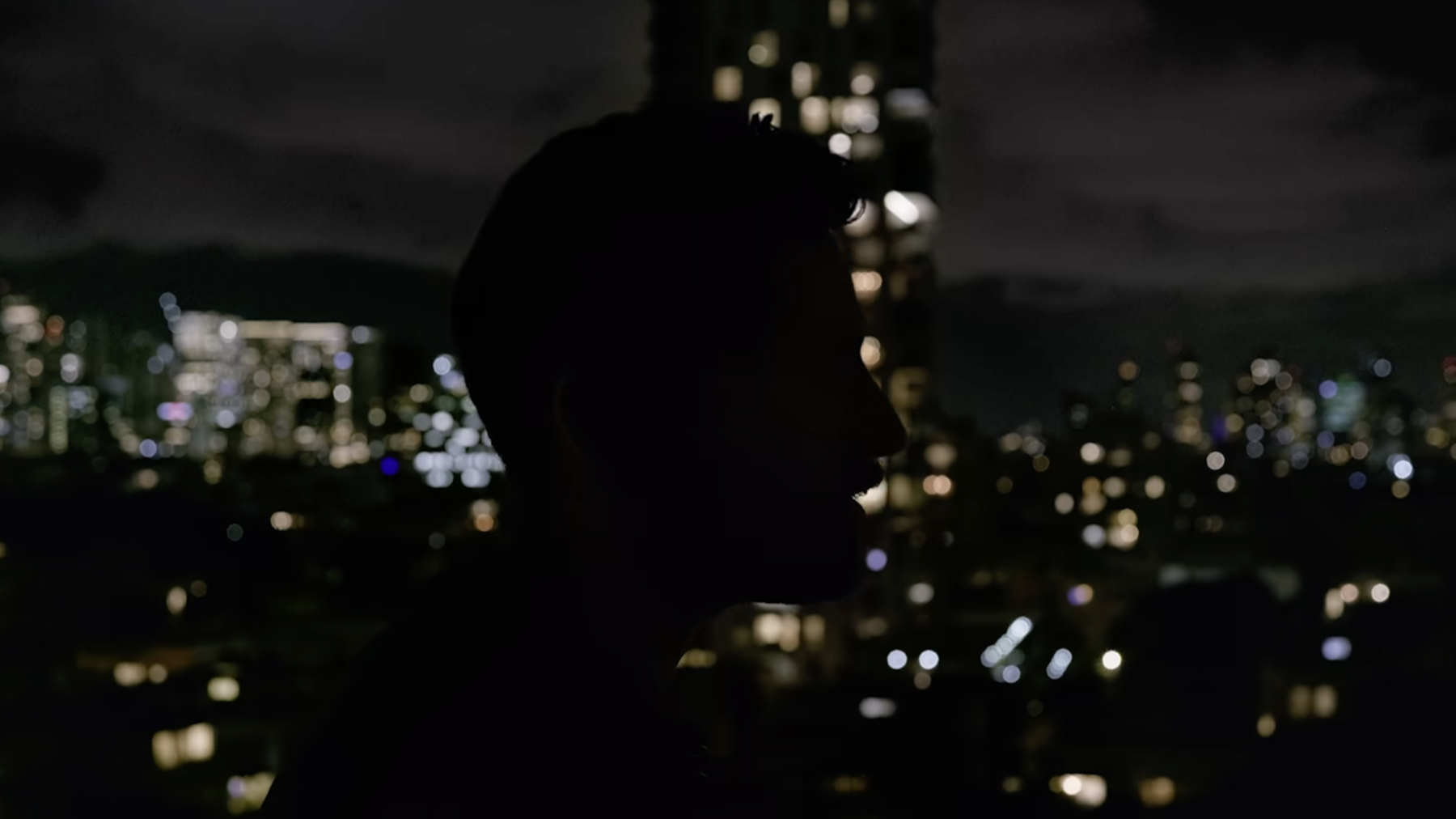
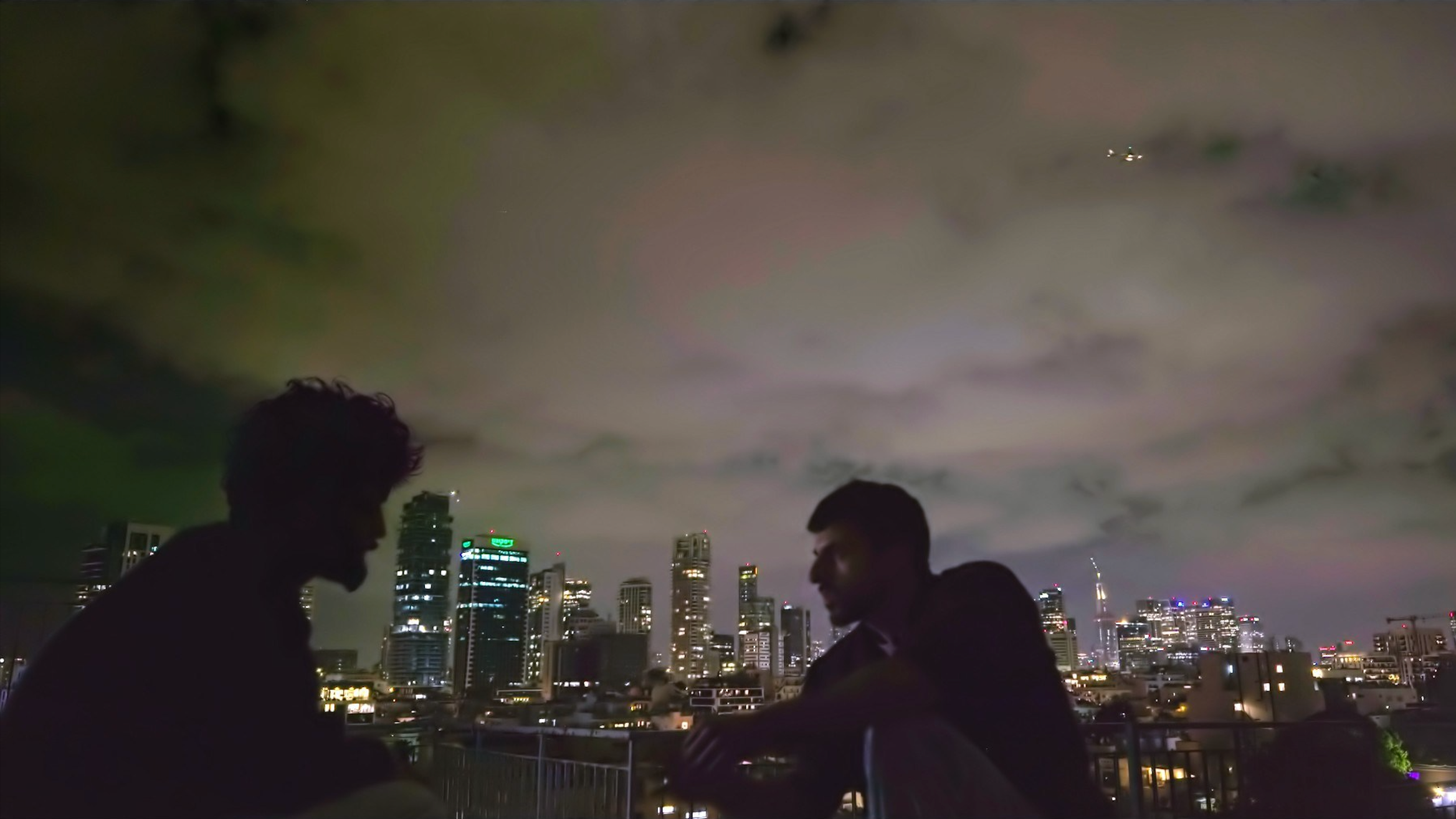
The silhouette of an anonymous Israeli officer | Photo taken from the official trailer
While the Palestinians are categorized in binaries of violent permissibility, the Israeli agents are abstracted into a singular collective force. Individual personalities recede, and they melt into the shadows that linger over Tel Aviv’s skyline. They’re completely anonymous, filmed on rooftops against the backdrop of their neighbors’ nighttime rituals: watching the news, stretching for yoga, dancing their minds away. Apart from clips of Netanyahu, the only recurring face we see is Israeli director Yuval Abraham as he conducts each interview.
To preserve the officers’ identities, the filmmakers concealed their faces and digitally manipulated their voices. They’re protected by the ethics of journalism, protected from the retribution of both their countrymen and the international community. It allows them to be honest. It allows them to unburden themselves without the possibility of punishment. Viewing the film ends up feeling closer to listening in on a confessional booth or a session of private talk therapy. They likely wouldn’t have participated any other way.
The supposed standards of journalism that are invoked to protect these soldiers’ anonymity are meant to be seen as equivalent to the grace given to whistleblowers who disclose the corrupt inner workings of a system. The film purports to expose an architecture of violence within which these officers are considered cogs in a machine. It’s not the individual; it’s the system. “If I don’t do it, someone else will,” as one officer asserts. In theory, these standards sound convincing. If whistleblowers aren’t protected, then it may threaten their lives. But it’s easier to imagine this standard in place in the context of protecting an Edward Snowden exposing systems of mass surveillance or disgruntled employees revealing the corrupt practices of healthcare and tech companies.
But the value in upholding the ethics of journalism doesn’t appear obvious in cases when the “whistleblowers” are admitting to bombing hundreds of buildings or sniping starving women and children in line for aid. Confessing to crimes does not prevent further harm if you’re still on the loose. It’s especially not self-evident when some of them have no interest in contrition, proudly reveling in the “insane fun” of it all. “It’s like a video game,” one says. Another describes the pleasure as purely that of completing a mission.
The rush of dopamine has become fully dissociated from the real-world wreckage in its wake. But must these criminals necessarily be protected, especially given that some of them are still active officers? Whose lives are being saved by these ethics? What responsibility do journalists have to the subjects of Israeli bombardment in Palestine and Lebanon?
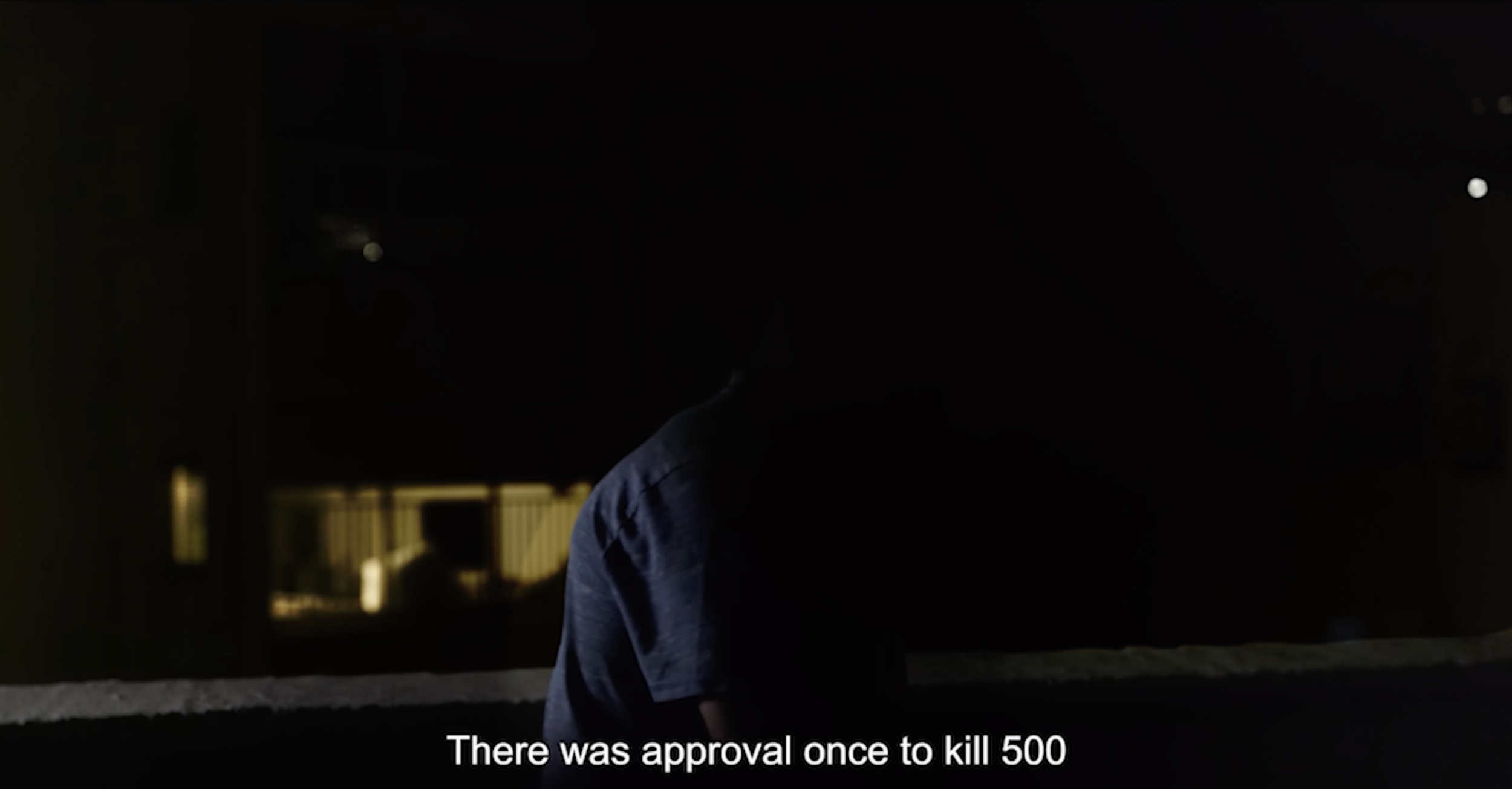
Anonymous officer describes an order to target 500 people in one blast | Photo taken from the official trailer
Naza also conceals the identities of the agents by cross-cutting their interviews in such a way that it becomes impossible to track the development of any individual discussion. According to The Guardian, which co-produced this film, around 100 Israeli sources were consulted before settling on the 24 officers for the film, but it isn’t clear why they needed to cram so many perspectives into an 80-minute film.
The clips are juxtaposed against each other without a continuity of conscience, making the experience of listening to their revelations closer to being washed over by a feed of emotionally charged tweets than being immersed in any one comprehensively argued thought. Fragments of conversation replace intensive discourse. No cohesive point of view emerges, and not enough insight is shared from each discussion to illuminate anything that hasn’t already been reported on by Palestinian journalists. After the film, it’s hard to feel anything but disgust.
Yuval Abraham and Rachel Szor’s previous documentary, No Other Land, was grounded by the presence of Palestinian co-director Basel Adra as he protested settler violence in his community of Masafer Yatta in the West Bank. It was a courageous film that compiled undeniable visual evidence of crime. No faces were blurred out, no identities protected. It was raw, narratively inventive, and a necessary preservation of real-time struggle in line with the history of activist-oriented documentaries all over the world. The film itself is art as well as evidence. Naza doesn’t rise to the level of either. It’s visually cold and monotonous, and the experience of watching it is like listening to a patchwork of interviews from digitally distorted figures who might as well be AI-generated.
How can faceless testimonies convince those who believe Israeli hasbara? And while it’s commendable that its mechanical form mirrors its substance, can any more insight be gained from banal observations on the banality of violence? Must we continue to peddle trite insights on the barbaric brutality of bureaucracies or how violence dehumanizes its actors? Does it still make sense to litigate the international legality of collateral damage when its laws have long been abandoned by its makers? Who is this film even for? What makes Naza any more special than the many other Palestinian-directed documentaries from the year?
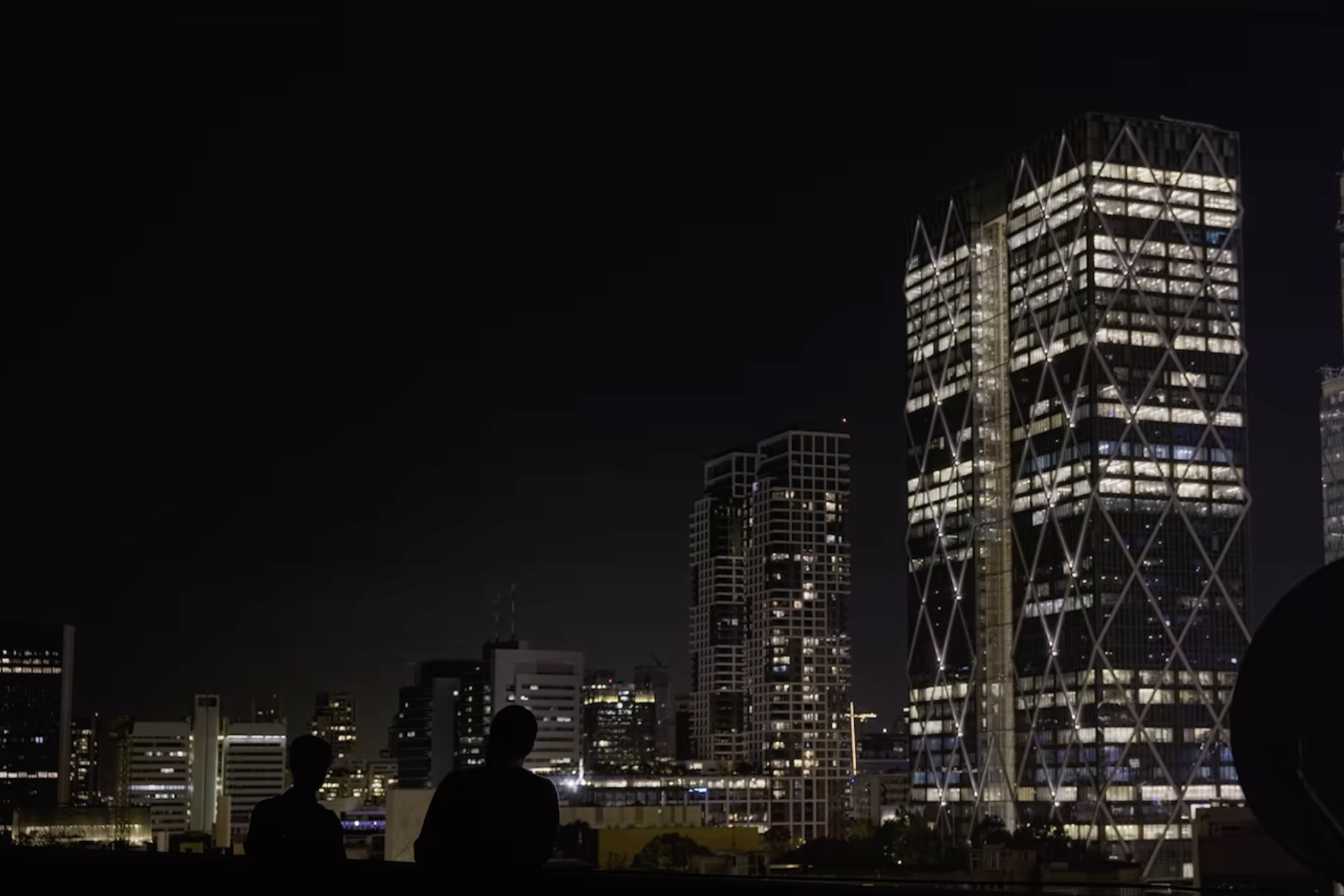
Yuval Abraham interviewing an Israeli officer while overlooking the Tel Aviv skyline | Photo taken from the official trailer
Imagine if, after No Other Land, the Israeli co-directors instead made a film about the violent settlers of Masafer Yatta, interviewing them about the ways they terrorize and displace Palestinians. Perhaps they also discuss the system with which the Israeli government facilitates their settlement. Would protecting their identities be celebrated given how we’ve seen them operate in No Other Land? Would a film like this receive a 25-minute standing ovation just as Naza did at the Venice Film Festival? If yes, what are we applauding for? And if not, what would be the difference?
Was making another festival film truly the most useful way to present this particular work of journalism? Just two years ago, the widespread critical clamor over No Other Land signalled a cultural resurgence for the documentary genre. Amidst the escalation of genocidal violence in Gaza, the film won award after award, eventually clinching the most prestigious of them all, the Oscar for Best Documentary Feature Film, presented by Hollywood stars Selena Gomez and Samuel L. Jackson. At the ceremony on March 2, 2025, the Israeli filmmakers were joined on stage by co-directors Basel Adra and Hamdan Ballal.
It was reported as a breakthrough. Mere weeks after the ceremony, Ballal was brutally beaten and detained by the Israeli military. A year and a half later, Masafer Yatta continues to be illegally settled. Neither the Israeli nor American governments have meaningfully restrained expansions in the West Bank despite the film’s widespread acclaim. And northern Gaza has since been systematically pummeled. Naza is touted as an Oscars frontrunner once again. But what use is another awards campaign?
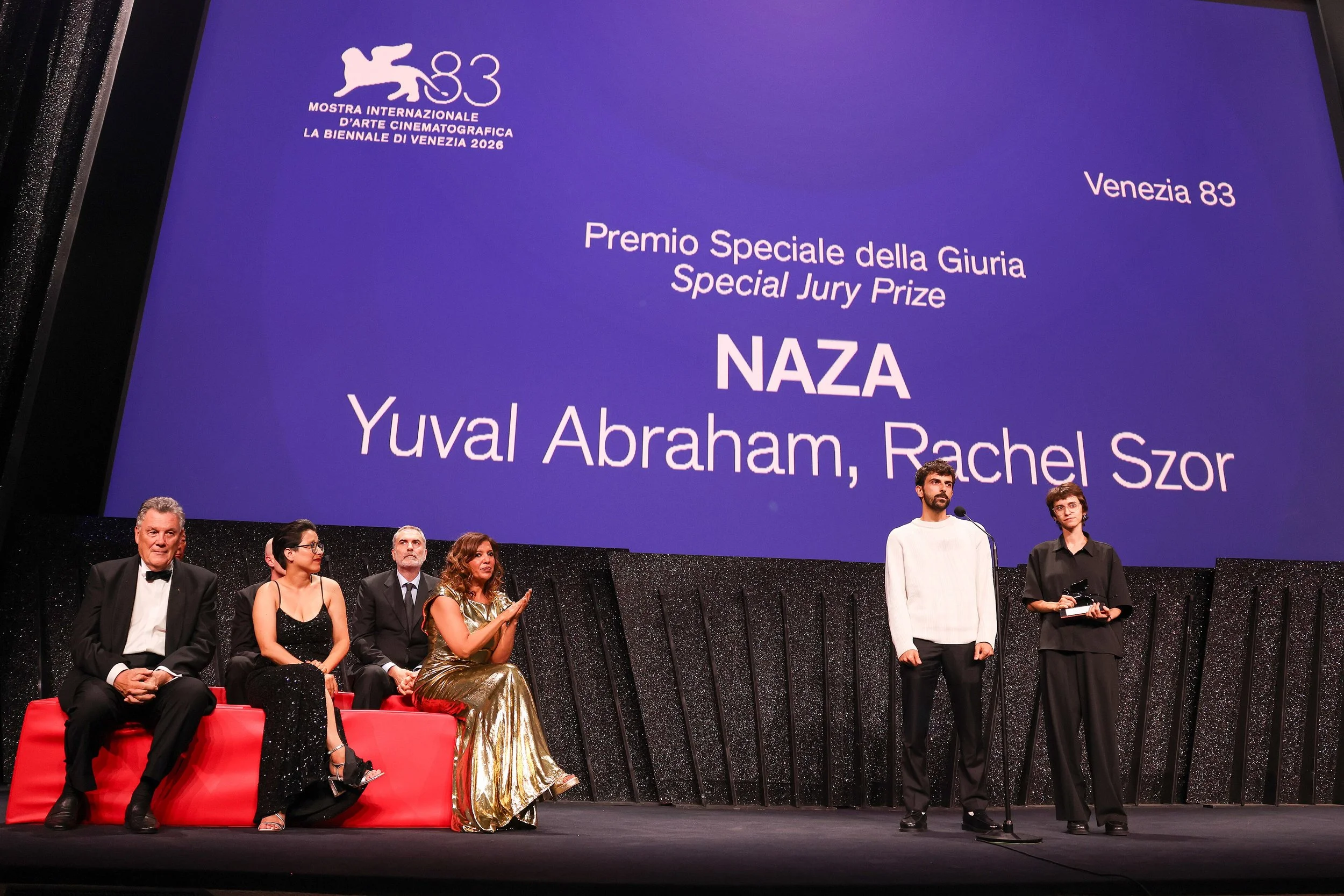
Yuval Abraham and Rachel Szor accepting the Special Jury Prize for ‘Naza’ during the closing ceremony of the Venice International Film Festival | Photo taken from Wikimedia Commons
Abraham and Szor’s bravery is undeniably commendable. Filmmaking is a legitimate form of activism. Since the release of Naza, the Israeli government has threatened to revoke their citizenships, and their families have been subject to intense public harassment. Although the film reports nothing new, the fact that it has caused such a firestorm may justify making it a documentary. Whether or not one accepts the collected testimonies as convincing evidence, debate on the morality of the Israeli military is being generated. Maybe it will change some minds within the country. But the film also reveals the limits to the imagination of a perpetrator-centered cinema.
Privileging Israeli points of view has myopically framed events around revenge for October 7. And the film enacts in its form an underlying, if inadvertent, philosophy that reduces Palestinian life to categories of acceptable victimhood. Their resistance is completely absent. Palestinians are constructed as passive people acted on by Israelis. The burden of human conscience remains with the latter; the former are only allowed to weep.
‘Naza’ will be released for free on The Guardian’s website in late November 2026.