
‘Unmarry’ REVIEW: The Cost of Unmaking a Marriage

‘Unmarry’ REVIEW: The Cost of Unmaking a Marriage

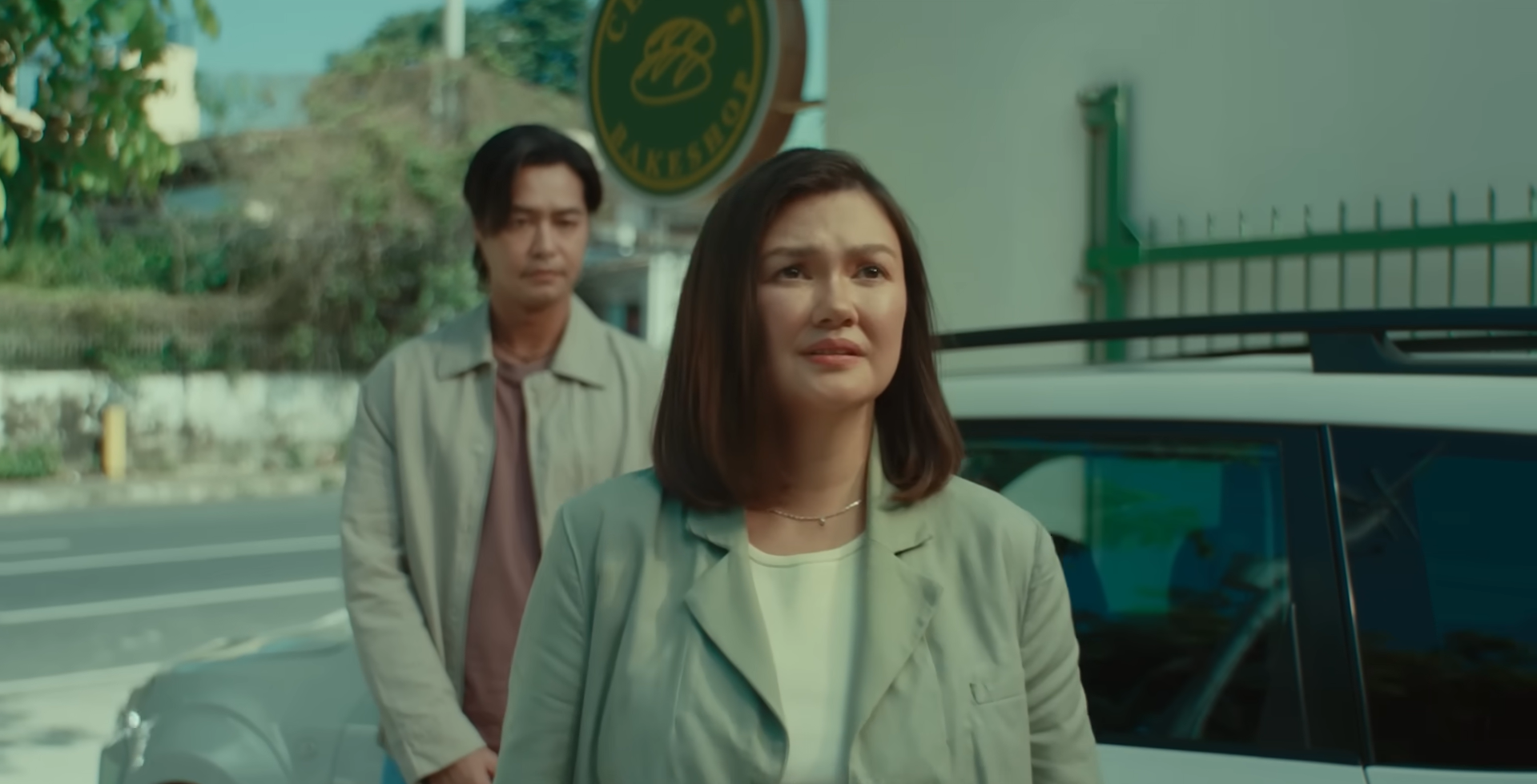
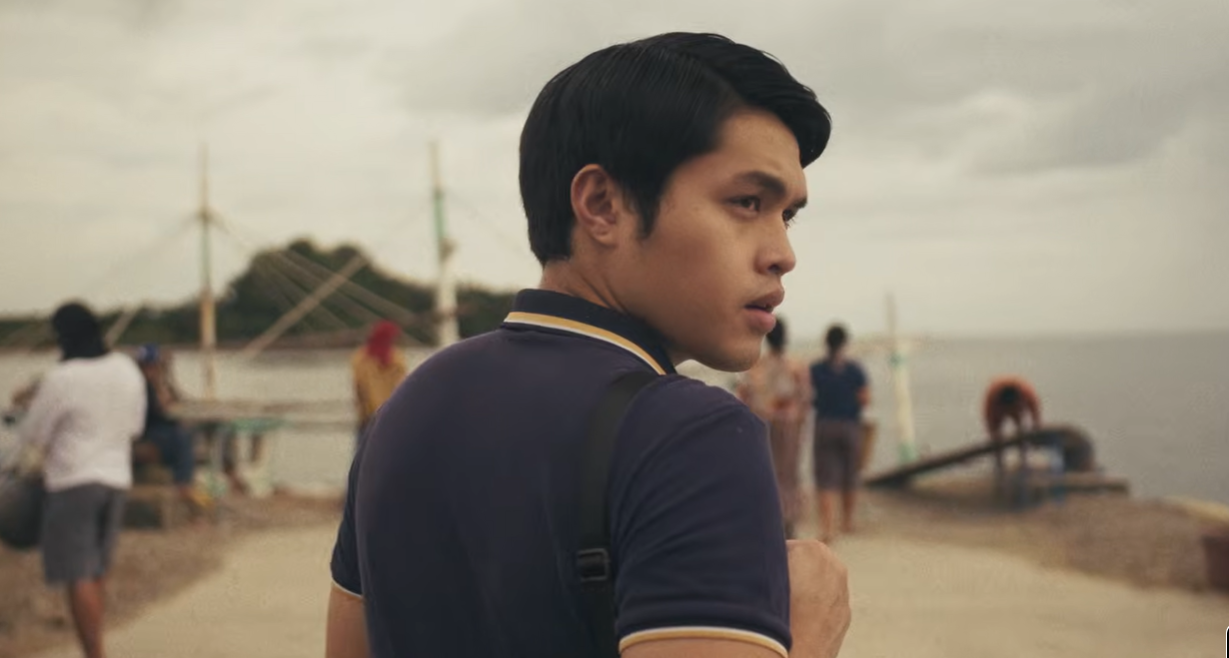
Angelica Panganiban as Celine with Zanjoe Marudo as Ivan in Unmarry / Taken from the Unmarry official trailer

This review contains spoilers and mentions of abuse
People like to frame separation as a test of courage, but that framing ignores the long period of erosion that often precedes it. Few discussions acknowledge how leaving a marriage can take a toll on a person emotionally, financially, and socially, especially once vows have already shaped how others define your life. Marriage is not a failure by default, nor is it a guarantee that love will remain sufficient over time. It is a structure that requires two people to keep choosing each other as circumstances, temperaments, and needs shift.
When that structure fractures, resentment takes root and intimacy becomes an obligation rather than a refuge. At that point, the question is no longer whether love once existed, but whether it still has room to survive. In the Philippines, where divorce is not legally recognized, leaving is not a clean severance. An annulment demands proof, patience, and a public reckoning of personal pain. In Unmarry, directed by Jeffrey Jeturian, this process unfolds as neither triumph nor collapse, but as a costly negotiation with law, memory, and personal identity.
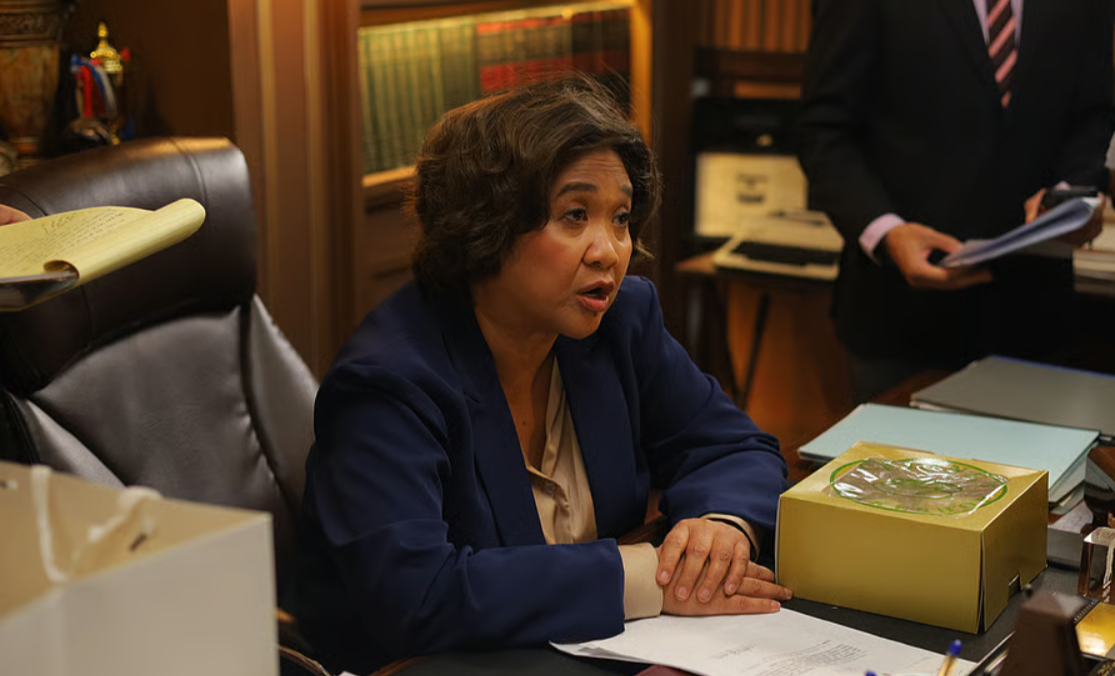
Eugene Domingo as Atty. Jackie Lambridas in Unmarry / Taken from the Daily Tribune
The film follows two individuals navigating separate annulment cases that gradually begin to reflect each other. Celine (Angelica Panganiban) seeks to end a marriage defined by sustained emotional, verbal, and psychological abuse from her husband Stephen (Tom Rodriguez). Ivan (Zanjoe Marudo), meanwhile, fights his wife Maya’s (Solenn Heussaff) attempt to annul their marriage after his alcoholism places their child in danger.
Both are represented by Atty. Jacqueline “Jackie” Lambridas (Eugene Domingo), a lawyer who also runs the YouTube channel “Walang Butas ang Batas.” Ivan believes that recovery and accountability should still leave space for reconciliation, while Celine wants a future for herself where she no longer depends on another person to survive. Their chance encounters at Atty. Jackie’s office evolves into an unexpected friendship. That connection is shaped by shared heartbreak, frustration and exhaustion, by the repeated need to explain, justify, and relive why their marriages fell apart.
Unmarry stands out as one of the more assured entries in this year’s Metro Manila Film Festival because of its restraint and clarity of purpose. The direction trusts the material, allowing scenes to breathe without leaning on heightened dramatics. The script resists the familiar rhythms of teleserye storytelling, choosing instead to linger on the aftermath of conflict rather than the spectacle of it.
The film is interested in what happens after the shouting stops, after decisions have already been made but consequences are still unfolding. The film is particularly careful about how it frames annulment in a country where marriage is treated as permanent by law. It doesn’t suggest that the existence of annulment makes marriage disposable, nor does it frame separation as evidence that vows are meaningless.

Celine takes the stand and faces cross-examination from Atty. Lucio Realonda, played by Mari Kaimo / Taken from the Unmarry official trailer
Instead, annulment is shown as an exhausting process that requires people to dismantle their own histories. The characters must justify their pain, narrate their failures, and repeatedly reopen wounds just to earn the legal right to leave. One of the film’s most effective devices is its use of Atty. Jackie’s YouTube videos, which function as structural anchors throughout the narrative. These segments explain legal mechanics while reflecting the emotional state of the characters.
They ground the film without turning it into instruction, reinforcing how law and personal suffering are inseparable in this process. In this sense, Unmarry is less about the end of marriage and more about the price of reclaiming agency. Leaving is framed not as a rejection of commitment, but as a final act of responsibility when staying becomes harmful.
At its core, the film succeeds because it maintains a careful balance between humor, drama, and moments of lightness without trivializing what is at stake. The humor never trivializes the pain, and the emotional beats never feel engineered for easy sympathy. Rather than instructing the audience on what to believe about marriage or annulment, the film invites viewers to sit with contradiction. It acknowledges that people can be hurt and still hope, be responsible and still flawed. There is no rush toward absolution or condemnation. This refusal to simplify gives the story a sense of integrity, allowing it to remain humane without becoming indulgent.
One of the film’s most compelling ideas is its decision to tell two marriage stories rather than one. Celine and Ivan occupy opposing emotional positions within the same legal framework. Celine’s story is about release — financial, emotional, and psychological — after years of being abused and neglected. Her pursuit of annulment is an act of self-preservation.
Ivan, on the other hand, represents the person who wants to stay, who believes that wrongdoing should be met with accountability but also with the possibility of repair. By placing these perspectives side by side, the film resists simple moral binaries. It acknowledges that the same process can feel like salvation to one person and erasure to another.
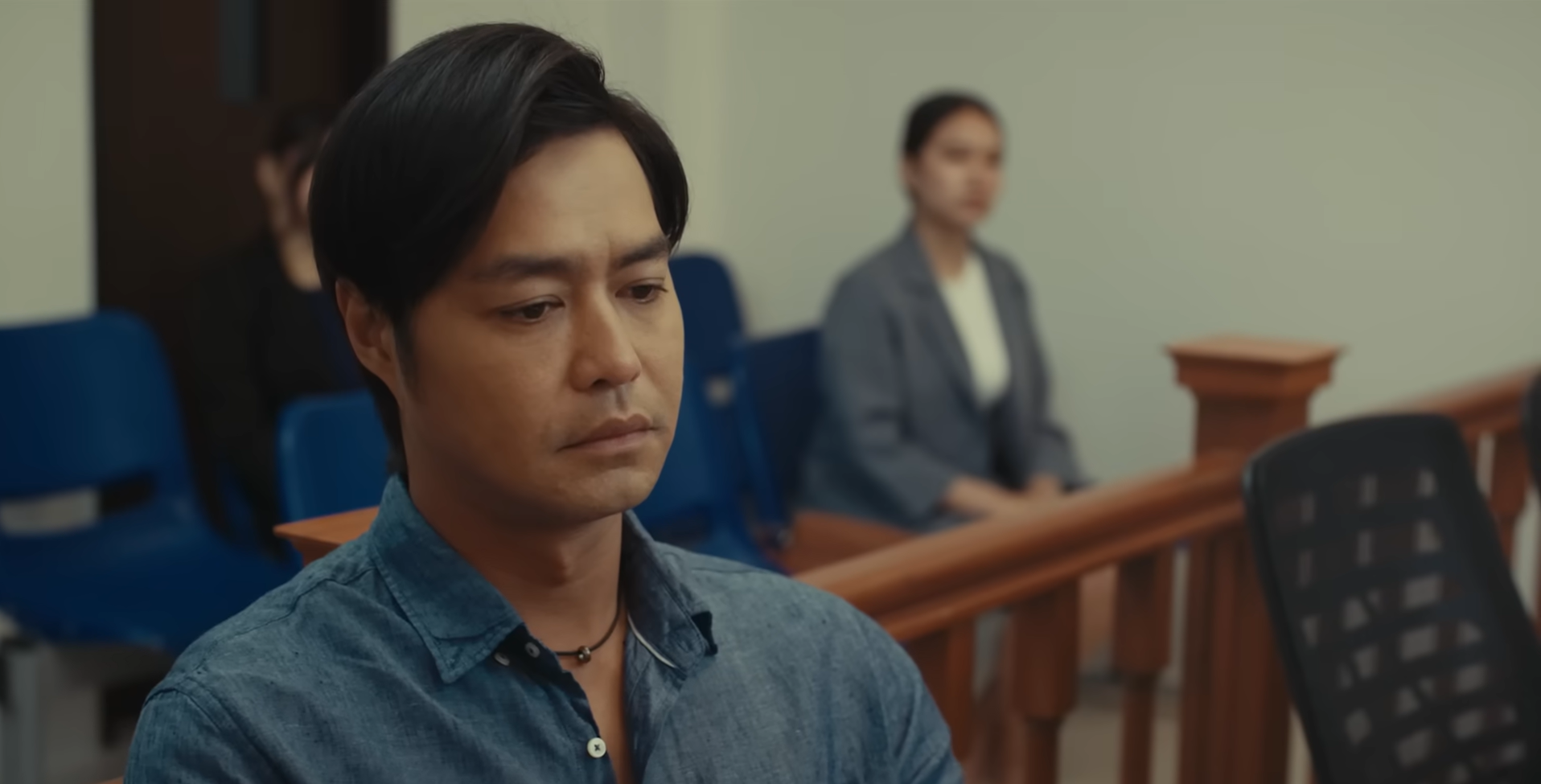
Ivan sits in court during the trial for his annulment / Taken from the Unmarry official trailer
Ivan is never absolved of his shortcomings, and Maya’s decision to annul the marriage is justified. Still, Marudo’s performance gives Ivan enough vulnerability to make his desperation intelligible, if not forgivable. His portrayal captures the panic of someone realizing that remorse doesn’t guarantee another chance. On the other hand, Panganiban delivers a remarkable performance as Celine, grounded and sentimental.
Her exhaustion is visible, not just in dialogue, but in her physicality, in her pauses, and in the restraint of her reactions. She conveys the toll of months spent negotiating safety and survival rather than happiness. Yet beneath that weariness is a restrained determination, a refusal to let the system hollow her out completely.
However, the film falters most clearly in its handling of Stephen’s character. I want to acknowledge upfront that men like Stephen exist — controlling, abusive, and deeply elitist — but the issue is not his cruelty, it’s how plainly it is presented. He is written as overtly villainous from the start, which strips the character of tension and makes his behavior predictable rather than unsettling.
A more disturbing approach would have been to portray him as charming and socially admired, someone who appears reasonable and caring while reducing others to objects. That kind of subtle manipulation would have raised the stakes for Celine’s desire to escape, because it would force both her and the audience to confront how abuse often hides behind respectability.
On the other hand, the film could have fully committed to Stephen being horrible, but it hesitates, softening him by framing him as a good father. Rather than adding depth, this choice blurs the film’s stance, leaving Stephen flattened into a character who feels inconsistently written and oftentimes cartoonish. Stephen needed a quiet desperation, vulnerability, or even a warped version of love; without it, he becomes less terrifying and more like a symbol than a person.
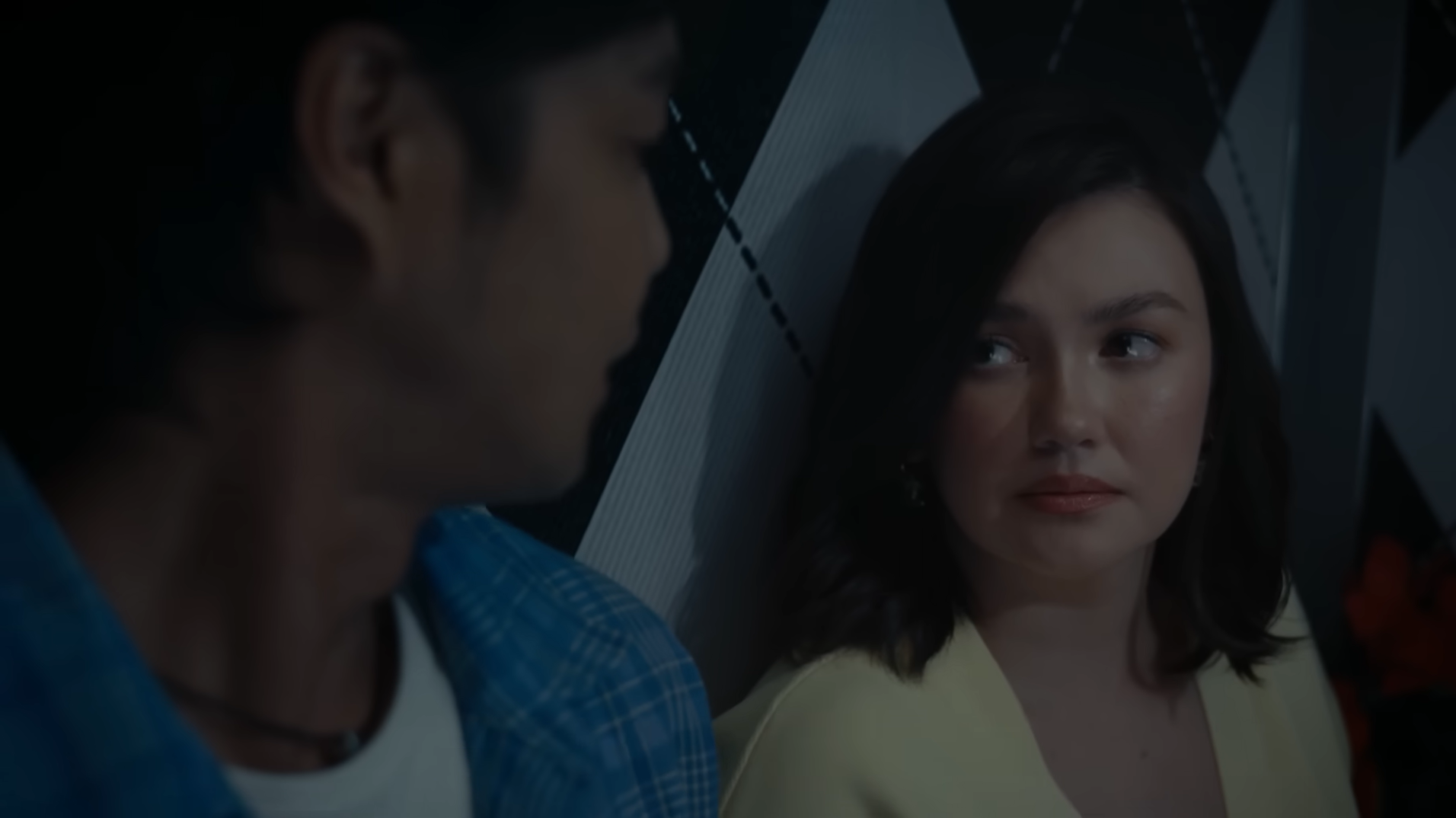
Celine meets Ivan’s gaze as the elevator malfunctions / Taken from the Unmarry official trailer
The second issue lies in the romance between Celine and Ivan, which develops during the middle of annulment proceedings and never fully earns its emotional weight. While the film insists on restraint, the relationship still feels premature, more like proximity than choice. For me, their chemistry exists, but it remains thin, relying more on circumstance than on a shared vision of who they are or who they want to become.
What the film captures more convincingly is their mutual damage, and this is where the story missteps by turning that bond romantic instead of letting it remain intimate but platonic. Framed as romance, their connection risks feeling like emotional substitution rather than genuine connection.
However even with some uneven choices, the film ultimately understands what is at stake when a marriage ends. It refuses to treat separation as either moral failure or personal victory, and instead locates it where it usually lives: in the long effort to regain control over one’s own life. And in it, what remains is the recognition that choosing yourself comes with cost and scrutiny, but it also opens space for autonomy, presence, and dignity.
In Unmarry, starting over is never framed as escape; it is work, negotiation, and endurance that continues long after the annulment is finalized. And in that work, hope is found, not in forgetting what was lost, but in deciding, finally, that your life is yours to claim. In the end, Unmarry leaves us with a clear, unflinching truth: that the right to begin again is never simply granted by law or love; it is earned through persistence, strength, and the willingness to keep walking forward. And in that persistence lies the undeniable promise of renewal.
‘Unmarry’ is currently showing in select cinemas nationwide as part of this year’s Metro Manila Film Festival.