
‘Shake, Rattle & Roll: Evil Origins’ REVIEW: Expect the Expected (It’s Disappointing Yet Again)
‘Shake, Rattle & Roll: Evil Origins’ REVIEW: Expect the Expected (It’s Disappointing Yet Again)



Going into any installment of the iconic and long-running Philippine horror anthology series Shake, Rattle & Roll, one already knows what to expect — you’re unlikely to leave the theater fully satisfied. This film series, which currently stands with 16 entries, has always been a mixed bag. Much like exchanging gifts with someone you barely know: you don’t know what’s inside, you brace yourself for the possibility that you won’t like it, and more often than not, you don’t love what you get.
As a Shake, Rattle & Roll enjoyer who has watched the very first installment to the latest 2023 release, I’ve grown accustomed to the cycle of getting excited for the next episodes — and the inevitable disappointment that often follows. Yet there’s usually at least one that sticks out and proves to be genuinely enjoyable, reminding you why you keep coming back. This pattern holds once again in Shake, Rattle & Roll: Evil Origins, one of the eight official entries in the 2025 Metro Manila Film Festival.
What sets this latest installment apart, however, is that after four decades, Shake, Rattle & Roll has, for the first time, heavily interconnected all three episodes through a single evil entity called Malum — one that haunts for three generations: the Spanish era of 1775, the present-day 2025, and the post-apocalyptic 2050.
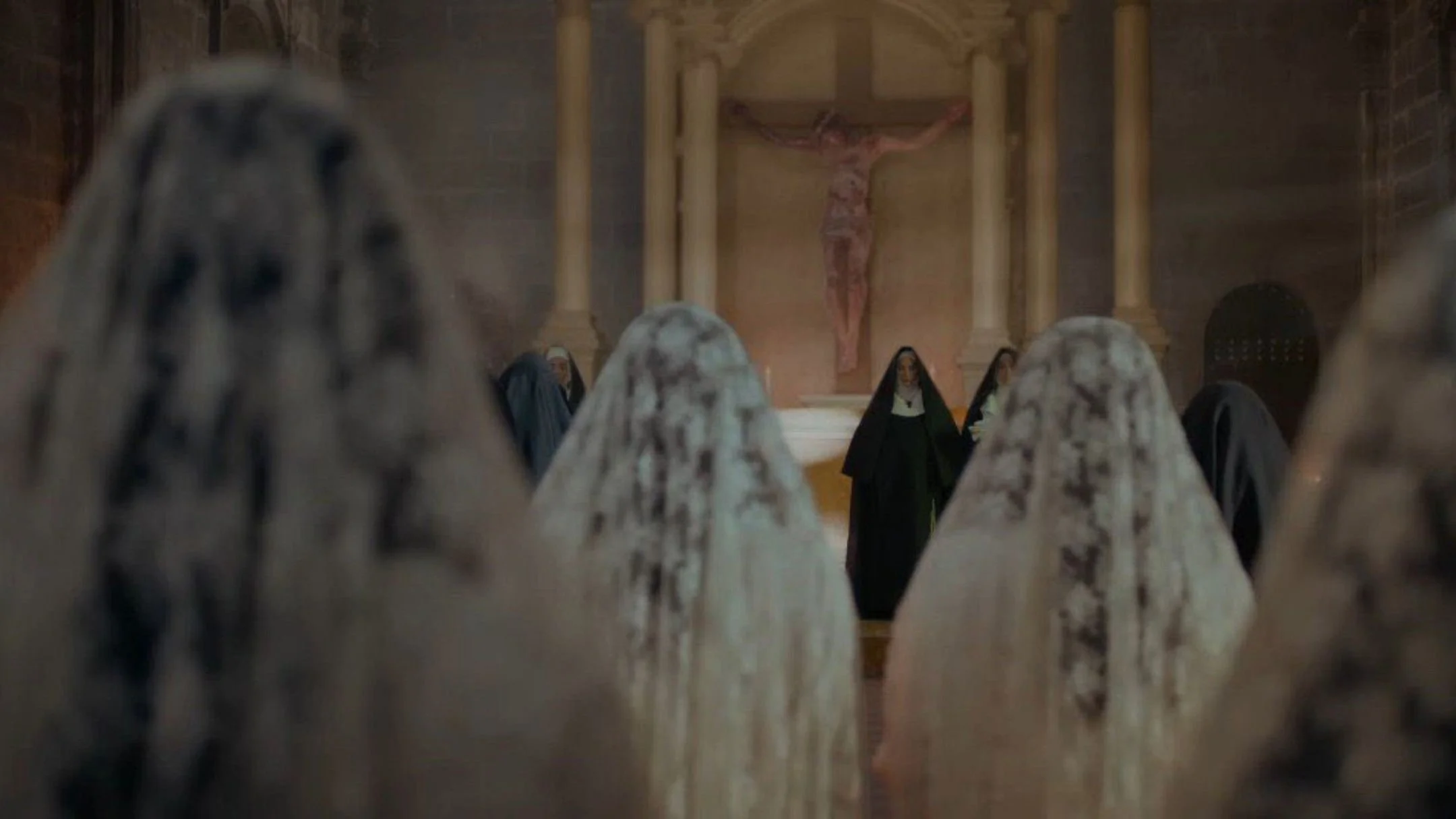
A still from the “1775” segment featuring nuns / Photo courtesy of Regal Entertainment
1775
dir. Shugo Praico
Shake, Rattle & Roll rarely ventures into horror set before the 20th century, making this nunsploitation episode during the Spanish colonial period immediately compelling. “1775” unfolds largely within a convent — a space defined by oppressive silence, shadowed corridors, and religious imagery that naturally lends itself to horror. These elements are effectively realized through its cinematography and production design, though its storytelling leaves a lot to be desired.
One strength lies in the all-female ensemble cast, from SRR veterans Janice de Belen and Carla Abellana to relative newcomers Ysabel Ortega and Loisa Andalio. They portray nuns weighed down by personal sins, guilt, and religious trauma. Among the three episodes, this one shows the most interest in character work, framing each nun through allusions to the seven deadly sins — an idea that culminates in their violent fates. Yet the concept remains underdeveloped, with the story seeming uncertain about how to fully engage its own themes.
While it attempts to establish the origins of the evil entity that will haunt the succeeding stories, the execution is largely lackluster. Hints of colonial horror are present, but the first on-screen killing is already underwhelming to begin with, causing the tension to gradually dissipate toward the climax. As the deaths pile up, the editing becomes increasingly frantic, giving the sense that it’s hastily rushing toward its conclusion, much like the audience, who may already be waiting for it to end.
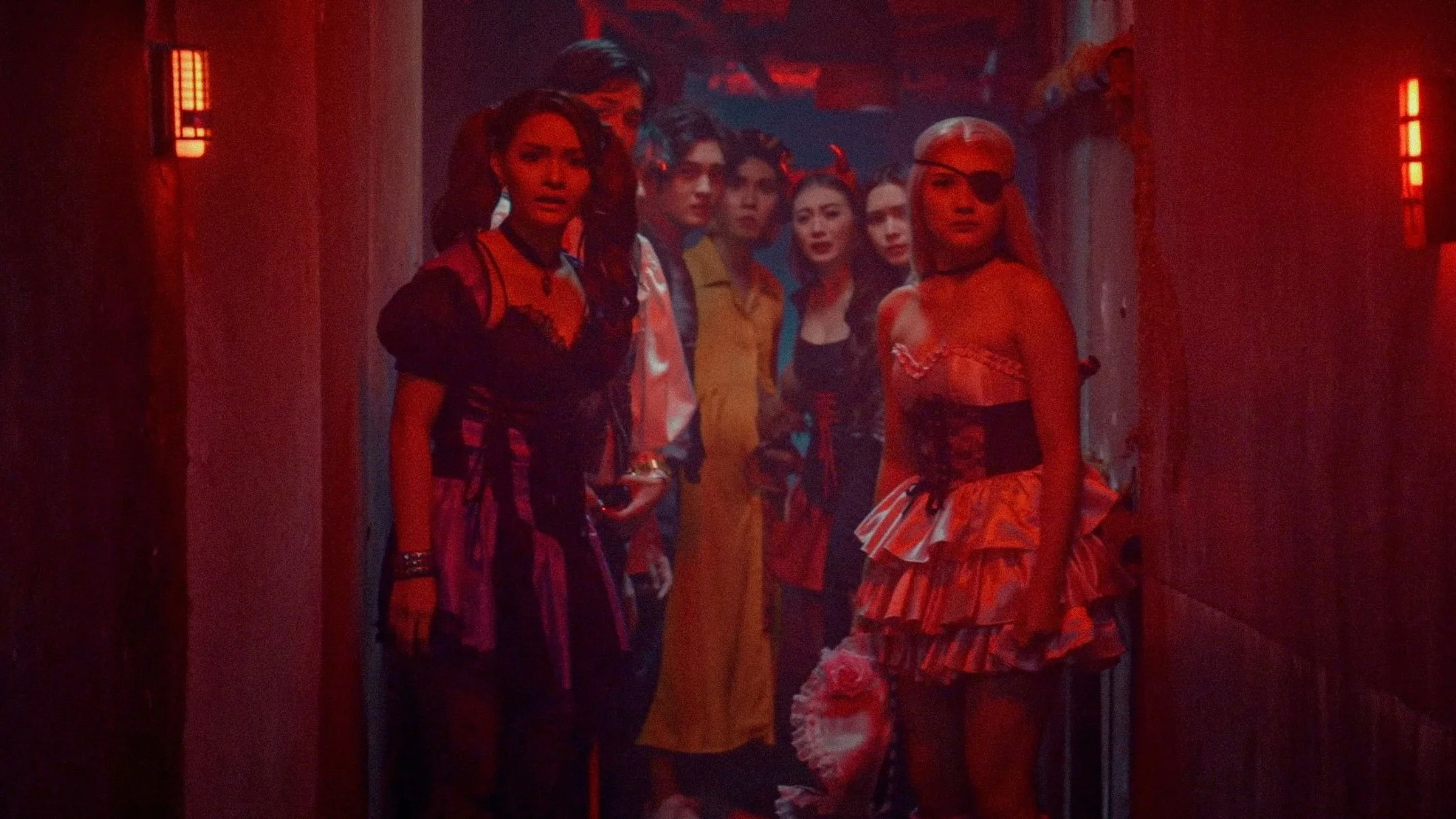
A still from the “2025” segment featuring a group of young adult friends at a Halloween party / Photo courtesy of Regal Entertainment
2025
dir. Joey De Guzman
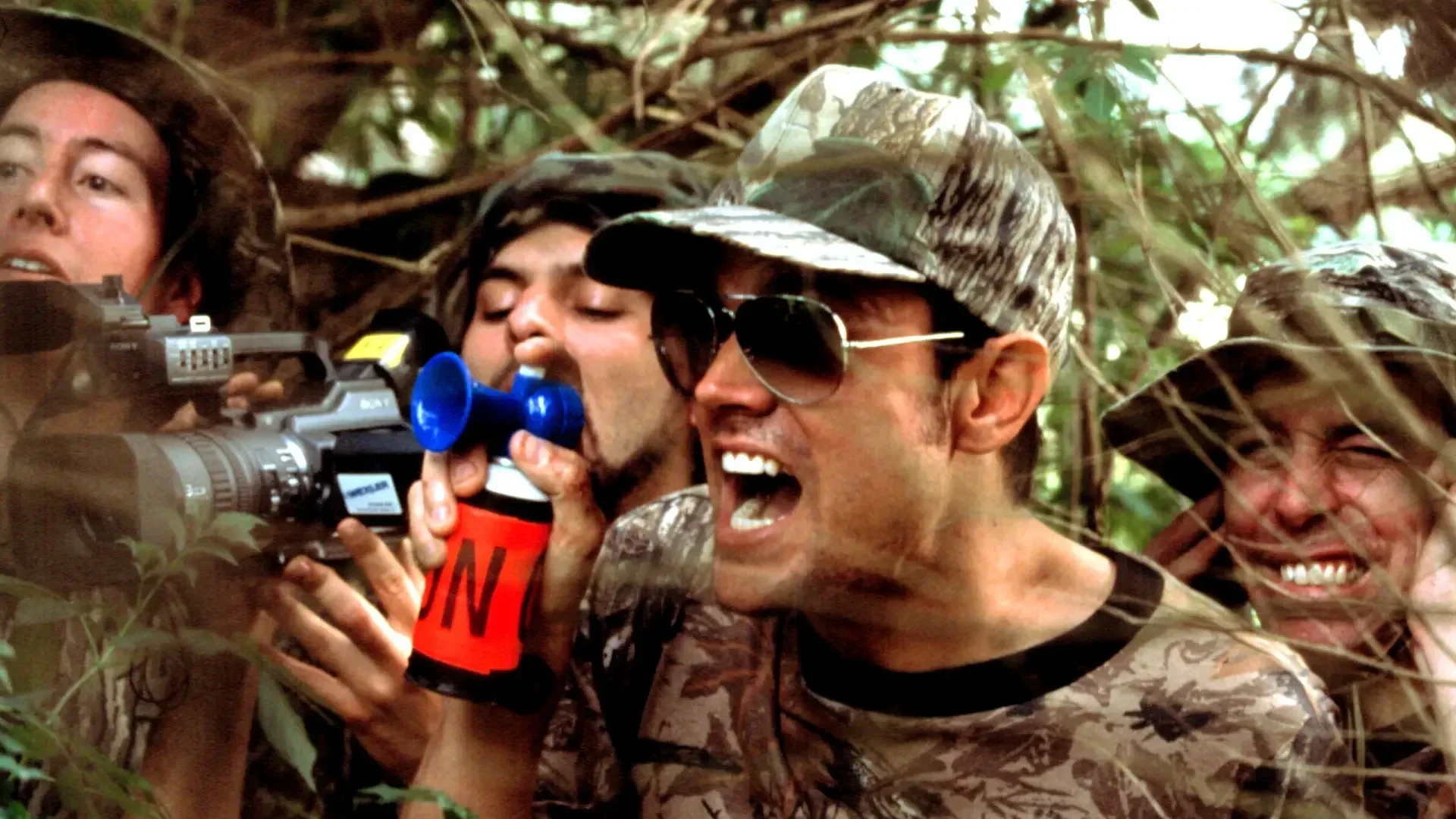
Leaning heavily into slasher territory, “2025” carries over the evil entity from the previous story but largely sets aside the overt supernatural horror in favor of a more slasher approach. The violence this time is driven by serial killers who are terrorizing an underground nightclub, though they remain under the influence of the same malevolent force.
The cast is stacked with young, rising stars, from Pinoy Big Brother (PBB) alums Seth Fedelin, JM Ibarra, Fyang Smith, Dylan Yturralde, and Karina Bautista to internet personality Sassa Gurl, alongside Francine Diaz and SRR veteran Manilyn Reynes. With an ensemble like this, it’s no surprise the episode is also packed with fan service, especially as a showcase for the JMFyang and FranSeth loveteams, testing how well these young stars perform outside the romance genre.
At a time when local audiences are craving a solid slasher, this episode somehow delivers. It’s effectively tense, driven by bursts of R-13 gory violence and a strong sense of claustrophobia as the characters are trapped inside an underground nightclub with mazy corridors and thick walls. It also has its share of ridiculous, campy moments, including Ibarra’s Captain America-esque moment, and a standout sequence in which masked killers brutally massacre a crowd of partygoers while “Budots” blasts from the speakers. To me, that’s cinema!
At the very least, you can say that the price of the movie ticket feels somehow worth it, as this is easily the most entertaining of the three.
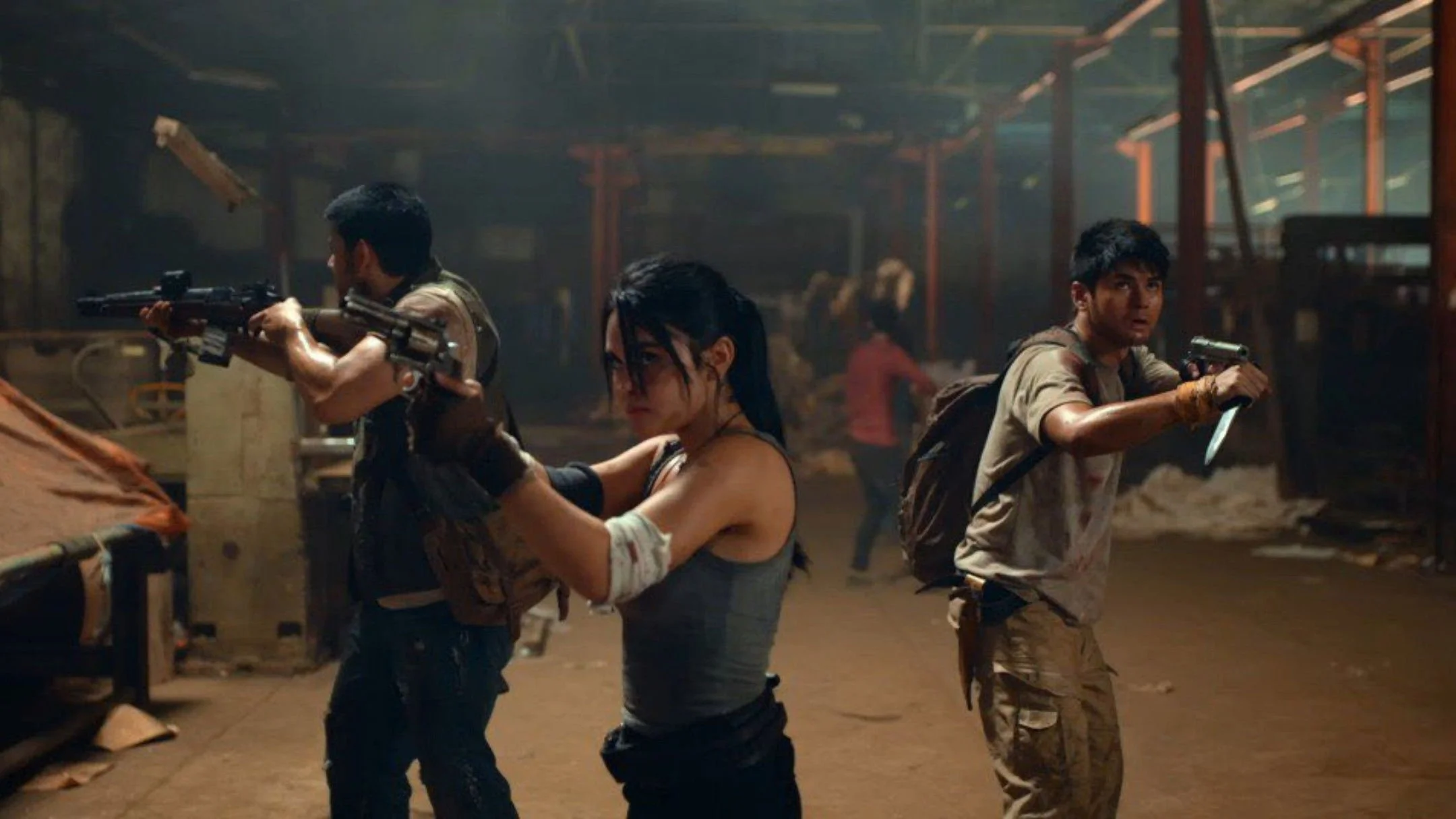
A still from the “2050” segment featuring a group of fighters in a post-apocalyptic Philippines ruled by the aswang / Photo courtesy of Regal Entertainment
2050
dir. Ian Loreños
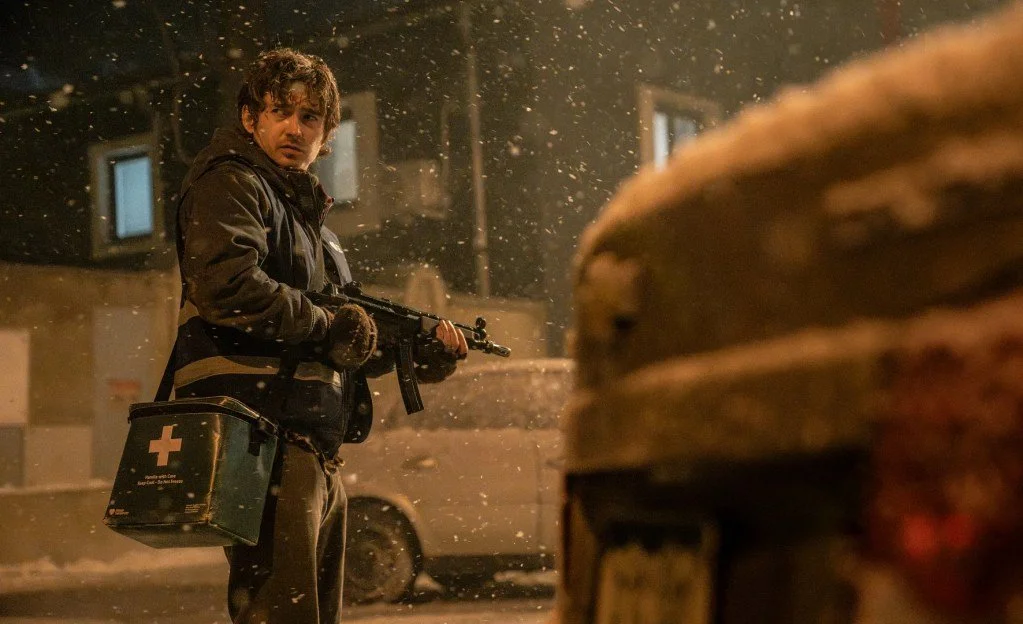
For the final episode, you’d expect it to neatly tie together the connections teased in the previous two — but instead, it delivers a disappointing conclusion to the story. Set in the year 2050, the evil entity has taken over the world, turning it into a post-apocalyptic dystopia ruled by aswangs. Richard Gutierrez and Ivana Alawi star as gun-wielding survivors, with Dustin Yu, Matt Lozano, and Manilyn Reynes (reprising her role from the previous episode) in supporting roles.
This third episode makes more explicit connections to the previous two, bringing back characters and recalling events from earlier stories. Some of these aswangs are the murdered victims from 2025, resurrected under the control of the evil spirit Malum, whose face is finally revealed here. However, these connections feel forced, as if the film is trying too hard to tie everything together, resulting in weaker world-building and a story that feels overstuffed yet ultimately lackluster. Not to mention that this episode somehow becomes a messy mix of action and supernatural horror with poor VFX work.
Part of the charm of SRR has always been that each of the stories stands independently, and this little experiment of theirs doesn’t quite work. I would have loved for this 16th installment of Shake, Rattle & Roll to explore more of colonial horror and how it haunts generations, but it barely gives us anything to work with.
The verdict? Shake, Rattle & Roll: Evil Origins disappoints yet again.
‘Shake, Rattle & Roll: Evil Origins’ is now showing in Philippine cinemas as part of the 2025 Metro Manila Film Festival.