
Sine Kabataan 9 OMNIBUS REVIEW
Sine Kabataan 9 OMNIBUS REVIEW


Now in its ninth year, Sine Kabataan continues to amplify contemporary issues, fresh voices, and stories from burgeoning young Filipino filmmakers.
In celebration of Philippine Film Industry Month (PFIM), the Film Development Council of the Philippines (FDCP) presents this year’s festival, which showcases a diverse lineup of nine (9) short films across two sets from filmmakers across the country.
The festival features films that present the diversity of Filipino, Cebuano, Bisaya, Waray, and Ilocano cultures, with genres ranging from coming-of-age drama and musical to social realism and the like.
Here are the official reviews for the nine short films:

Film still from Titser, titser!
Titser, titser!
dir. Franchesca Grace Pagatpat
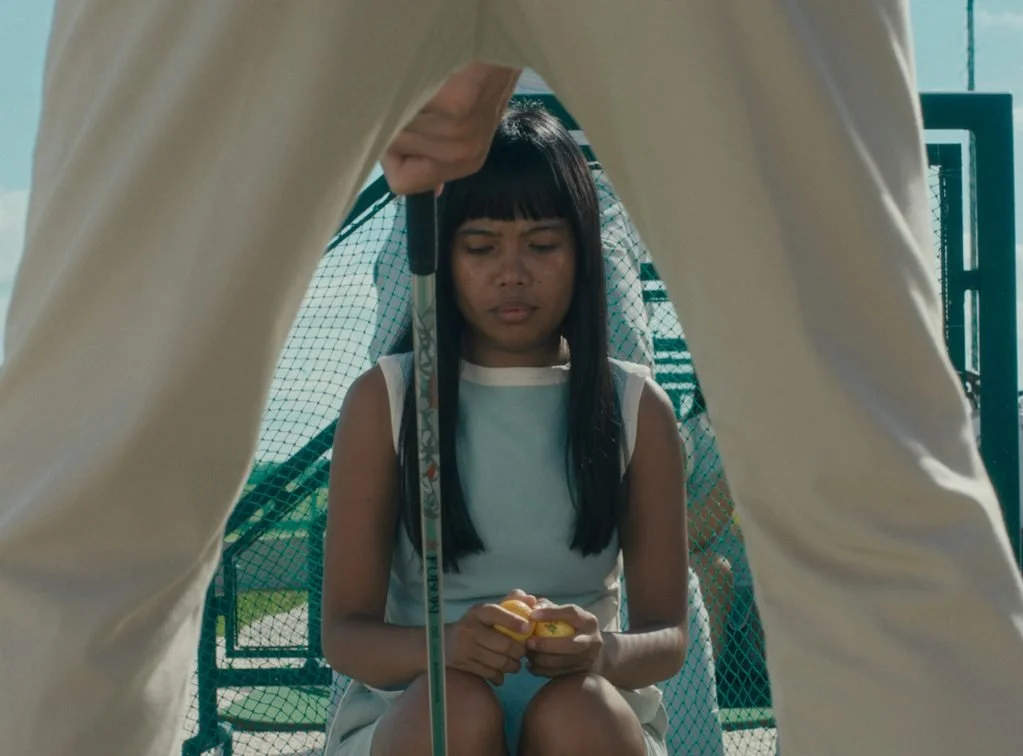
There are a lot of melodies competing for attention in Franchesca Grace Pagatpat’s Titser, titser!, but the film is at its best when it locks into the restless noise of teenage rebellion and that stubborn refusal to let adulthood take everything with it. The Cranberries nod sits comfortably beside the riotous tweegaze-alt-rock sound of cheeky things, while the frisky camera work and whimsy-punkish paper cut-outs and scribbles give form to the freedom these kids keep trying to find outside classrooms ruled by terror-killjoys, otherwise known as substitute teachers. But it isn’t just authority figures draining the life out of them. The inadequate facilities, lack of dedicated spaces, and the makeshift conditions that school-based arts communities are forced to work within speak to how little room, literally and otherwise, the country gives its young artists to thrive.
The more interesting question is what happens when the people meant to nurture them are struggling too, and the film never quite gives that idea enough space to breathe. Its formal choices can feel similarly out of sync. The mixed-media animation is clearly meticulous, but sometimes sits on top of scenes rather than deepening them, while the quartet hasn’t quite found the chemistry that would make their friendship feel fully lived-in. Still, there’s something very earnest in the way Titser, titser! treats music as both refuge and resistance, a way of keeping some small flame alive in a place that keeps asking young artists to grow up by giving things up. – Axl Zamora Mendez
Film still from Ikalulunod ko ba ang Paglangoy (Will I Drown If I Swim?)
Ikalulunod ko ba ang Paglangoy (Will I Drown If I Swim?)
dir. Lawrence Balingasa
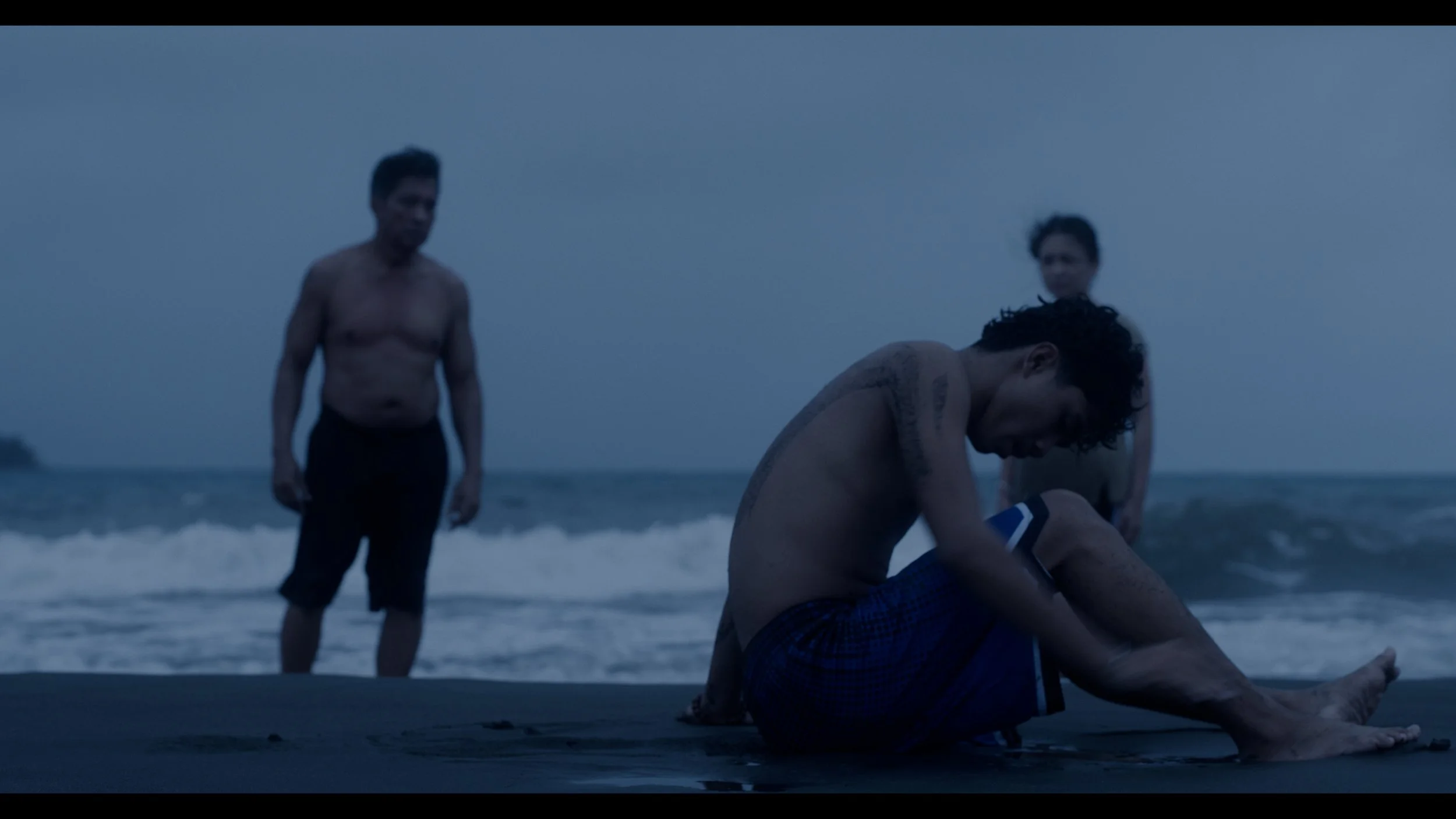
Equal parts haunting and melancholic, Lawrence Balingasa’s Ikalulunod ko ba ang Paglangoy is a slow-burn portrait of a family splintered by silence. What cannot be articulated between the characters is instead captured through the tactility of the frame — the harsh ebb and flow of Occidental Mindoro’s waters; its deep dark blues and greys that threaten to swallow the beach whole; the textures of linen cloth whisked by strong winds. The film is structured as a sort of unraveling, threading long static shots of what should be the intimacy of a small seaside home into increasingly uncomfortable intervals of shame. Marco functions as an intermediary between his parents, speaking through him rather than to each other. Balingasa renders this tension by skilfully assembling bodies to conjure those wordless in-betweens.
It is that degree of attention towards blocking and use of space that the film excels at, demonstrating the image’s potential to embody the narrative’s emotion. Yet despite being shot as cold and nihilistic, scenes still feel remarkably lived in. Much like a painting that invites us to examine it more deeply the longer we look, Ikalulunod ko ba ang Paglangoy succeeds as a formal exercise in temporal and sensory cogitation. Where silence is not mere absence of sound, but a material presence, weighing on the body, and lingering long after the tides recede. - Niko Perez
Film still from Yada na ta Busag nga Vannn! (Here Comes the White Vannn!)
Yada na ta Busag nga Vannn! (Here Comes the White Vannn!)
dir. Giomer Gulferic
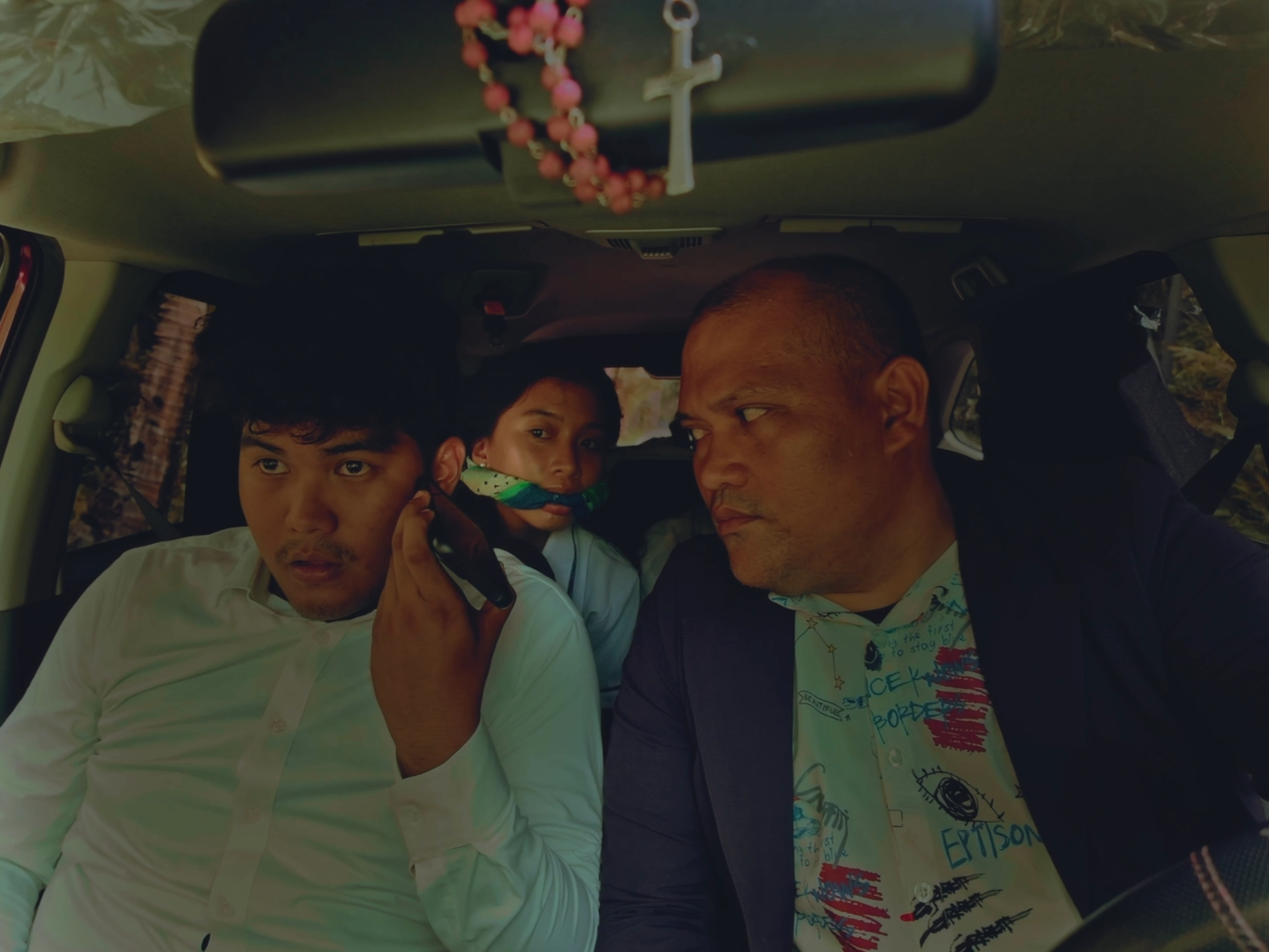
Giomer Gulferic’s Yada na ta Busag nga Vannn! is a road movie built on a spectacularly bad kidnapping plan, and much of its pleasure comes from watching that plan unravel in increasingly absurd ways. Structured as a darkly comic triptych, the film follows a ragtag duo whose “carefully planned” abduction immediately begins falling apart: they kidnap the wrong kids, come armed with an extortion script, and, in place of the proverbial white van, can only muster a red Toyota Innova bearing the wonderfully unsubtle plate “VAN 2026.” It’s very silly, and the film knows exactly how silly it is. Gulferic carries that looseness into the form itself, shifting aspect ratios and letting scenes play with the roughhouse energy of a story perpetually threatening to come undone. At times, it actually does; the filmmaking can feel unpolished and the narrative logic hazy around the edges.
But the jokes land often enough that the mess becomes part of its charm, sharpened by a regional comic sensibility that keeps the absurdity from feeling generic. More importantly, once the kidnappers begin warming to Joyce and Teddy, the joke stops being simply that these men are terrible criminals; they may simply be too decent to become convincing ones. Beneath all the slapstick and formal play, Yada na ta Busag nga Vannn! finds something unexpectedly humane in the foolish things people do when circumstance corners them, letting its absurdism arrive somewhere warmer than satire usually allows. – Axl Zamora Mendez
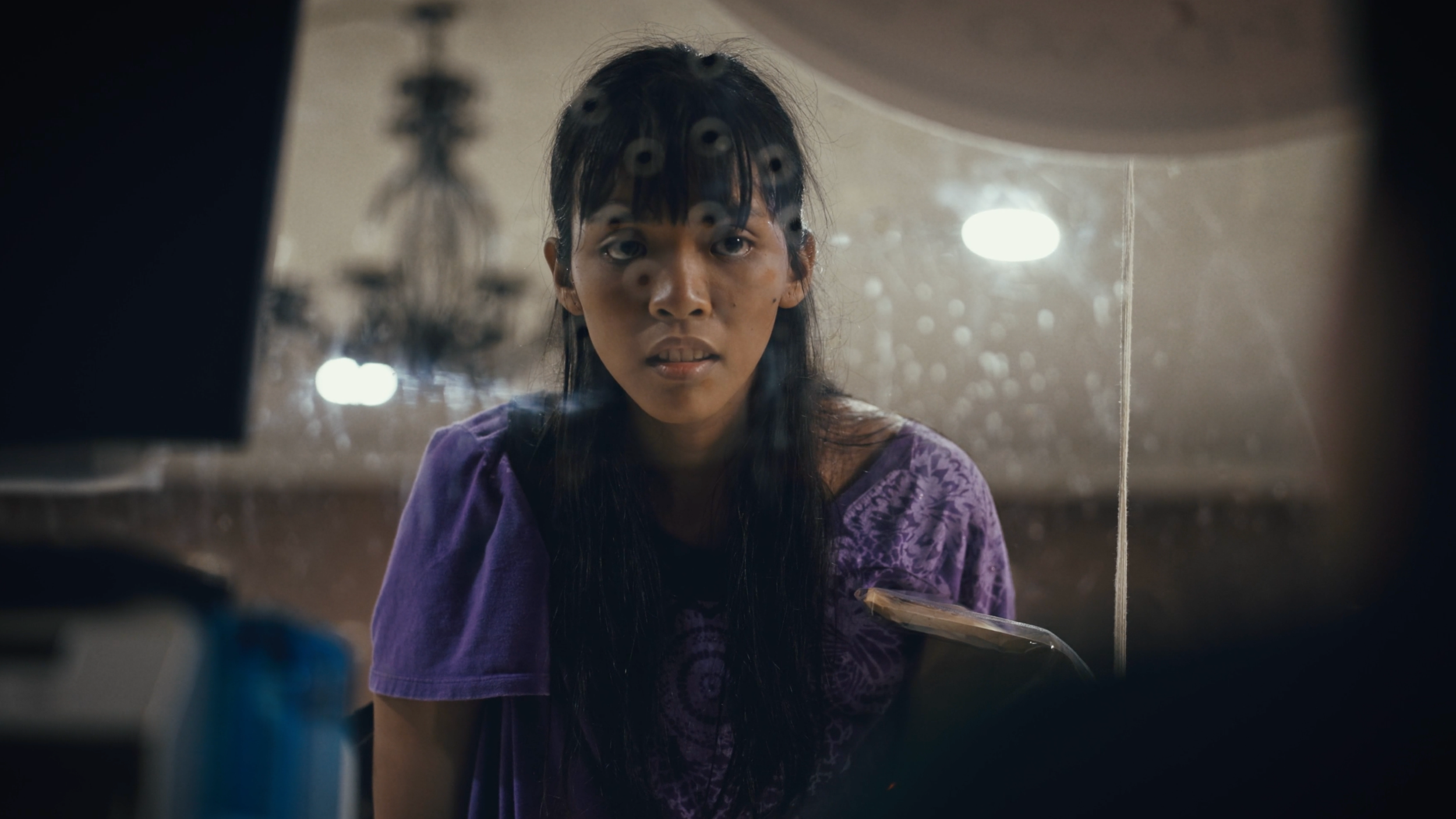
Film still from Kurita (Octopus)
Kurita (Octopus)
dir. Zechri Jacob Alvarez
How long will Filipinos have to endure the hardships brought about by an anti-poor system, especially in healthcare? Zechri Jacob Alvarez’s Kurita captures the exhausting reality of navigating tedious and time-consuming bureaucratic processes, especially when someone’s life is already running against the clock. What should have been a happy celebration becomes a painful, heartbreaking experience — one that perhaps could have been different with better, more timely support. Dona, a determined granddaughter, is played by Ma. Danika Quime rushes to complete the requirements for financial assistance while doing everything she can to make her grandmother’s birthday celebration possible. Meanwhile, her grandmother, played by Ligaya Rabago, is hospitalized. Through Dona’s experience, the film shows the struggle of asking for help that should be accessible and provided more efficiently, especially to those who need it most. As the story progressed, the film hit me deeply.
I did not expect the ending, which made the overall experience even more painful. Its story resonates with many Filipinos because the struggle it portrays feels all too familiar — the endless paperwork, lengthy processes, and exhausting effort required just to receive financial assistance. It reflects a reality that should not be normalized: having to spend so much time and energy seeking help while already dealing with difficult circumstances. We need more films like Kurita — films that can knock on the doors of our leaders and remind them of the realities ordinary Filipinos face. Hence, to those who are forced to become an octopus, stretching every arm and tentacle just to juggle everything at once while navigating a system that makes even basic assistance difficult to access: I hope that one day, the system in this country becomes better, more accessible, and more humane. Because as Filipinos, we deserve better! – Bea Allado
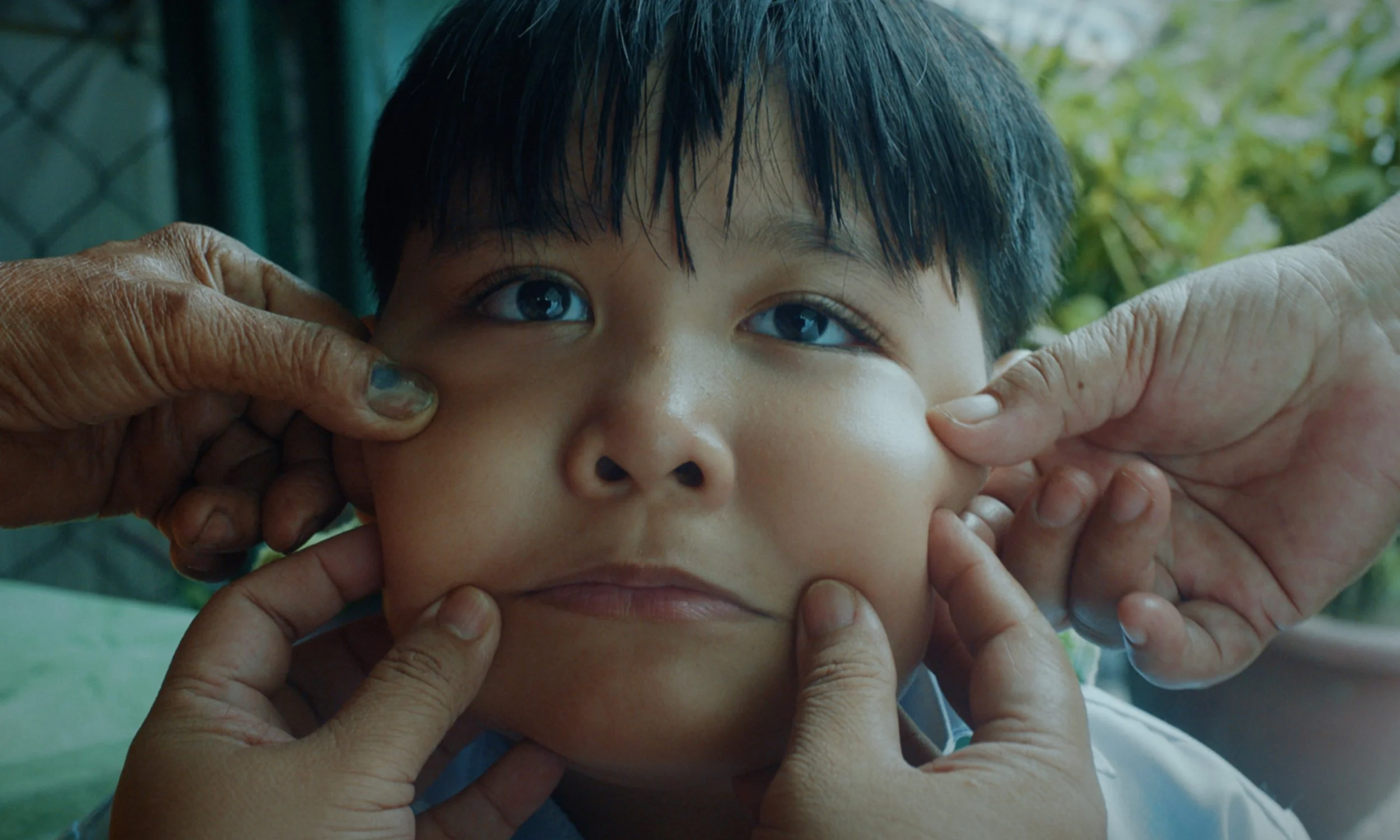
Film still from Hindi Pa Nag-Aagahan si Tau (String Bean Boy)
Hindi Pa Nag-Aagahan si Tau (String Bean Boy)
Dir. Janno Pelias
When we see a chubby kid, we might see them as cute, healthy, or simply well taken care of. These assumptions may seem harmless, but behind a child’s appearance are feelings and experiences that we do not immediately see. Janno Pelias’s Hindi Pa Nag-Aagahan si Tau explores this hidden side through the story of a child learning to understand and accept his own body, told with a charming and fresh approach. Tau, a grade-school outcast, is determined to fit into his string bean costume for his school’s Nutrition Month performance. What begins as an effort to fit into a costume becomes something more — it reflects his desire to fit in, both within society and within the expectations of what it means to be “fit.” The story reflects an experience many people may have gone through but often neglect to talk about. It is an eye-opener, showing that concerns about body image can begin during childhood, not only during the teenage years.
The visual treatment complements its narrative, with the string beans serving as a meaningful metaphor for Tau’s motivation. I’d also like to highlight the charming and natural performances, particularly Stephen Wardell Dizon as Tau, who naturally captures the innocence of a child, and Meryll Soriano as his mother, whose expressions in the ending effectively convey her concern without needing many words. Overall, the film conveys its message with clarity and subtlety while giving meaningful representation to children who experience body-image struggles. It reminds us that the words we casually say about a child’s appearance can affect them more deeply than we realize, encouraging us to be more mindful of how we talk about children’s bodies, understand what they may be feeling beyond what we see, and promote a healthier way of understanding and accepting our bodies — not just during Nutrition Month, but every single day. – Bea Allado
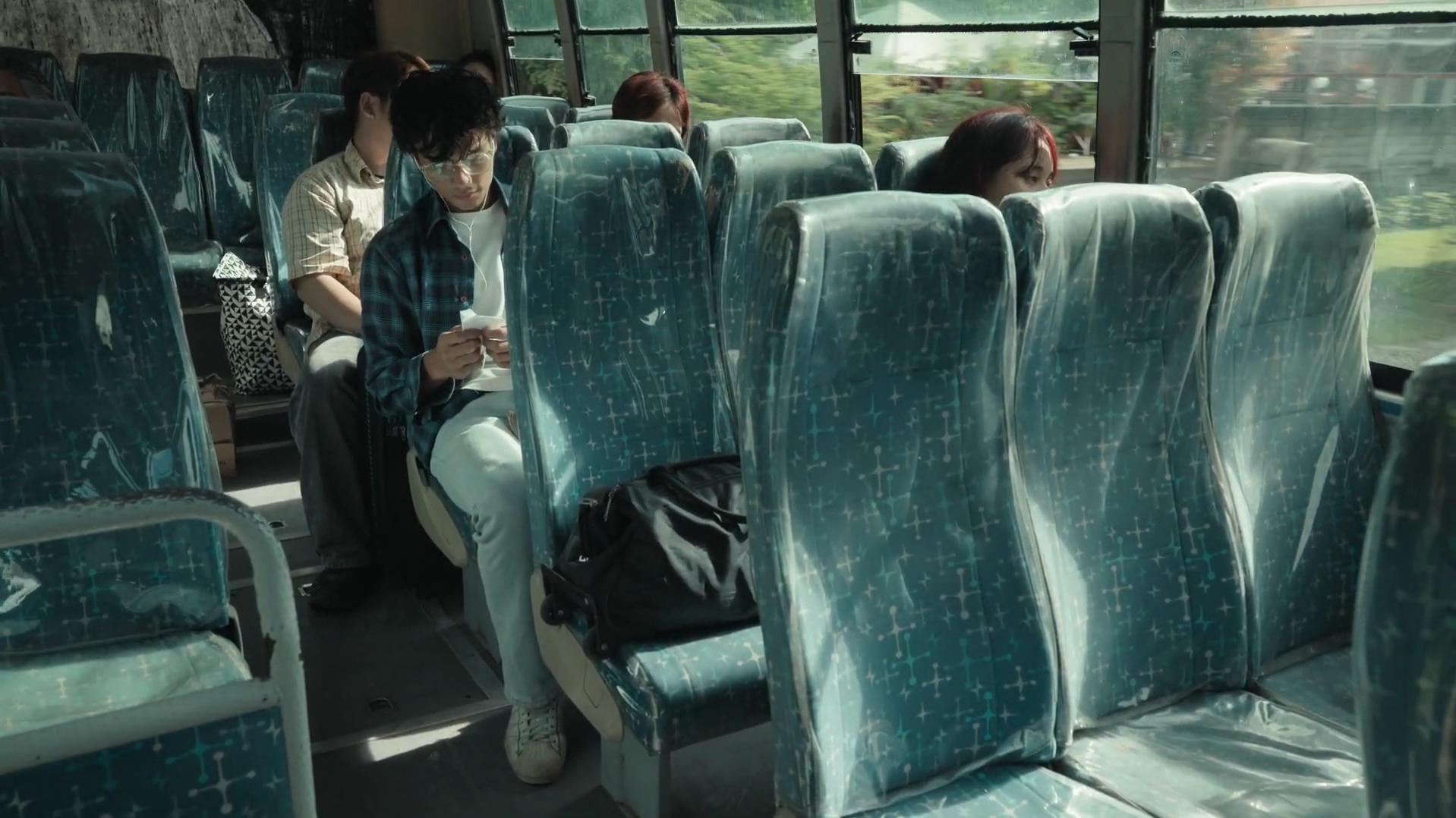
Film still from Asa Mutugpa ang Paglupad-lupad (Where the Drifting Flight Comes to Rest)
Asa Mutugpa ang Paglupad-lupad (Where the Drifting Flight Comes to Rest)
dir. Emmanuel Pamaylaon
Time moves strangely in Emmanuel Pamaylaon’s Asa Mutugpa ang Paglupad-lupad. Moments stretch, memories linger longer than they should, and like Miguel, the film seems in no real hurry to let go of what still hasn’t been fully processed. Returning to New Bataan, Davao de Oro, years after the devastation of Typhoon Pablo in 2012, it is less interested in ruined buildings than in the damage that stays lodged inside families, the kind that rebuilding a house can’t really repair. The film stays close to Miguel as he moves through New Bataan anew, letting the town return to him in fragments. There is an almost literary fluency to how these memories are pieced together, carrying Pamaylaon’s musings seamlessly into film form. At times, though, their accumulation begins to saturate the present, replacing action with recollection, while the reverse-reverb cues that come with each flashback overstate transitions that might otherwise have bled more naturally into the moment, dulling the film’s momentum. Still, its attentive diegetic soundscape makes even the most ordinary details feel newly charged. Later on, Miguel’s longing becomes almost physical: the air feels familiar again, while the sounds and spaces of New Bataan seem to settle back into place around him, carrying that peculiar sensation of coming home after being away for far too long. And maybe that’s where the film is most moving: in looking at and understanding healing not as getting back what was lost, but as slowly learning how to live with whatever remains. – Axl Zamora Mendez

Film still from Inday’s Ark
Inday’s Ark
dir. Alex Loygos
Short films are often avenues for filmmakers to break into the movie scene and hone their craft, so it's quite disheartening to see that Alex Loygos’ Inday's Ark seems like a troubled production gone awry. The film is plagued with technical hiccups and glaring inconsistencies that most likely will ruin the audience's immersion in the story. Perhaps it's partly because of inexperiences from the filmmakers’ part, or there are countless things that went wrong with the people that they hired (or maybe both). Either way, it's still telling how dire and vital building connections within the industry and getting the right people for the job are. And for filmmakers who aren't within the proximity of such creatives, they're often at a disadvantage. I wish I could say something about the material or the concept itself, but I have to be frank: nothing about it really stuck with me. I merely wish the filmmakers all the best in their next movie. - Justin Caunan
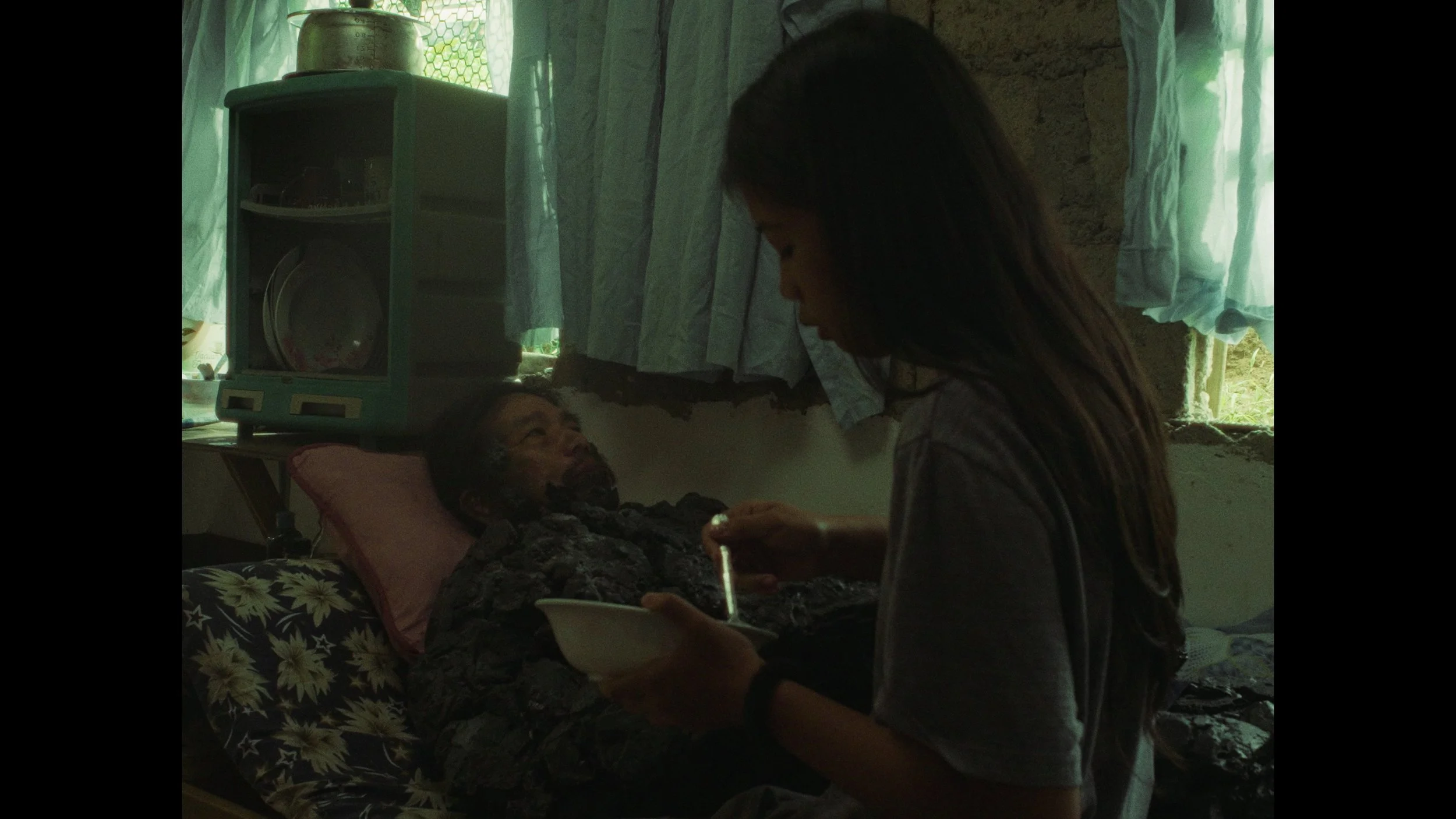
Film still from Bato’ng Bunga (Stone Fruit)
Bato’ng Bunga (Stone Fruit)
dir. Elj Seth Tababa
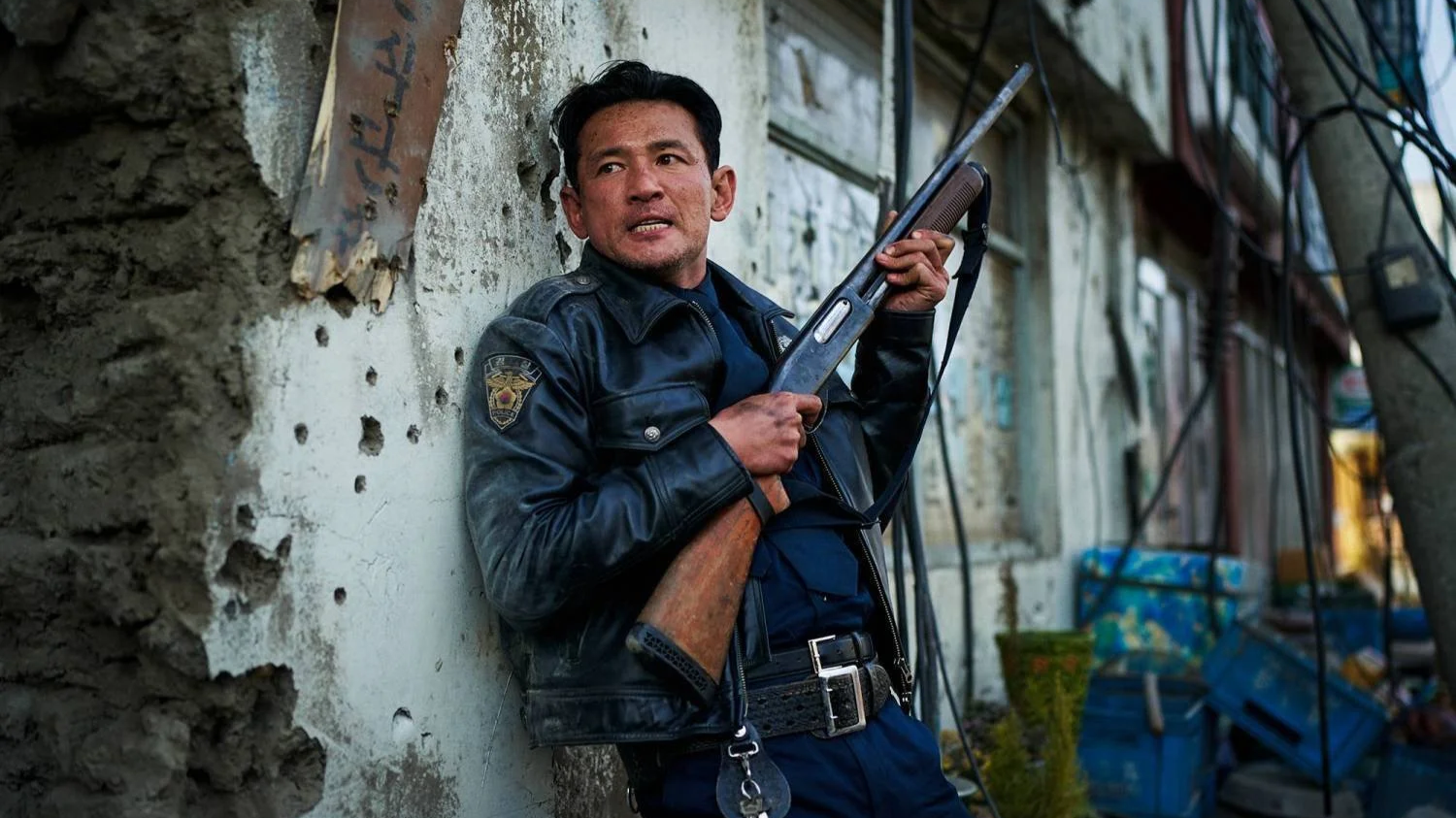
There’s something unusually tender in the way Elj Seth Tababa’s Bato’ng Bunga approaches euthanasia, especially in a country where the subject still sits uneasily against cultural and religious ideas about suffering and death. It doesn’t just gesture at the desire for the act; it follows its consummation toward something stranger, almost folkloric. But the film doesn’t stop at the moral question facing Samantha and Lina. Gregor, a former miner whose body has quite literally turned to stone, makes the damage of labor exploitation impossible to separate from the family carrying it long after the work is done. Silicosis becomes something stranger through the film’s magical realism, elevating it from an illness to something closer to a spiritual burden, giving poetic form to the violence of unsafe working conditions without obscuring their material cause. Tababa’s command of how each scene accrues meaning from the last is equally assured, matched by Ethan David Gipanao’s exacting images, which give the film a tactile, weathered quality. In the spotlight is Sharon Ceneta’s Lina, a grieving mother trying to hold together a household already coming apart, delivered with a performance whose restraint and convincing Bisaya anchor the film’s more fantastical impulses. – Axl Zamora Mendez
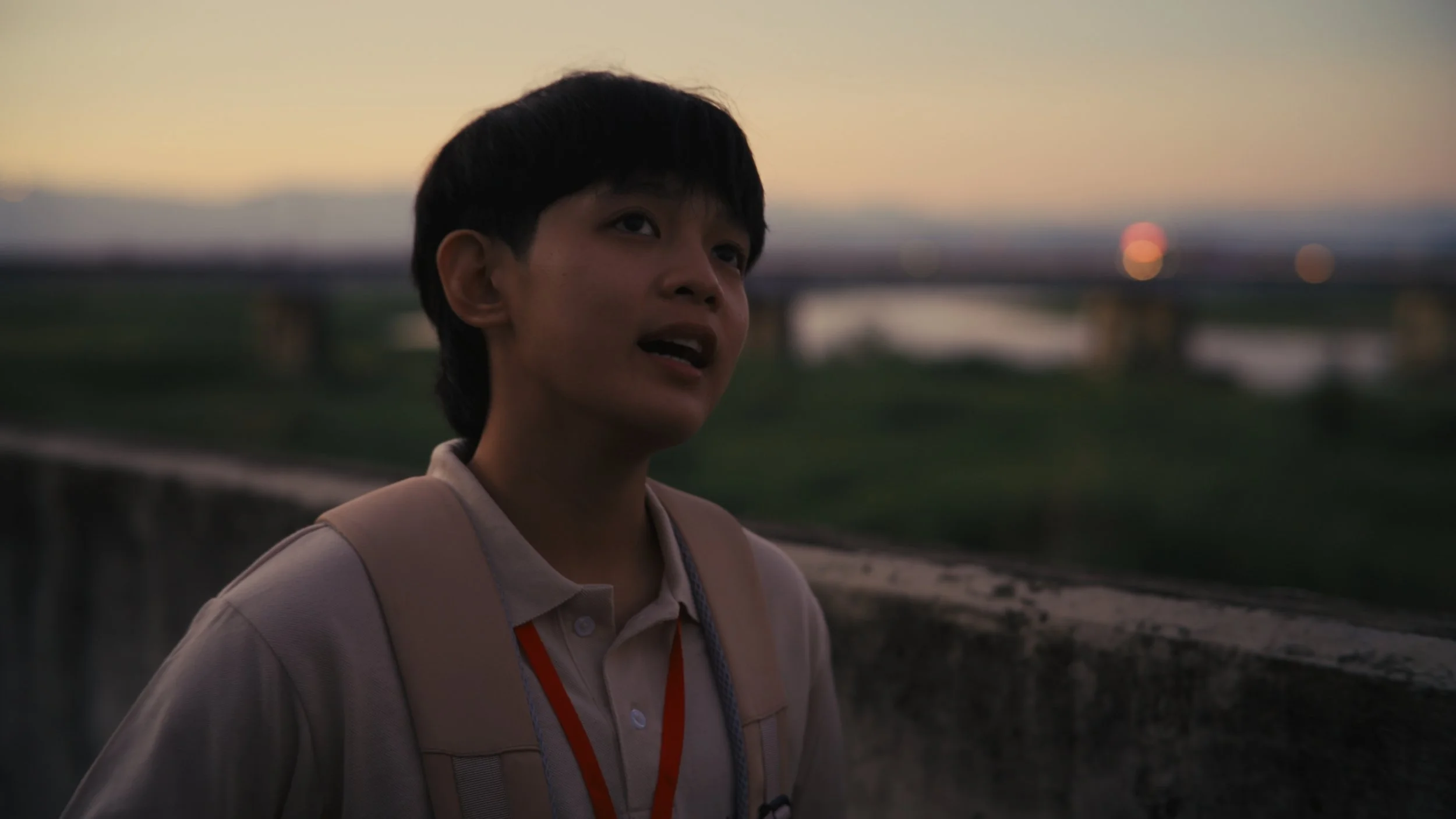
Film still from Piyesa
Piyesa (Piece)
dir. Ryand Angelo Ugalde
As trans bodies continue to be politicized and restricted, Ryand Angelo Ugalde’s Piyesa offers an empathetic examination of the often conflicting public and private realities of transitioning. It is that age-old irony that to gain something new comes with a measure of loss. But the film is less concerned with grief than it is about the very real social and economic costs of existing as a queer individual. That is, that the supposed freedom of being authentically oneself simultaneously carries the risk of being pushed further to the margins. In Piyesa, Kris’ passionate performances of traditional Ilocano melodies intercut with images of stone pillars and architecture, acknowledging the unyielding social structures that struggle to accommodate his evolving identity. It is probably not a coincidence that the film also keeps two ubiquitous institutions of Filipino life in the periphery: the Church and basketball.
There are, of course, scenes painfully familiar to the trans experience: removing a binder after a long day; scrutinizing one's body in the mirror; observing cis bodies with astonishment then mild envy; and dealing with the mildly awkward task of coming out to a loved one. These details are captured with striking intimacy. Yet the film never obligates Kris to explain himself, refusing to treat transness as something exceptional or inherently transgressive. Instead, moments of quiet anxiety are regarded with light tenderness thanks to the friendship between Kris and Ian. Their relationship anchors much of the film, transforming uncertainty into an opportunity for joy and acceptance. When Kris finally steps on stage during the choir’s final number, the camera chooses not to linger on him anymore as he sings. Piyesa attests to the way such stories unfold off-stage, unknown to the common spectator, but silently endured by those who bear them. – Niko Perez
Presented by the Film Development Council of the Philippines, the 9th edition of Sine Kabataan was screened from September 18 to 20, 2026, at the Red Carpet Cinema 1, Shangri-La Plaza, and from September 18 to 26, 2026, at FDCP Cinematheque Centres nationwide.