
‘The Flor Contemplacion Story’ REVIEW: Paano Inilawan ang Ilaw ng Tahanan
‘The Flor Contemplacion Story’ REVIEW: Paano Inilawan ang Ilaw ng Tahanan

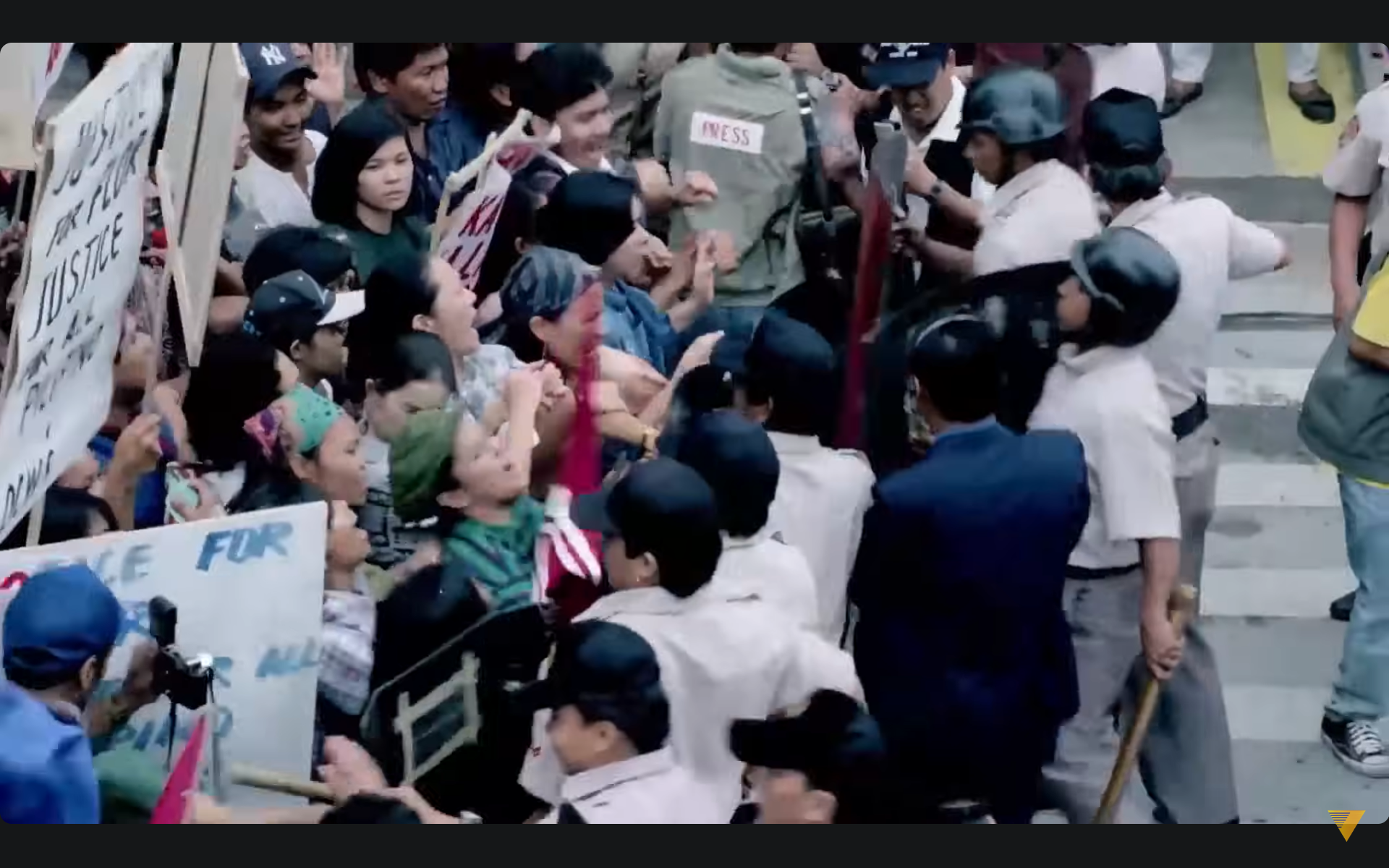
Eksena ng protesta para kay Flor Contemplacion / Larawan mula sa VIVA Films.
This review is written in Tagalog. An English translation is provided.
Sa Pilipinas, wala nang bago sa isang mapayapang kilos-protestang nauuwi sa isang girian. May ganitong eksena sa unang 25 minuto ng The Flor Contemplacion Story. Lahat ng nakikita natin sa screen ay mga ekstra. Walang silang mga linya; bitbit-bitbit ang kaniya-kaniyang placard at iba pang props. Halatang may iisang instruksyon siguro mula kay Direk Joel Lamangan: “Pagka-action, mag-chant lang kayo ng ‘Flor! Flor! (Nora Aunor)’” Maya-maya, darating si Mayor Vicente (Bob Soler) kasama ang mga pulis at makikipag-usap sila kina Neneng (Jaclyn Jose) at Efren Contemplacion (Julio Diaz).
Literal na agaw-eksena. Kitang-kita ang effort ng buong produksyon. At siyempre, itinatampok nito on-screen ang angking kakayahan ng militansiya at kolektibong aksyon – dalawang bagay na karaniwang hindi makikita sa mga pelikulang galing sa malalaking studio gaya ng Viva.
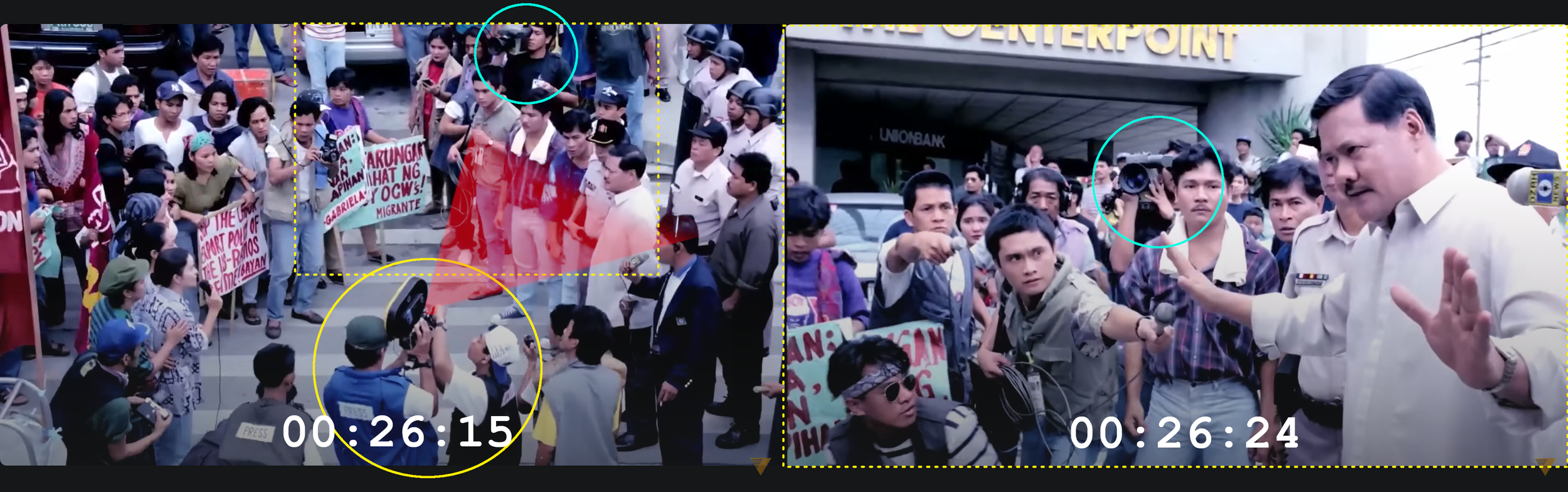
Mga cameraman sa loob at labas ng pelikula / Mga larawan mula sa VIVA Films at mga anotasyon ni Sam Arinto.
Kung uulit-ulitin ang eksenang ito, pansin ang mga ekstrang nakabihis-midya; mga umaaligid na reporter at cameramen na kinukunan ang protesta — na sila pa lang ang mga cameramen mismo ng pelikula.
Itong mumunting camera trick ay hindi lamang “big brain moment;” malamang ay nakatipid pa ang produksyon sa isang rolyo ng sine. Hindi natin malalaman kung sino kina Direk Joel o sa sinematographer nito, na si Romel Vitug, ang nakaisip, ngunit tanda ito ng husay at lebel ng detalye’t pag-iingat ng mga lumikha sa pagsasadula ng totoong buhay ni Flor Contemplacion.
Sa loob ng dalawang oras, lantad ang papel ng sinematograpiya ni Romel Vitug na nagbibigay-liwanag, sa literal at metaporikal na antas, sa kuwento ng isang ilaw ng tahanan.
Sa pagtutok at pagtampok
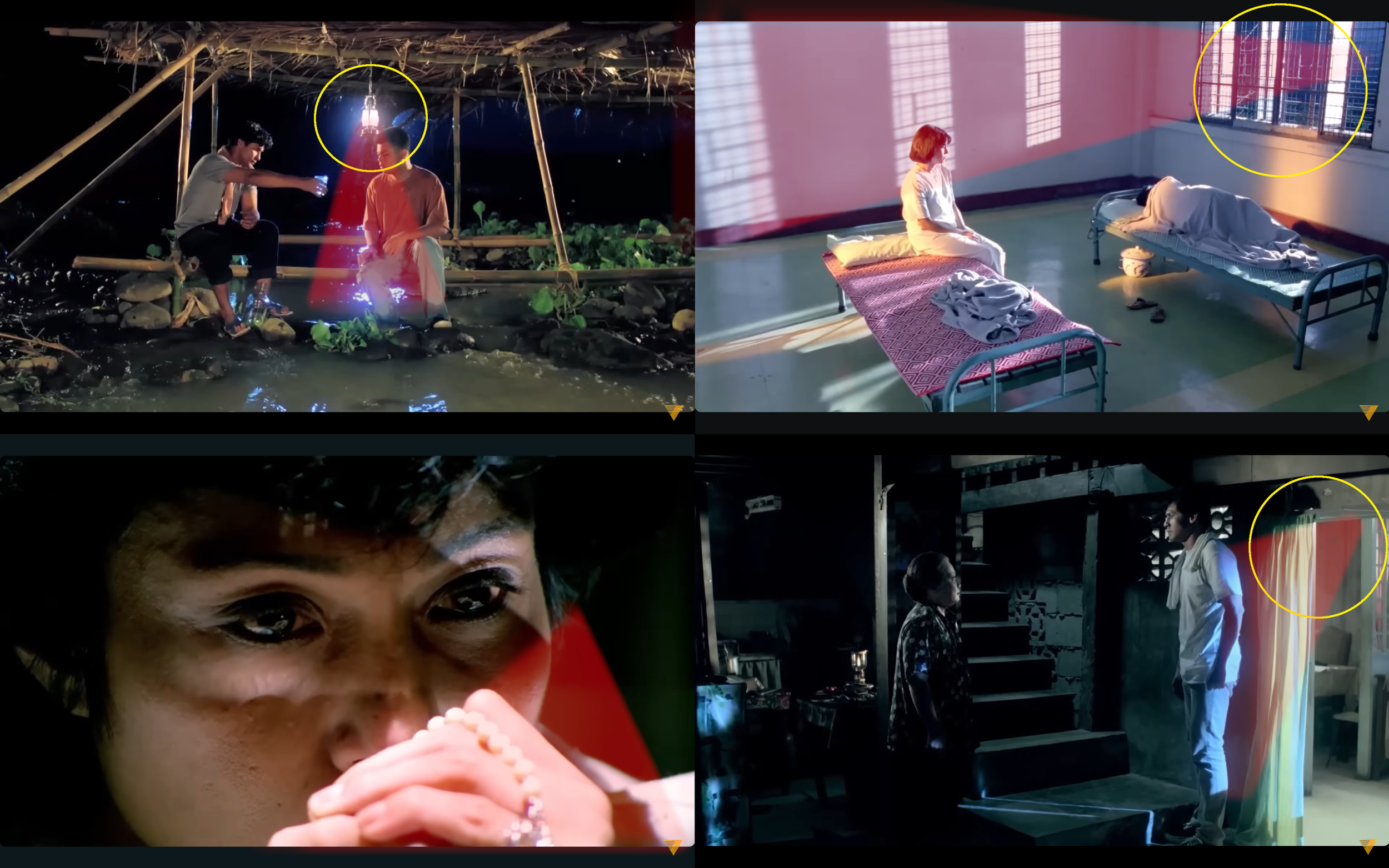
Mga larawan mula sa VIVA Films at anotasyon ni Sam Arinto.
Lagi’t lagi, kalkulado ang bawat frame ng pelikula. Ang mga light source, artipisyal man o natural na sinag ng araw, ay sadyang kalkulado. Hindi sapat ang paglalarawan sa mga ito bilang “malikhain” dahil sa idinadagdag nito sa pangkalahatang ibig sabihin ng eksena.
Sa paglalaro sa mga anino at ilaw ni Vitug, madaling napupukaw ang mata ng manonood sa mga iniilawang karakter. Bawat emosyon nina Aunor, bawat patak ng luha ni Morales ay mas dama at bumibigat sa ganda ng kuha ng kamera nito.
Sa pagbibigay-liwanag
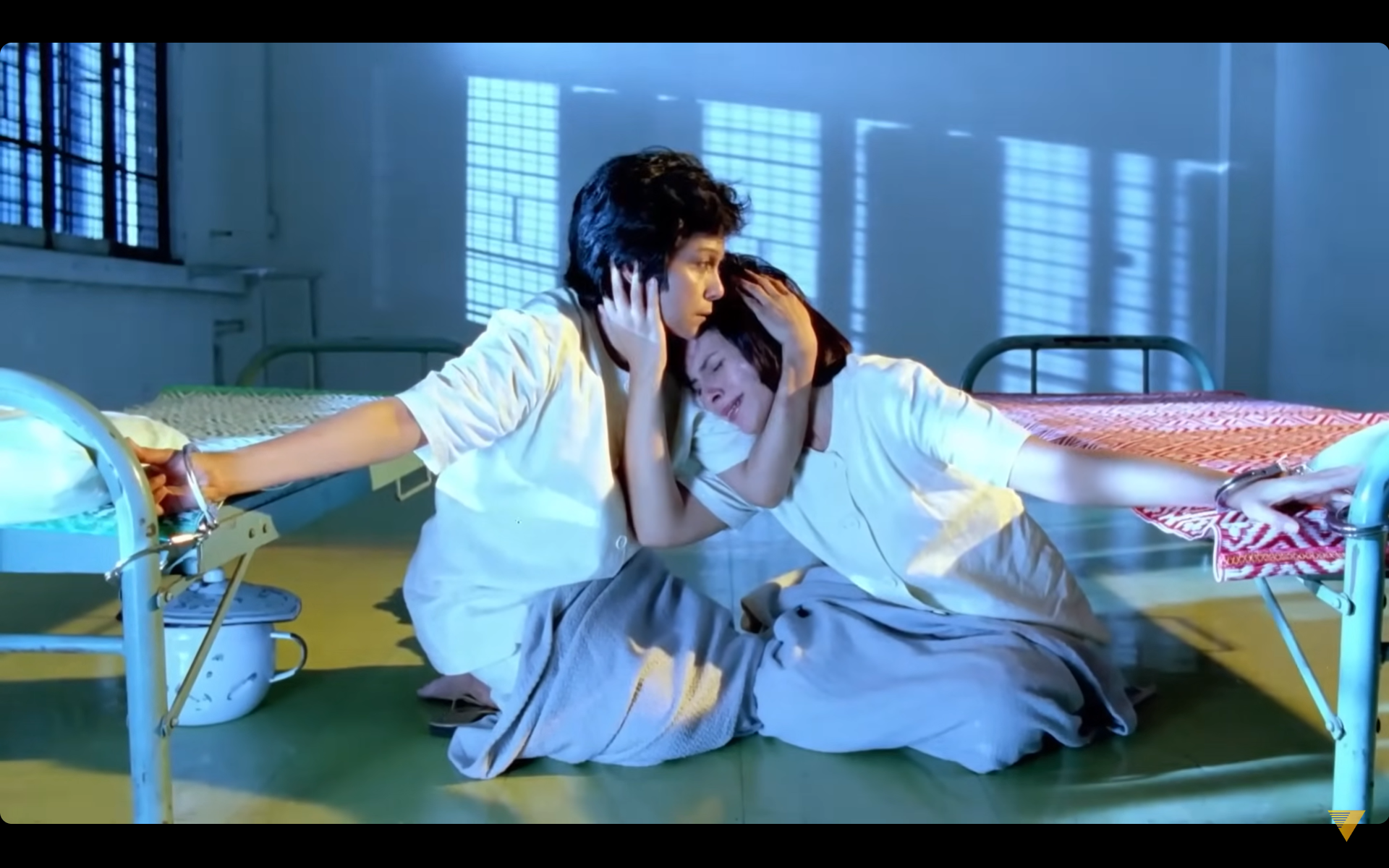
Flor Contemplacion, left (Nora Aunor), at Delia Maga, right (Rita Avila), sa isang piitan para sa mga Pinay na OFW. Larawan mula sa VIVA Films.
Kung gaano kasarap sa mata ang pelikula, ganoon din kaingat ang treatment nito sa kuwento – halaw sa mga tunay na pangyayari noong 1995, tungkol sa buhay ni Contemplacion bilang isang domestic helper (DH) sa Singapore, isang ina at asawa, at isang babae. Bitbit din nito ang talas ng komentaryong nais palitawin patungkol sa lipunang Pilipino.
Si Flor ang nakipagsapalaran sa ibang bansa at nagtrabaho, na kadalasang ikinakabit sa istoryotipikal na papel ng isang tatay. Bilang isang DH, maihahalintulad siya sa modernong katumbas ni Joy (Kathryn Bernardo) sa Hello, Love, Again. Parehong mga babaeng piniling magsakripisyo at tiisin ang pag-aalaga sa ibang pamilya upang maalagaan ang kanilang sariling pamilya.
Pagtutulong-tulungan ng kababaihan at pag-intindi sa isa’t isa ang pinalilitaw na naratibo. May nuance sa kanilang mga relasyon bilang mga babae. Sina Flor (Aunor) at Neneng (Jose) ay may pagkakaintindihan at respeto sa bawat isa labas sa pagiging kirida o kabit ng nakababatang dalaga. Ang kapwa OFW ni Flor, si Virgina Parumog (Rita Avila), ay naiipit sa parehong sitwasyon at kasama sa piitan. Si Russel Contemplacion (Vina Morales) ay bunsong anak ni Flor na lumaking wala sa piling ng kanyang nanay ngunit lumaki sa kanyang lola (Gloria Sevilla).
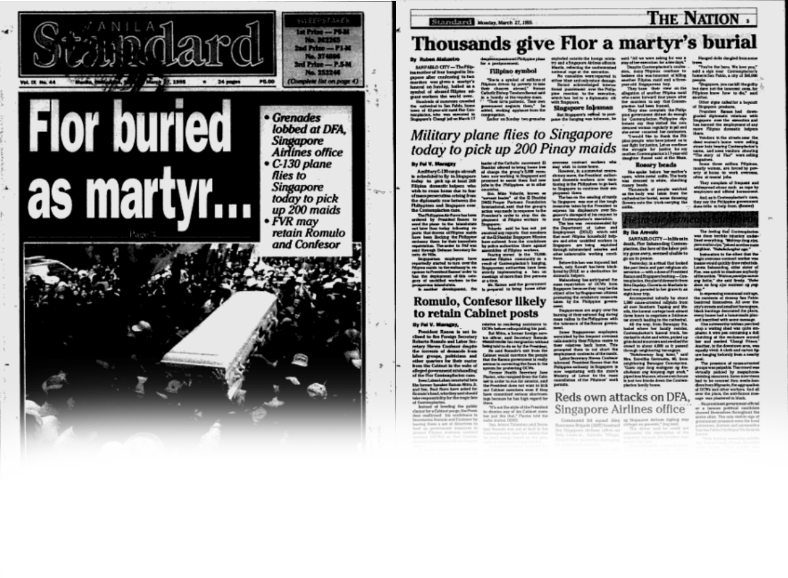
March 27, 1995 Manila Standard broadsheet para kay Flor Contemplacion. Mula sa Google Newspapers.
Binabalot ng complexity ang mga babaeng karakter sa gitna ng kanilang hinaharap na realidad at problemang nais lagpasan. At ang pinakaibubuod at pinakapinupunto ng pelikula ay ang paglalathala ng pagka-walang-sala ni Contemplacion sa isang krimeng kanyang inako upang protektahan ang kaniyang kapwa babae at kapwa DH na si Delia Maga (Amy Austria).
Talamak ang usapin pagdating sa mga biyograpikal na pelikula, lalo na sa Hollywood. Kesyo kung totoo bang nangyari ang mga naisapelikula o pag-e-exaggerate lamang sa buhay ng isa nang sikat na personalidad, halimbawa, si Elvis Presley o si Yukio Mishima o ‘di naman kaya si Oskar Schindler. Sa kaso ni Flor Contemplacion at sa pelikulang marapat lamang na ipinangalan sa kanya, nabigyang-buhay at nabigyang-hustisya ang kanyang kuwento — na sa kasamaang-palad ay nauulit pa rin hanggang sa kasalukuyan — bilang isang OFW na naging martyr at bilang isang ilaw ng tahanan sa pamamagitan ng pagbibigay-liwanag sa kanyang kuwento at mga ilaw na pinailaw ng crew at ni Romel Vitug.
Mapapanood nang libre sa YouTube ang pelikulang The Flor Contemplacion Story.
-
There is nothing new about a peaceful mobilization turning into a physical riot in the Philippines. 25 minutes in, the film The Flor Contemplacion Story captures this grim reality. Extras fill the screen. They are non-speaking actors, carrying their own placards and props. You can tell they had only one instruction from the director, Joel Lamangan: “When I say action, all of you protesters should chant ‘Flor! Flor!’” The scene plays out; Mayor Vicente (Bob Soler) arrives with the police and negotiates with Neneng (Jaclyn Jose) and Efren Comtemplacion (Julio Diaz).
This scene is eye-catching, “agaw-eksena” in Filipino (lit. scene-stealing). You can see the production value. And above all else, it depicts the militancy of the people and the power of collective action against institutions — two things that seem subversive and rare to see on-screen, especially in Filipino films produced by a mainstream studio like VIVA.
When you watch this scene over and over again, you’ll see other extras portraying media workers: swarming reporters and cameramen capturing a protest in support of the protagonist. Upon further examination, you’ll figure out they’re actually the camera operators of the film.
One may describe this trick as a “big brain moment”; the production probably managed to save a film roll or two and also reduced some time refilming different angles. It is unknown whether it was Director Joel or the film’s cinematographer, Romel Vitug, who came up with the idea. But this time-saving, film-conserving trick indicates the level of detail and careful treatment of the filmmakers in recreating real-life events from the real Flor Contemplacion’s story.
Romel Vitug’s cinematography in the film’s two-hour runtime literally and metaphorically shines a light on the complexities and intersectionalities of the life of the eponymous protagonist, an "ilaw ng tahanan" (lit. light of the house; a Filipino idiom used to describe mothers).
On spotlighting
The frames aren’t only well-framed and well-lit. They are beautifully calculated with intent and bathed in symbolism. Calling these cinematographic choices “creative” underplays their significance and impact on each frame's imagery.
Vitug’s intentionality in utilizing shadows and lighting catches the watcher’s eye and guides it to the characters and what the scene evokes; every emotion portrayed by Nora Aunor as Flor, every tear shed by her onscreen daughter, Vina Morales as Russel Contemplacion, both gently strum one's heartstrings as it shines upon it and hits the key light.
Shedding light on
As aesthetically pleasing as the film is, it is careful and deliberate in its treatment of the story. The biographical feature retells the events of 1995, following the eponymous lead as a domestic helper (DH) in Singapore, a mother and a wife, and what it’s like to be a working woman across national borders. The film never miss to shed light on the realities of Filipino society.
Flor took upon the “masculine” role of providing, going overseas, and fending for her family. She embodies motherhood in all of its modernity, making the sacrifice of taking care of other families instead of her own — to be able to take care of her own at the same time — very reminiscent of a spiritual predecessor to Joy (Kathryn Bernardo) in Hello, Love, Again.
The film explores Flor's relationships with other females in the story, underscoring their level of understanding of each other's complicated and nuanced situations. Flor (Aunor) and Neneng (Jaclyn Jose) still hold respect for each other, even though the latter is the younger mistress. Flor finds a companion and a friend in solitude with Virginia Parumong (Rita Avila), facing the same crimes in Singapore. And the complex relationship of the youngest daughter, Russel (Vina Morales), growing up with her grandmother (Gloria Sevilla) and still having empathy and love for her absent mother working in a foreign country.
Female characters in The Flor Contemplacion Story are slathered with complexity and grounded in reality. Very much so, reflective of the film’s driving narrative and justifying logic: Contemplacion’s act of bravery to cover up another woman’s and fellow OFW’s crimes — committed by Delia Maga (Amy Austria).
Biopics are notoriously controversial, especially in Hollywood. Accuracy and truth in real-life events are distorted and often exaggerated to boost the protagonist’s identity, which is more often already a famous name such as Elvis Presley, Yukio Mishima, or Oskar Schindler. But in Flor Contemplacion’s case, an ordinary mother and a hardworking OFW becoming a martyr to a nation is just worthy of a biopic named after her. A film that shines a light on motherhood literally — on its subject matter and real-life protagonist — and metaphorically in the four corners of a screen lit by Romel Vitug.
‘The Flor Contemplacion Story’ is available for free on YouTube.