
‘Filipiñana’ REVIEW: Playing on unequal ground
‘Filipiñana’ REVIEW: Playing on unequal ground

This review contains minor spoilers.
Space is an important element whenever I watch any type of film. My dependence on the character’s relationship with the setting is never taken away, especially when the entire plot almost always relies on the beauty of what we see on the big screen — a space filled with colors, whether it portrays chaos or vagueness.
Interestingly, the concept of golf as a sport and as a setting pushes this idea further when put into an almost two-hour film: its emptiness and silence contextualize “space” as something more rooted within the plot and the characters. As an audience, you are forced to be immersed in the slow and hot atmosphere of the course, where its landscape is as empty as the suffocating silence of the film.
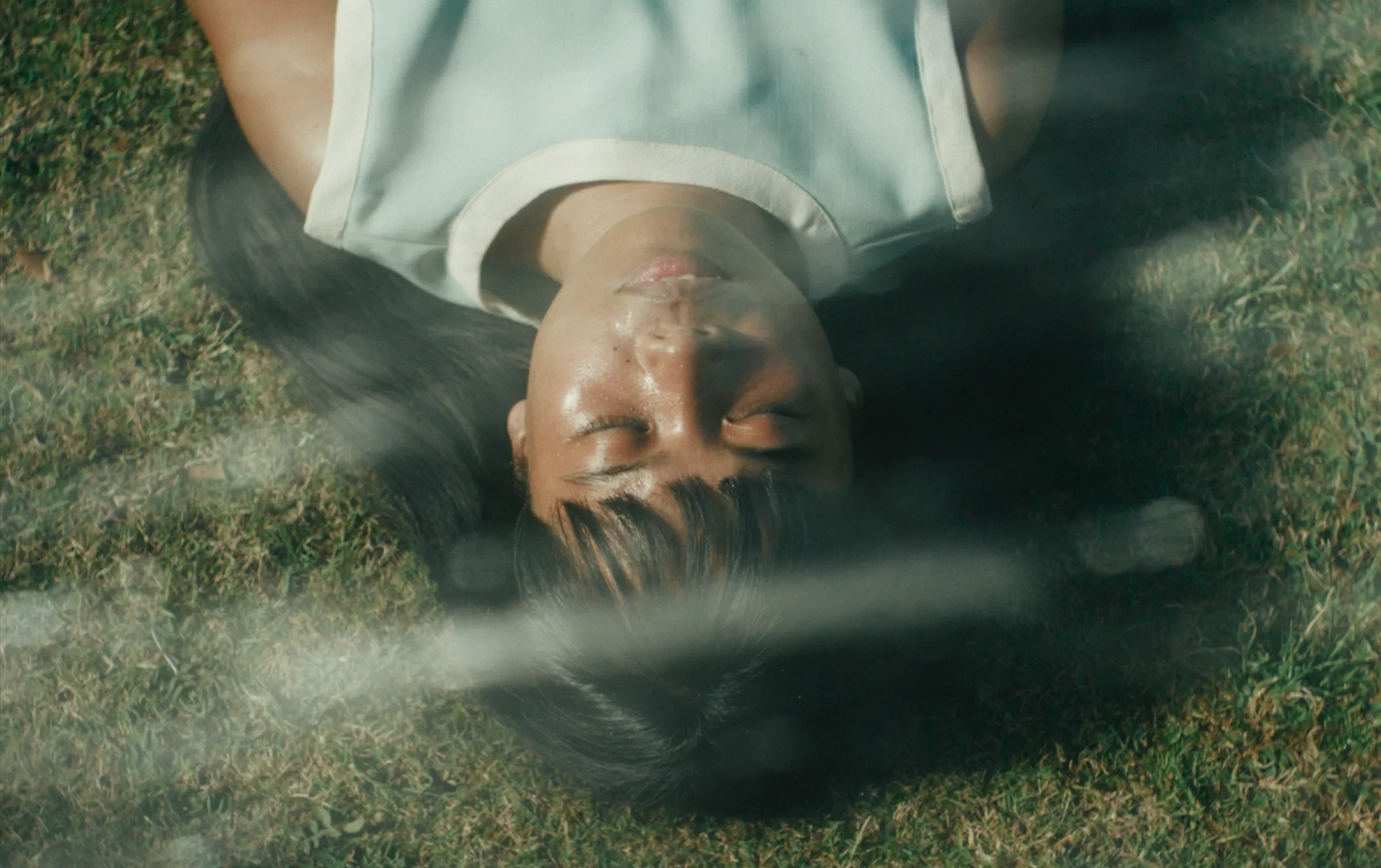
Isabel (Jorrybell Agoto) in Filipiñana / Photo courtesy of Kino Lorber

In an important sense, Rafael Manuel’s Filipiñana takes this to pride by maximizing the concept of space as a component within and outside its characters. The concept of big spaces being only for the rich and the privileged is expanded into various scenes that portray how inequality will always prevail, even in the simplest courses of being on a golf course as a worker and as someone who simply plays the sport for leisure.
First, I want to focus on the evident structural inequalities of the characters, which can be the first thing that audiences may notice. This is clear in the contrast between Filipino workers and the rich foreign tourists who get to set foot in the film’s space. For instance, tee girls are not allowed to occupy the golf course as they please. As funny as it sounds, their task revolves around assisting the players by positioning the golf balls before the players hit them with silver-shining golf clubs.
A limited space is set between them and the rich, as the tee girls suffer not only under the scorching sun and the burning heat, but also in how they are treated labor-wise. Conversely, the rich get to immerse themselves in the empty spaces of the course not just because of their over-expensive outfits, but also because of the local caddies who assist them every step of the way. In another way, we can look at it as stolen lands that the rich and greedy get to enjoy without guilt and remorse, as seen within Isabel’s (Jorrybell Agoto) backstory.
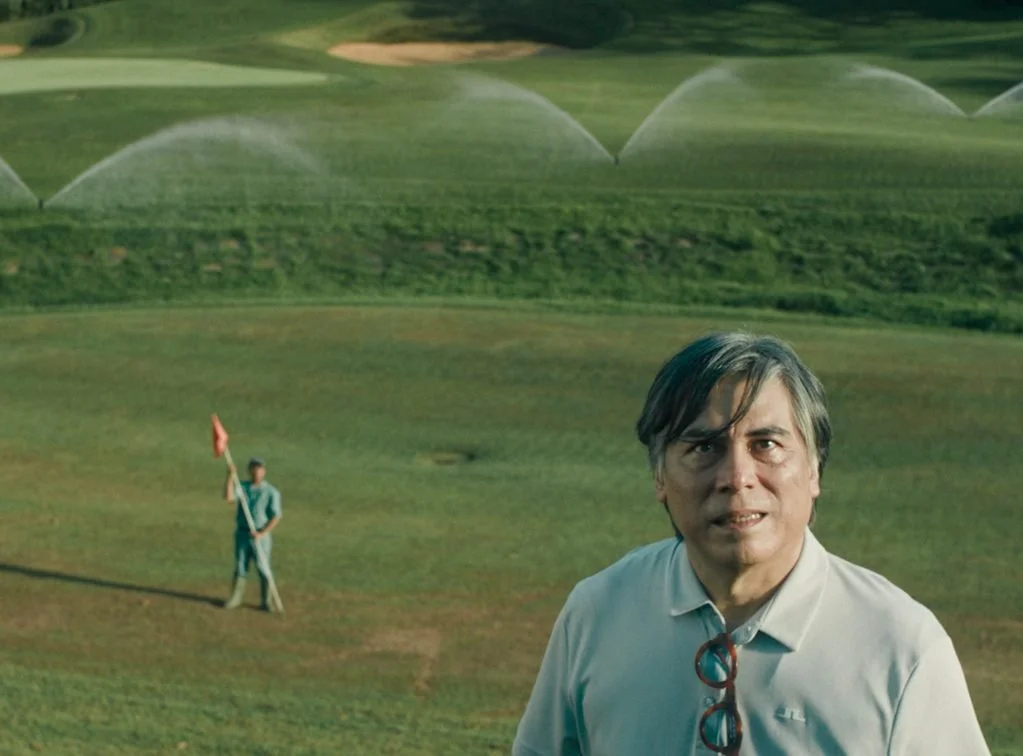
Renato (Carlitos Siguion-Reyna) in Filipiñana / Photo courtesy of Rappler
It is also important to note how women are portrayed in the film: objectified, uniformed, and tightly controlled. The tee girls and caddies are not only subjected to their work responsibilities, but also to how they must constantly obey the rich, which, in the film’s case, are the rich male identities in the background. Even with Isabel’s freedom symbolized by her exploration of the course, they are constantly submissive to men — almost “othered,” in a sense, by how they must dress, how they respond, and how they act around every male character. Thus, the limitations and boundaries we see do not only exist within the physical space, but also within the characters’ actions and “limited freedom.”
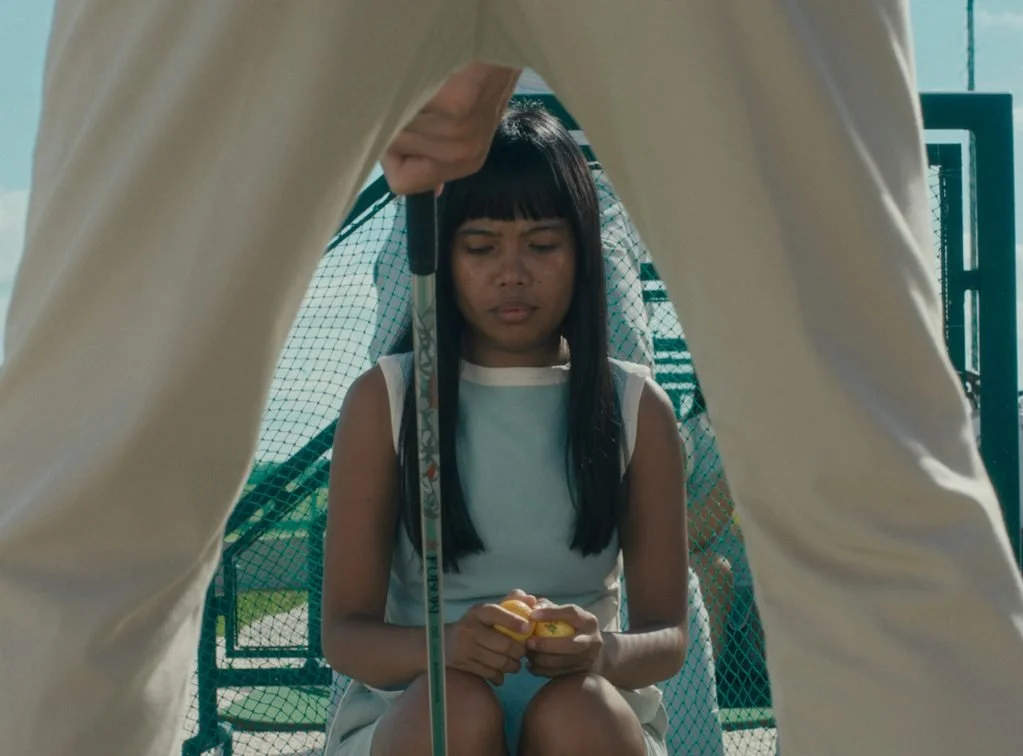
Isabel (Jorrybell Agoto) in Filipiñana / Photo courtesy of Rappler
Second, the concept of “stolen lands” will always remain in each scene building up to the film’s ending. Filipiñana was shot on eight different golf courses. Each vast landscape designed for simple leisure for the rich and the privileged is a space that was once occupied by someone — someone in need of the actual large space more than for pleasure and entertainment. These big, empty spaces in the film become harder to ignore by the time we realize how much people spend their money just to play, when these lands were simply stolen from a community that actually needed them for living.
Even when excluding the context of historical colonialism, we see a pattern that continues to manifest in the Philippines’ setting, particularly through projects that could potentially harm Filipinos’ way of life. For instance, the proposed development of Pax Silica in the country raises similar questions about who might benefit the most from the use of local lands. A more important question is: who bears the consequences and burdens of these actions?
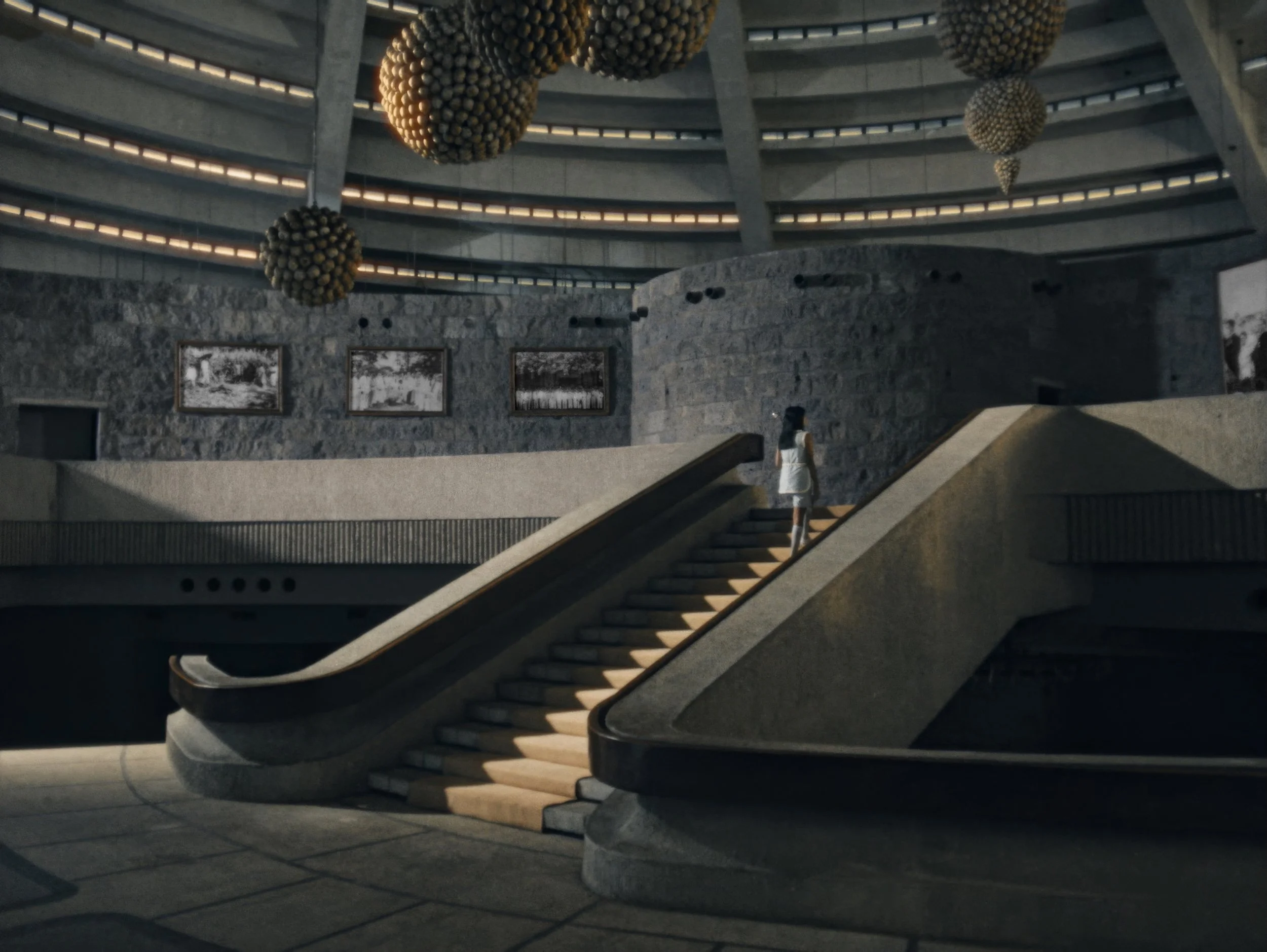
Isabel (Jorrybell Agoto) in Filipiñana / Photo courtesy of Kino Lorber
Ultimately, Filipiñana plays with the element of space wisely. A simple backdrop extends to a reflection of the inequalities in the current situation of Philippine society. With Isabel as this “simple act of resistance,” we see how the ending may or may not have offered her genuine freedom. It is also important to highlight what people may or may not willingly do to reclaim the space that was once theirs, not because of the power they have, but because of the power that is taken away from them by the rich and the privileged who constantly use their ability to manipulate these spaces.
‘Filipiñana’ was the official closing film of the 22nd Cinemalaya Philippine Independent Film Festival and was later released in Philippine cinemas nationwide.