
‘Digger’ REVIEW: An Uneven but Compelling Portrait of Climate Guilt
‘Digger’ REVIEW: An Uneven but Compelling Portrait of Climate Guilt


Tom Cruise as Digger Rockwell in ‘Digger’ / Photo courtesy of Warner Brothers

WARNING! SPOILERS AHEAD FOR ‘DIGGER’
Disaster becomes easier to live with when responsibility can be distributed until no one feels personally accountable for what happened. Digger, directed by Alejandro G. Iñárritu, is most interesting when it examines that instinct, especially the human desire to turn catastrophe into argument, entertainment, or history rather than confront the choices that created it.
The story initially follows Digger Rockwell (Tom Cruise), an aging oil billionaire who conspires with the U.S. President Compson (John Goodman) after reckless drilling helps trigger an environmental disaster, only for the film to reveal that this apocalyptic political farce is actually a stage rehearsal taking place in a future already damaged by the choices the play is mocking.
Digger left me admiring the ambition behind it more than the film that finally emerged from that ambition. There is real anger here, and sometimes real wit, but the movie keeps weakening its own ideas by explaining them long after they have already landed.

Tom Cruise as Digger Rockwell and Sandra Hüller as Emma / Photo courtesy of Warner Bros. Philippines
Iñárritu approaches climate collapse, corporate greed, political cowardice, and collective guilt through an aggressively theatrical satire that I often admired in concept more than in execution. A genuinely provocative film exists inside Digger, and several scenes show how sharp its writing can become when it trusts its characters and audience. My frustration comes from how often the movie explains ideas that were already clear, turning potentially cutting satire into something more blunt and repetitive. I still found a lot to appreciate, particularly the performances, the mid-film structural shift, and the moments when the screenplay lets responsibility get complicated rather than conveniently assigned.
The opening stretch worked extremely well. For roughly the first twenty-five minutes, the film commits so fully to the grotesque behavior of Digger and the political machinery around him that I was willing to follow its abrasive rhythm. The dialogue is loud, combative, and deliberately excessive, but there is energy in the way the characters negotiate blame while protecting their own comfort. Cruise immediately makes the central figure more watchable than he has any right to be. His physical transformation helps, but the performance goes beyond makeup. He gives Digger a vulgar confidence that feels practiced rather than cartoonish, and he knows exactly how to shift between charm, aggression, and panic.
The reveal that everything has been part of a theatrical rehearsal genuinely changes the film’s shape, and the idea behind it opens up more interesting territory. Reframing everything as a rehearsal in a damaged future gives the satire a more complicated target. The film is no longer only mocking an oil magnate or an incompetent administration; it is also questioning how later generations package disaster, grief, guilt, and historical memory into entertainment. That turn gave the audience more to think about than the first section alone. It also makes the ending more unsettling, because the play is not safely removed from reality. The world outside the theater confirms that the audience watching this story has inherited the consequences.
Where the movie loses me is in how aggressively it explains that idea. Once the reveal happens, nearly every major scene seems designed to make sure no one could misunderstand what the film is saying. Climate denial, corporate greed, political cowardice, and public complicity are all addressed so directly that the screenplay often circles back to restate its argument. The issue is not that political satire must be subtle. The issue is that the film frequently replaces observation with insistence. It has enough strong material to let the audience connect the implications, yet it repeatedly interrupts its own momentum to spell them out.
That is especially frustrating because the writing can be excellent. The European Parliament sequence is the clearest example. Digger admits responsibility, then cleverly shifts the discussion toward society’s dependence on oil until everyone in the room begins accusing everyone else. The scene works because it shows how accountability dissolves once guilt becomes broad enough to share. Digger does not escape by proving his innocence; he escapes by making responsibility feel universal. That is far stronger satire than the film’s more direct speeches because the argument emerges through behavior, power, and rhetoric.
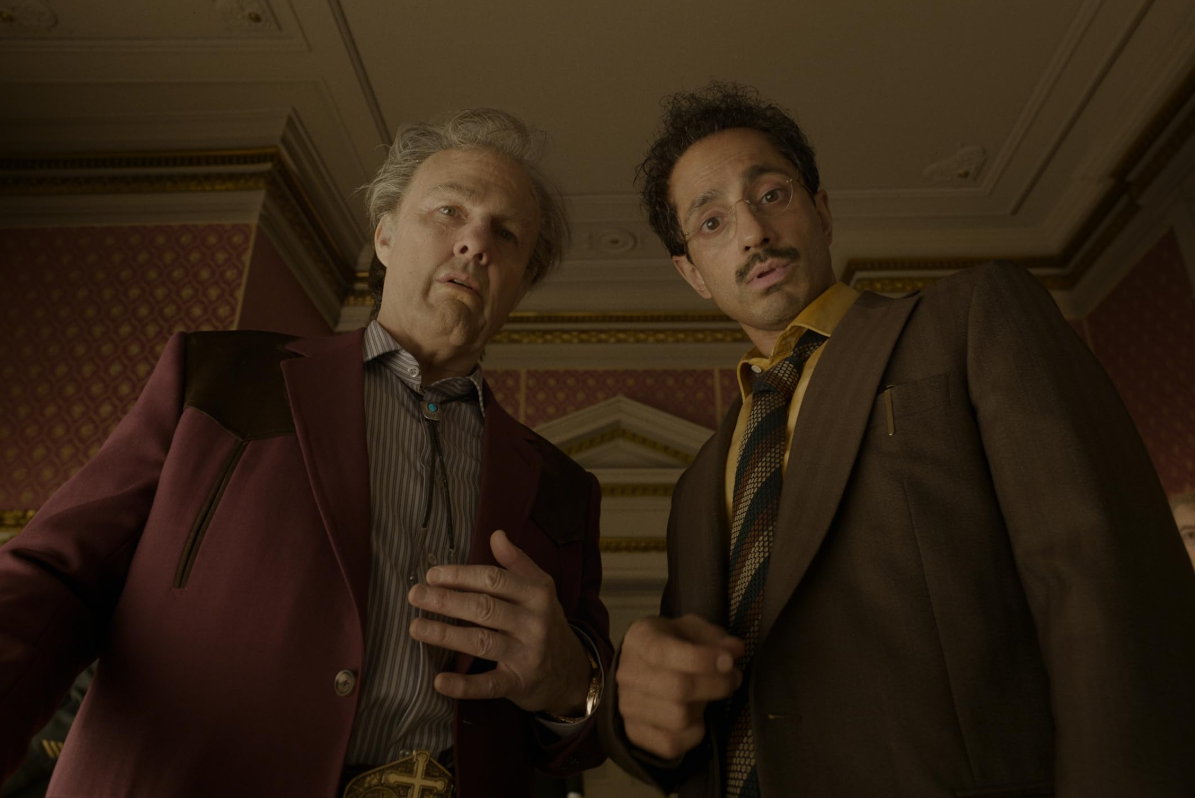
Tom Cruise as Digger Rockwell and Riz Ahmed as Ganesh / Photo courtesy of Warner Bros. Philippines
The performances also give the screenplay more range than its tone sometimes deserves. Riz Ahmed as Ganesh is very good at grounding scenes that could easily become pure farce, while Goodman understands the absurdity without flattening his character into a joke. Cruise is the main event, though, and I appreciated seeing him step outside the action-star identity that has defined so much of his recent work. There were stretches where I stopped thinking about the actor entirely. One extended speech had complete control of my attention because Cruise plays it with enough conviction to make Digger’s logic disturbing rather than merely ridiculous.
The comedy works less consistently. Some exchanges land genuinely well, and several smaller moments earn a laugh, but the overall tone often feels strained. Almost every conversation arrives at an elevated volume, which eventually limits the film’s ability to escalate. Anger, panic, absurdity, and confrontation begin blending because so many scenes operate at similar intensity. The result occasionally becomes exhausting rather than funny.
Curtis’ breakdown is one of the film’s strongest ideas because it gives the central performance an ethical weight. His discomfort with turning real suffering into entertainment creates tension the movie badly needs. Kenny’s explanation for financing the play is equally compelling. He believes reenacting the past can help people process collective grief, while Curtis fears the production reduces tragedy to spectacle. The film does not completely settle that conflict, and it is better for it. This is one of the rare places where Digger allows competing ideas to remain unresolved instead of directing the audience toward a single approved reading.
The ending is effective because it refuses to let the theater become an escape. Curtis finishes the performance, the audience celebrates, his family receives good news, and then everyone steps outside into a world that proves the disaster was never contained onstage.
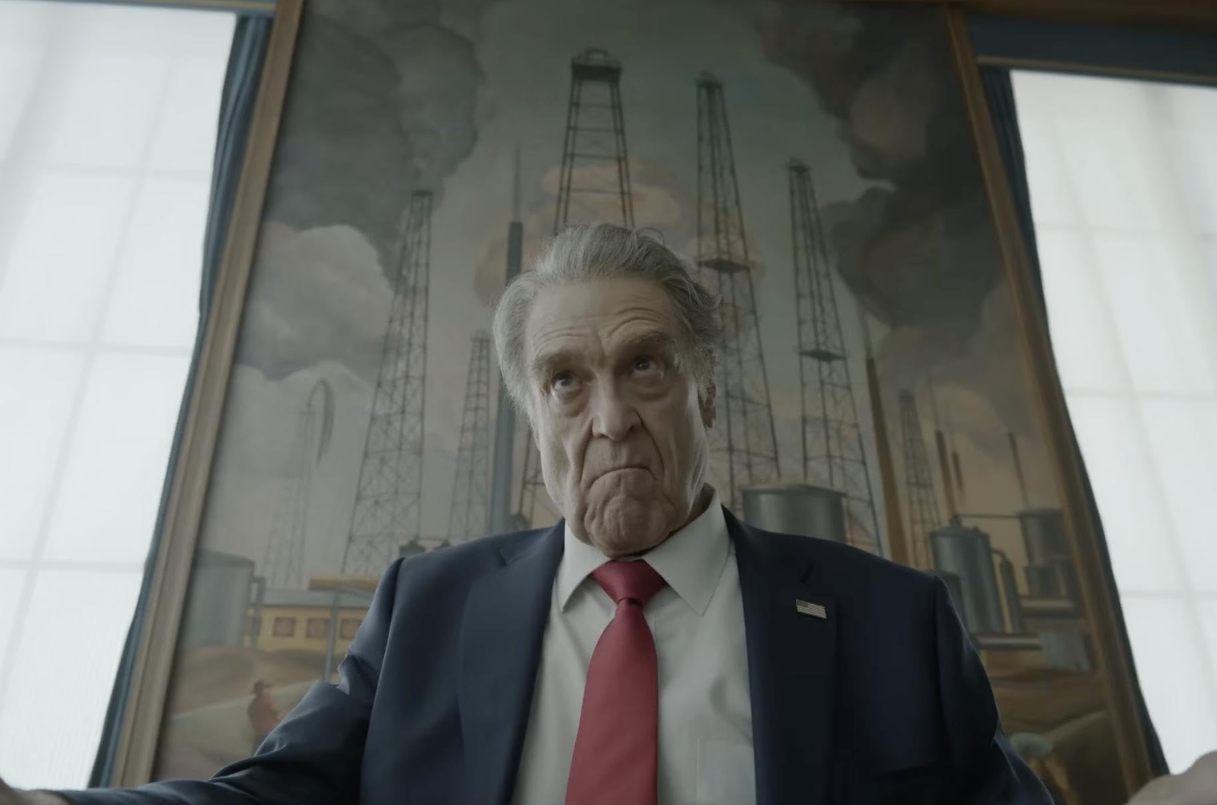
John Goodman as President Compson / Photo courtesy of Warner Bros. Philippines
That movement gives the film a sadness its broader satire sometimes lacks. These people understand what went wrong, can dramatize it, can ridicule those responsible, and are still trapped inside the consequences.
Digger ultimately suggests that remembering catastrophe does not equal learning from it, especially when memory becomes another spectacle that allows people to feel morally separate from history. Its satire sometimes weakens itself by insisting too loudly on ideas already visible. Still, its ending leaves behind a more difficult thought: responsibility does not disappear when the guilty die, because their choices continue shaping lives they will never have to witness. The film works best when recognizing that the real burden of catastrophe falls on people who arrive after the decisions have already been made, left to decide whether understanding the past will change anything about what they do with the future.
‘Digger’ is now showing in Philippine cinemas.