
‘You Can See Everything’ REVIEW: What Are You Looking For?

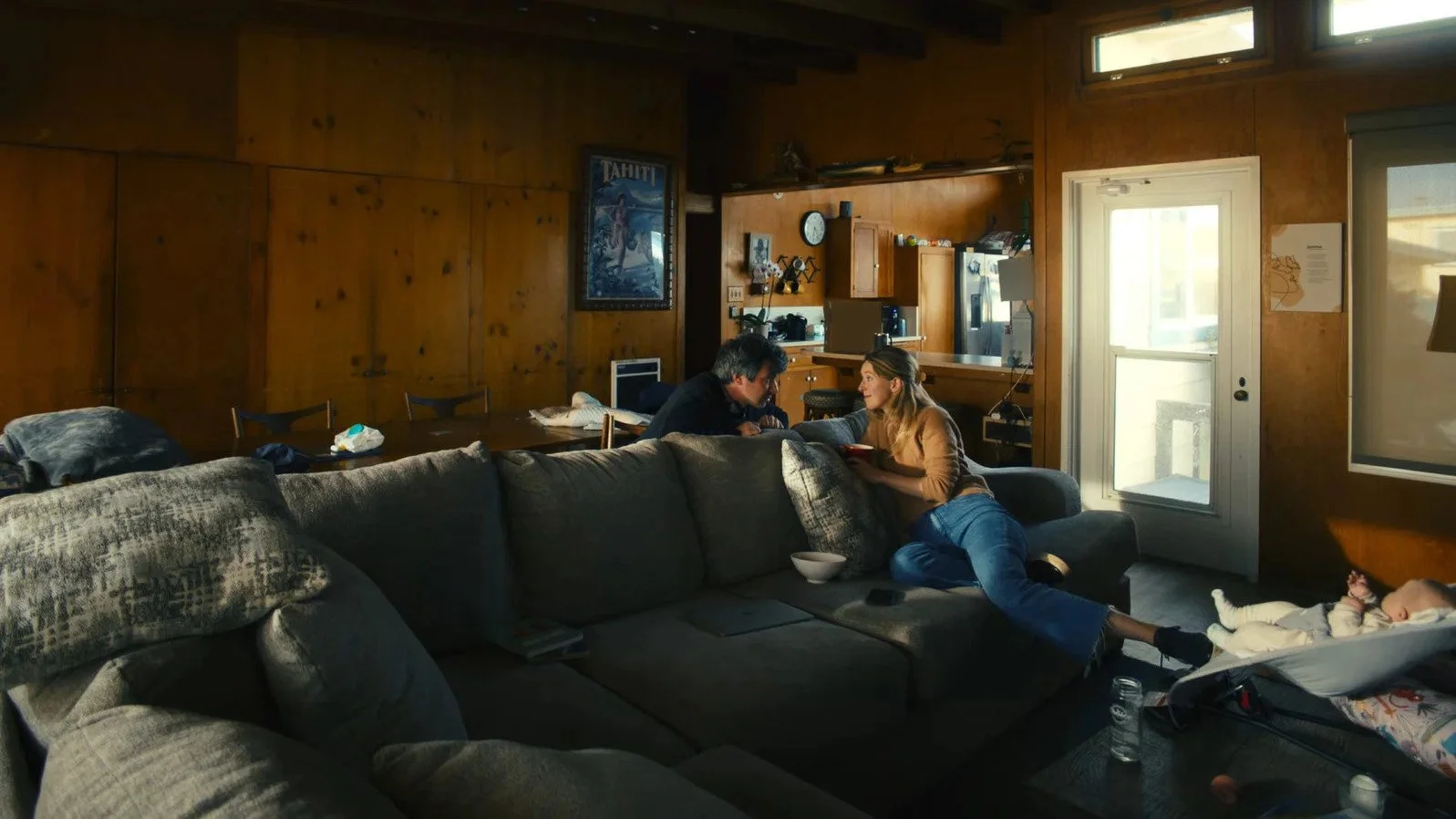
Nathan Fielder and Elizabeth Holmes having a transparent conversation, or so it seems | Still courtesy of A24

You Can See Everything is a movie about a metaphorical well, and just how easily and in flexible ways it could be poisoned. The movie makes itself apparent already from the opening sequence — a seemingly intimate moment between a loving couple being scrutinized and observed deeply, and where the title card is even obfuscated in certain parts — that it has more than seemingly linear intentions in making sense of its controversial subject.
The couple that we see in their downtime is soon-to-be convicted Theranos head CEO Elizabeth Holmes, notorious for claiming and promising all-encompassing blood tests through engineered devices that turned out to be a scam on a grand scale, and business partner and fiancée Billy Evans, who has some peculiar things that he is not willing to fully divulge for some reason. The man (one of the people) taking a deep glance is comedian Nathan Fielder, who, in his own words (during a rather wry, ironic observation at one point), is well-known for creating the comedy series Nathan For You, where he helps several upstart businesses with crazy ideas.
Elizabeth and Billy have hired both Fielder and documentarian Lance Oppenheim (fresh off of his electric, digital nightmare of a fiction feature debut Primetime) to try to capture Elizabeth's last few weeks before serving her prison sentence. Of course, it all starts as awkward as you'd expect when the “cringe comedian” that both Elizabeth and Billy hired tries to integrate into their daily lives, but as more questions are asked about the hows and whys of Elizabeth's actions, and the implications of said answers as Nathan tries to take a deeper look at the cavernous rabbit hole, things start to escalate into a deep-dive into not just the subjects.
To give a rather frank confession: similar to how Holmes' first and only exposure to Fielder was that one Nathan For You clip was the one where he was taken aback by a grandfather's family tradition, I too was not exactly a huge Fielder fan going in. I think it's best for me to say this outright and not subconsciously fall into the trap that Fielder and Oppenheimer set up in terms of the thread of “preconceived notion” that looms over the three-hour runtime. And those were not the only threads that You Can See Everything drops in deadpan fashion in its early goings. It is very transparent that the intention coming into production is far from a puff piece for Holmes and Evans, as Fielder continuously pokes and prods for some reason and contextualization of their actions in the past and present, while still surprisingly having space for cutting self-reflexivity: why does he want to find out?
Is it to reconcile an image in his head of Elizabeth? What does he get from trying to bring out and deconstruct her intentions and method of communication, knowing the sheer effort that it takes to get at least resembling a semblance of straightforwardness?
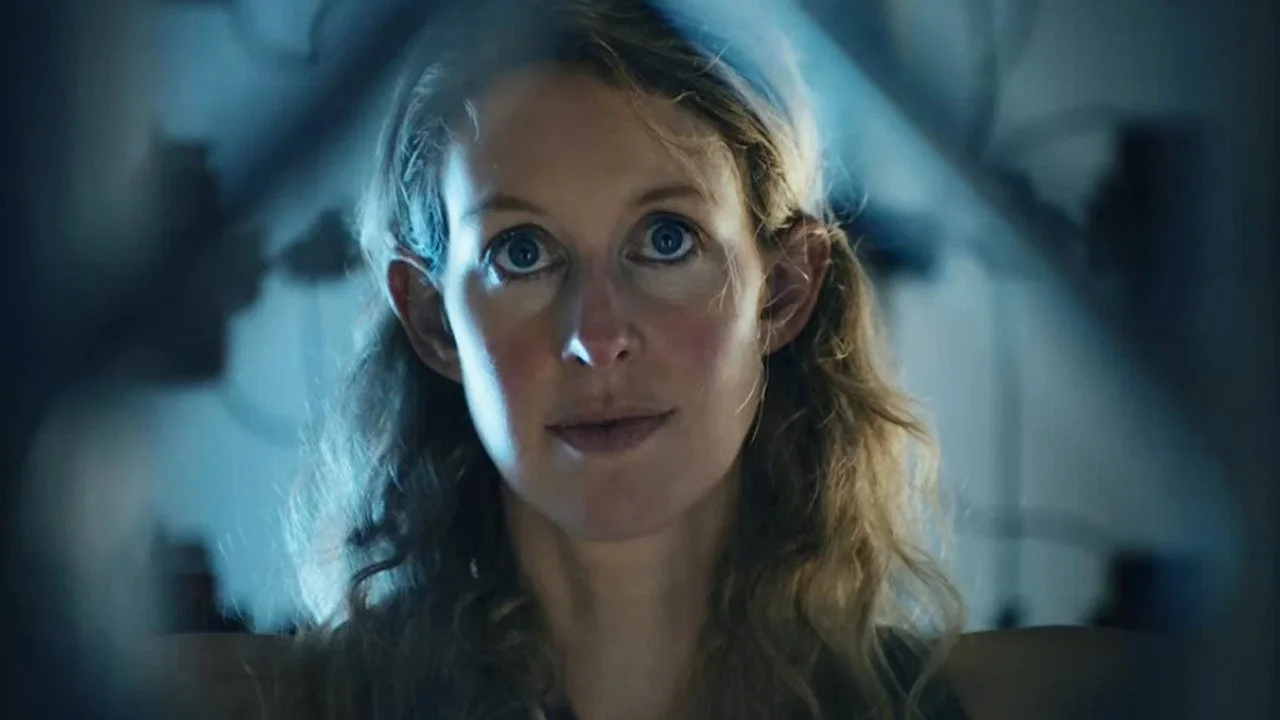
Elizabeth Holmes during a procedure that captures her image; what does this entail? | Still courtesy of A24
And then, as the second hour of the film commences, the film pays off those threads in ways that, while making sense, go to some rather frazzled extents that essentially function as a spark plug that lights itself up towards self-immolation. Previous details (and even individuals mentioned) make their presence known all too well; more of Nathan’s own artistic idiosyncrasies begin to bleed into the way he comprehends the situation he is in (fans of one specific HBO show may see some threads!), and the film itself begins to turn its own deconstructive ambitions towards itself and its own existence.
All of this, done at a clip that at times, due to its own deliriously dangerous tightrope act (taken up to 11 due to the real-life stakes involved), reminded me of a similar buzz during Parasite’s second act, which I acknowledge is a loaded comparison, but it goes to show just how much Fielder and Oppenheim managed to somehow keep the ball rolling despite the tangible cards stacked against them.
But ultimately, what elevates You Can See Everything into something more than sheer navel-gazing on a grand, detached lens is how it never looks away from attempting to reckon with nearly everything it does, and not just in a formal manner (Oppenheim’s documentarian lens is as unflinching as it can be, opening versatility in narrative that Fielder truly goes to the limit with). Like as if it is walking on eggshells, it is deeply aware of the contradictions, hypocrisies, and the possible reasons and context they operate on or propagate.
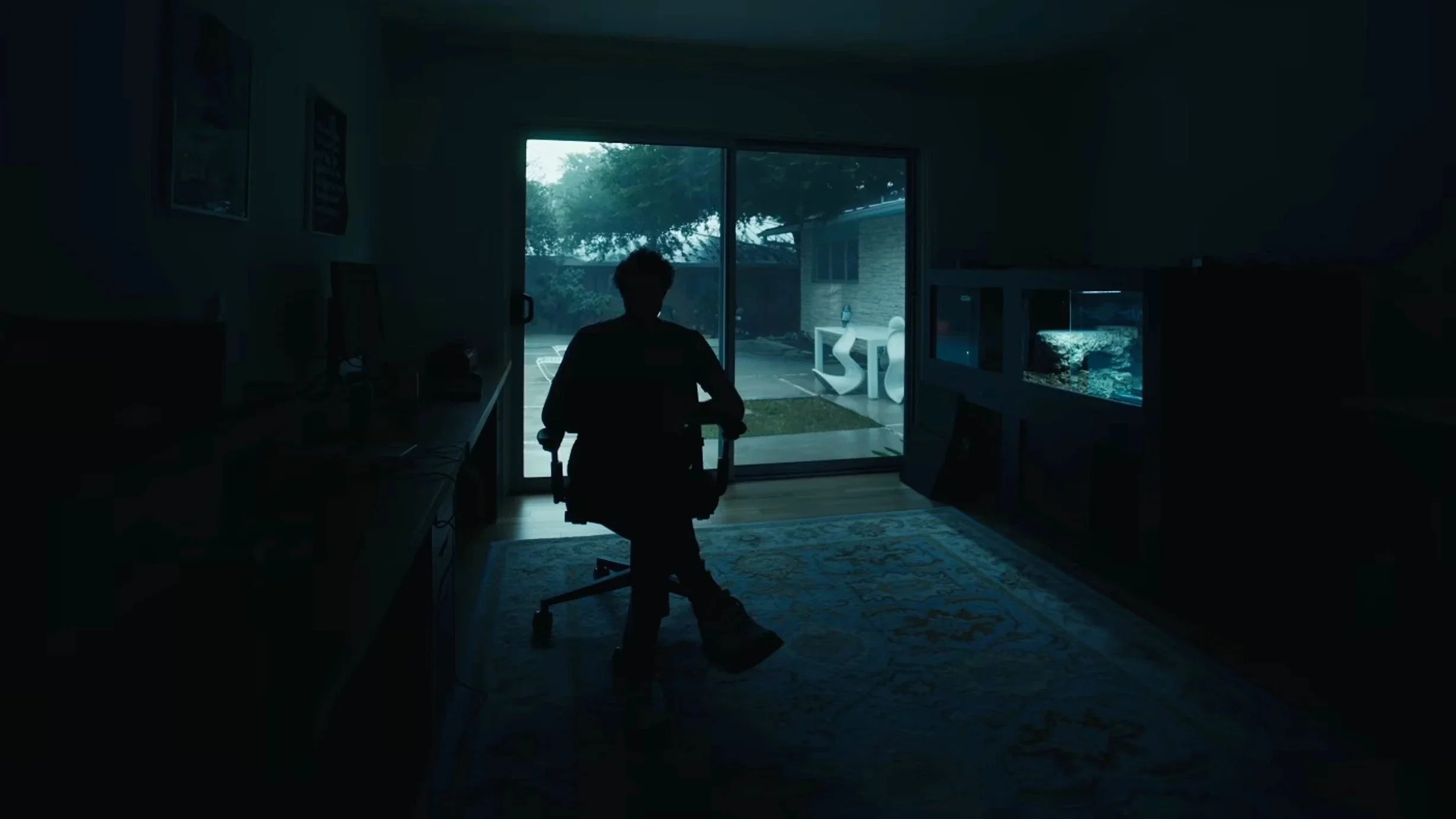
Nathan Fielder looks out a cloudy view beyond the window | Still courtesy of A24
It doesn’t come up with any clean narrative answer, nor does it agonize over the holes that lie at its philosophical center (see: the comparisons this film has been given to Digger, a film that also touches several adjacent aspects but on a more wounded, bleeding-heart microphone-to-mouth fashion), but it is solemnly aware of and accepting of the risks it poses for being the way it is. In a world that is slowly becoming to be considered “post-truth,” it is refreshing to see a film so deeply embedded in the times that does not just step back and look at the tangled wires, but to try and determine from which devices they come from.
I apologize if this review may come off as a bit vague, but as Nathan and Elizabeth’s interactions morph into something more convoluted and emblematic along the way, how one receives You Can See Everything and its own mutations with their perspective is also of equal importance.
A view that is too suffocated by the lens in which it creates a thousand stories, whilst chameleonic in nifty repositioning of how it tells a whiff of them, it manages to juggle ridiculously loaded interrogation along with bleak laughter over the sheer weight of how to manage it, and a barreling momentum that never lets its eyes away from the hole our supposed “observer” tries to jump in. Even if one can say they would not be real, we all can’t resist finding anything in order to validate our own definitions of it, right?
‘You Can See Everything’ is now showing in Philippine cinemas through Columbia Pictures Philippines and was part of the 2026 QCinema International Film Festival’s lineup under the Dokyu Days program.