
‘Status: Rejected’ REVIEW: A Perfectly Imperfect Portrait of the American Dream
‘Status: Rejected’ REVIEW: A Perfectly Imperfect Portrait of the American Dream

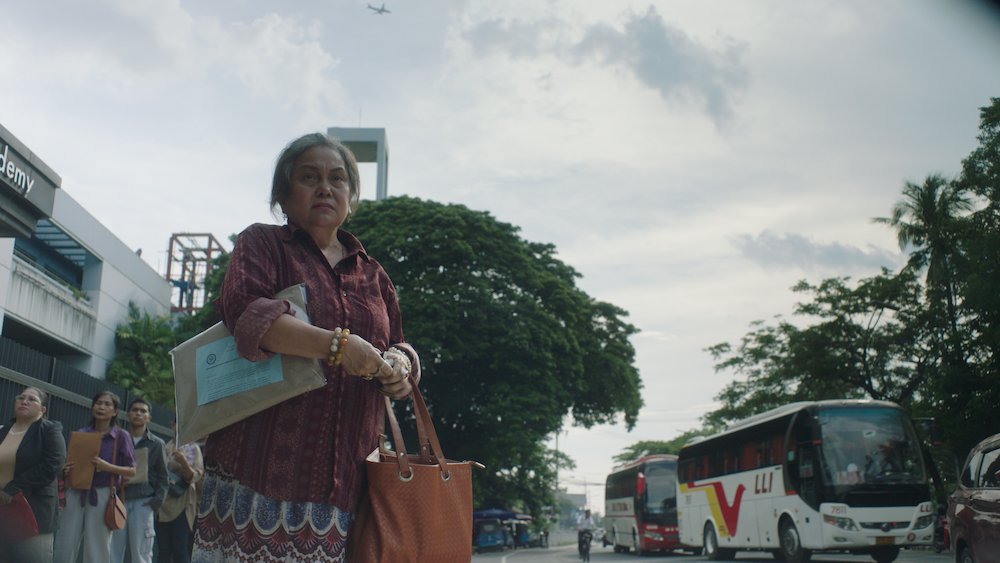
Ruby Ruiz as Biring in ‘Status: Rejected’ | Still courtesy of Black Cap Pictures and Clever Minds Inc.

Time and time again, Filipinos long for a miracle. It may be in the form of a holy apparition, or a person whose pockets are full of cash. It can be anything that will put them in a better place than their current predicament in the blink of an eye.
For 69-year-old Biring Divinagracia (Ruby Ruiz), it's having her tourist visa approved for a trip to America. Like many Filipinos out there, Biring thinks moving out of the Philippines is the solution to her problems, as being at home feels like life is in a constant stasis.
In a country whose government abandons any sort of integrity, accountability, and transparency, but has also devolved into a circus of theatrics, it’s not surprising for its citizens to lose hope for good governance in their homeland and believe that anywhere else would be a welcome change. When the systems fail to serve the people and make their lives a living hell, why bother staying?
So when opportunities don’t work out the way we imagined, like Biring, who is denied her visa for the nth time in the US Embassy, it’s as if we’re cast astray.
Vahn Pascual’s Status: Rejected is not the first Filipino film to dismantle the American dream, but this isn’t to say the film has nothing new or genuine to say. In fact, it’s far from that, because what begins as a Horatian satire on the effects of American colonialism in the Philippines gradually evolves into a devastating portrait of family estrangement in the age of the Internet.
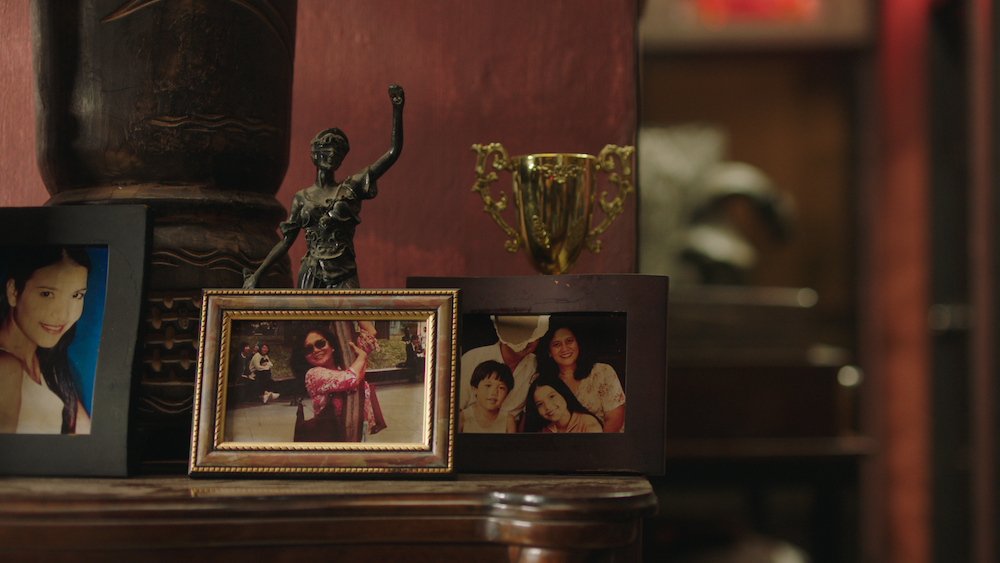
Picture frames in ‘Status: Rejected’ | Still courtesy of Black Cap Pictures and Clever Minds Inc.
One of Biring’s main reasons for her desire to migrate is to join her son, who is working in the States. Unbeknownst to her, he is a TNT (“tago nang tago” / illegal immigrant), which Biring’s daughter Anna (Alessandra De Rossi) is aware of.
Compared to her son, with whom Biring is proud and close, Anna feels bitter towards her mother. After her mother enforces her failed dreams on her, Anna also endures similar failures as Biring and ends up having to raise her own daughter/Biring’s granddaughter, Sophia (Yani Villarosa), as a single mom, while also caring for Biring. It’s this crushing weight of responsibility and unresolved resentment from Anna that drives the animosity between her and Biring, which, in turn, causes Biring’s loneliness in the household.
Biring’s only trusted confidante is Tessie (Beverly Salviejo, whose spirited performance lights up the scene with the warmth she brings), who encourages her to be on social media so that she can connect with others. When Biring follows her old friend’s advice, it doesn’t take long before she crosses paths with Steve, who introduces himself as an elderly American gentleman trying to find companionship in the digital space.
Biring’s relationship with Steve isn’t instantaneous. Neither is her knowledge of going online, which leads to some funny moments where Biring tries to navigate high technology and a long-distance relationship. But when tensions rise within the Divinagracia residence, and her loneliness worsens, Biring finds her only comfort and distraction through her chats with Steve. Soon, a romance blooms between them…
…or so it seems.
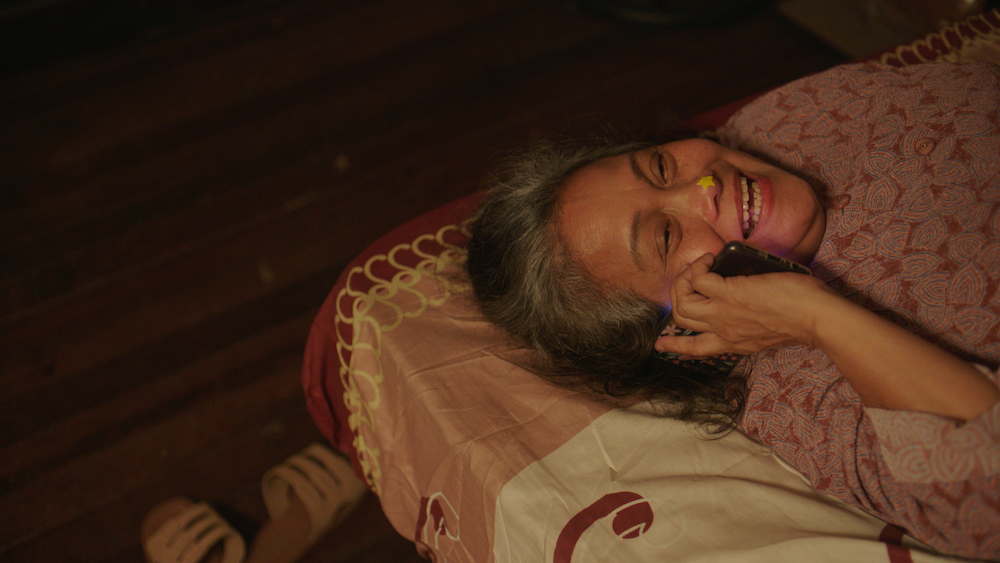
Ruiz as Biring in ‘Status: Rejected’ | Still courtesy of Black Cap Pictures and Clever Minds Inc.
The film’s main question it wrestles at is whether or not Steve is genuine. Although the answer is apparent early on, I find myself doubting. In one of the film's most intimate images, we see Biring's hand reaching out for Steve's through the computer screen, stylized in what appears to be frames printed out of a Xerox machine. From then on, I, like Biring, also want to believe that her newfound connection is true. To say otherwise is to not only admit that you are fooled but also realize that the dream once thought to be in your grasp is never even actualized to begin with.
This gets me reflecting on how much members of a family know each other’s inner realities. This may not be the case for some Filipino families, but some have cultivated a culture within the household where being vulnerable is dismissed simply because no one has the time nor the patience to hear the other’s problems. People also hesitate to open up, because they seem sure that they will be only judged and rejected by those they share a home with. This is the case for the younger generations, which is commonly explored, but Status: Rejected demonstrates that the elderly also experience this as well.
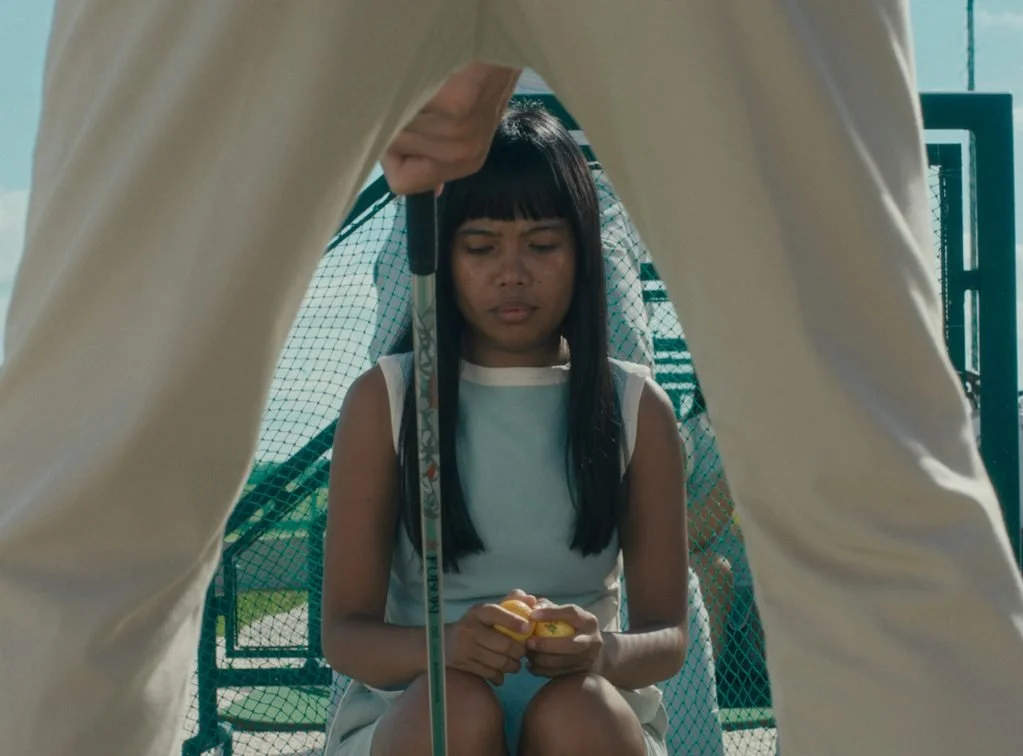
As technology advances, and trends come and go like flies, the older generations struggle to keep up and stay connected. As Anna hustles to keep her family afloat and Sophia has her fair share of college and relationships to deal with, Biring is always left at home, counting the days until she comes to America (these lonely moments in which the negative spaces and framing the subject in the confines of a particular object are where Martika Ramirez Escobar’s marvelous DP work shines). When Biring tries to do something nice for her family, her gesture is met with disdain from Anna, leaving her feeling worthless.
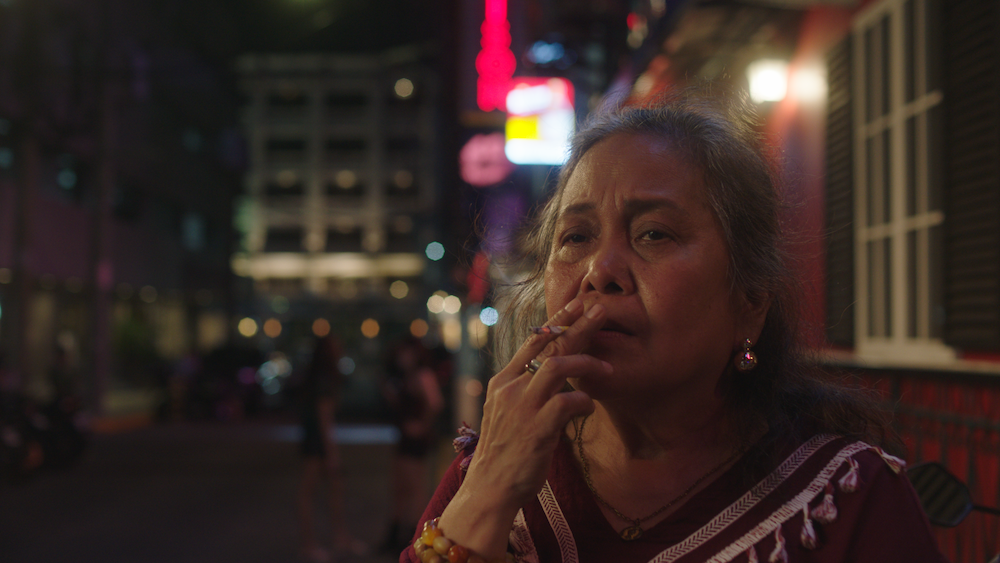
Ruiz as Biring in ‘Status: Rejected’ | Still courtesy of Black Cap Pictures and Clever Minds Inc.
So, like Biring, we turn to materials that we don't have, and persons who seemingly have time at their disposal. Biring yearns to be in the snowy American mountains, or in the glitters and glamours of Hollywood, because they look better than being here. We think living there is better than here. We think their movies are better than here. We think their system is better than ours. We think what's there is better than what's here. We turn to people like Steve who offer us company, a way to be desired and appreciated, and also an opportunity to have a brighter future somewhere else.
We often say the phrase, “baka sakali” or “maybe someday,” as a way to express that maybe there's a chance for things to be better. And taking that chance somewhere else is something we look forward to and march on even with rose-colored glasses. Because what if not taking that risk will be our biggest regret?
But upon doing so, we tend to idealize that dream when the path can be all smoke and mirrors. We don’t acknowledge that some things are too good to be true. And upon being blinded by all the glamours we pictured in our head, we abandon what's already at our arm's length. We lend time and the little wealth we have to a rotten tree whose fruits only benefit those who sowed it. There is a desperation for easy solutions, because we have endured the problems and the suffering time and time again, and that desperation is exploited by the same figures we look up to.
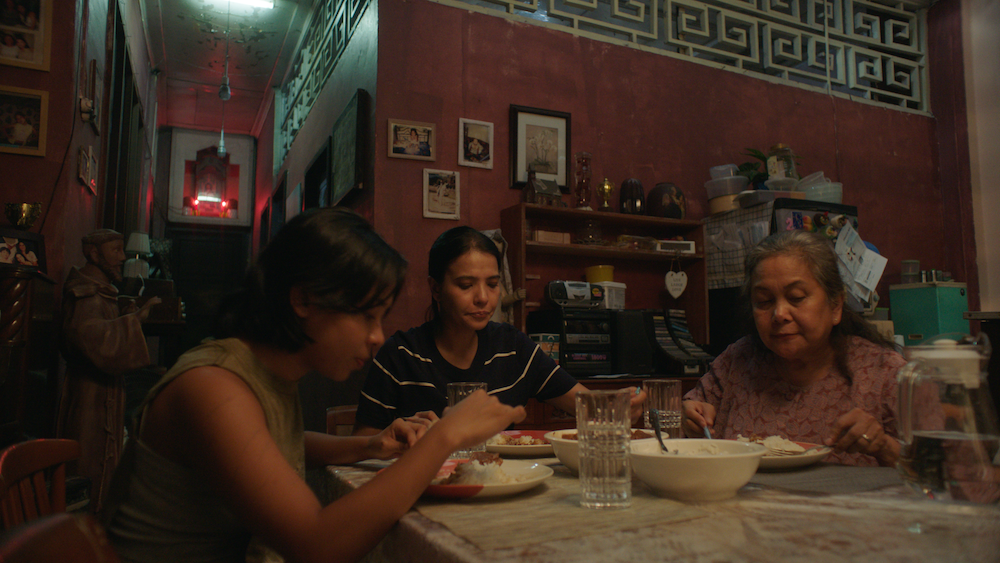
Yani Villarosa as Sophia, Alessandra de Rossi as Anna and Ruiz as in ‘Status: Rejected’ | Still courtesy of Black Cap Pictures and Clever Minds Inc.
It's unmistakable to say that Status: Rejected evokes a lot of emotional truths that have existed in the past and yet still remain relevant to this day. This impressive first feature from filmmaker Pascual is a compelling drama that is as much about what makes human connections human as it is about the outside forces and the nature of time that alienate us from each other. But no matter how these forces and shattered dreams may break you, the film lets us know that there will always be a shoulder you can cry and rely on, waiting for you at home, and what differences we may have can be overcome.
If the movie has a fault — albeit a tiny chasm that's worth delving deep into — then it will be expanding the film's central point of view from Biring to Anna and Sophia. The film implies a rich family history of disappointments, grudges and resilience through silent gazes, withheld dialogue and even the lived-in spaces of the house itself (thanks to brilliantly subtle production design from Marielle Hizon). However, I cannot help but perceive that de Rossi and Villarosa — poignantly restrained in their performances — feel slightly underutilized, especially when their moment of confrontation arrives.
Still, the emotional crux of the film is Biring, and I can't imagine another actor playing her, none other than Ruiz. The film needs Biring to have some mischievous spunk in her, in addition to the melancholy. The character has to be self-assured enough to call her friend Tessie “tanga” or “stupid” for her unwise decisions without making it seem malicious and hypocritical when Biring does something similar. Ruiz can fulfill those aspects in ways where Biring feels like she's anyone's grandma even before the credits roll. She is perfectly imperfect, like all families are, like all Filipinos are, like all of us humans are.
Side Note: I have to know if Vahn Pascual and company have seen Cris Fuego’s ‘Pinikas.’ Both have storylines where the female protagonist online-dates an American, and feature a misunderstanding gag about tits being mistaken for teeth(s) and the other way around. I just find it funny that it happened twice.
‘Status: Rejected' is one of the selected full-length feature films for the 22nd edition of the Cinemalaya Philippine Independent Film Festival, where it won the NETPAC Award (Full Length) and Best Actress for Ruby Ruiz.