
‘Mag-iina’ REVIEW: Family dysfunction in allegorical horror lenses
‘Mag-iina’ REVIEW: Family dysfunction in allegorical horror lenses

WARNING! SPOILERS AHEAD FOR ‘MAG-IINA.’
Horror and secrets hound the very walls of an ancestral home, and sins are forgiven — so does the matriarch, says the debut screen collaboration of Guelan Varela-Luarca and Giancarlo Abrahan, Mag-iina (English title: The Mothering).
The film opens with a flashback of a young Anj (Alejandra Cortez) looking for her father. We then cut to the present day as adult Anj (Janine Gutierrez) returns to the Philippines for the 40th day of mourning the passing of her father. She’s insistent on leaving after the event, despite the demands of her aunt Ysobel (Cherry Pie Picache) to stay in the mansion indefinitely. More bizarre and eccentric events occur during her first day as we are also introduced to Ysobel’s adopted son Yñigo (Lucas Andalio), named after Anj’s father Yñigo Abreu Jr. (much to Anj’s chagrin), Anj’s drunken mother Mita (Agot Isidro), and her grandmother Angela (Jackie Lou Blanco).
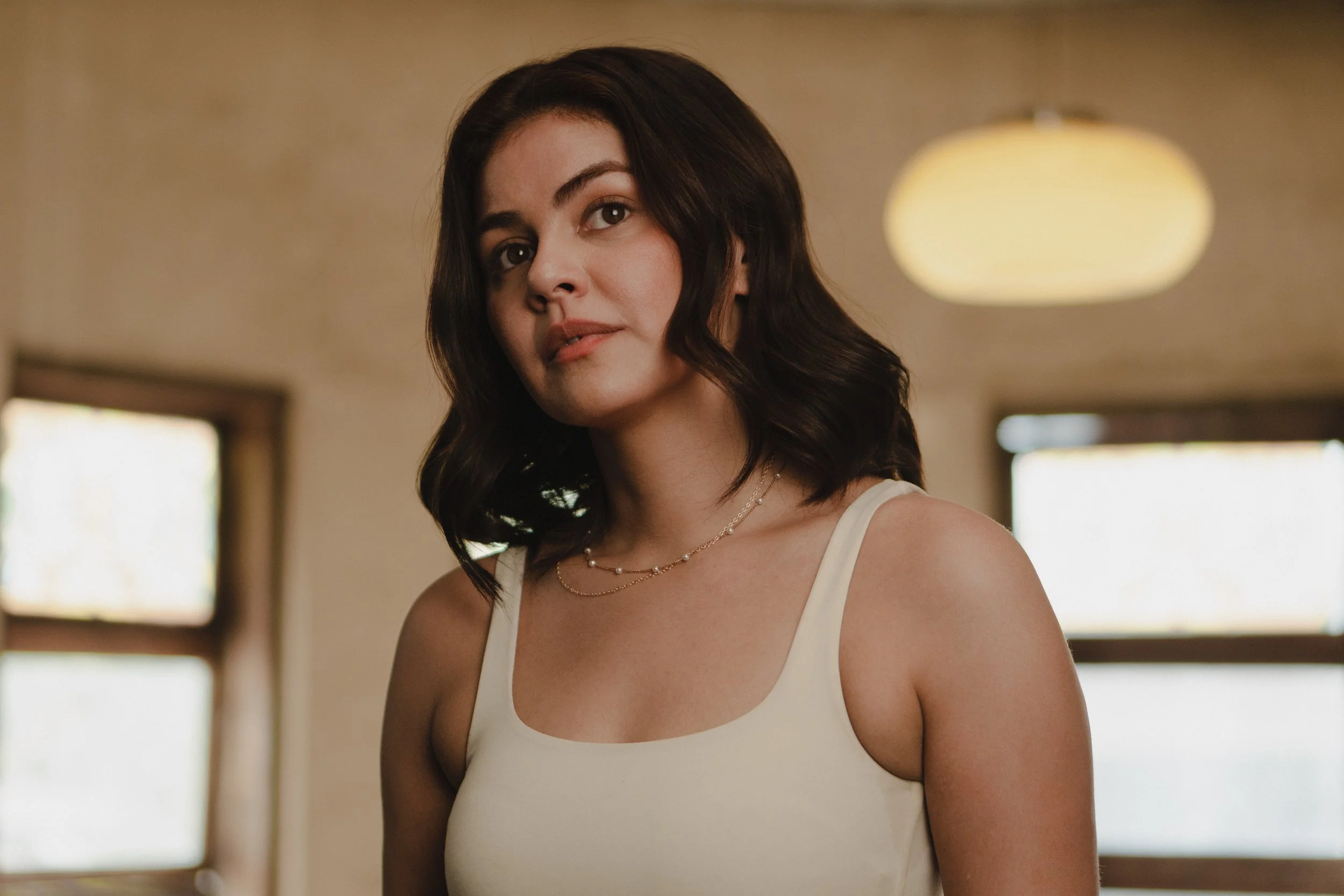
Still from Mag-iina / Photo courtesy of Cinemalaya

Anj wants to escape the dreaded occasion as she never wanted to make amends with her past, especially with her mother, who sent her away when she was just a child. Her grandmother Angela finds her selfish and cowardly for even considering leaving, insisting she must take care of her mother. Her mother Mita, who longs to communicate with her dead husband, spends her days drowned in alcohol and in despair. Keeping the house together is Ysobel, with the help of their housemaid Katte (Ness Roque).
Varela-Luarca’s Palanca-award-winning play is his most high-concept yet. Earlier this year, Corridors, the title of the play which the film was based on, had a one-night-only staged reading in Makati. Years after it was written, the play is now being adapted as a film, and I can see why it was considered to be made into one. I admire the ambition and scale of the project. I can see that they really put a lot of their passion into creating this film.
Given the privileged task of fully realizing the play into film is director Giancarlo Abrahan. As much as I fell in love with their collaborative theatrical works, there is something that fell short with their work here. Allegories and symbolism are littered throughout the film, and if that’s not enough, there is a single Marcos reference mentioned during the film. All throughout, they are building into something that helps the audience gather the pieces together. However, the film’s unevenness results in a film that keeps on falling flat every time the film is ready to reach a cathartic turn.
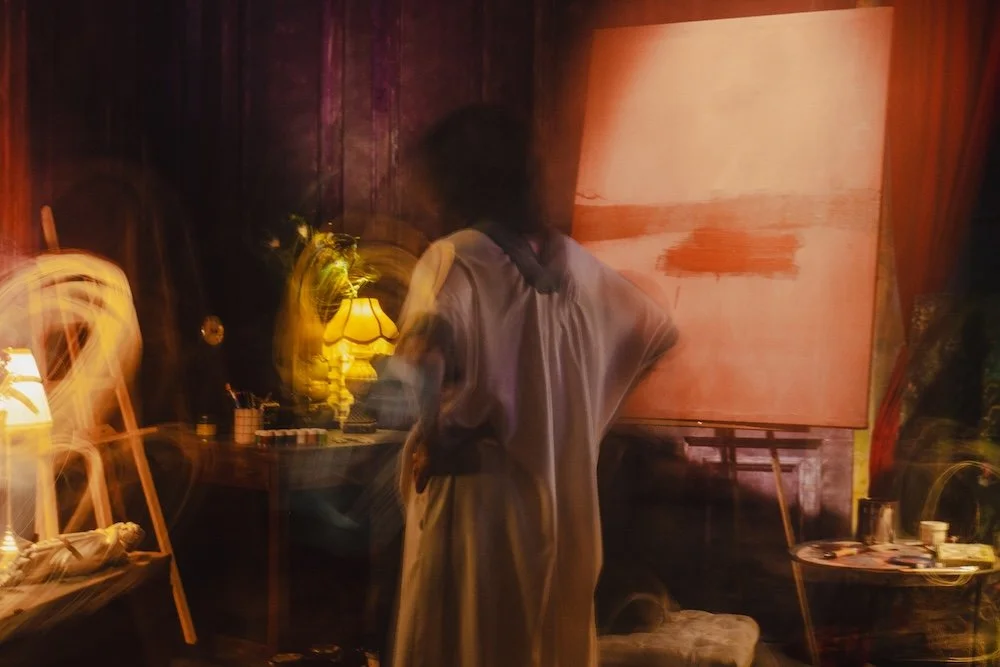
Still from Mag-iina / Photo courtesy of Cinemalaya
The set, while looking meticulously crafted, feels too polished at times for its own good. You would assume that a large house with only one muchacha would be more dilapidated rather than nearly clean, especially for a house that doesn’t merely see guests in sight. We see rooms filled with dusty items. It was also angled in such a way that it felt smaller, which is certainly not the case of the actual house at all. It feels more cramped than ruined. For a source material titled Corridors, it was also a wasted opportunity to make the house a character, à la Kisapmata and Sentimental Value.
The most important part of the film is the painting being talked about repeatedly by Yñigo to Anj in the film. As I let my thoughts simmer after the film ended, the reveal of the painting robbed the cathartic effect of the scene where Anj fainted during another dream sequence, and afterwards, her father sucked her tits oozing with blood and milk. Having worked on the Filipino translation of Nick Joaquin’s A Portrait of the Filipino Artist, Luarca maintained the mystery clouding around the painting in the play by never revealing it to the audience. We only saw how people reacted to the painting itself. This effect could’ve also been beneficial not only for that scene in the film, but also for the film in general.
The film, despite its missteps, achieved its intended effect on the audience. There's grotesqueness and eeriness in each scene that sets the tone of the film quite effectively. The extreme close-up shots of gnawing, chewing, and grunting, as well as the heightened sound design of those movements, put the audience in unease. The score’s cryptic nature elevated the film, bracing the audience for the more sinister occurrences that will happen in the film.
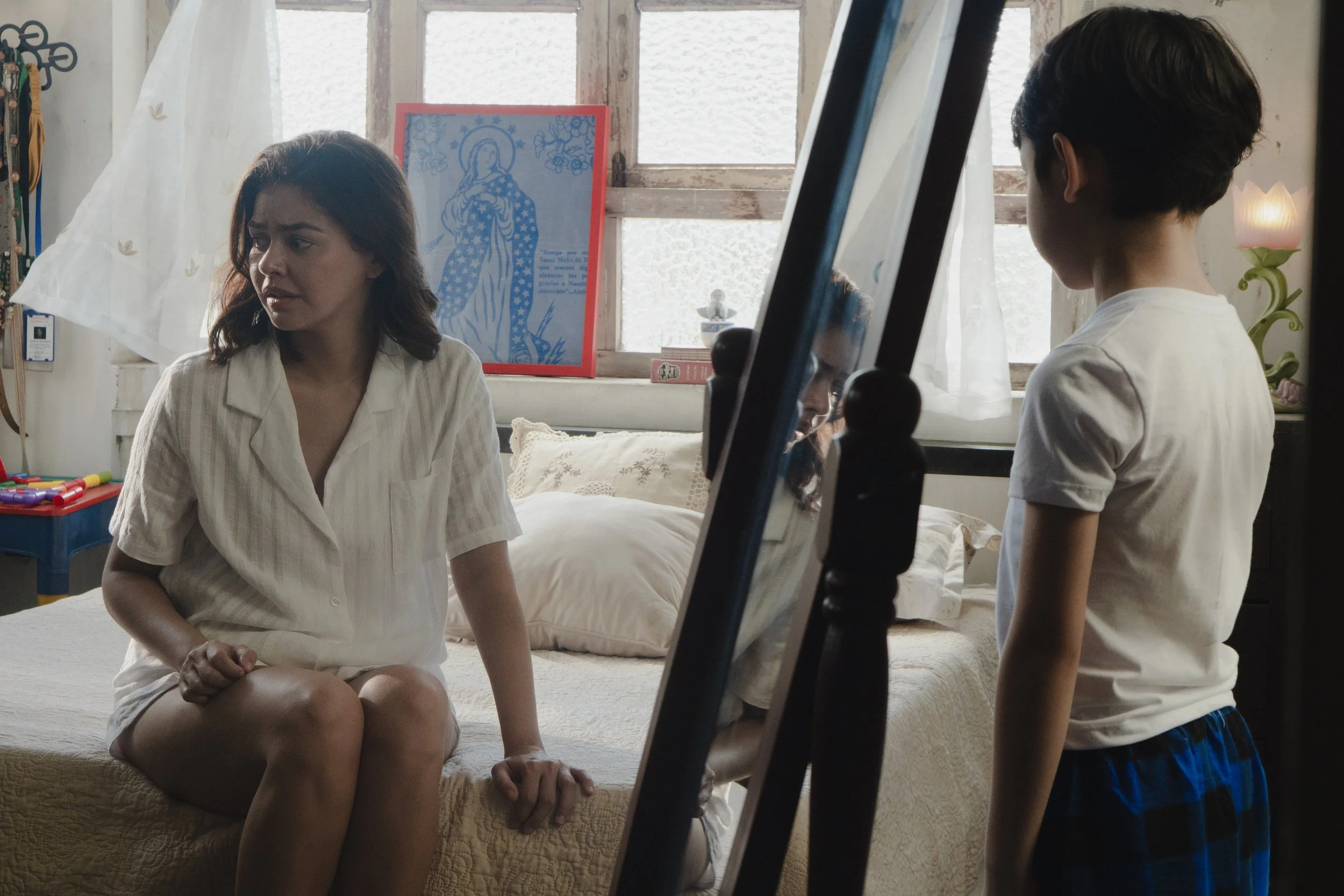
Still from Mag-iina / Photo courtesy of Cinemalaya
Arguably the selling factor of this film is the powerhouse performances given by the cast (dare I say, they mothered hard). Gutierrez gives a monumental performance in this film. Anj had been away for so long, and how she reacts to the events unfolding before her eyes is just a masterwork and extends her capabilities as an actress.
Another notable performance in this film is given by Blanco. In her most transformative role yet, she embodied the part so boldly, defining the role with character choices that land exquisitely well. She is a dynamite you wish never to explode, and when she does explode, she does it with such intensity you crave to see in a horror film. It would be a crime not to give her a Supporting Actress award in this.
Additionally, Ness Roque is another standout in this film. While we are first introduced to Anj in the film, Katte communicates most with the audience. We see her suffering under the belittling of the family. She wishes to break free, in need to survive, and you can see it in her eyes. Her suffering is romanticized and her sexuality demoralized by the very people she serves. By the end, you feel relief as she spreads her arms in the air, feeling the fresh breeze given by the fields.
Many films in this Cinemalaya batch are very divisive, even the popular ones. Mag-iina generated varying opinions; some loved it, and some find it too pretentious for its own good. I can see why people appreciated this, and on the other hand, there are flaws that I cannot just disregard. One thing is certain: this is not your usual Cinemalaya watch, and I hope Cinemalaya brings out more films like this in future editions.
‘Mag-iina’ is one of the selected full-length feature films for the 22nd edition of the Cinemalaya Philippine Independent Film Festival, where it won Best Production Design, Best Screenplay (Full Length), Best Original Music Score, Best Supporting Actor for Lucas Andalio, Best Director for Giancarlo Abrahan, and Best Full Length Film.