

‘Bar Boys: After School’ REVIEW: The Hardest Lesson on Dreams, Loss, and the Pursuit of Justice

‘Bar Boys: After School’ REVIEW: The Hardest Lesson on Dreams, Loss, and the Pursuit of Justice

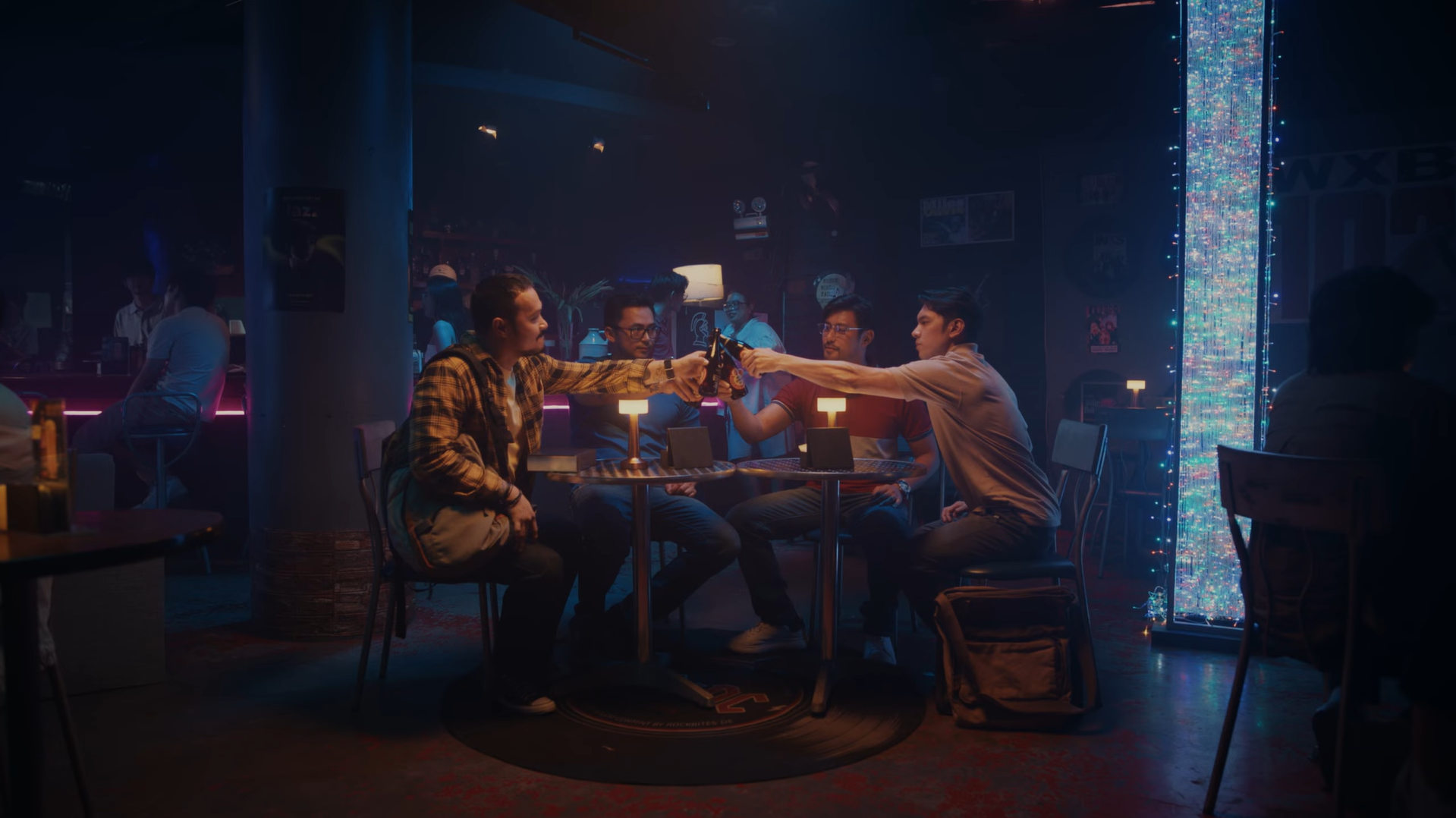
Kean Cipriano, Enzo Pineda, Rocco Nacino, and Carlo Aquino as Josh Zuniga, Atty. Christian Carlson, Atty. Torran Garcia, and Atty. Erik Vicencio in Bar Boys: After School / Taken from the Bar Boys: After School official trailer

This review contains spoilers
Learning, whether inside or out of the legal profession, doesn’t end at graduation. Growth is not linear or inspirational in the easy sense; it’s cyclical, marked by missteps, recalibrations, and the slow reshaping of who you think you are. Ambition is not framed as momentum but as something repeatedly tested; by exams, by time, and by the growing awareness that effort does not always lead where it promises.
By placing seasoned graduates beside newcomers who feel stuck in the same uncertain season, Kip Oebanda’s Bar Boys: After School asks what it means to keep reaching for a goal that stays visible yet feels harder to grasp, and what it means to choose what is right when that choice depends less on personal virtue than on remaining loyal to a system meant to serve the many instead of a guarded few, even as that system moves at an uneven pace and resists the fairness it claims to protect. The film shows its audiences that dreams don’t end with seeing, or not seeing, your name on the list of bar passers, and life after school offers no guarantee of clarity or ease.

Kean Cipriano as Josh Zuniga with Will Ashley as Arvin Asuncion, Therese Mavar as CJ David, and Sassa Gurl as Trisha Perez / Taken from the Bar Boys: After School official trailer
The story picks up ten years after the original, following Atty. Erik Vicencio (Carlo Aquino) working for a non-profit, Atty. Torran Garcia (Rocco Nacino) who is sidelined at a firm that refuses to take him seriously while he teaches part-time, Atty. Chris Carlson (Enzo Pineda) who struggles to remain present for a family he no longer lives with, and Josh Zuniga (Kean Cipriano) who decides to pursue law again after a failed career in show business. Bound by shared responsibility, they care for their ailing mentor, Justice Bing Hernandez (Odette Khan).
Alongside them, a new generation of law students: Arvin Asuncion (Will Ashley), Trisha Perez (Sassa Gurl), and CJ David (Therese Malvar), whose uncertainties mirror, rather than contrast, those of their predecessors. The film shows both the sacrifices and perseverance required in pursuing ambition. Ultimately, it captures the tension between dreams and the realities that follow them.
Sequels in cinema are often made to capitalize on a familiar title rather than deepen what came before. Bar Boys: After School avoids that pattern because it understands why the first film worked and refuses to treat that success as an easy path. Instead of feeding us with nostalgia, it adds nuances to the scope of its story, allowing the characters to grow in more complicated directions.
The sequel feels noticeably more anchored in reality than its predecessor. Where the first film leaned into idealism and possibility, this one sits firmly in the messier terrain of adulthood, where choices accumulate, energy wears thin, and conviction is harder to sustain. The characters are no longer driven by excitement alone but by necessity, frustration, and the fear that they may have already compromised too much. That tonal shift gives the film weight, even when it becomes uncomfortable. The film engages with larger social realities: inequality, institutional failures, and the compromises demanded by adulthood, but it does so through lived experiences rather than broad statements. What once played as a story about reaching a dream becomes an examination of what follows when that dream shifts, slows, or loses its former clarity. The characters no longer stand as symbols of ambition alone, but as people negotiating what remains when a long-held goal shifts or collapses.
One of the stronger decisions is the attention given to Josh’s arc and the continuation of Erik’s journey, and his relationship with Justice Hernandez. Erik’s storyline feels reflective without being stagnant; his interactions with his mentor reveal how ideals age alongside the people who once believed in them most fiercely. Josh’s expanded role, meanwhile, adds a layer of vulnerability that the film benefits from, especially as it interrogates the idea of starting over after failure. That said, the ensemble balance isn’t always even. Torran and Carlson often feel present but underexplored. Their conflicts are recognizable and relevant, yet the film rarely stays long enough on them to let those struggles fully land. It creates the sense that their stories exist to support the larger themes rather than stand on their own.

Odette Khan as Justice Bing Hernandez with Atty. Erik / Taken from the Bar Boys: After School official trailer
Performance-wise, the cast largely delivers. There is a sincerity in how the actors approach their material, and several scenes dealing with systemic inequality, ethical compromise, and emotional fatigue resonate strongly. The intent behind each confrontation is clear, and when the film trusts its actors to carry the moment without overexplaining, it’s at its most effective.
Odette Khan’s performance as Justice Hernandez is undeniably commanding. She brings a grounded presence that stabilizes the film emotionally, and it’s clear how much the narrative relies on her. At times, however, her character feels less like a fully active participant and more like a vessel for clarity, someone whose primary function is to articulate lessons the other characters are meant to absorb. The dialogue surrounding her can feel overly instructive and too sentimental, as if the film is too eager to spell out its takeaways rather than allowing them to emerge naturally from conflict.
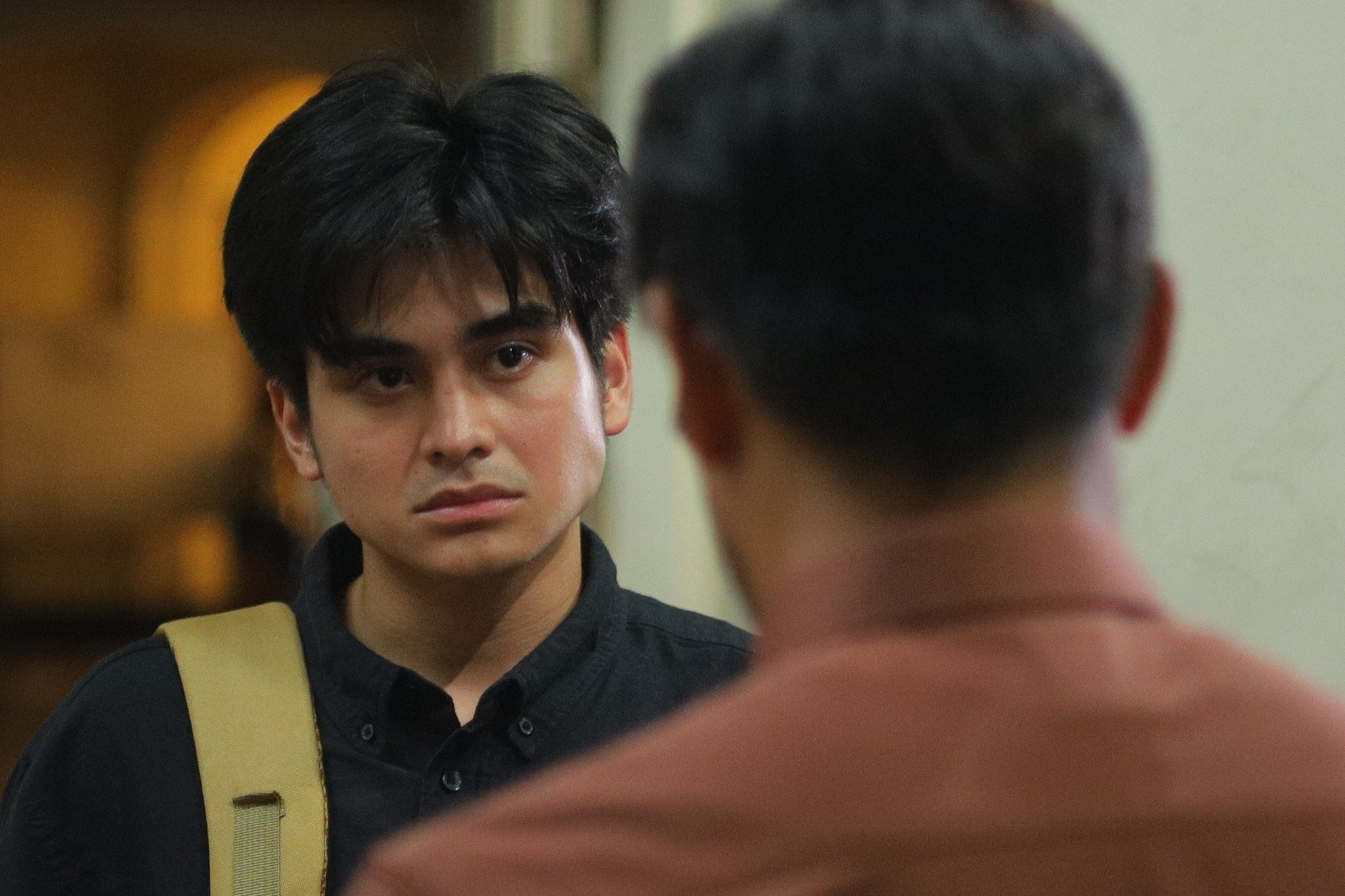
Arvin having an emotional conversation with Atty. Torran after class / Taken from the Bar Boys official Facebook page
A standout surprise is Will Ashley as Arvin. His character arc is one of the most thoughtfully constructed in the film, and Ashley brings a restraint that makes Arvin’s internal struggle feel lived-in rather than performative. His monologue about being a working student, how he could’ve had more if he had more, is particularly effective, not because it’s flashy, but because of how measured and emotionally honest it is. You sense the character’s uncertainty and resolve coexisting, which makes his journey compelling.
That said, one of the film’s most noticeable weaknesses lies in its structure. When the new set of characters were announced, I felt an early sense of doubt. In films like this, introducing too many characters often leads to interrupted or unfinished storylines, and that concern eventually proved valid. The film introduces too many characters and parallel storylines, all competing for space in an already limited runtime. Some arcs are genuinely affecting but never given enough room to breathe; others are clearly meant to matter, yet they rush past before they can leave a lasting impression. The result is uneven pacing, moments of emotional clarity interrupted by narrative congestion, making the film feel scattered at times, as if it is constantly choosing what to let go of rather than what to deepen.
Where the film occasionally falters is in its tendency to explain its themes through dialogue instead of dramatizing them. This is most apparent in Trisha’s arc. Her motivation to pursue law as a means to challenge gender inequality in the country is timely and important, but much of it is conveyed through dialogue rather than action. As a queer law student already facing institutional constraints, her story feels primed for a more confrontational moment, such as a direct clash with the university administration over restrictive dress codes for the graduation ceremonies or gendered expectations within the classroom. Showing her resistance within the system would have given her struggle sharper specificity, especially since these policies remain a reality in many academic spaces in the country.
It would have also added real weight to the film if Erik’s fight against the Hidalgos had been shown fully in court, not just hinted at, but confronted head-on. Seeing that legal struggle unfold would have grounded the story in something concrete: the idea that systems can be challenged, that the law is not meant to serve only those already in power, and that justice should reflect the needs of the many rather than protect the comfort of the few. Without that lens, his role feels more symbolic than transformative, and a crucial opportunity to show resistance within the system is left unexplored.
And yet, despite these flaws, the film still manages to land somewhere meaningful. There is an underlying sincerity that carries it forward, a sense that it is reaching out rather than being performative. Bar Boys: After School is a film made for people who are worn down, those who are struggling, those who are tired of pushing against forces that feel immovable, those who want to fight but don’t know where to begin. Beyond its call for justice, it speaks to a deeper, more fragile battle: the effort to keep believing in a dream while navigating loss, fear, and exhaustion. It understands that not all fights are loud, and not all courage looks heroic.
The film may be a little messy in structure, but its heart remains intact. Bar Boys: After School stands as a reminder that dreaming itself can be an act of defiance, especially when the world gives you every reason to stop. This is a story not just about chasing your dreams and changing the system, but about refusing to let it take away the reason you started fighting in the first place.
Bar Boys: After School is currently showing in select cinemas nationwide as part of this year’s Metro Manila Film Festival.