
Pelikultura 2025 OMNIBUS REVIEW: ST Shorts Premiere and #BuhayElbi
Pelikultura 2025 OMNIBUS REVIEW: ST Shorts Premiere and #BuhayElbi


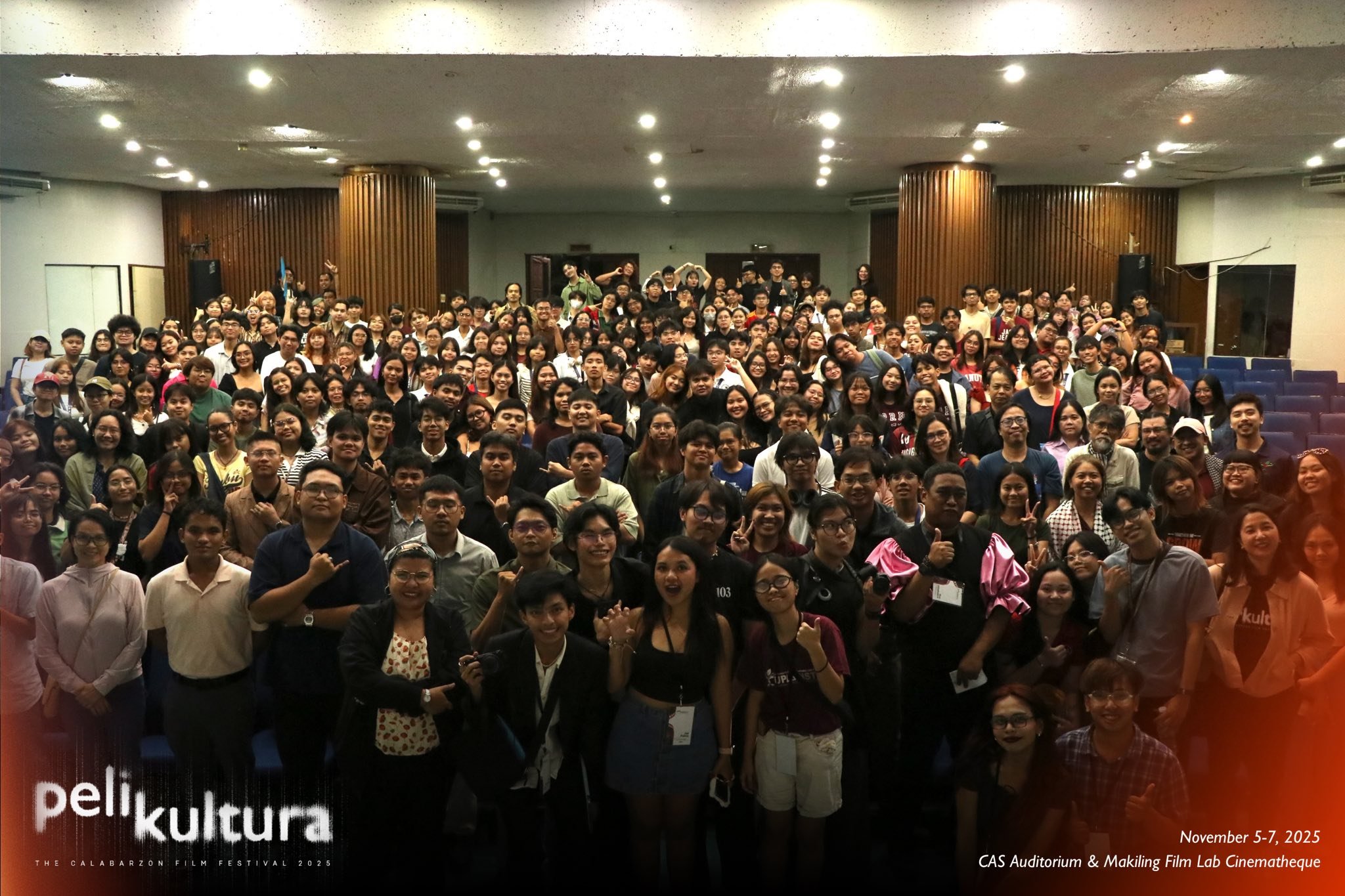
Pelikultura 2025 Closing Program | Courtesy of Pelikultura: The CALABARZON Film Festival
Pelikultura: The CALABARZON Film Festival returns for its 2025 run with new stories and forms of storytelling about Southern Tagalog. The festival is more than a celebration of Southern Tagalog’s pride and diversity, but also a reminder of how cinema is a form of resistance that mirrors the lived realities of the people living in the region. ST Shorts Premiere and #BuhayElbi are the festival's main highlights, highlighting stories about the region as well as homegrown storytellers from Los Baños, where the festival started. Pelikultura continues to become a platform for regional filmmakers and a catalyst for driving regional cinema representation. Here are the official reviews:
ST Shorts Premiere
HIJAS
Dir. Raina Vergara
Raina Vergara’s HIJAS feels less like a traditional documentary short and more like a private talk that somehow made its way onto film. It starts with a simple wish, for Vergara to be closer to her mother, but that wish opens into something harder to name. The film listens instead of speaking. The camera stays still, patient, almost gentle, as if it knows it’s not meant to lead. Through Vergara’s careful questions and her mother’s slow answers, we see how the weight of family history sits between them. Distance, here, isn’t treated as failure, but as proof of love’s complexity. Sometimes the act of wanting to connect already means you’re reaching.
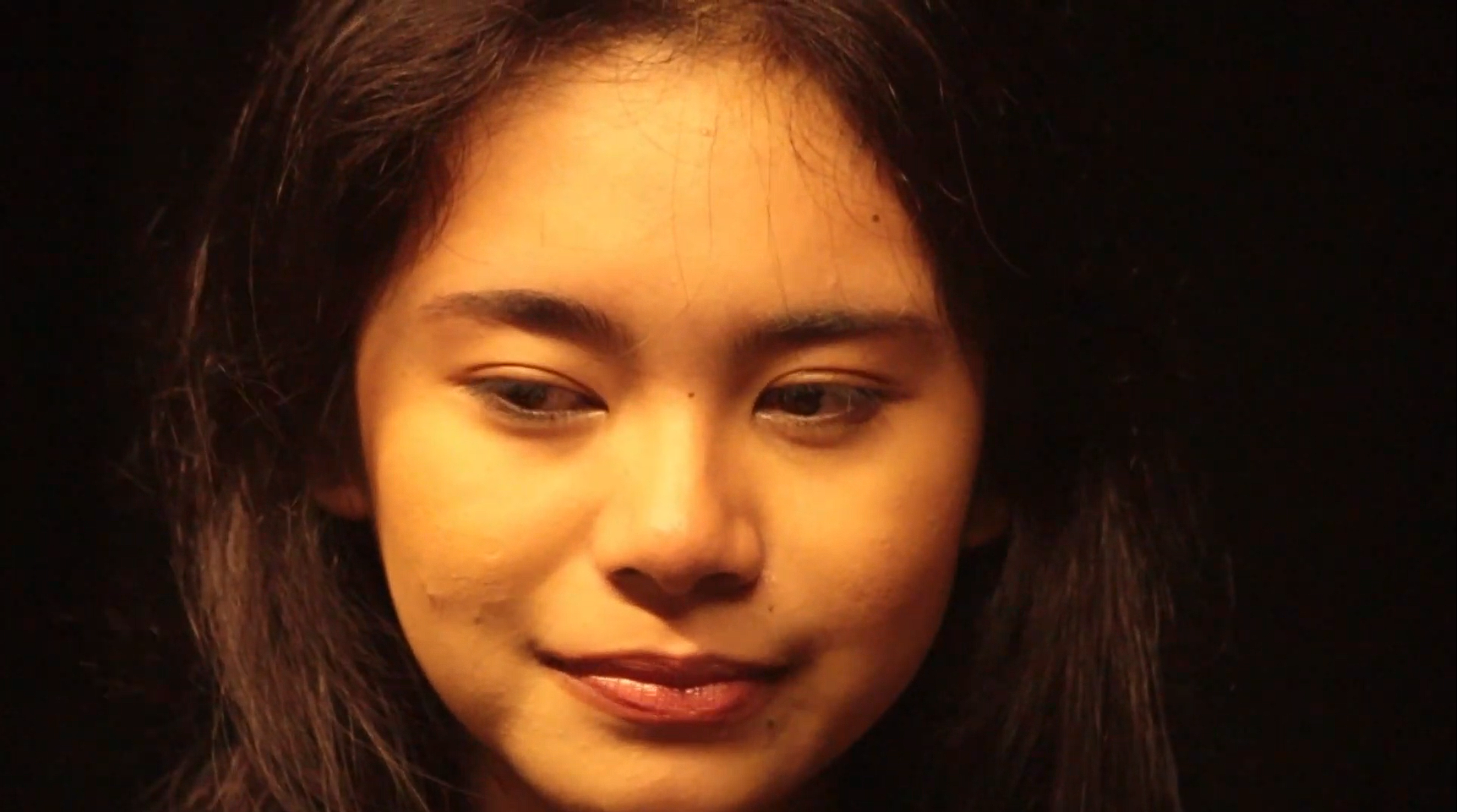
Film still from HIJAS
The story moves quietly, without emotional push. It grows inside pauses, in words. Vergara learns her mother once carried the same longing to be closer to her own mother, but something happened, and the bond broke. That truth doesn’t arrive as tragedy; it arrives as inheritance. Pain passed down, not by choice, but by habit. Yet in the middle of that weight, something shifts. By listening, Vergara begins to undo what was handed to her. The conversation turns into repair, small but real, built from patience and trust.
What makes HIJAS strong is how it refuses to rush toward comfort. When Vergara’s mother says she wants her children to feel safe to talk to her, the words carry both love and regret. Still, the film ends on a note that feels like a release. The distance between them doesn’t vanish immediately; it softens. You can sense the start of something new, a closeness not born from duty but from choice. Beneath its tone, HIJAS feels like a door opening, like breaking a pattern that once felt permanent. In the end, Vergara’s film isn’t just about mothers and daughters; it’s also about what it takes to stop repeating old pain and call it love instead. — Jessica Maureen Gaurano
Angono's Finest Daycare
Dir. Mikyla Mae Alingasa
In tracing the themes of belonging and return, the film is drawn back to the question that haunts every act of remembrance: What is home? Mikayla Mae Alingasa’s playful attempt to locate home within the texture of memory and the physicality of a place now changed unfolds through a cinematic scrapbook of old family pictures and personal artifacts. This filmic passage of time is juxtaposed with the lingering presence of her childhood house in the background, accompanied by an endearingly off-key piano rendition of Happy Birthday To You.
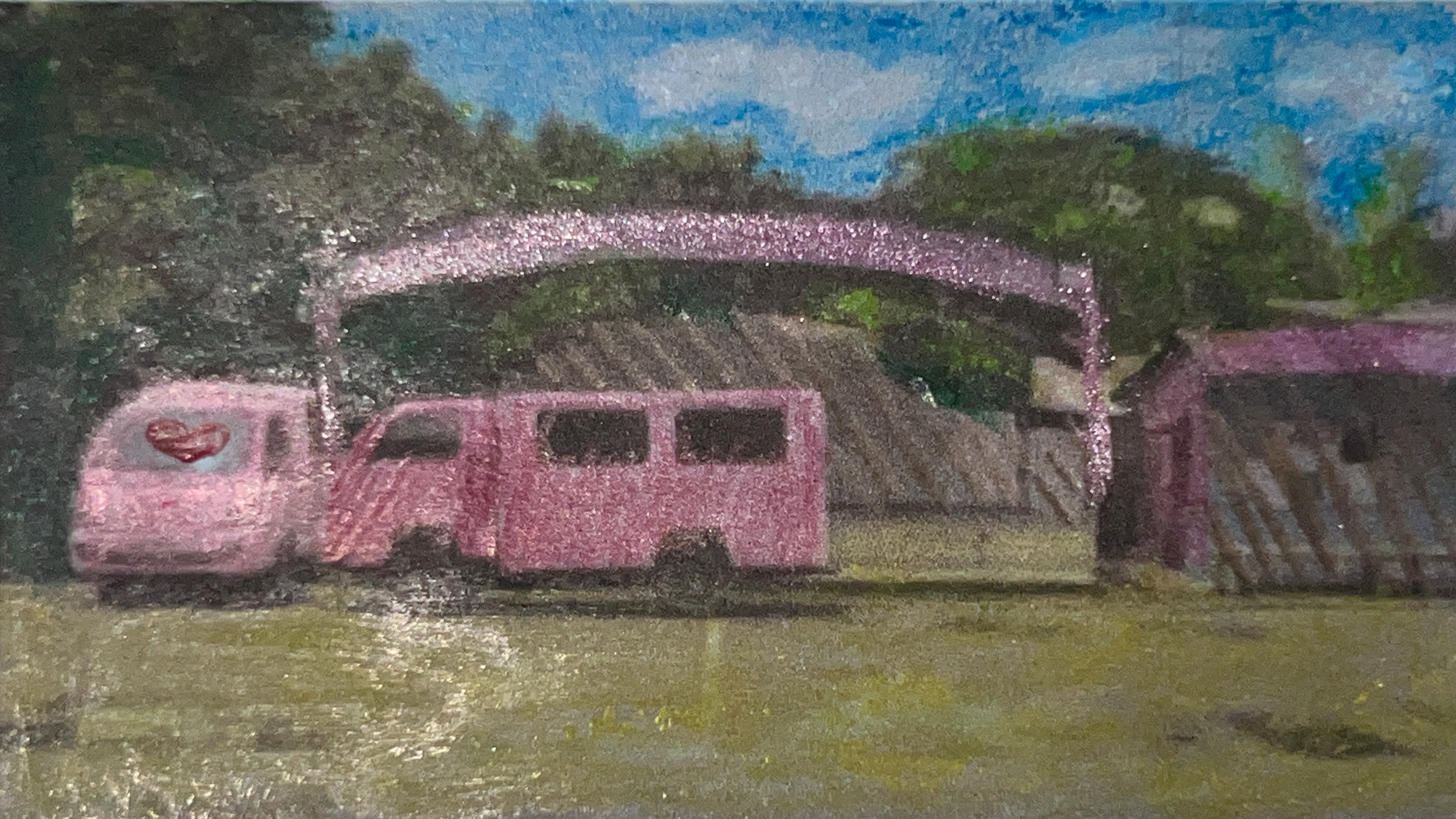
Film still from Angono’s Finest Daycare
Interesting note: In the closing credits, instead of flashing ‘a film by’ followed by her name, the director chose ‘recollections by’. It is a subtle but meaningful artistic choice. It becomes more intimate then, more personal. It is not a film about a girl returning to her childhood home anymore, but a mosaic of memories - fragile, fading, and deeply human - tenderly entrusted and shared with us. – Dave Jonathan Verbo
Oscar's Recipe
Dir. Piolo Rayla
Oscar’s Recipe simmers with the vibrant zest of a life seasoned with joy, memory, and passion, masterfully served by Chef Oscar Abenes. The documentary stirs together his journey from humble beginnings as a hotel kitchen cook to becoming the first Filipino chef de cuisine at Walt Disney World, where he spent ten years perfecting his craft. Now he owns Andy’s Place in Southpoint Square, where he serves dishes crafted with a smile.
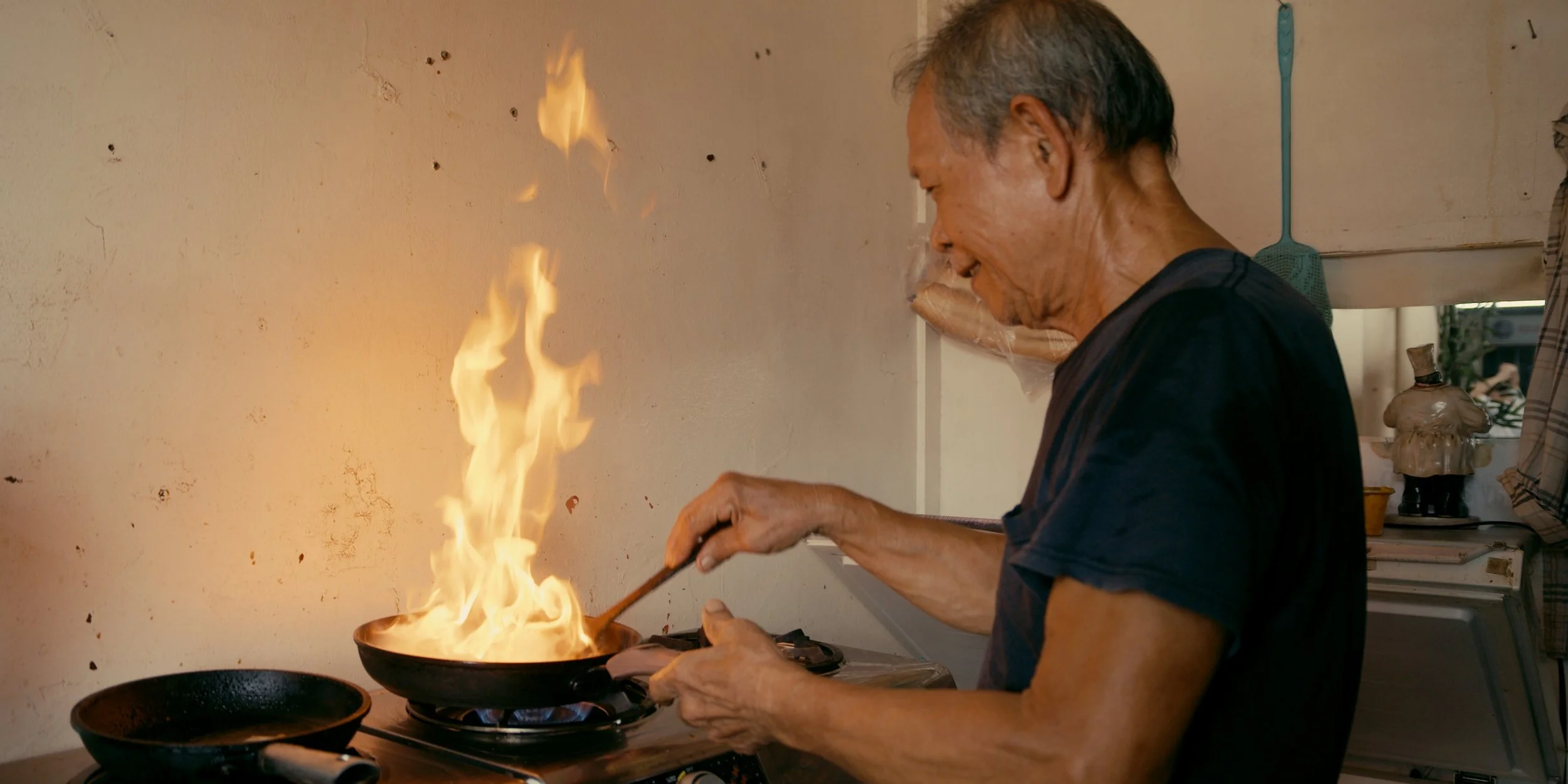
Film still from Oscar’s Recipe
In a time when passion is too often sacrificed for profit’s sake, Chef Oca stands out by serving affordable gourmet creations with love and care. “Do you want to eat something different? I don’t use MSG here or anything like that”, he shared. “Everything here is natural”. His ingredients are homegrown herbs, nourished with the same care he puts into every plat du jour. He never studied culinary arts, but he does everything himself–from taking orders from customers to preparing and serving each hearty meal. What he has instead are years of experience, hard work, and perseverance. His craftsmanship and flair are savored in every bite and reflected in the loyalty of university students who keep coming back for the comfort of his food. Oscar’s Recipe captures the life of an ordinary man with an optimistic perspective, whose wisdom and experience bring out the extraordinary flavors hidden in everyday moments. - Dave Jonathan Verbo
Mga Bulaklak sa Family Tree
Dir. Faith Ferrer Lacanlale
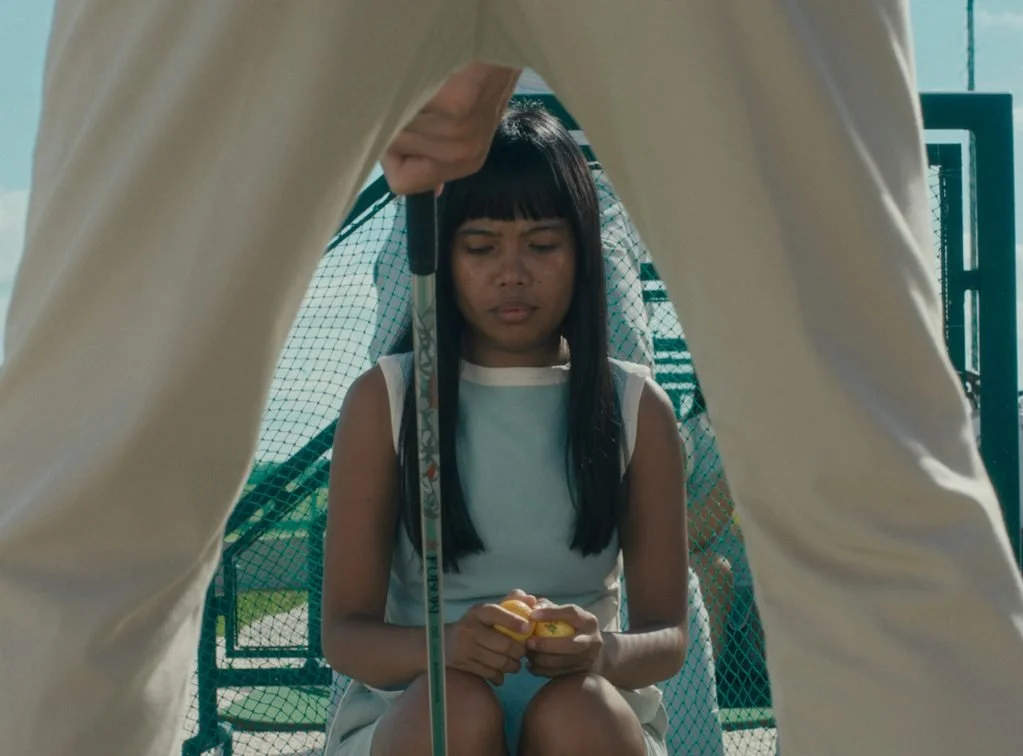
Women have fought for generations to gain the rights they hold today, yet Mga Bulaklak sa Family Tree reminds us that the fight is still here. Faith Ferrer Lacanlele’s short film follows a young girl who struggles with her surname. It’s so long that she spends time trying to write it, until it starts to bother her. What begins as a small school problem turns into something heavier. It shows how a name can carry history, expectation, and the weight of a family’s story. Her wish to change her surname feels simple, but it grows into something more - an early spark of wanting to choose who she is.
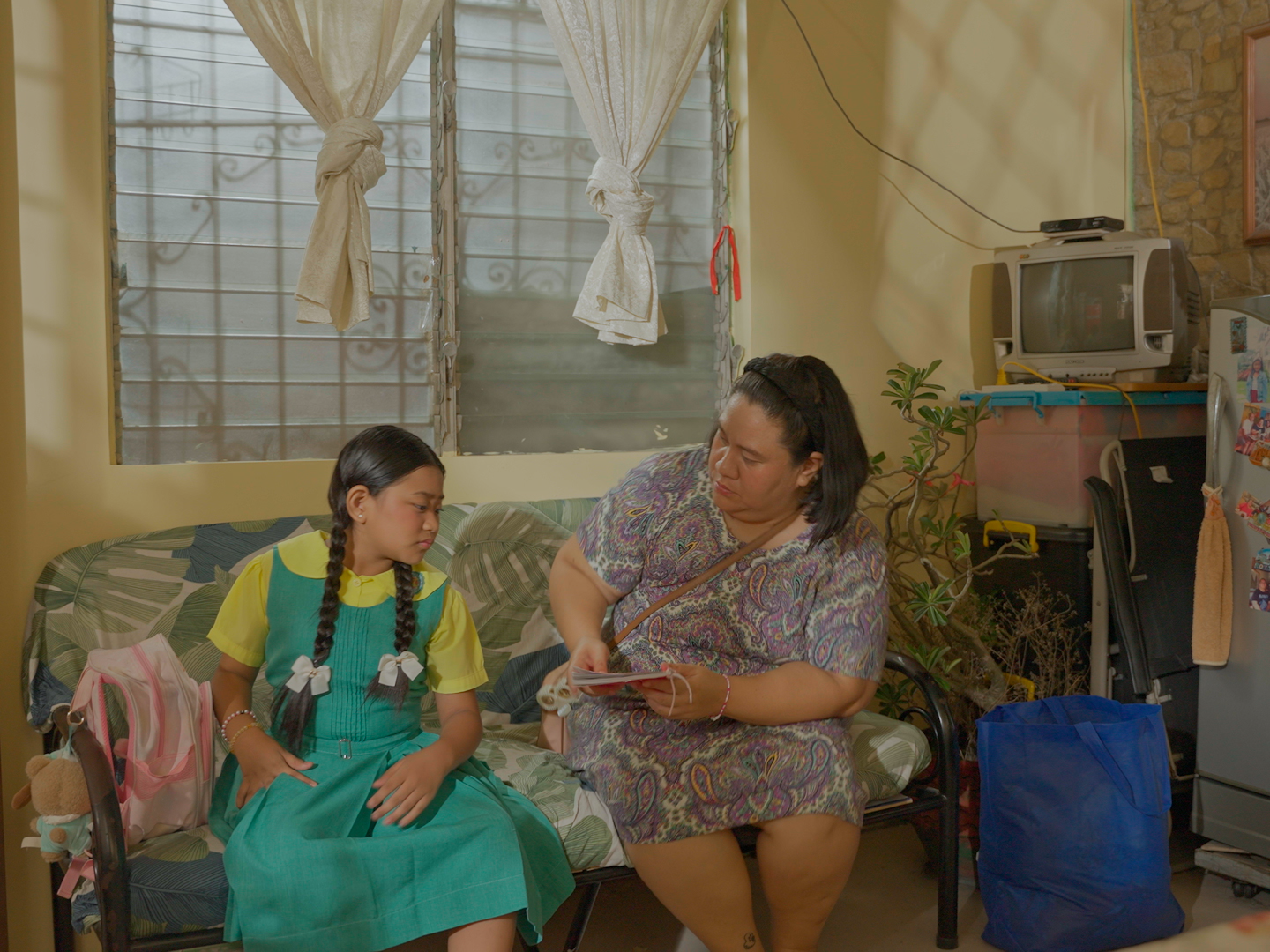
Film still from Mga Bulaklak sa Family Tree
When people tell her that a woman can only change her name through marriage, the film exposes how deep those old rules still run. It doesn’t use long speeches or explanations. It lets the child’s actions speak for what she feels. You can sense her confusion as she starts to see the world isn’t always fair, even when she doesn’t yet have the words for it. The classroom scenes and her effort to write her name show how these ideas form early, teaching girls to accept what they are given. It’s not a loud story by any means, but it’s firm, steady, and clear about what it wants to say: inequality hides in simple things, and it often passes as normal.
The film ends with a sense of hope that feels earned. The title, Mga Bulaklak sa Family Tree, fits the story well. It brings to mind growth, persistence, and how new generations rise from the struggles of those before them. The girl’s small moment of awareness becomes a sign of change. The film may look simple, but it leaves an honest trace behind. Lacanlele turns an ordinary school problem into a reflection of how identity, family, and freedom are all tied together, and how even a child can begin to question the roots of her own name. — Jessica Maureen Gaurano
Cemento
Dir. Justine Borlagdan
Justine Borlagdan’s short film Cemento takes something as common as cement and turns it into a symbol of decay. What should represent strength and progress instead becomes a monument for greed and neglect. The film unfolds through a distant narrator who speaks not only for himself, but for a country that has seen too much change without care. Cement fills every part of this world: half-built houses, unfinished roads, and the gray sprawl that replaces what used to be alive and green. Even the floods feel connected ot it, as if the land is drowning under the weight of its own development. Borlagdan turns the image into a reflection on how progress, when left unchecked, can harden into control and silence the very people it promised to uplift.
The film’s storytelling cuts deep without trying to. It uses a detached voice that mirrors how people often feel left out of the conversations about their own future. Those in charge speak of development, but they vanish before the dust even settles. The film jumps between fragments, glimpses of construction sites, shots of spreading gray, faces that seem both present and absent. Each image sits heavily, showing how cement shifts from a sign of building to something that swallows what’s beneath it. Borlagdan works with tension, letting unease build not from loud moments but from what lingers.
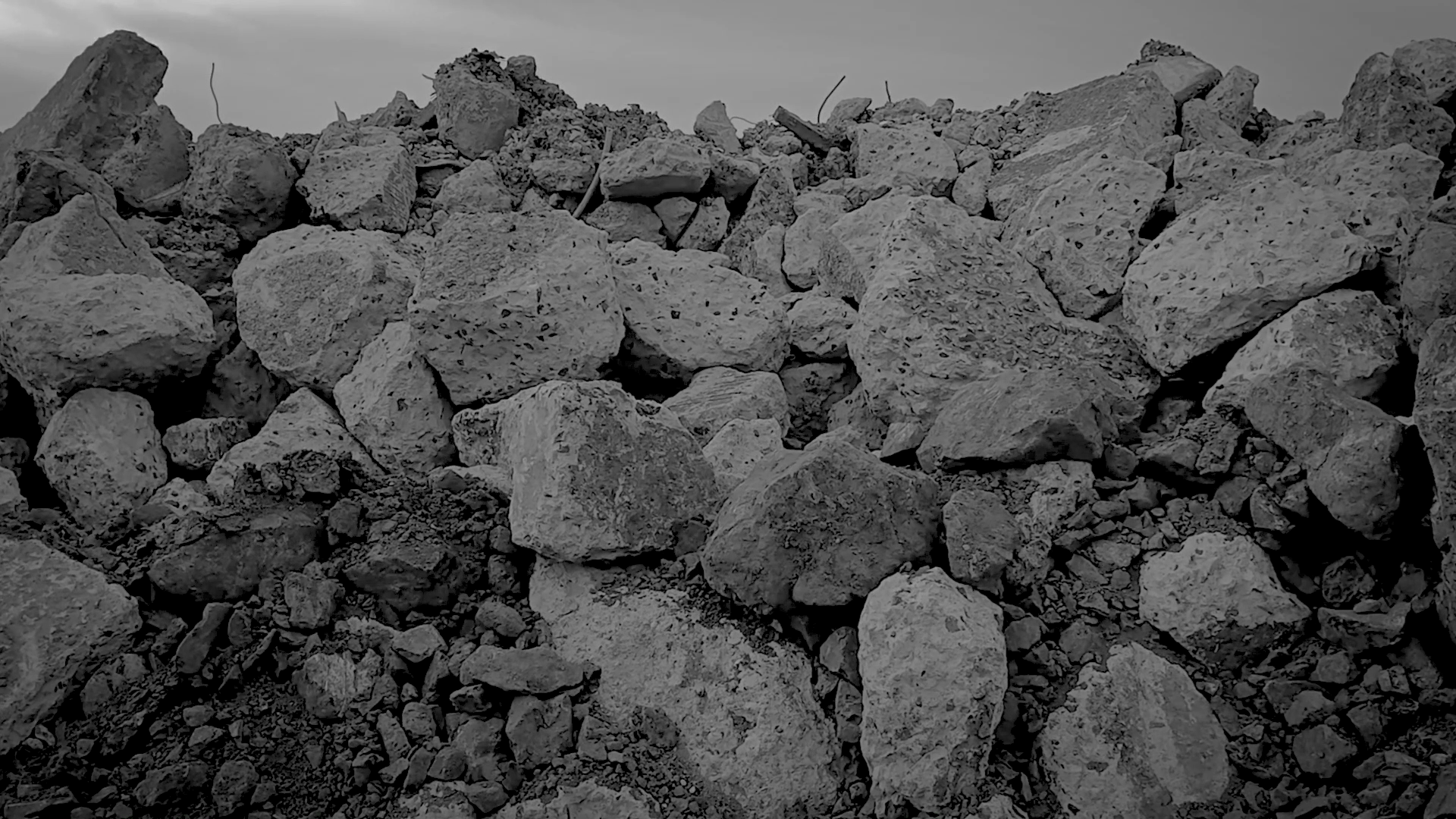
Film still from Cemento
Visually, Cemento feels bare and unyielding. The camera stays long enough for cracks, floodwater, and forgotten corners to tell their own stories. You can sense exhaustion in the textures - the stillness, the repetition, the gray that never fades. Nothing feels staged or exaggerated; it all sits there, heavy and unembellished. The absence of color speaks louder than what sound could. Borlagdan doesn’t try to provoke pity or outrage. Instead, he lets the reality breathe and weigh on you. By the end, you see that cement isn’t just something that builds, it’s something that buries, layer by layer, until only silence remains. —- Jessica Maureen Gaurano
Ang Paglipad ng Saranggola sa Aplaya
Dir. Danielle Cusi
Opening with a question, Are we just going to let our culture fade into memory?, The film follows Diane as she returns to her hometown in Mindoro. Years earlier, she had spent the summer with her childhood friend Yum-ay, a Mangyan girl with whom she shared stories and the simple joy of flying kites. When she returned the following summer, Yum-ay was gone. Now older and wiser, Diane hopes to reconnect with her friend she once knew.
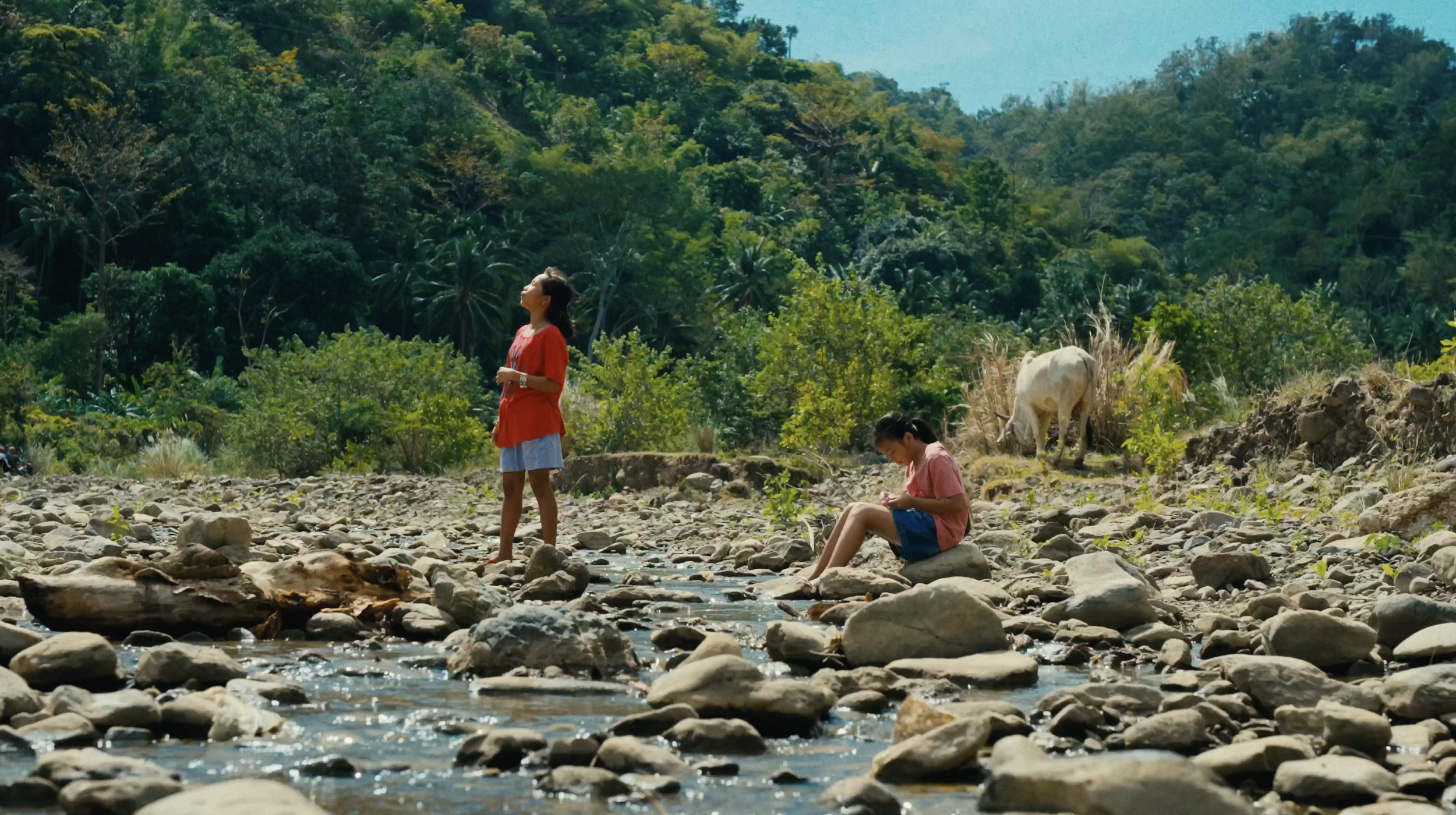
Film still from Ang Paglipad ng Saranggola sa Aplaya
Every frame feels sincere. You can feel the filmmaker’s earnest commitment to her vision. On first impression, the film charms us with nostalgia that reminds us of summer vacations, long afternoon adventures, and childhood friendships. Beyond its surface appeal, however, it offers an intimate reflection on history and memory, presence and absence, and culture and erasure. All of these co-exist, reminding us of our responsibility to remember the past and preserve histories that might otherwise fade into memory. – Dave Jonathan Verbo
Angela and Her Dying Lola
Dir. Mark Terence Molave
Mark Terence Molave’s Angela and Her Dying Lola studies survival not as heroism but as a deal with decay. The house where Angela and Her Dying Lola is set seems to shrink with every breath; its walls pressed in by illness, debt, and time. The story revolves around Angela, a teenage orphan, who moves through it with care, every step measured, every gesture carrying its own reason. Poverty isn’t scenery here; it’s a rulebook, shaping what can be done, felt, or delayed. Molave’s camera stays patient, watching instead of speaking. What comes through is endurance without glory, survival stripped bare until it feels both human and distant.
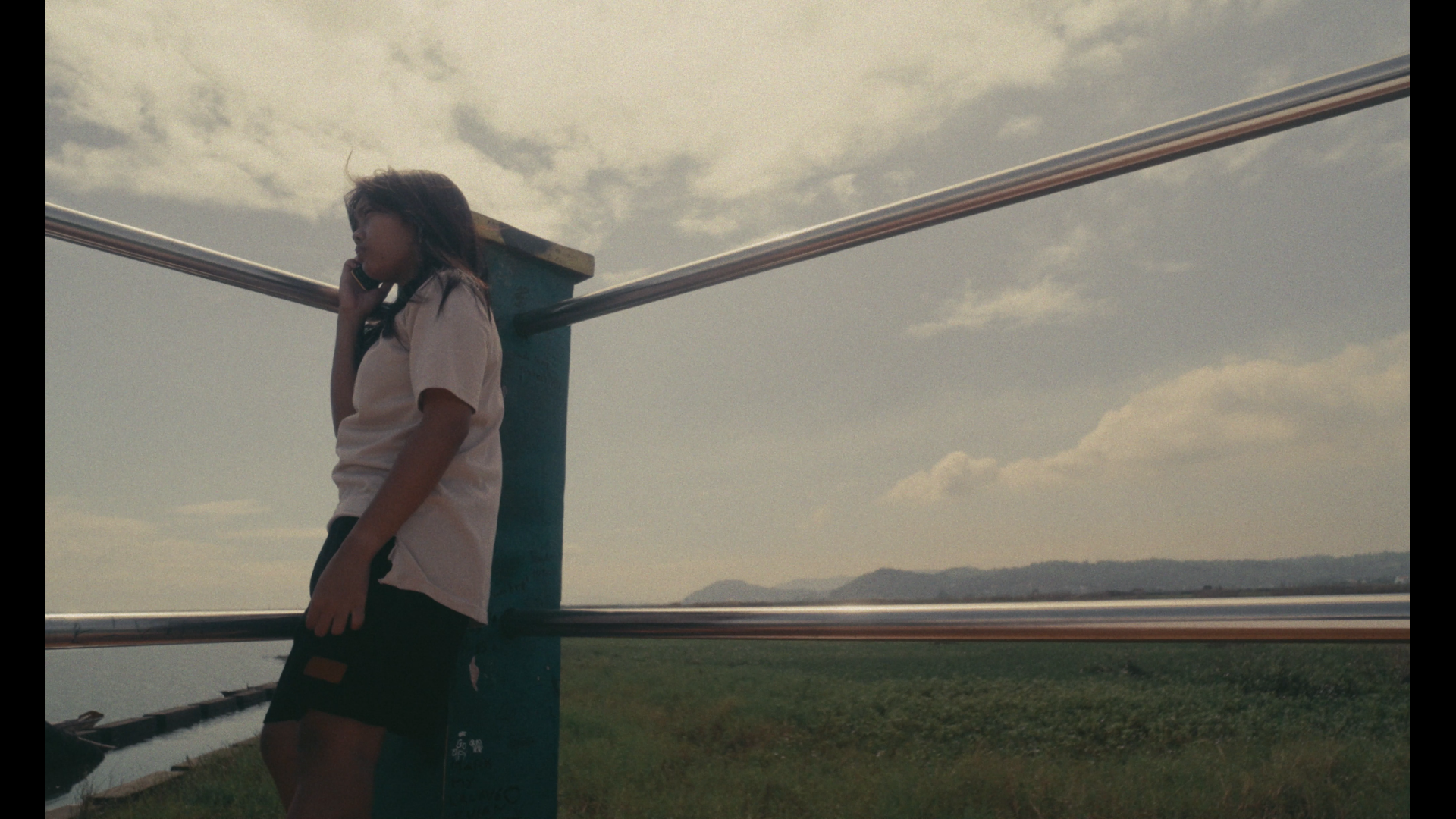
Film still from Angela and Her Dying Lola
Angela not only nurse her grandmother out of virtue, she also does it because someone has to. Each act repeats until meaning fades and duty becomes muscle memory. The story’s weight sits in that repetition, in how tired movements start to tell their own story. Poverty is the pull beneath everything, a gravity that bends every choice toward surrender. Realism, for Molve, isn’t style, it’s the record of what happens when time turns heavy for those who can’t waste it.
In the end, the film narrows to one question: what does survival really cost? Angela’s decision, drained of sentiment, shows how hunger and care can twist into each other until neither feels pure. There’s no redemption waiting; just the small, sharp logic of getting through. Molave frames survival as a trade between the body, the conscience, and the will to keep moving. What’s left isn’t hope but motion itself: a pulse that keeps going after meaning fades. Angela and Her Dying Lola ends not in peace, but in continuation; a life that refuses to stop, even when there’s nothing left to save. — Jessica Maureen Gaurano
City's Laundry and Taxes
Dir. Diana Galang
Let’s begin with one of this year’s entries from the 8th Sine Kabataan Short Film Festival, starring Louise Abuel and Mylene Dizon. Directed with spotless clarity, Diana Galang wrings emotional truth from every scene, leaving no stone unturned. The film itself fulfills the promise of the form. Spun with care, pressed clean, and gleaming with youth, tension, and relevance. However, it ends with a cliffhanger that makes me wish to see it developed and expanded into a feature-length social realist crime drama someday.
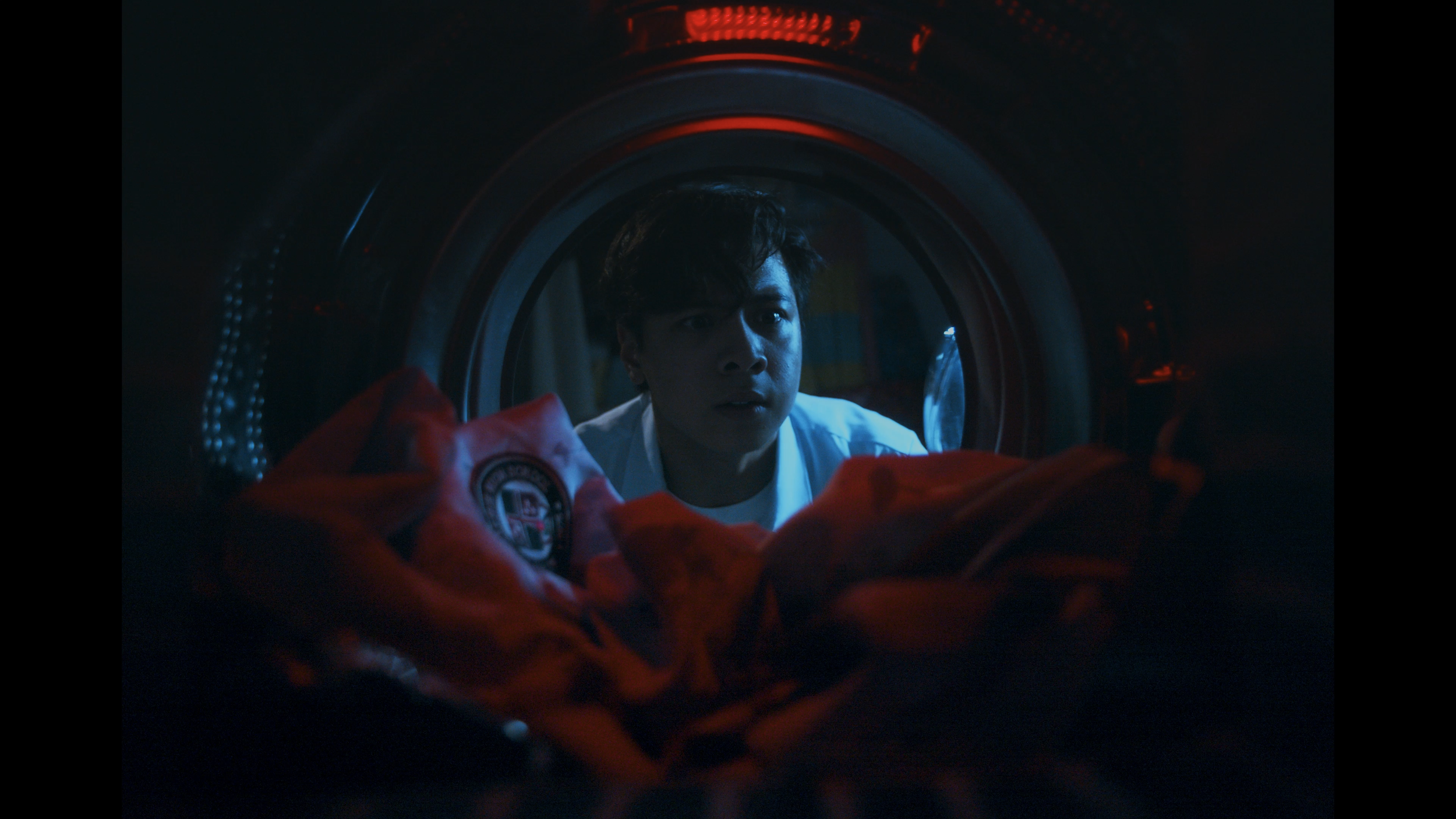
Film still from City’s Laundry and Taxes
The film finds its moral axis in Mik-Mik, played by Abuel in his indie comeback, a former student journalist who once witnessed an act of police brutality but chose silence over exposure. Now, he finds himself holding evidence–a bloodstained school ID belonging to his missing classmate, discovered in the dirty laundry of a policeman. At once, there’s an interesting interplay in the film where police violence meets the moral vocation of student journalism. It asks: What obligations do student journalists bear when truth-telling endangers their own safety? And how does self-preservation in the face of violence become a form of complicity? The film turns these questions inward, forcing Mik-Mik to confront his inner conflict and the paralyzing fear that comes with seeing the truth. – Dave Jonathan Verbo
NOONSTARS BET NA BET
Dir. Lorenzo Miguel Molina
NOONSTARS BET NA BET nails the schlocky cheeseball nonsense of noontime variety shows in the Philippines, where real human emotions are capitalized, love team narrative bent for the avid viewer’s sweet dose of delusion, and embarrassing situations are packaged as wholesome lunchtime-friendly entertainment. All these for a high audience viewership rating. The cringe, the iconic, the dramatic, and the idiotic share the same live spotlight, feeding the viewers at home and the meme economy. The moment something real and unscripted slips through, though, everyone must pretend to maintain the illusion of control. And since they can’t afford to stop the camera from rolling, they need to proceed to the next segment. Chaos has to keep its cue. The show must go on.

Film still from NOONSTARS BET NA BET
Variety shows are trashy, sure, but that’s the point. People want something brainless to fill the lull of work lunch breaks and siesta hours at home. Watching a mess unfold is part of the pleasure, a national pastime even. NOONSTARS BET NA BET gets it. The pretense, the kitschy, the over-the-top, the noise, and the gleeful absurdity of iconic Filipino TV variety shows such as Wowowin, Eat Bulaga, and It’s Showtime. If anything, I was waiting for it to go completely off the rails (like Sonny Calvento’s Primetime Mother), but maybe that’s for another day. Until then, I’ll still end up watching (like any other noontime shows–whether I like it or not–because it’s already blaring from the TV while I’m still trying to eat my lunch in peace). - Dave Jonathan Verbo
Papa Xerox
Dir. Kylechandler Bigay
Short films with simple premises are always interesting to watch, because within their simplicity, you’re drawn to see how the unexpected will be rendered. That’s exactly what Papa Xerox delivers. Internet star Yani Villarosa, popularly known as Yanihatesu, effortlessly embodies her character Momay working at a computer shop, waiting for her online boyfriend to come pick her up. She’s fun, squishy, chameleon-like, sour (literally,) and curmudgeonly in every frame all at once. Her comical performance is chemically balanced by Benjie Belena’s soft demeanor as an elderly man asking for assistance with his documents to be printed in the computer shop.
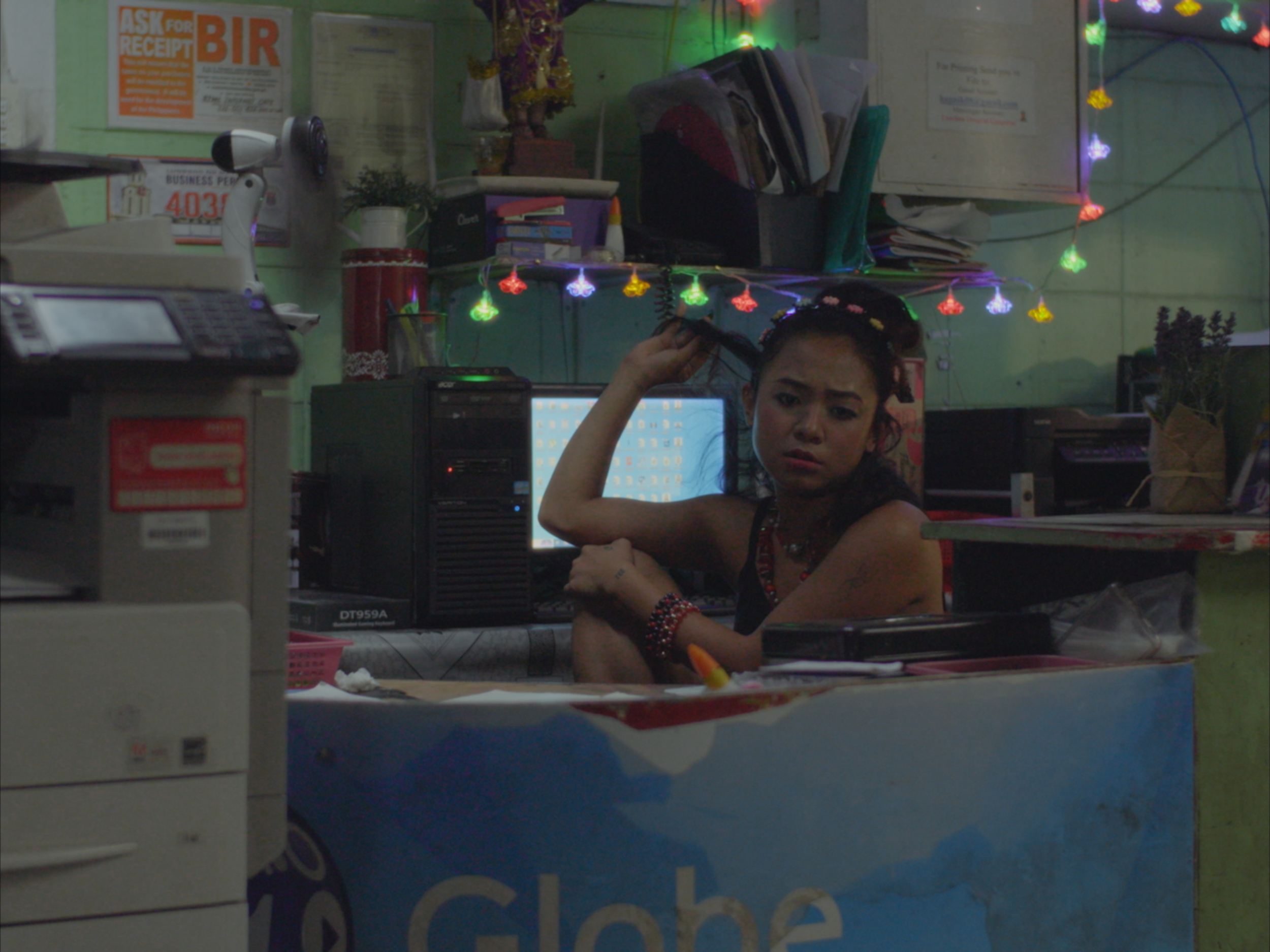
Film still from Papa Xerox
Like its colorful characters stuck in ordinary space, the film brings a zany story of love that comes when you least expect it. Like, literally. - Dave Jonathan Verbo
Dela Cruz, Juan P.
Dir. Sean Rafael Verdejo
I felt this film in a way I didn’t expect; it hit too close to home. As someone who’s faced the unease of job hunting after graduation, Sean Rafael Verdejo’s Dela Cruz, Juan P., felt like a story I already knew. The film doesn’t chase drama; it catches what real life feels like when you’re sending out applications that lead nowhere. You wait for a call that doesn’t come. You start asking if maybe the problem is you. Verdejo builds that mood with precision, turning the familiar ache of rejection into something heavy and true. The film understands how work, which should give pride, often becomes a trap that drains people instead of lifting them.
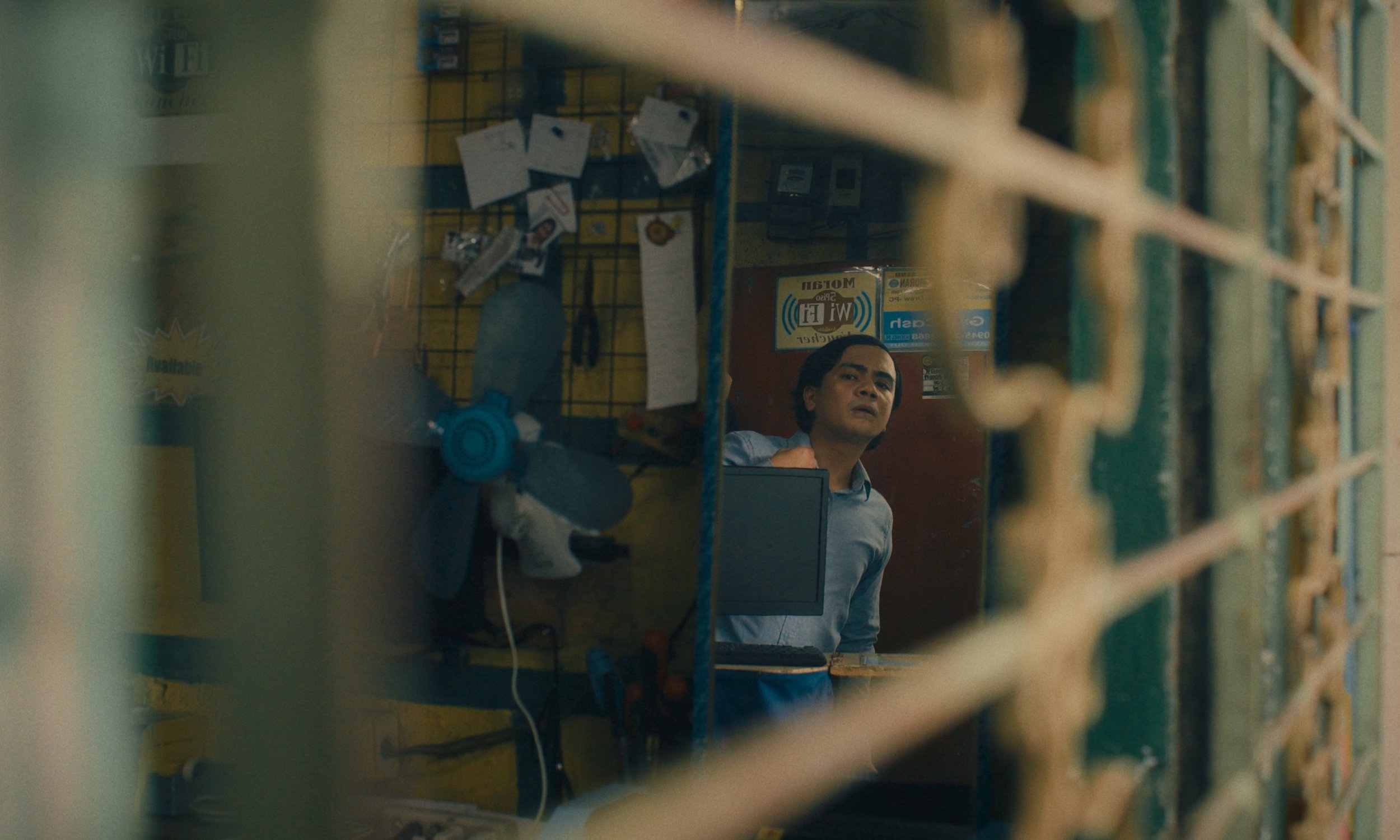
Film still from Dela Cruz, Juan P.
The story mirrors the reality of the job market in the Philippines. It’s a field dressed up as opportunity but lined with loss. Companies post jobs with long lists of impossible qualifications, years of experience for pay that can’t even cover rent. Then, when someone finally gets hired, they’re expected to stay grateful no matter how unfair the setup is. The satire cuts deep, showing how absurd the system has become. It speaks from something everyone knows but few want to name. The film never loses its grip on what matters. It says the problem isn’t with workers, it’s the world that refuses to value them.
What gives the film its force is how it finds meaning in exhaustion. Dela Cruz, Juan P., doesn’t stay with despair; it turns that fatigue into resistance. It tells us that dignity isn’t something we earn, it’s already hours and no system can erase that. Verdejo turns the screen into a kind of mirror, one that reflects both pain and resistance. Beneath its satire runs a deep tenderness for the Filipino worker, the everyday Juan who keeps standing up even when everything pushes him down. The film doesn’t end with comfort; it ends with a pulse. You walk away restless, seeing the struggle not as someone else’s story, but as our own. —- Jessica Maureen Gaurano
#BuhayElbi
Maria
Dir. Ma. Yna Cruzana
The heart of the film, Maria, lies in its sincerity in telling a queer coming-of-age story amid a landscape saturated with heteronormative tales. The story follows Maria as she slips away from her mountain home to spend a day in the city with her friend Andy. Her brief escape from home became an inquiry into selfhood defined by spatial and emotional dislocation as she moves with unease and wonder through the city’s bustling streets. Her encounter with the unfamiliar and overwhelming is steadied by Andy’s presence - her hand guiding hers, grounding her against the clamor of the city.
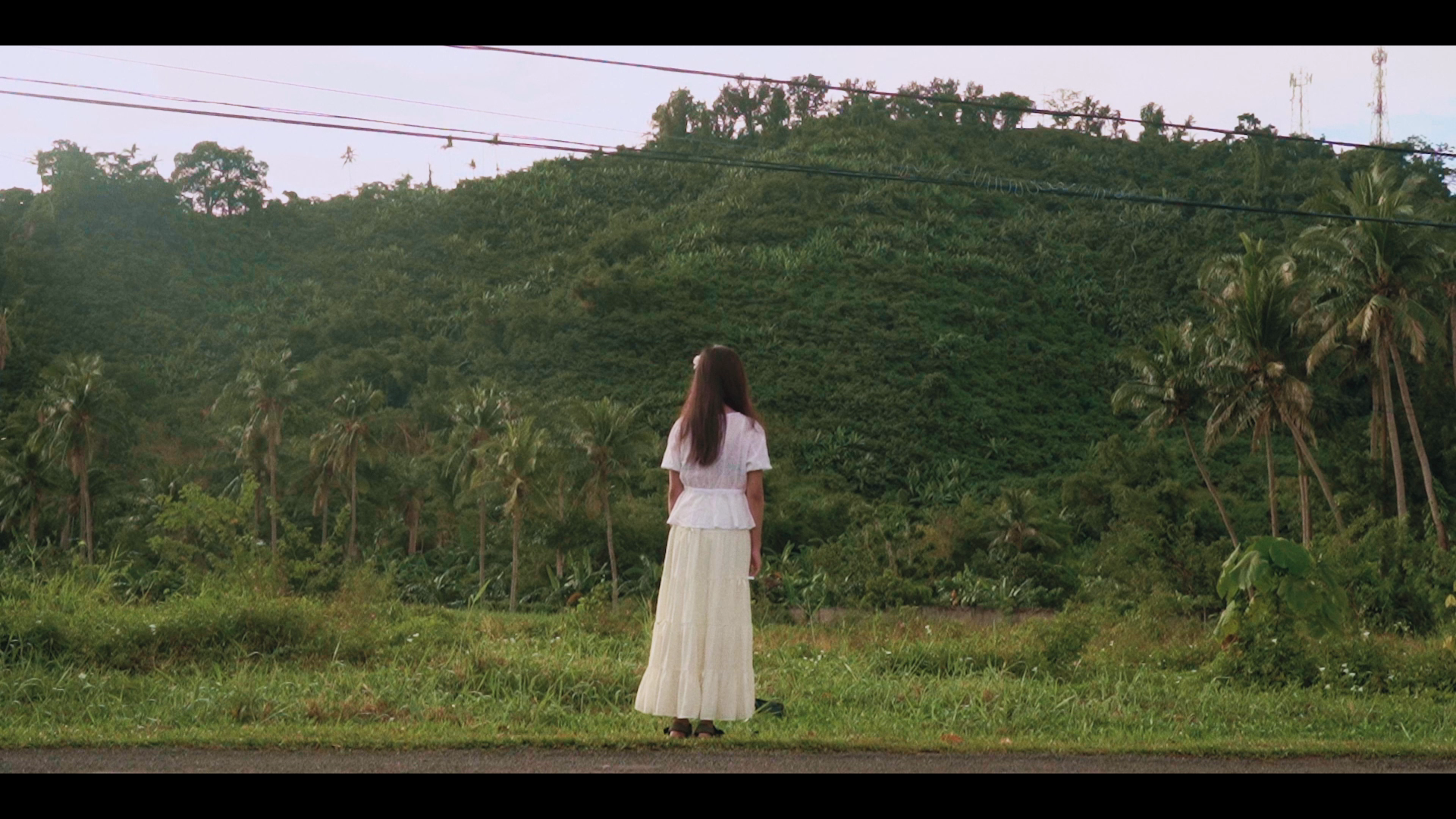
Film still from Maria
The film finds beauty in gestures and quiet moments, and awkward shared smiles between the two characters. But the film also deepens the complexity of the story as this closeness and connection bring confusion not only to her friend but also toward the city itself, beguiling and terrifying and achingly new. - Dave Jonathan Verbo
SI KRISTYAN, SI HESUS, AT ANG MGA BARAHA
Dir. Carl Joseph P. Bacong
SI KRISTYAN, SI HESUS, AT ANG MGA BARAHA moves through the narrow place where faith meets desperation, where belief starts to ache for proof. The film doesn’t attack religion or praise it, but it sits in the pause after a person realizes that prayer may not be enough. Kristyan’s visit to the fortune teller isn’t a story of superstition winning; it’s about how faith can bend when fear enters. When the death card is drawn, it stops being a symbol and becomes the sign he dreads but already expects. Each scene feels heavy but honest, showing how faith, once pressed by suffering, starts to sound like a plea instead of a promise. Carl Joseph Bacong doesn’t rely on spectacle; he watches how people break in small ways, how belief wavers under the weight of love and loss.

Film still from SI KRISTYAN, SI HESUS, AT ANG MGA BARAHA
Doubt, in this story, is a way to keep going. Kristyan wants control, even if it comes from a deck of cards, because control feels safer than silence. The film turns faith into a mirror more than a shield. It shows what a person is missing, not what they hold on to. The fortune teller’s cards don’t speak; they only reflect how random pain can be. What breaks faith here isn’t disbelief, it’s the moment a believer admits that belief might not fix anything. Bacong doesn’t soothe or preach; he lets that realization stay, raw and unpolished. In the end, the short film doesn’t ask us to choose between faith and doubt, but rather shows us how one survives inside the other. — Jessica Maureen Gaurano
hikbi
Dir. Ellie Vivo
hikbi can function as a work of liminal horror and home invasion at the same time. The film evokes the atmosphere and tension of The Strangers (2008) and Skinamarink (2022) in its fixation on the instability of safety, where the real horror does not come from the act of trespass but from realizing that nothing is truly safe at all, the home, the body, the mind.
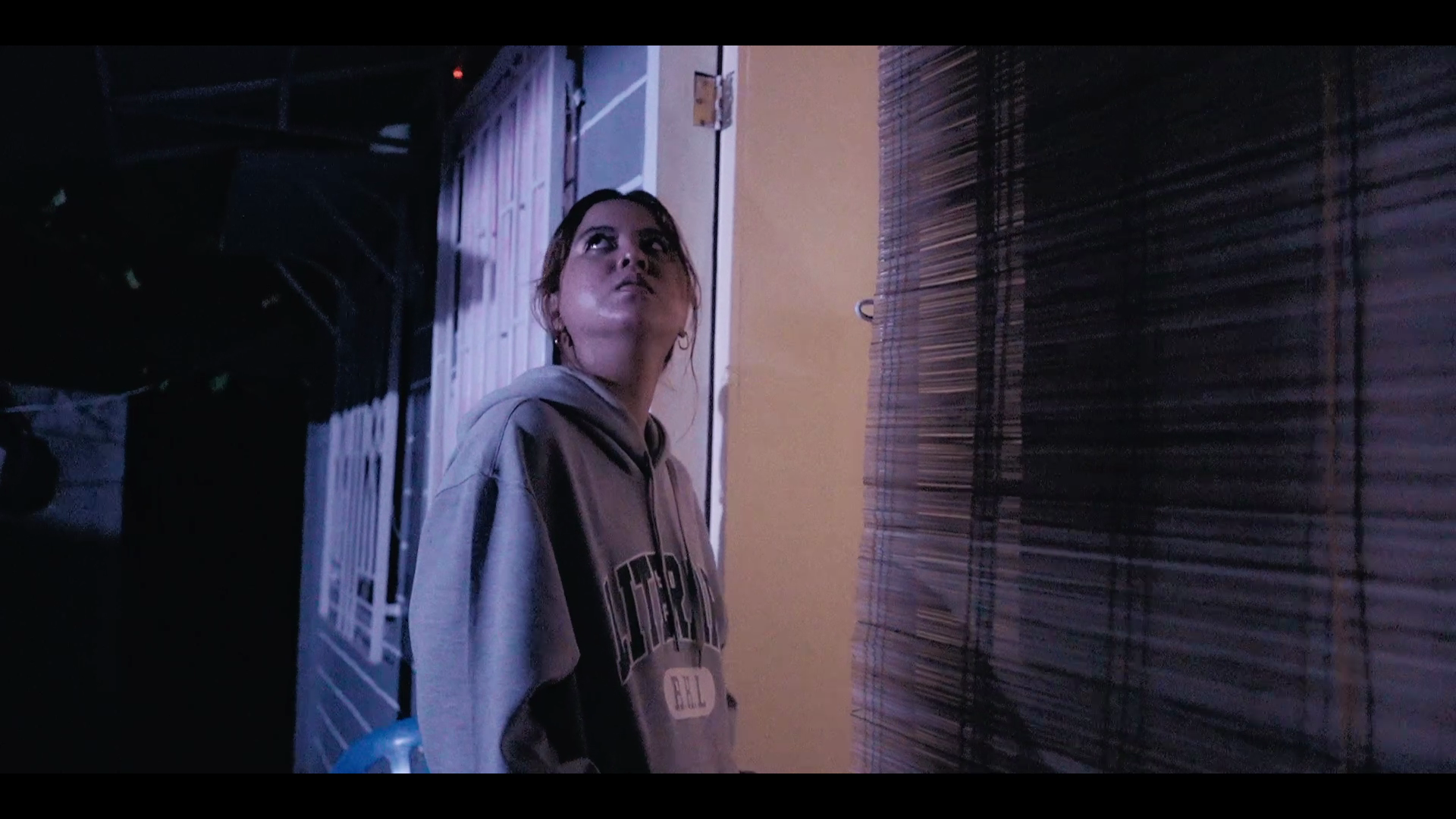
Film still from hikbi
hikbi shows a self-awareness of both its form and the limitations it tries to test. By merging the visceral dread of violated space with the tingling eeriness of the unknown, the film transcends its budgetary and technical constraints as a short film. Though hikbi may function best as a conceptual piece (for now), one can imagine its potential expanding in a fully-realized vision in horror. - Dave Jonathan Verbo
Ang Nawawalang Necktie
Dir. Amira Kawasa
Amira Kawasa’s Ang Nawawalang Necktie captures a resonant search for identity, a story that stays not because of its plot, but because of the confusion it mirrors in those of us torn between passion and practicality. Watching Grace move through old spaces, I saw my own hesitation in hers, the pull between what feels right and what others say makes sense. The missing necktie, simple at first, becomes more than an object; it turns into a symbol of the self that drifts away when we try too hard to fit in. Grace begins as an artist, someone sure of her path, but after her grandfather’s death, that confidence fades. His absence feels like a missing piece that leaves her unsure of what kind of life she wants. I understood that. Grief can blur what once felt clear, until our dreams lose their edges and names.
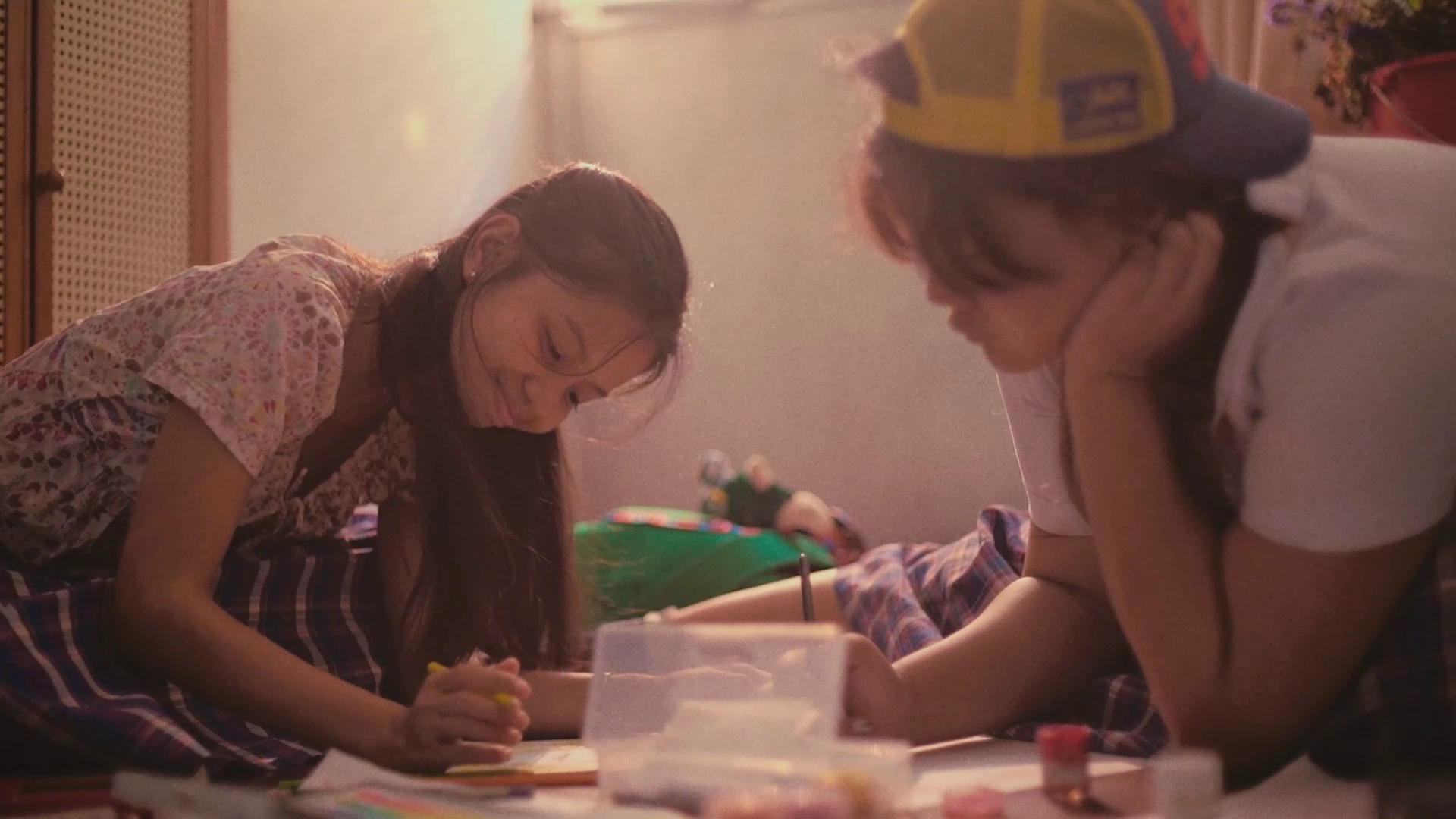
Film still from Ang Nawawalang Necktie
When Grace finds the necktie, she doesn’t have an epiphany, but she remembers. Through that object, bits of her past return: her grandfather’s warmth, the small things that used to ground her. The film stops being about finding something lost and becomes about piecing together who she used to be. I realized then that her search was never just for a necktie or a career, but for herself, the part dimmed by loss and pressure. In Grace’s discovery, I saw a kind of peace; the thought that maybe the act of searching, even without answers, is already a step toward finding home again — Jessica Maureen Gaurano
SINEGANG.ph is an official media partner of Pelikultura: The CALABARZON Film Festival 2025.