
‘Lee Cronin’s The Mummy’ REVIEW: Unwrapped, Unabashed, and Unhinged Grieving

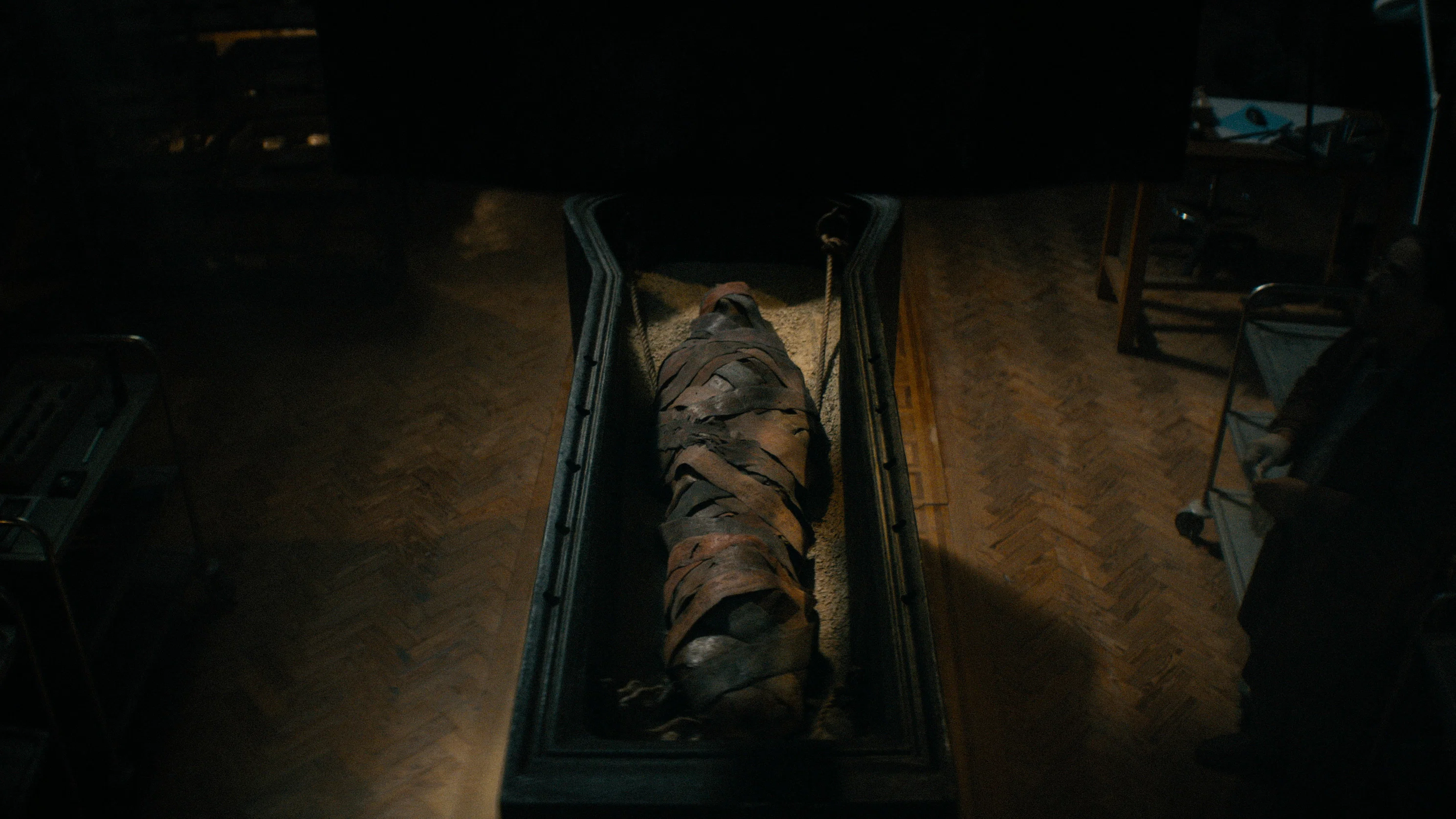
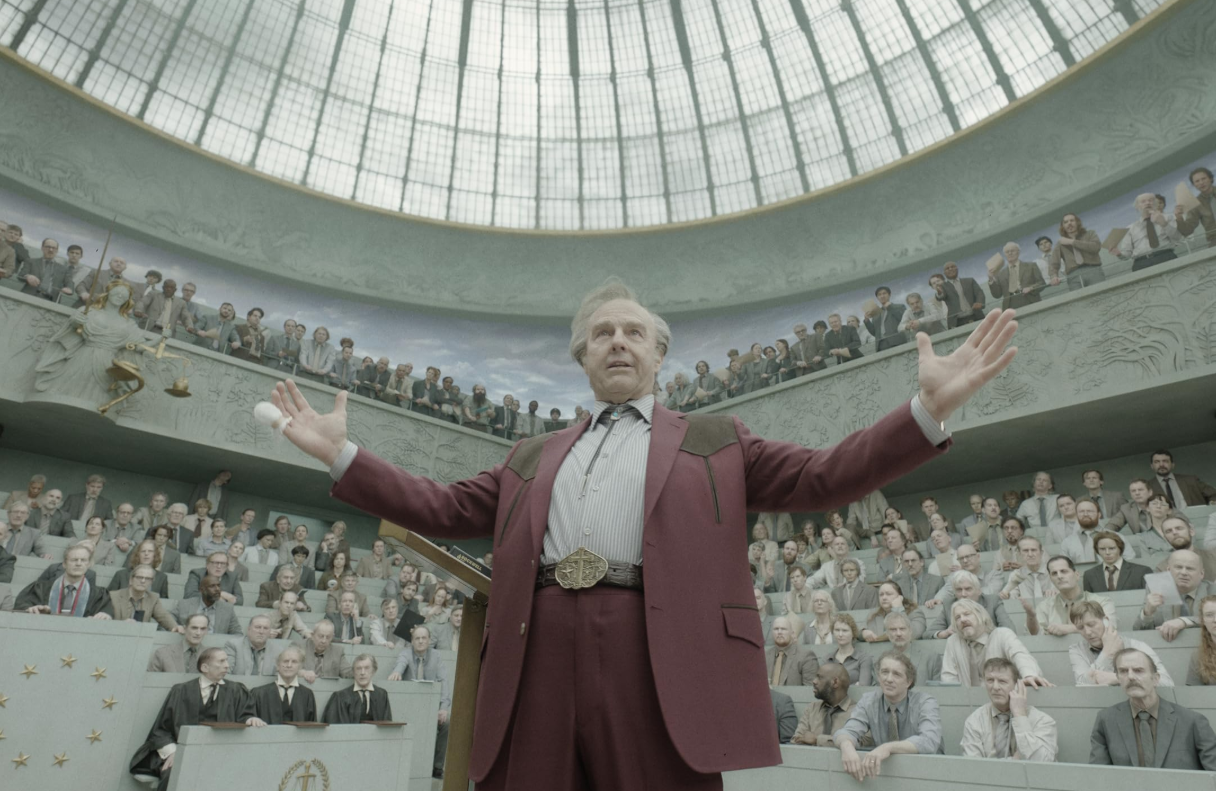
A mysterious tomb with something wrapped inside | Still courtesy of Warner Bros. Pictures

Like with any other decade since they were first unleashed into screens to spook people at the multiplexes, the 2020s have been ripe with reimaginings of classic horror movie IP, particularly the iconic creatures and monsters of days gone by. It seems that a common sensibility that is prevalent among many other recent reincarnations (which include Leigh Whannell’s interpretations of The Invisible Man and the Wolf Man, and the two recent auteur-driven Frankenstein features by Guillermo del Toro and Maggie Gyllenhaal) is to ground their genre tropes in familiar trappings, yet still maintaining a modern sheen in presentation or thematics, to represent their evolution through the lens of those at the helm, while also giving tribute to the originals.
Another filmmaker throwing themselves into the ring is horror director Lee Cronin, who has made a name for himself after helming Evil Dead Rise, a breakneck, gory, demonic possession feature whose success can fuel the then-Raimi-directed franchise into the new generation. After the success of this jump, initially starting small with his debut feature, the moody The Hole in the Ground, Cronin makes another audacious, unexpected leap with a new incarnation of ‘The Mummy’, his name fully embedded within the movie’s title through the suggestion of producers out of confidence in what vision he could bring to the table, as well as potentially as a sort of pragmatism knowing the similarities that could be brought up to the adjacent Brendan Fraser-led franchise of the same name which will also be getting a new release soon.
What is that vision that Cronin brings to his The Mummy? Well, it’s an utterly vicious, shambling behemoth that I’m still struggling to process how it coheres together, but nevertheless a visceral one.
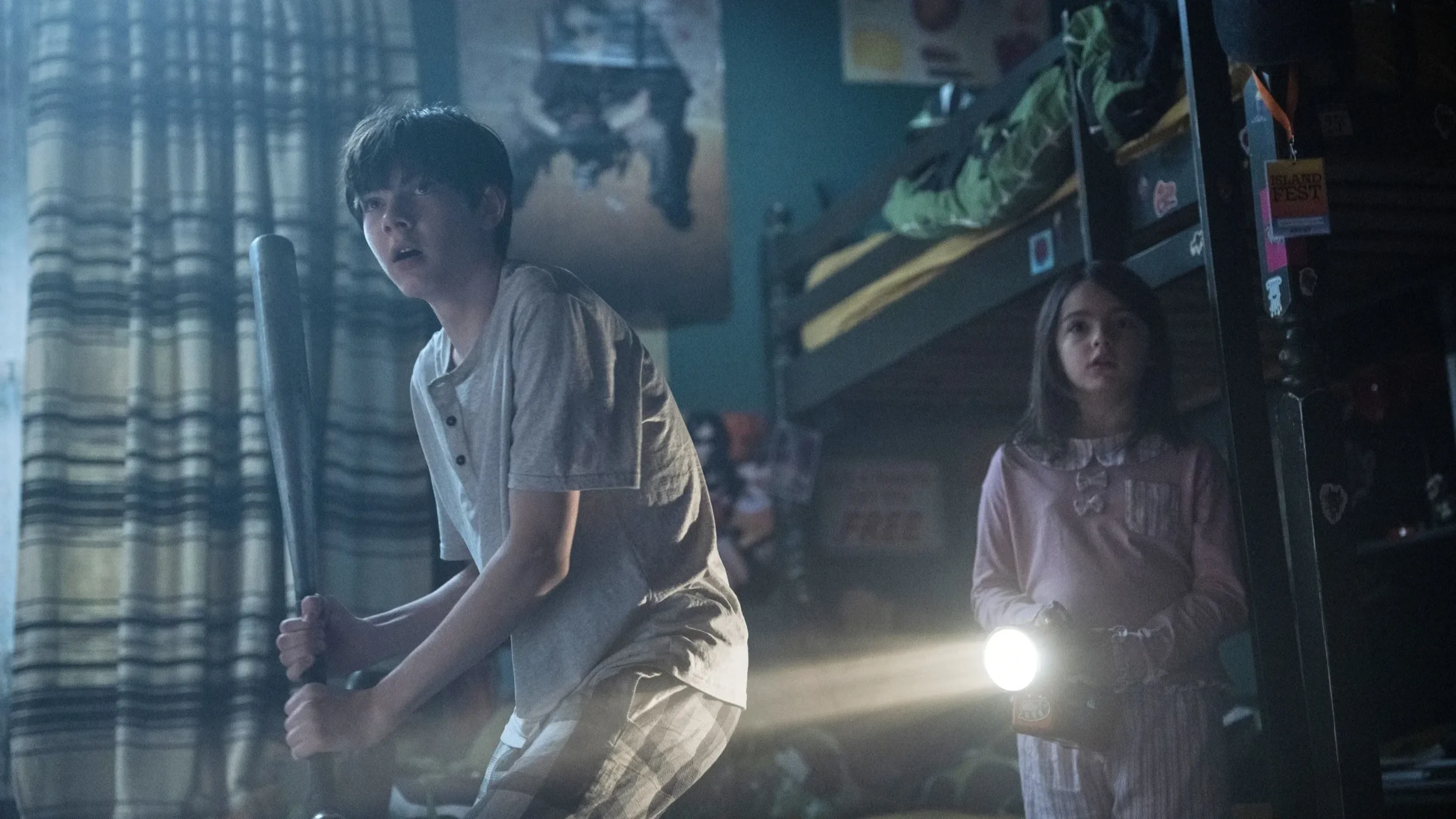
Shylo Molina and Billie Roy in Lee Cronin’s The Mummy | Still courtesy of Warner Bros. Pictures
The film follows a family residing in Egypt, who, in the midst of a potentially transitional move as father Charlie Cannon (Jack Reynor) receives a new job offer, his daughter Katie ends up kidnapped by a mysterious figure connected to their family, leaving no trace and him, his wife (Laia Costa), and elder son (Shylo Molina) shaken. After years of living with trauma (and the birth of their youngest daughter, Maud (Billie Roy), the Cannon family soon discovers that Katie has been found and retrieved, bandaged in a mysterious tomb. Despite some tenuous concerns and relations about her condition, the family takes her home to repair the bonds they didn’t know were broken, only to find out that something even more twisted beyond human comprehension has entered their home.
Cronin has stated that two films that had influenced his film: David Fincher’s Se7en and Tobe Hooper’s Poltergeist, and it shows in both the infusion of their tone and premises within this film, the uncertainty that lies in caring for a family member, crossed with a ghost plot and a grimy, head-spinning mystery over the cause of some nasty bodily harm. The approach here, though, is as bizarre as it is quite self-indulgent, mostly due to the quite lengthy run time of over two hours, which is quite a lot for a movie whose logline is quite simple on paper. But like the evil that has taken grip on the Cannon family, there are plenty of weird, often clunky, yet fascinating peculiarities that hide in what is quite unassuming.
Lee Cronin’s The Mummy really takes its time in sinking in every pore of wandering confusion, melancholy, and intrigue of its premise, aided by an additional subplot of a local officer (May Calamawy) who aids Charlie in tracking down information about Katie’s disappearance after an unfortunate exchange during her initial disappearance. Conceptually, it does allow a sense of investment in this family’s dilemma, allowing them to ruminate over how to deal with Katie’s condition and whether or not it’s safe or even moral to treat her in certain ways after their own failure to keep her safe before, while the greater-scale unravelling unfolds as the specificities of the situation are revealed.
This mix of external and internal tension keeps things together even if some character decisions are a bit funky to continue it, but it does tie into the drawback: that the characterization isn’t quite as solid enough for it to be consistently as engaging as it should be, as much as it yields decent investment. Simple, stock, yet sympathetic characterization is good to set up consistent challenges towards varying situations, but when locked into a certain mode for an amount of time, it does allow the linear dimensionality to show, especially when it hits a bit of a straight lull in the midpoint.
Then you get the other side of the coin, and the one the film is a bit more game in selling: the gorehound genre elements. Numerous gross, transgressive, and nasty practical FX-driven bloodshed scenes in here are deployed in such devilishly mean-spirited measures, no matter the poor recipient. It is through these that the film never really fully loses steam, as the big “money moments” are some of the most outrageous studio horror imagery to be projected this year that I wish that Cronin spent less excess time on trying to overly sprawl the buildup and go straight to the Evil Dead-esque madness that is clearly what the film banks on for its blunt force impact. It is also a barometer for the sort of confusion tone-wise that the film never fully reconciles with: is it a sober, nightmarish eldritch drama that banks on familial paranoia, or a campy, over-the-top splatterfest? I’m all for the versatility of tones in storytelling, but in this case, the screenplay-related conflicts do muddy its coherence.
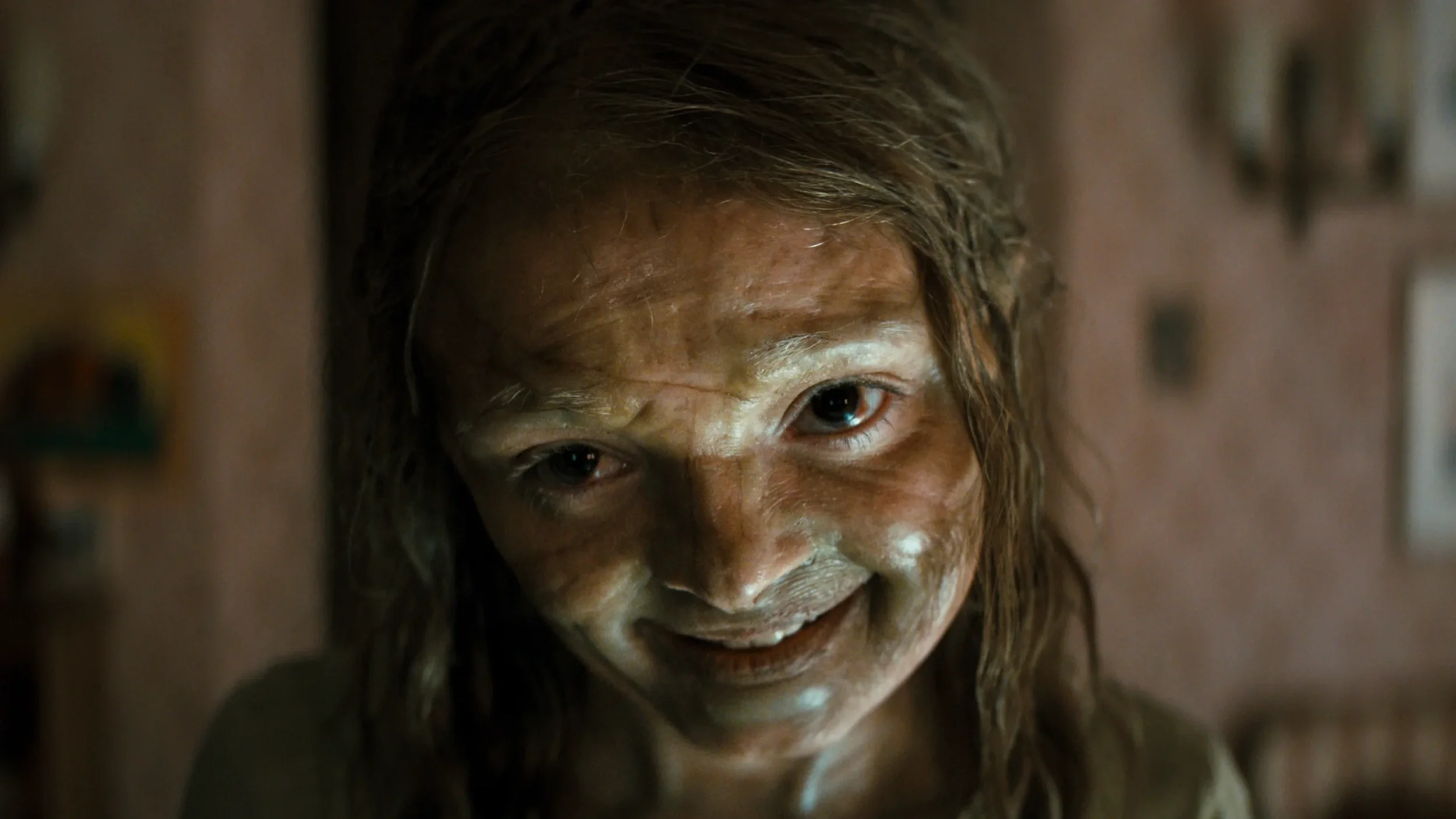
Natalie Grace in Lee Cronin’s The Mummy | Still courtesy of Warner Bros. Pictures
Still, though, if you are going to be confused about what type of film you are going to be, the best case scenario is probably to be quite good at the least at both of your registers, and at that, Cronin still manages to get a lot of mileage. Split diopters up the wazoo (stylish excess for sure, and why not?), Some ridiculous line readings from a pretty game cast, and a deluge of memorably upsetting set pieces in the back half truly have Cronin in total sicko register, fully channeling his own penchant for perverting family dynamics in ghoulish fashion. Even if it all ends on a bit of a curious note, the confidence never quite wavers, albeit built on shaky ground that needs more than a bit of retuning.
At the end of the day, Lee Cronin’s The Mummy is as self-indulgent and grimy as the title implies, an overload of everything that its eponymous director has been doing in the earlier parts of his career, to a degree that is overwhelming and, to be frank, just barely holds itself as a feature. As an ardent supporter of projects that are clear carte blanche signals for filmmakers to go fully ham on whatever makes them tick, the overloaded nature still makes a tantalizing look at its blood and guts worth it, even if it is to take a gander and be drawn into the film’s sheer, gooey, uncomfortable carnage that is worth flinching at. I didn’t even notice my nail bleed as I bit while writing this, and I don’t think I will ever see that independently for a long time. Thanks, Lee.
‘Lee Cronin’s The Mummy’ is now showing in Philippine cinemas through Warner Bros. Pictures.