
‘Ganggang’ REVIEW: The Innocence of Childhood and State Violence

‘Ganggang’ REVIEW: The Innocence of Childhood and State Violence

Set in rural Bulacan, the film follows Ilay (Kenneth Vincent Mendoza), a child of desaparecidos parents; Ten-Ten (Don Rishmond Cerbito), son of a farmer-activist; and Mel (Raine Dela Cruz), child of a military sergeant, as they navigate elementary school. They go to school, make friends, play spider fighting, and spend their days doing the things children do. Yet behind this seemingly ordinary childhood is a much harsher reality, one shaped by the conflict between state forces and those who continue to fight for their rights.

A spider fight game between schoolchildren | Still courtesy of Cinemalaya

If you’re familiar with Burgos and his previous work, Alipato at Muog, which earned him the Special Jury Award for Full-Length Film category at the 2024 Cinemalaya Philippine Independent Film Festival, you’d know that this film is personal. He has consistently discussed human rights violations, injustice, and impunity, and Ganggang continues that conversation, bringing it down to childhood.
After repeated defeats in spider fighting against school bully Anton (Prince España), Ilay and Ten-Ten become defeated and resigned, and have accepted that each loss means Anton gets to continue ruling over them at school. What begins as an issue between schoolchildren gradually becomes a reflection of the society they live in, where those in power intimidate and oppress those with little means to fight back.
The arrival of Mel, a city boy whose optimism disrupts this resignation, gives Ilay and Ten-Ten a new perspective. He convinces them that perhaps they could one day defeat Anton, too. They just needed to find the right spider (ganggang). Through this newfound hope, Burgos allows his characters to discover the possibility of overcoming their bullies and finding the courage to resist.
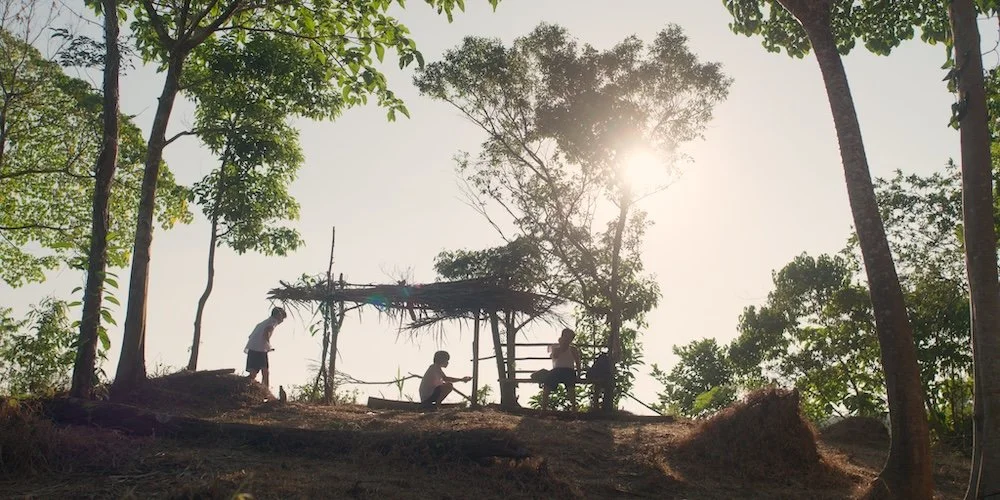
Don Rishmond Cerbito as Ten-Ten, Raine Dela Cruz as Mel, and Kenneth Vincent Mendoza | Still courtesy of Cinemalaya
Burgos carefully lays out each page of the story, giving his audience enough time to grow attached to this trio before revealing the larger weight behind their adventures. This friendship even took us back to our own childhood memories, reminiscent of making friends and getting into trouble together.
The film’s choice to tell this story through children is interesting as it gives us a clear picture of how much the consequences of political violence go far beyond those involved. Their innocence makes the violence around them feel even more unsettling because it reminds us that systemic injustice knows no one, trickles down to children, and shapes the kind of world we are forced to grow up in.
Still, Ganggang is not without its flaws. Some of its dialogue can feel too on-the-nose, with some sounding so unnatural that it’s distracting. In one scene, Ma’am Rebelyn (Elora Españo) and Ma’am Anding (Hershey Neri) had to point out that the new ice candy vendor was no longer around. Of course, viewers had already caught on, making the literal explanation unnecessary at that moment. There are some scenes when characters’ lines and delivery feel so unusual in a conversation that you become aware that these are roles written by someone.
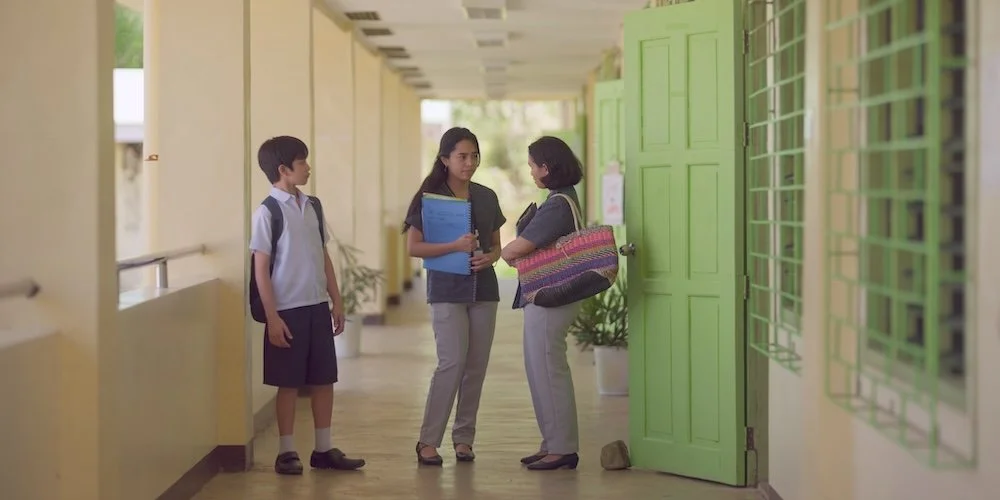
Raine Dela Cruz as Mel, Hershey Neri as Ma’am Anding, and Elora Españo as Ma’am Rebelyn | Still courtesy of Cinemalaya
Filmmakers, I believe, should trust their audience enough to read between the lines, especially when the visuals and circumstances can communicate the message more effectively. However, given its powerful and urgent message, this flaw feels trivial to me. The film makes up for it with its narrative, characters, and courage to call out such a flawed system.
Perhaps what makes Ganggang hit so hard is how familiar the story is. It's easy to get carried away into this world because it's one we all know well. We encounter it in the news, movies, songs, and on social media. Stories of how state forces have intimidated, kidnapped, tortured, and killed activists have become so familiar to Filipinos that they risk becoming background noise.
Like the real-life people it draws from, Ganggang does not hold back in its message. It is enraging, uncomfortable, and painfully direct. And beneath all of that is a call to its viewers as they leave the theaters: continue standing for truth and justice and speaking up for those who couldn’t.
More than anything, Ganggang is a film filled with heart, struggle, and conviction. It reminds us how early we Filipinos are introduced to the realities of power, violence, and injustice — and how dangerous it is to become so familiar with them that we stop fighting back.
‘Ganggang’ is one of the selected full-length feature films for the 22nd edition of the Cinemalaya Philippine Independent Film Festival.