
‘First Light’ REVIEW: An Ambiguity Of Social Dilemma Presented Through Memory
‘First Light’ REVIEW: An Ambiguity Of Social Dilemma Presented Through Memory

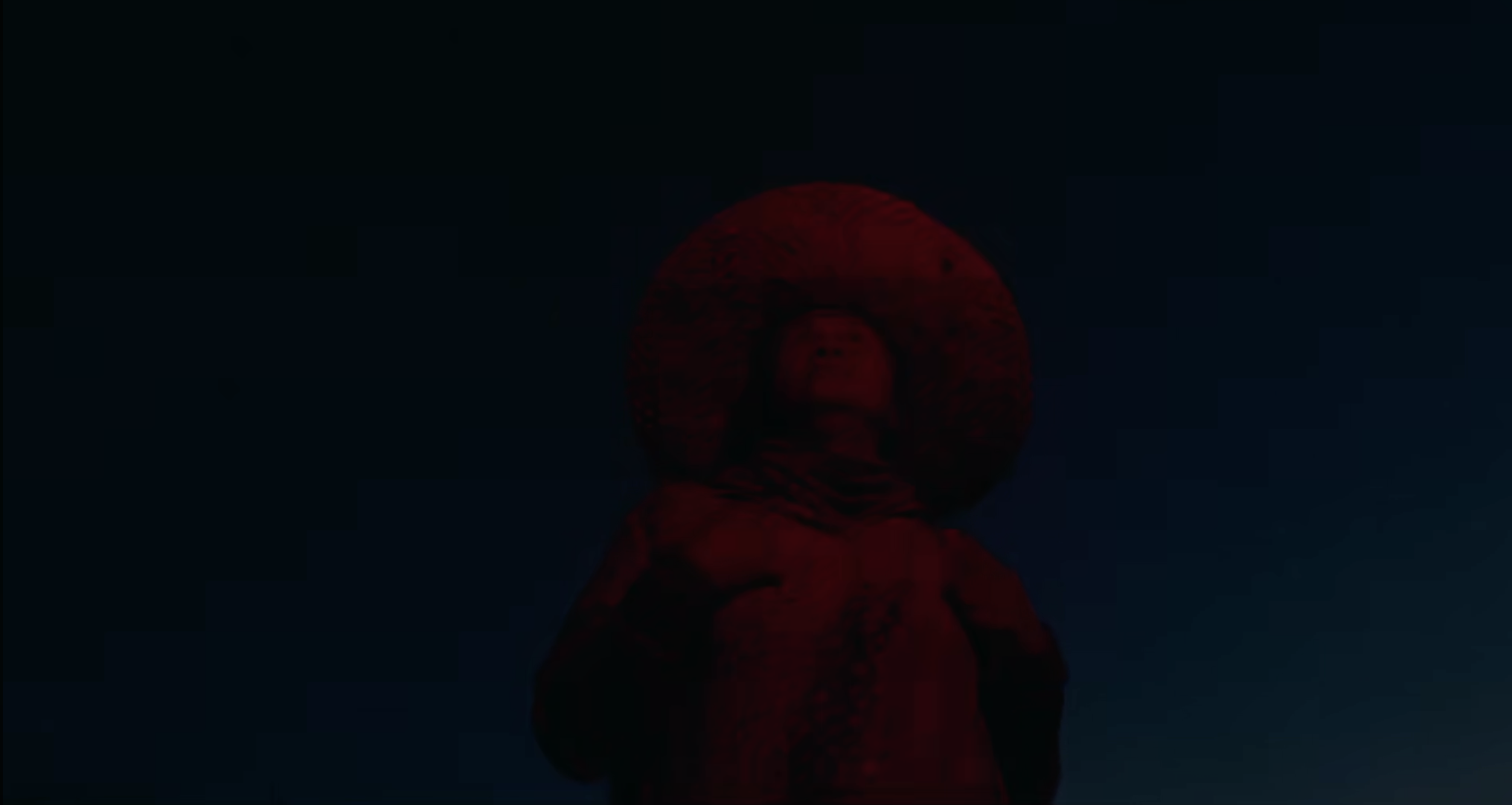
The farmer at night in First Light | Still courtesy of Clou Media Productions, Majella and Screen Australia

I would start this review with a quote from José Rizal, taken from his play, El Consejo de los Dioses” (Council of the Gods), which also appears in the film as well.
“I enter the future with a memory of the past.”
I was at Intramuros on that fateful day, as I continued searching for myself. Every day as I walk along its streets, I can feel inequality seething into the everyday. The ghosts of Spain and Spanish colonization continue lingering in its walls — a reminder that we still have a long way to achieve our own path as a nation.
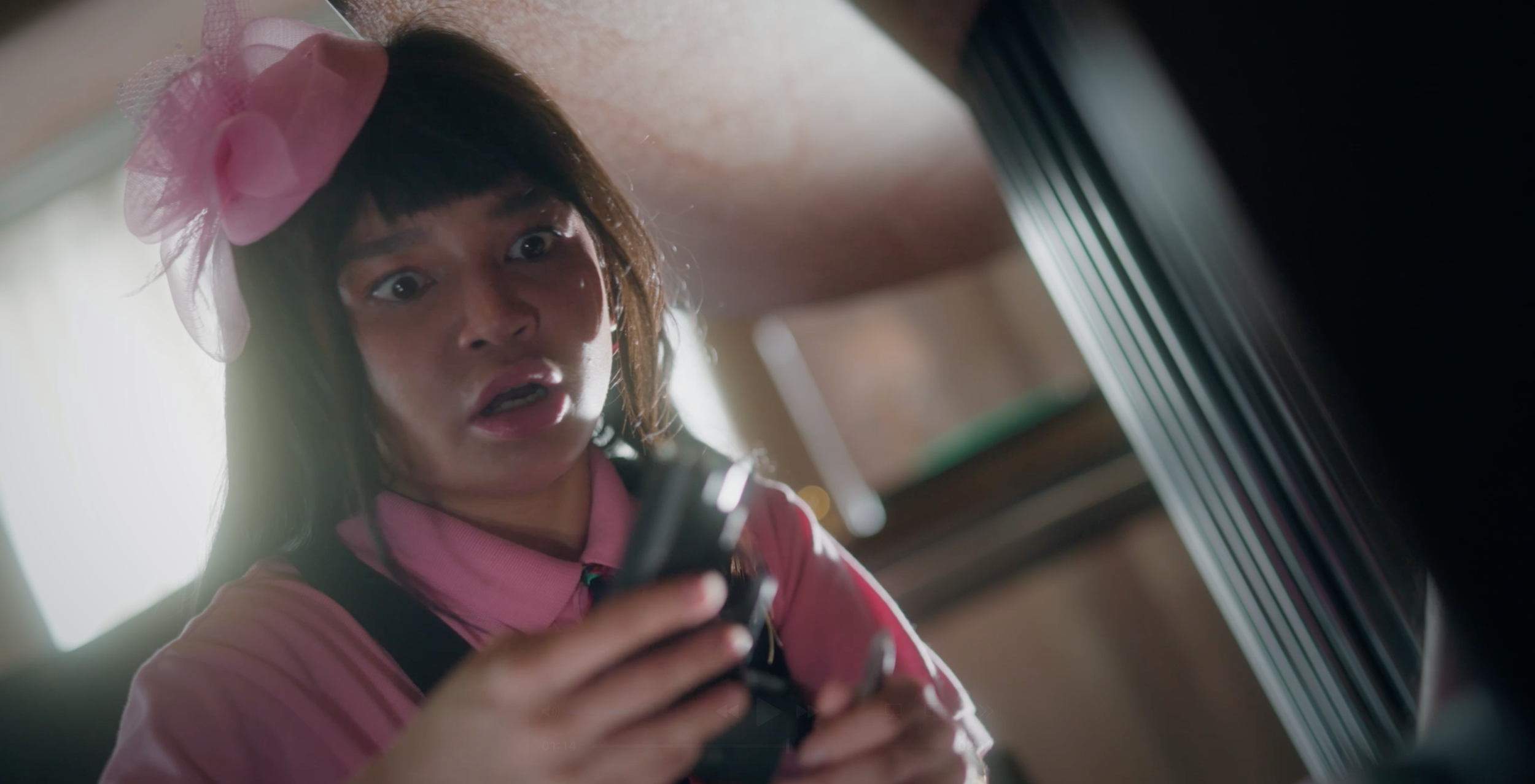
To start, James J. Robinson’s debut feature, First Light, reflects on the life of Sister Yolanda (played by Ms. Ruby Rodriguez) living in her everyday life as a nun somewhere in a provincial town somewhere in Rizal. Her own beliefs were questioned at that point after she witnessed an accident involving a young boy named Angelo at a construction site. As a bridge between God and humanity, her mission is to provide solace to the suffering, but interference and pressure from external forces — from the compradors to the enforcers prevented her from doing God’s duty.
A different type of horror — not through gore and violence but through a backhanded show of niceness and cowardice.
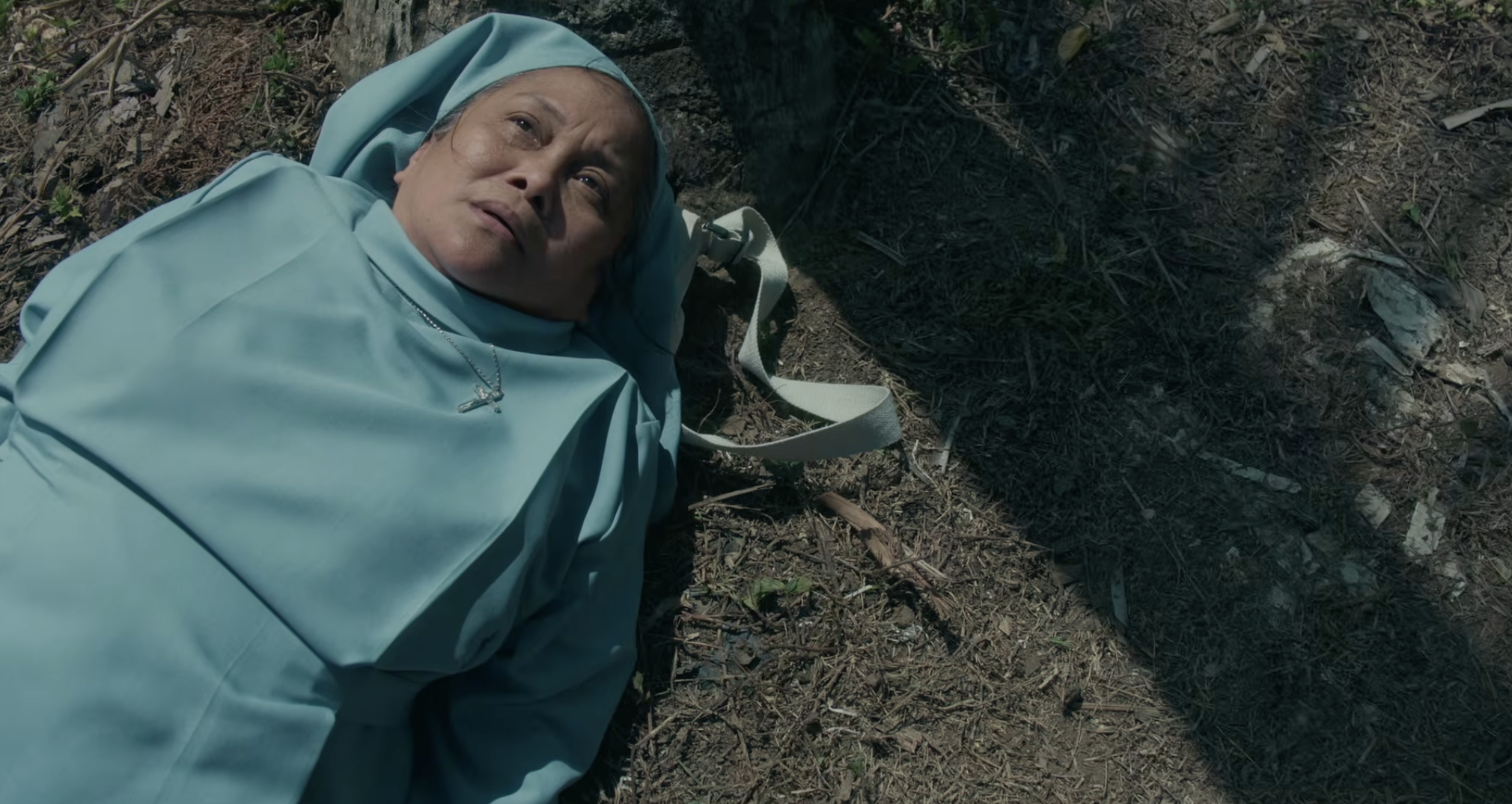
Ruby Ruiz as Sister Yolanda in First Light | Still courtesy of Clou Media Productions, Majella and Screen Australia
Even in the walls of the convent, corruption and selective patronage are evident. It was nothing new, though, as people who are perceived to serve God for the rest of their lives are human. There is a reason why the term “Catholic guilt” exists, carrying the consequences of their sins in the past while preparing for the afterlife with God.
There are moments of restraint while eerily discovering the hidden agendas. Is it a form of colonial trauma? Or are we gearing towards its acceptance, na kinagawian na? The film shows that a person’s death provides a question of legacy and significance. Celia's death was solemn but grand, while Angelo's felt like a feast and an opportunity to catch up with the community and as a way to come together.
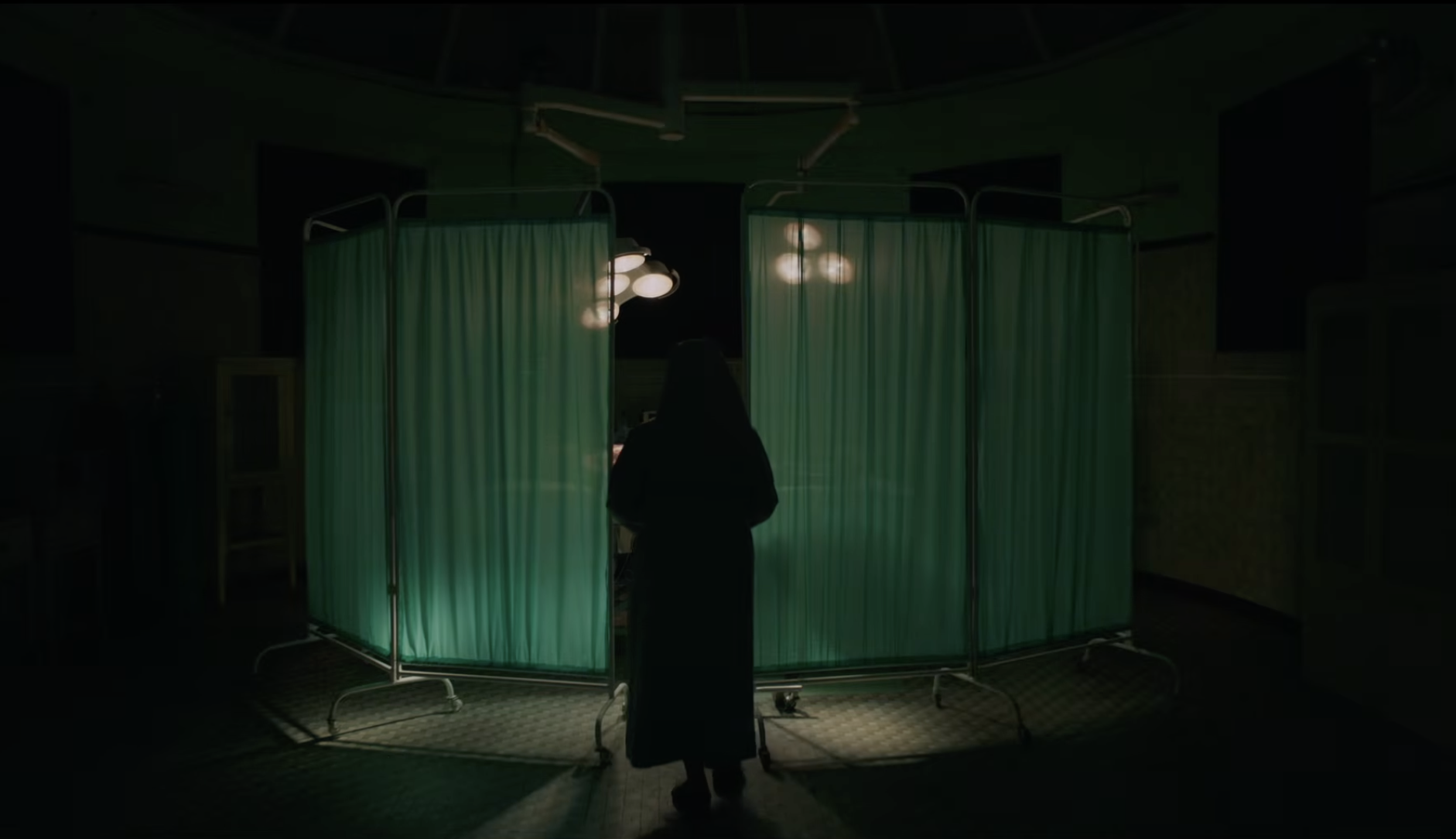
Sister Yolanda approaching a young boy named Angelo in First Light | Still courtesy of Clou Media Productions, Majella and Screen Australia
Meanwhile, later parts of the film felt ambiguous and muted. There was an effort to restrain the presumed violence — leaving multiple rooms for interpretation. That alone already lingers. However, I would also be bluntly honest to say that many audiences may have a hard time identifying these nuances.
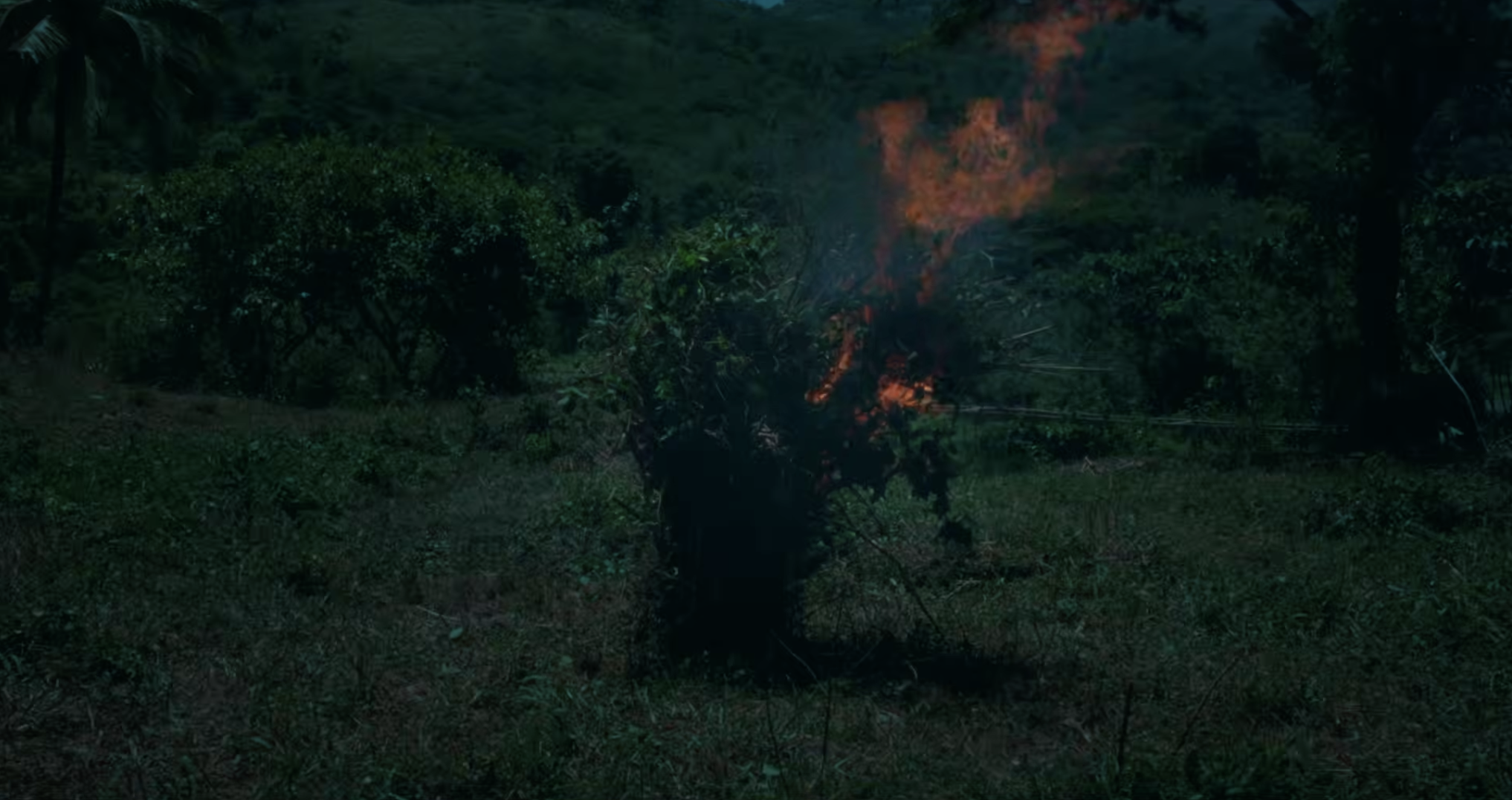
The forest in First Light | Still courtesy of Clou Media Productions, Majella and Screen Australia
Looking back to a film similar in this premise, Isabel Sandoval’s Aparisyon (Apparition), there was an attempt to portray violence not through graphic means but through implication. And to quote Ms. Ruby Rodriguez during the Philippine premiere, “Sa loob at sa labas — buhay ng Diyos but humans make walls.” As we go back to history, humans make walls not just for protection but also to gatekeep their status and to build their own legacies. First through the use of stone and later through ideology and subjugation.
Cinematography was flawless as it reminded me of Fernando Amorsolo’s paintings and at the same time, feels void of joy. Through the spaces that we inhabit and the continuity of colonial rule, First Light presents a Philippines that is devoid of celebration and festivity.
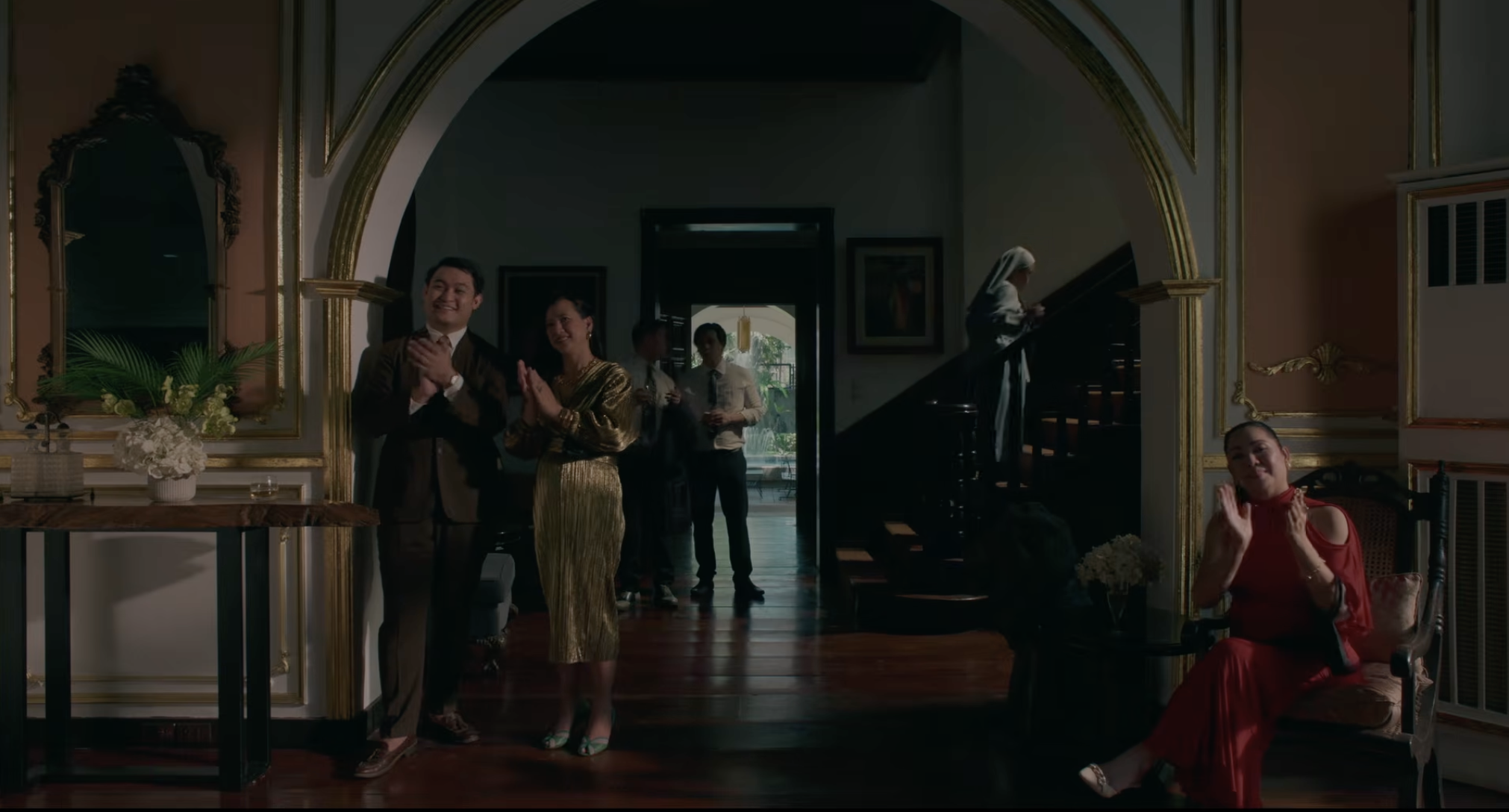
Linda’s (Maricel Soriano) stately mansion during a banquet in First Light | Still courtesy of Clou Media Productions, Majella and Screen Australia
The establishing shots of mountains and forests, a common theme in recent Southeast Asian films — how one would be living in social harmony while deterring the fear of impending forces, whether in the form of armed violence or economic coercion and development. Also, while the forest lives on, dies, and is reborn, humanity reaches the point that society will kill itself, and the cycle of life continues. As part of the life cycle, death can be used or weaponized to control people, and it is terrifying, but it is an inevitable reality.
To end, First Light is a reflective journey of our collective social trauma and a reminder of our heritage, even in the smallest aspects.