
Porvenir’s ‘El Fuego del Alma’ Triumphs in Localizing a Southern Gothic Classic
Porvenir’s ‘El Fuego del Alma’ Triumphs in Localizing a Southern Gothic Classic

Feature art by Abigail Manaluz
Duality has long been a staple theme of theater scripts, but none, at least in my limited reading of the text itself, has captured the melancholic sensibilities quite like Tennessee Williams’ Summer and Smoke. Staging it, let alone translating it for the Filipino masses, poses a severe risk of losing the oppressive Southern gothic atmosphere that made the material work. Thankfully, Porvenir’s production of Williams’ piece, Mark Mirando’s El Fuego del Alma, avoids the trappings of superficial localization of characters and setting by meticulously transplanting the soul of the text and all of its irreconcilable and opposing halves into an introspective 90-minute play that is distinct, tropical gothic, and most importantly, uniquely Filipino.
Alma’s devotion to religion and Juanito’s insistence to science are both adapted to reflect the spectrum of patriarchal control in the form of piety and patrimony, both deeply ingrained in Philippine households. Even the community, who only acted as passive observers to the lives of the protagonists in the original material, becomes active participants whose panoptic sneers and stares enforce social norms through fear of being the town’s next gossip headliner. Because of these changes, the romantic tragedy born from spiritual misalignment is then transformed into a scalding critique of a society at constant odds with its people. What is expected and what is authentic to oneself are but lines that will remain parallel no matter how one changes or adapts to fluctuating standards and customs, which Eljay Castro Deldoc masterfully injects into a play that has become an engaging mix of mid-century American spine and contemporary Filipino blood through his translation.
Even the staging leaves little to be criticized. Unlike the Panasonic-sponsored projection-fest that seemed to plague theater productions over the past year or two, El Fuego del Alma chose a rather unconventional yet practical, and dare I say ingenious place to stage theirs: the first floor lounge area of Sine Pop, a boutique cinema in Cubao. Its predominantly monolithic architecture heavily complements the staging with its restrictive but tactile utilization of the entire post-war house, leaving no bamboo garden, concrete floors, nor wooden stairs untouched. The best sequences came from the live superimposition of multiple scenes happening simultaneously that can be seen clearly through the panoramic windows. It makes me wonder how it will differ on a rainy evening and affect the outdoor scenes and the live instrumental since I watched it on a relatively calm and summer afternoon.
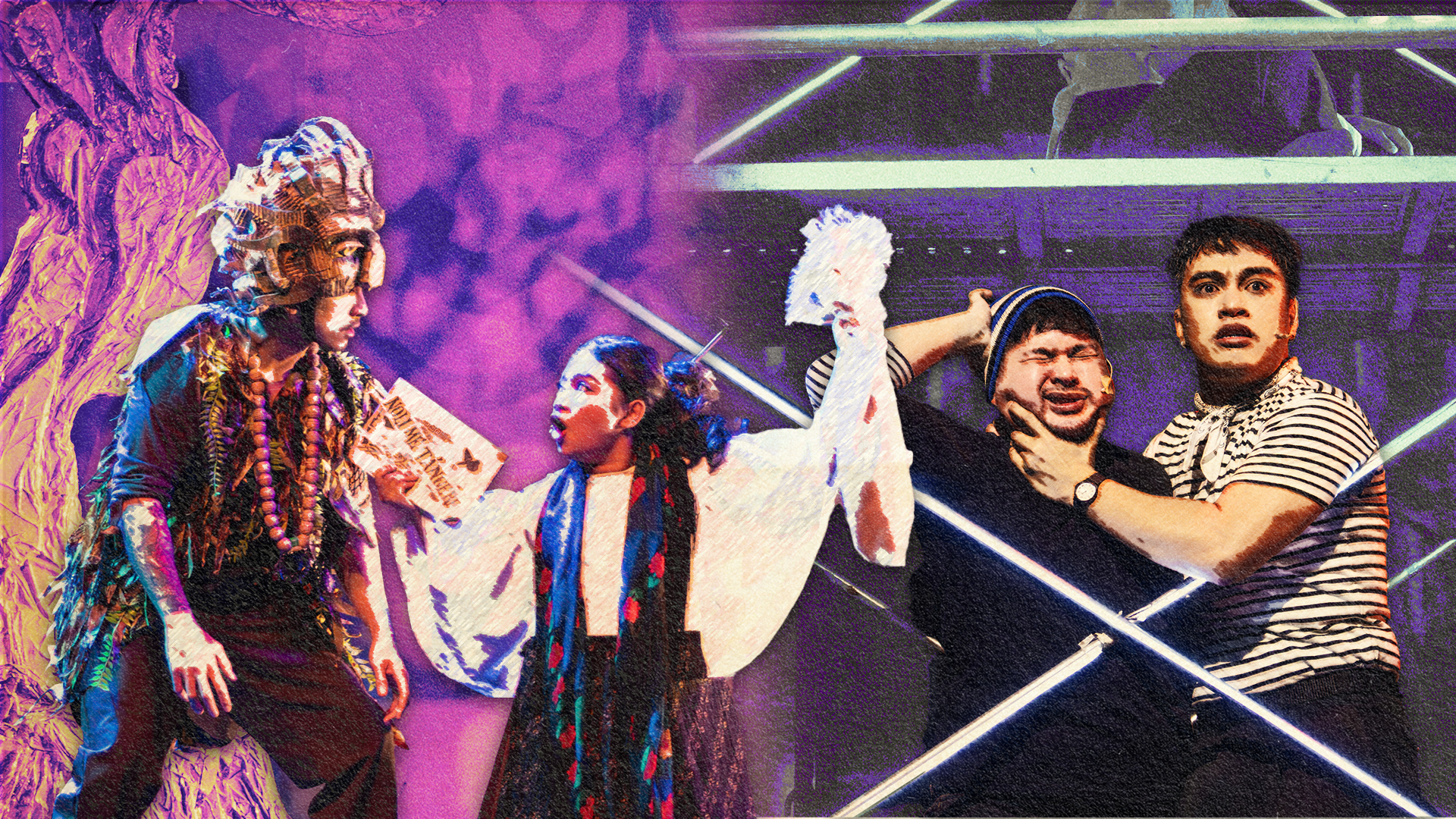
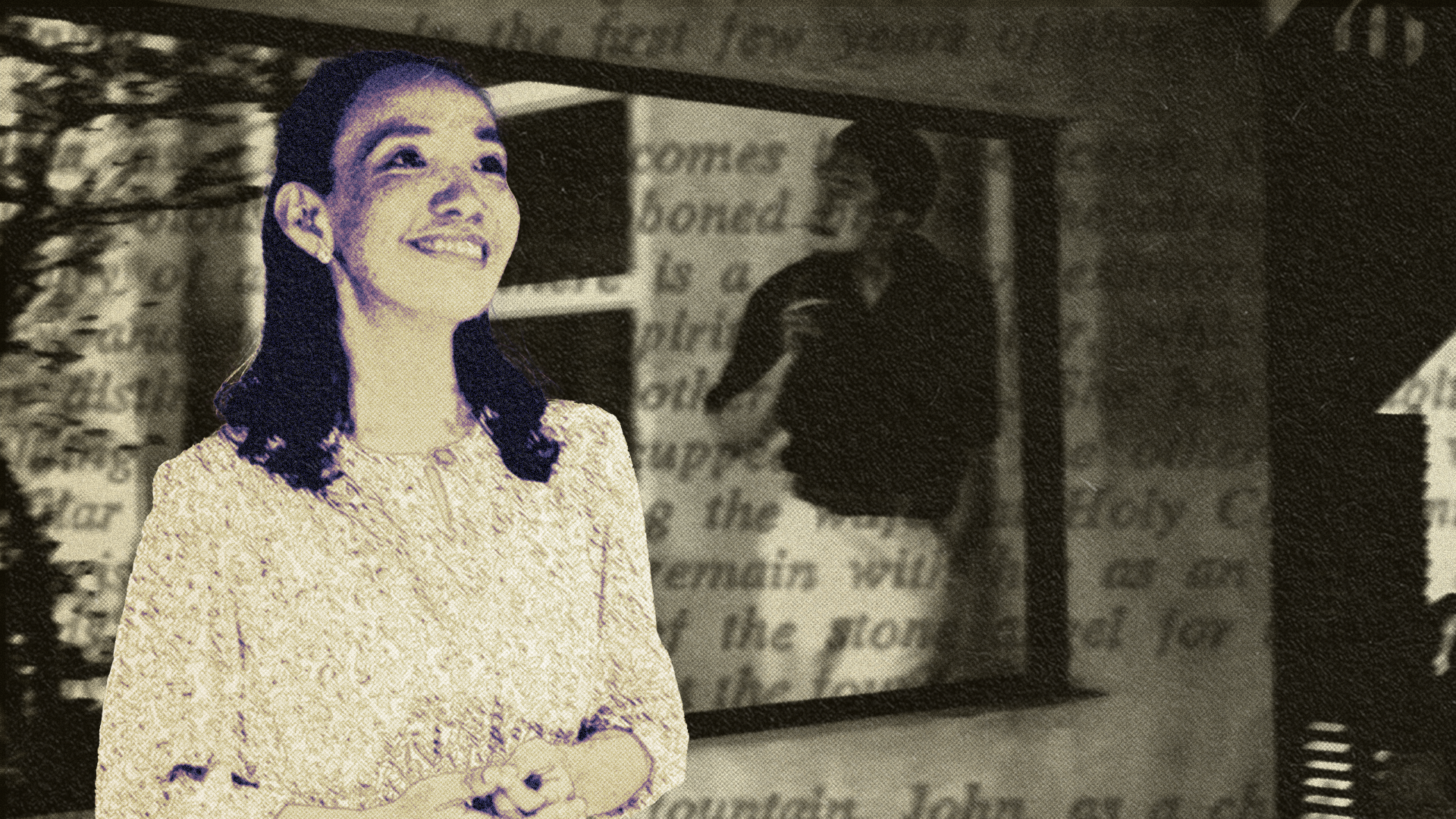
Of course, no great stage design or translation can compensate for a weak cast, but this is hardly a concern for this Porvenir production. The trio of Alma, Rosa, and Juanito, played by Opaline Santos, Hariette Mozelle, and Sandino Martin, respectively in my showtime, inhabits their fractured, fluctuating identities to a tee: Santos’ volatility, Mozelle’s seductiveness, and Martin’s ardor coalesce into a heavy, humid atmosphere akin to brewing storm with climactic downpour drenches the audience until the final sequence. Duality itself extends beyond the script as every show rotates its principal cast into different characters that, when coupled with the unpredictability of July and August’s weather and the contrasting afternoon and evening time slots, transforms each performance into a once-in-a-lifetime event that is essentially irreproducible. Popularized locally through Artist Playground and Kholab Productions’ twin-bill Double Take, this rotating cast approach creates a compelling reason to rewatch the play again and again to discover another facet of the play not seen before and never to be seen again.
Porvenir’s El Fuego del Alma ultimately achieves what many theatrical localizations can only aspire to: preserving the emotional foundation of its source material while thoughtfully rebuilding everything around it into something unmistakably Filipino, much like the post-war house that then became Sine Pop. Mirando’s direction and dramaturgy, and Deldoc’s translated script, supported by talented the cast and artistic team, succeed not only in retelling Williams’ tragedy but also in revealing that the social burdens carried by Mississippians in the early 1900s are perhaps no different than our own today.