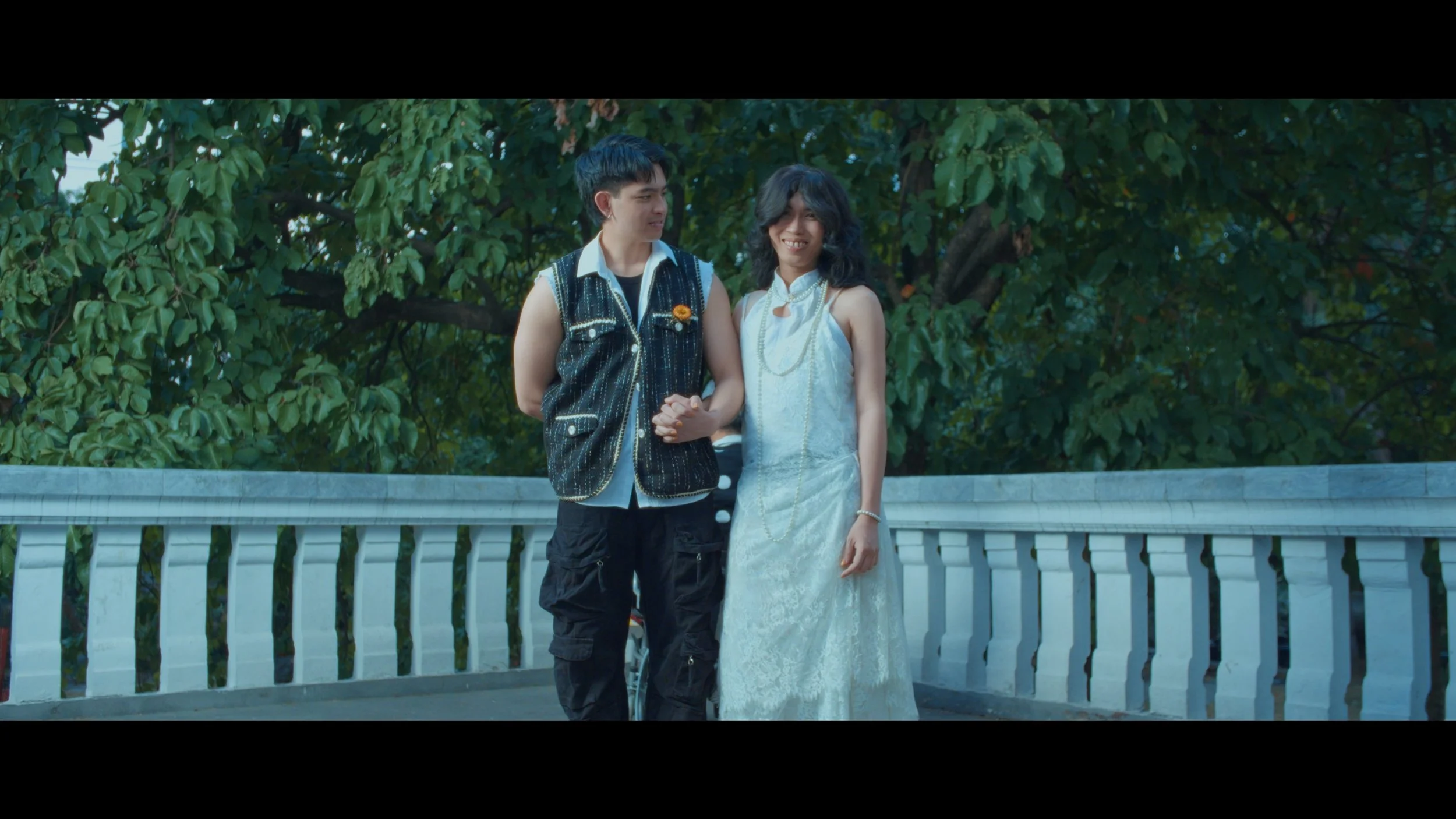

Getting Geese(d): The Performative Stance of Taste in Online Discourse

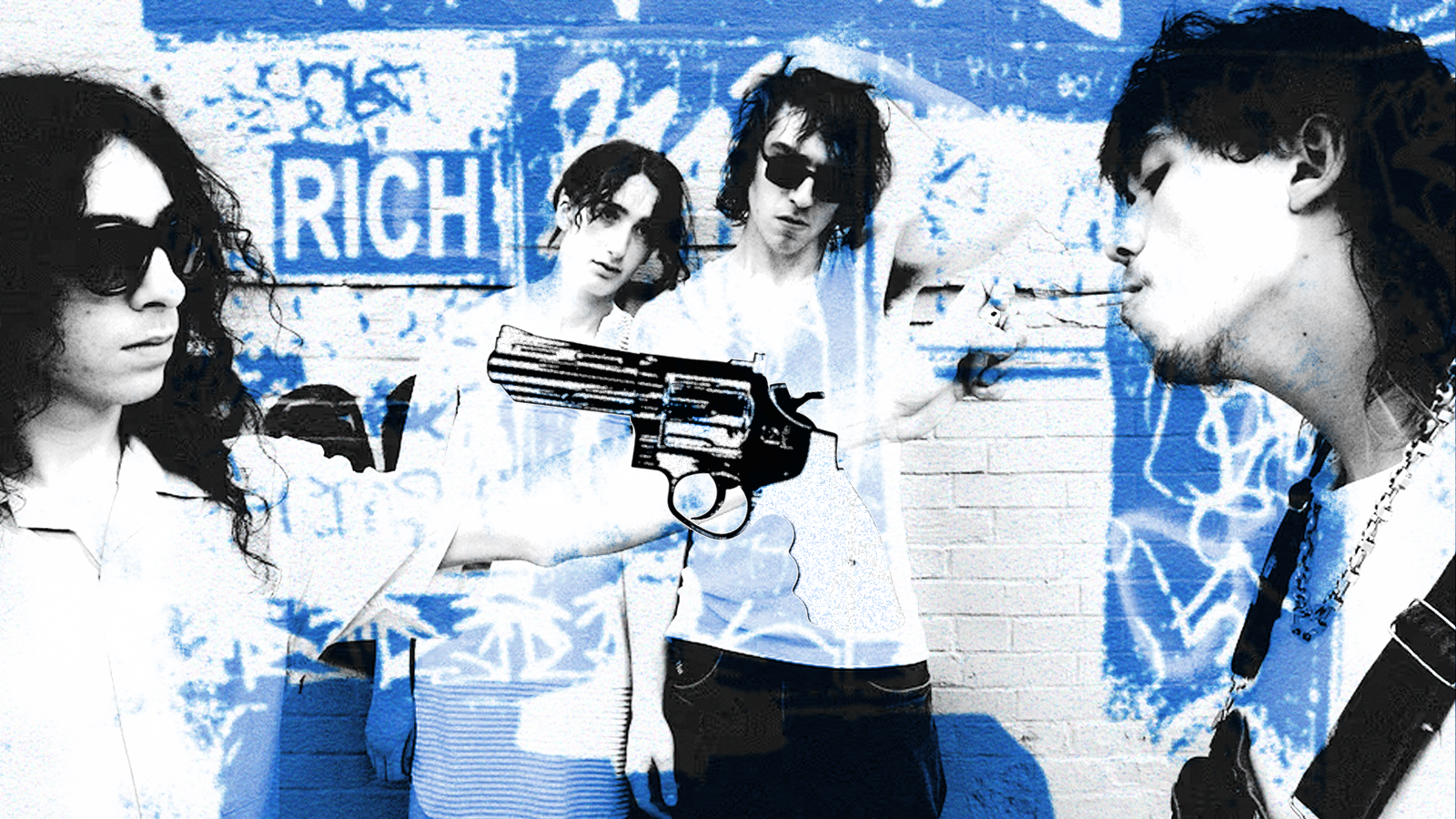
Feature art by Angelica Afan
There has been a growing pressure in contemporary online discourse that goes beyond simply responding to art. It now requires role-playing, not just whether you like or dislike something, but where you place yourself in relation to it and what that stance implies about you.
Meaning is no longer gained only through a direct encounter with a work. It is steadily influenced by how that encounter can be quoted or coded into a signal within larger conversations. Expression begins to consume itself under the pressure of visibility.
It starts to manifest as if it already has an audience beyond the moment of its creation. Within that environment, a split emerges: some forms of expression resist virality and self-mythology, while others are immediately absorbed into them. The difference is not merely aesthetic. It is structural.
This tension becomes easier to see when placed against contemporary music culture.
A great case study is Geese and their third album, Getting Killed, which continues to suggest that this generation’s rock can exist without self-mythology or the puffed-up seriousness the genre has worn for decades. The band doesn’t lean on mystique or posture; instead, they occupy a rare space where experimentation and accessibility stop feeling like opposites.
What makes it all land isn’t just the idiosyncratic songwriting, the tense guitar work, or the production choices; it’s the enveloping sense that the band isn’t performing at a distance from each other or from the listeners. Cameron Winter, Emily Green, Max Bassin, and Dominic DiGesu all feel like they’re willingly letting you in. They can pull off sprawling bangers while still coming across like low-maintenance friends you could hang with, trading inside jokes or arguing over who’s wearing the most absurd shirt.
Nothing feels inflated beyond the act of playing itself. That’s one of the reasons why any review of this record would almost always praise its jam-like structure. There’s a looseness to their musicianship and bravado that resists mythmaking. Even at their most chaotic, the songs remain grounded, as if the tension builds within a shared language that has been tried and true for a lot of years rather than a constructed persona.
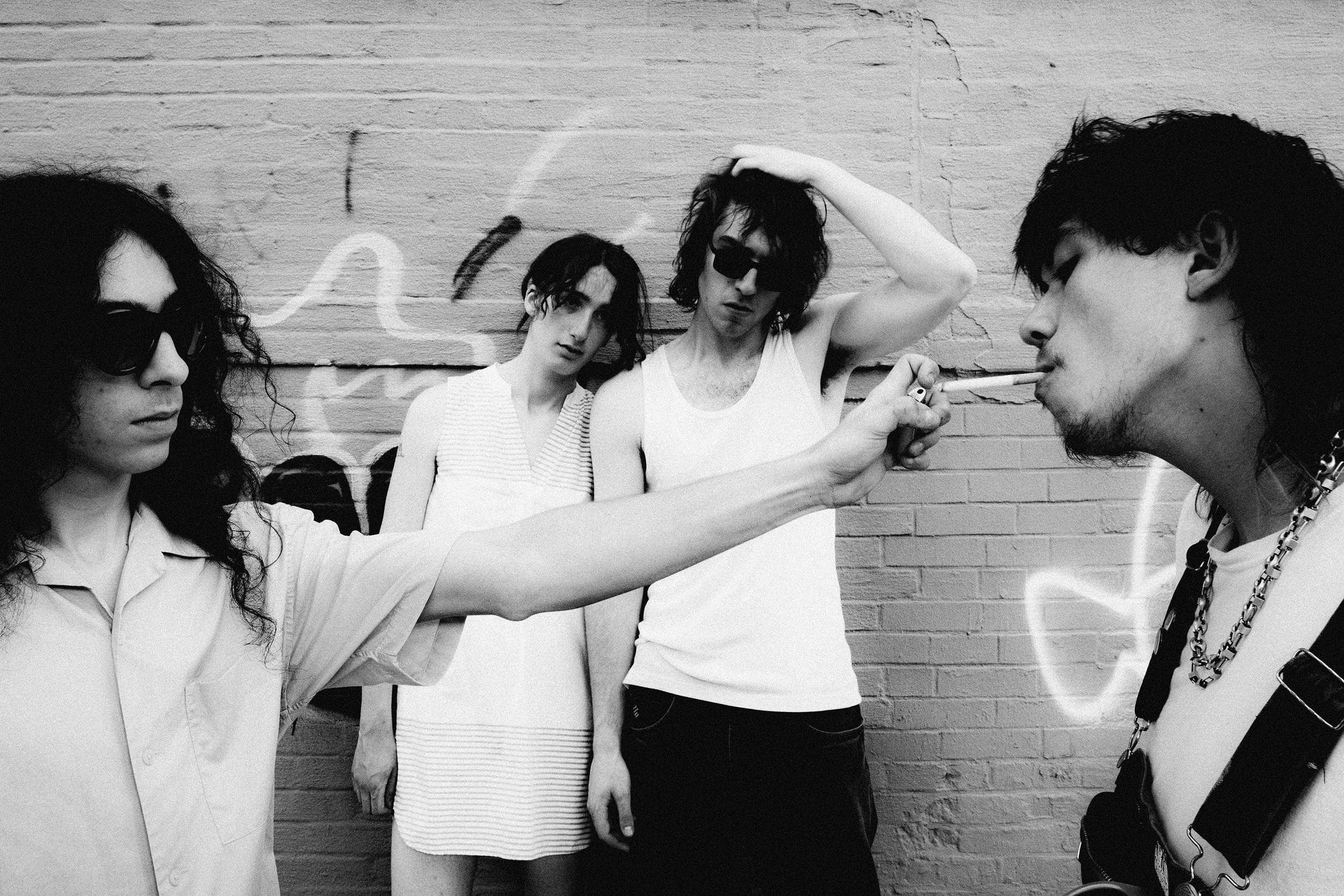
Compared to Getting Killed’s predecessor, 3D Country, which leaned more on infectious hooks and melodic tone, this album has drawn greater attention and provoked stronger reactions, even as it pushes its audience further through its exploratory style. This unmistakably points to a continuing mainstream appetite for risk. But, at the same time, it also places the band slightly at odds with how contemporary music culture tends to process what it hears and, most of all, what it sees.
And when something like this finds its market, it surely doesn’t stay contained. It spills outward into visibility. Social media feeds, comment sections, and short-form discourse loops are surely in the frame, especially if you’re tapped inside online music spaces.
From one post to another, whether in retweets, or shared posts, social media makes it effortless to both hype and hollow out criticism into something rapid-paced and digestible. At times, intentions adapt a new function solely for site traffic. This shared language that the digital age has introduced breeds herding of all kinds, from die-hard stans to ragebaiting trolls. As feedback systems like reactions tighten their grip, they affect intrinsic motivation and reward selective takes that mirror existing sentiments. The net effect is a form of discourse governed by visibility. It is fast, loud, and ultimately reductive.
Once that happens, general reception starts to flatten into a pattern. What should be healthy engagement becomes solely platforming a take. The reaction begins to feel almost inverted relative to the music itself: painfully predictable. That’s where the word “overrated” starts appearing not as a critique but as a passing hunger pang that needs to be satiated. At their most benign, they are shortcuts. At their most revealing, they are placeholders for presence within a conversation that demands constant indexing of self-image.
Up through its sophomore album, Geese built a steady fanfare and modest acclaim. But when Getting Killed began flooding the discourse, the narrative seemed to shift. From quietly underrated to loudly overvalued. There’s a sense that we struggle to let things simply sit on their own terms. Instead, we always need friction to be present when something becomes widely renowned, not always to challenge the artists to reach their potential, but as a way of gaining traction for ourselves through a “hot take.”
Geese aren’t alone in this. Similar language circulates around artists like Doechii or Billie Eilish, where forward motion in sound gets reduced to whether that motion is “justified.” The label stops describing the music and starts describing the speaker’s need to take a stance. Over time, it loses meaning altogether, becoming just another way of needlessly broadcasting distance.
At its most extreme, this logic mutates into irresponsible think pieces. The Wired piece that frames Geese through the language of a “psy-op” is a clear example of this drift: industry visibility gets reinterpreted as conspiracy, as if standard promotional mechanisms automatically imply disingenuous intent. The argument doesn’t emerge from the music itself but from suspicion of scale.
What this reflects is a pivot in how the current discourse operates. It is no longer enough to respond to art; one must also locate oneself within the reaction to it. Not just liking or disliking, but curating what that preference means in relation to everything else already in the zeitgeist. A band like Geese making Getting Killed, which avoids overt self-mythologizing, ends up in a system where meaning is assigned less through encounter than through framing, comparison, and response.
What this incident, along with similar reactions across various artists and genres, really reflects is how staged online discourse has become. Harsh criticism isn’t new; it has always been part of art. But now it often feels like performance in itself, with people trying to level themselves above the work rather than alongside it. As Grace Robins-Sommerville puts it brilliantly in his Paste article, it is no longer enough to dislike a piece of music based on its artistic merit; you also feel compelled to morally justify that distaste.
And maybe the clearest way to see that is by looking at its opposite: bathroom graffiti.
Not for its perceived underground appeal, but for its lack of optimization. It doesn’t need to signal identity because it isn’t trying to survive beyond the moment of inscription.
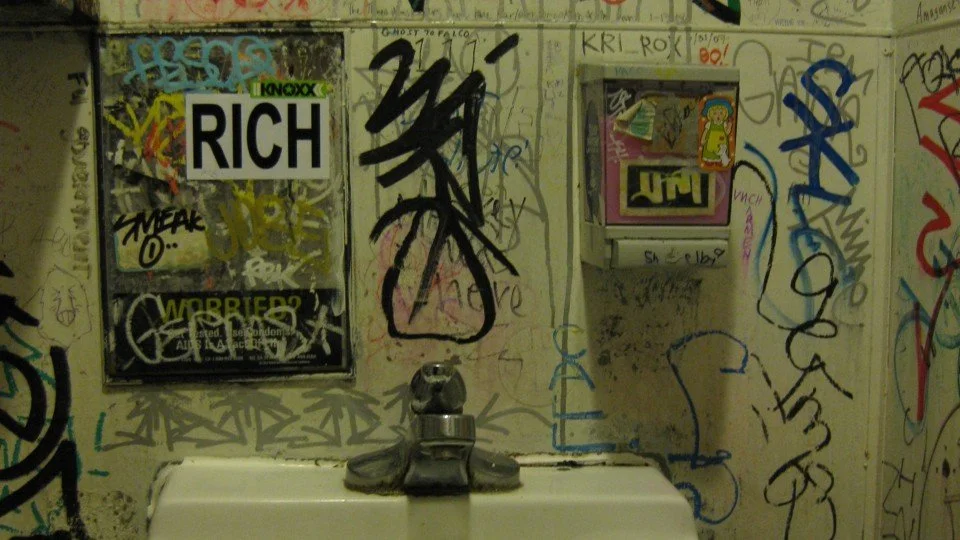
Even when it becomes informational, as when restroom walls are used to share anything from local tips and event notices to personal messages or political resources. The underlying logic doesn’t change: it remains local, immediate, and unconcerned with broader interpretation. In Chicago, for instance, references to groups like the Chicago Abortion Fund have appeared alongside everything from band names and secret messages to crushes to phone numbers and the craziest drawn cartoons. They function as direct, practical, and open communication rather than identity performance.
Understood this way, the contrast exhibits how expression changes once visibility becomes a universal filter of what gets to matter.
Context doesn’t just outline meaning; it repositions what expression is for. Both online discourse and bathroom walls share a contradiction: they are public, but they simulate privacy. The difference is in how they respond to that condition. Bathroom graffiti behaves as if the possibility of being seen is incidental. Online discourse behaves as if it were primary.
That shift in orientation changes everything. A passing reaction becomes something pre-conditioned by how it will be received, quoted, or repurposed. The response stops being just a response. It becomes a firm standpoint, even when it presents itself as spontaneity. What we end up with is not simply interpretation of art, but performance around it. Performing intelligence, taste, moral clarity, or even deliberate disengagement.
And maybe that is the tension Geese accidentally exposes. A band making music that still feels open, unstable, and internally social is received by a system that increasingly turns everything outward-facing and declarative. The question then is not why criticism exists, but why so much of it now feels like it needs an audience in order to function at all.
Perhaps, there is something still worth recovering in forms of expression that don’t immediately convert themselves into a customized character for public consumption. Not a nostalgia for “authenticity,” but a reminder that not every reaction or preference needs to subsume identity to be half-real.