
Fragments of One Dream: Tomorrow x Together and the Rhythm of K-pop Storytelling
Fragments of One Dream: Tomorrow x Together and the Rhythm of K-pop Storytelling

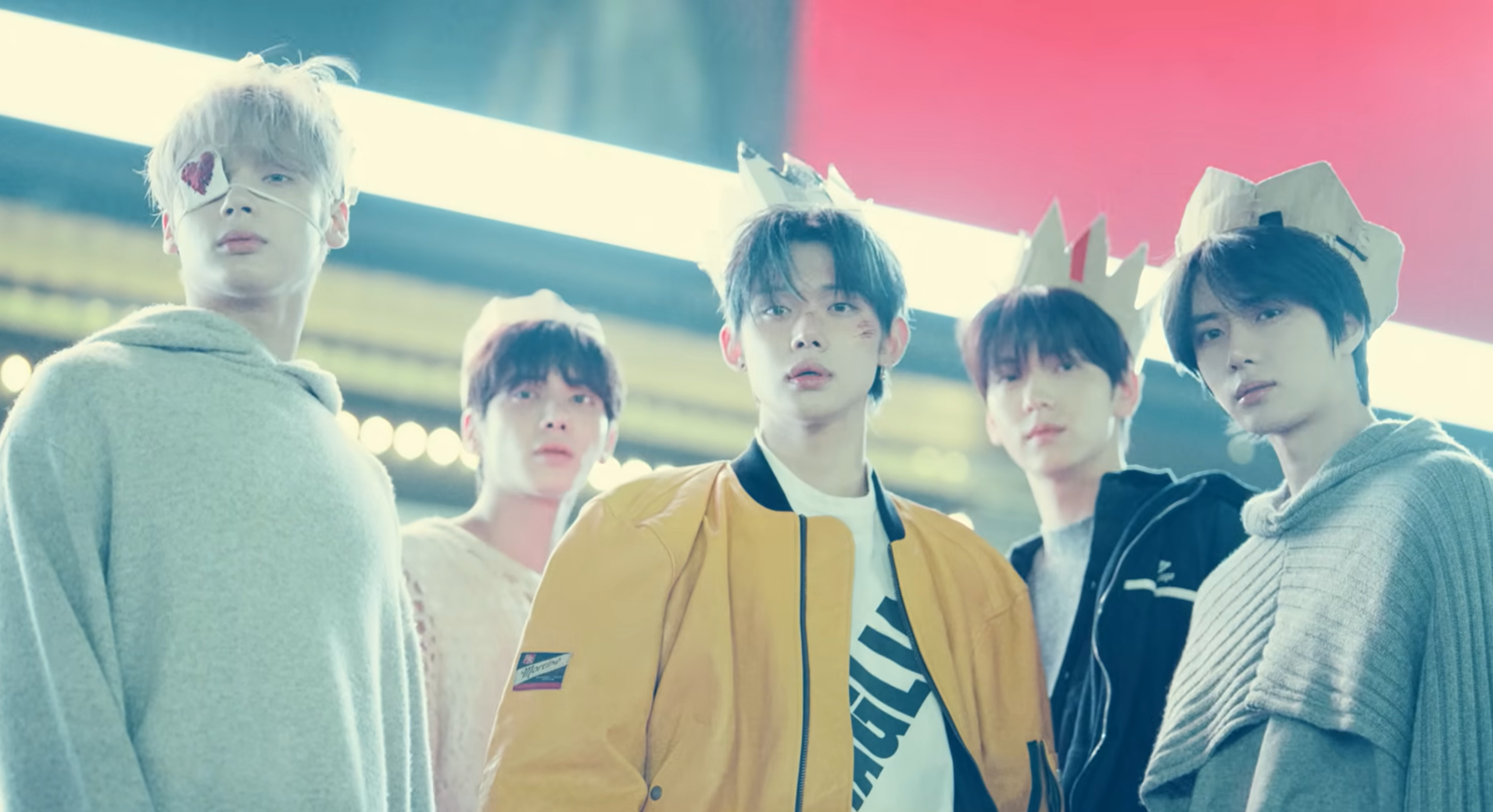
Still from the ‘minisode 3: TOMORROW’ concept trailer
K-pop is often discussed through performance – choreography, sound, and visual style – but over the past decade it has also developed increasingly elaborate narrative systems. These narratives rarely appear in a single place. A group’s story may unfold across music videos, album concepts, short films, web content, and other materials released over several years. Any one of these pieces offers only a partial view.
This arrangement affects how audiences encounter meaning. Instead of following a continuous plot, viewers encounter recurring images and situations that appear, disappear, and later return under different circumstances. The connections between them are not always stated. Recognition becomes part of the experience: noticing when something seen before resurfaces and asking what has changed in the meantime. And among recent groups, Tomorrow x Together has worked consistently within this format.
Since their debut, Tomorrow x Together has developed an ongoing narrative often referred to by fans as their “lore.” Characters, alternate timelines, and symbolic imagery recur across their releases. Yet the story is never gathered into a single text; it all unfolds through dispersion.

Beomgyu, Yeonjun, Hueningkai, Soobin, and Taehyun | Photo courtesy of Big Hit Music
Tomorrow x Together and Narrative Construction
Tomorrow x Together, commonly known as TXT, is a five-member group formed under Big Hit Music that debuted in 2019. The members, Soobin, Yeonjun, Beomgyu, Taehyun, and Huening Kai, entered an industry where concepts and visual identity were an integral part of the K-pop formula. What distinguishes their work is the persistence with which narrative elements move across formats.
Rather than limiting storytelling to individual songs or videos, TXT’s releases gradually introduce images and situations that recur in later projects. A location glimpsed in one video may reappear in another under altered conditions. Relationships between characters shift over time, sometimes contradicting earlier suggestions. The group’s output doesn’t read like a set of independent releases; it behaves more like an archive whose parts are continuously in conversation with each other.
The group’s music plays a central role in this arrangement. Songs don’t function merely as accompaniment to the visual storyline; they participate in shaping it. Tracks such as Run Away, 0X1=LOVESONG (I Know I Love You), and Loser=Lover introduce emotional positions, escape, attachment, and disillusionment that recur across the group’s visual narratives. The lyrics and sonic tone often frame the psychological states that the videos depict. When a later release revisits similar themes or imagery, the earlier music continues to shape how those moments are interpreted.
A release like The Dream Chapter: Magic establishes ideas about friendship and escape, while later works such as The Chaos Chapter: Freeze and The Name Chapter: Temptation return to similar emotional territory under more unstable conditions. The songs themselves trace this movement: the sense of possibility heard in earlier tracks gradually shifts toward tension, longing, and uncertainty. Music therefore becomes another thread through which the narrative evolves.
From Film to Distributed Form
Relatedly, cinema has long used fragmentation as a storytelling method. Films such as Alain Resnais’s Hiroshima Mon Amour and David Lynch’s Mulholland Drive rely on disrupted chronology, memory gaps, or unstable identities to complicate narrative continuity. Viewers piece together meaning from fragments that arrive out of order or refuse to align neatly. Yet even in these cases the fragments belong to a single work. The film itself provides the frame that gathers them.
TXT’s narrative removes that boundary. Techniques familiar from cinema, repetition, discontinuity, shifts in identity still appear, but they are dispersed across multiple releases. A music video may introduce an image that only gains context years later in another video or a short film. The story therefore does not exist inside one object; it exists in the relations between objects.
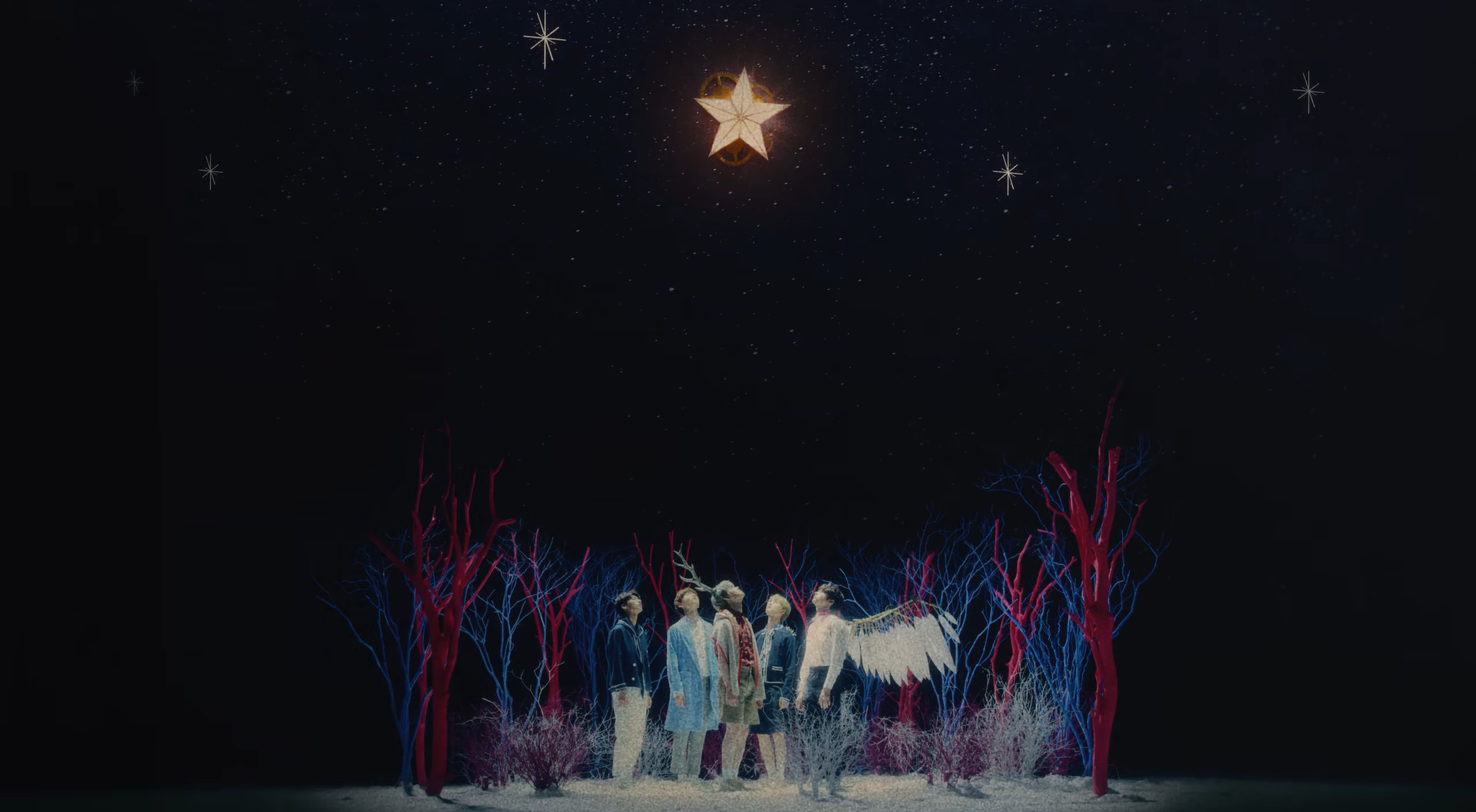
Still from the ‘Nap of a Star’ official music video
Albums Beyond Containment
In most musical contexts, the album functions as a closed unit. Even when built around a concept, it gathers its themes within a fixed set of tracks and visuals. TXT’s albums frequently resist that closure.
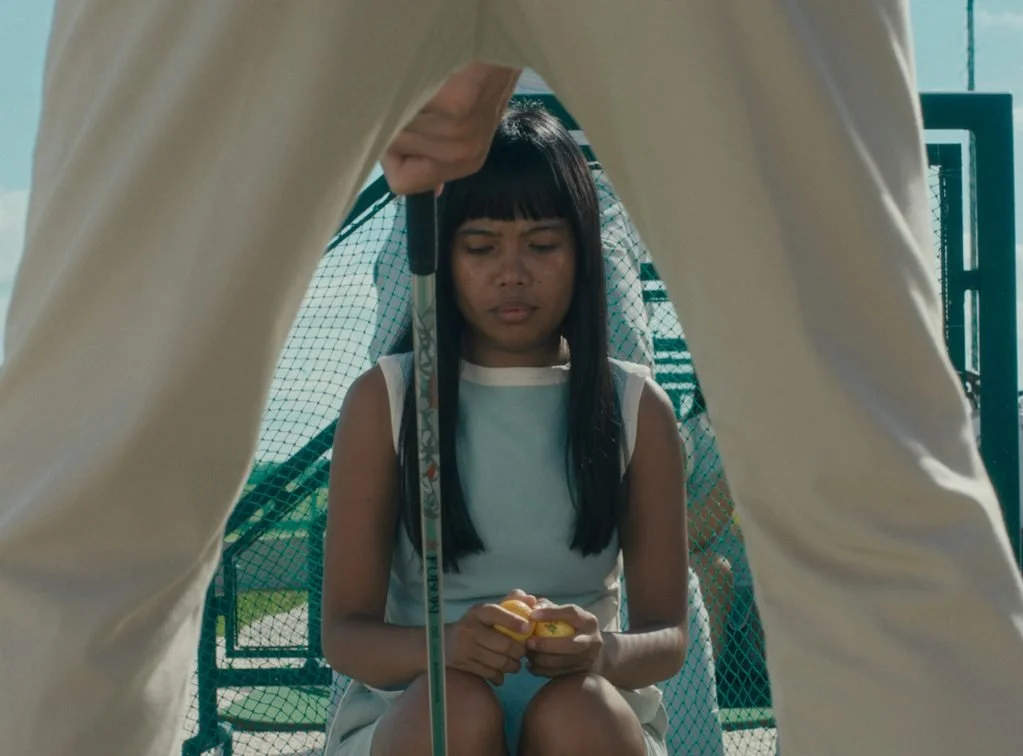
Visual materials from early releases already hint at this approach. The music video for Nap of a Star presents figures undergoing strange transformations within environments that shift between dreamlike and unsettling. The imagery does not settle into a clear storyline. Instead, it introduces motifs that remain unresolved within the video itself.
Later releases revisit related imagery without explaining it outright. A location once associated with childhood wonder may return in a darker setting. A symbol that first appeared playful may carry a different emotional weight when it surfaces again. The earlier image is not replaced; it is reinterpreted.
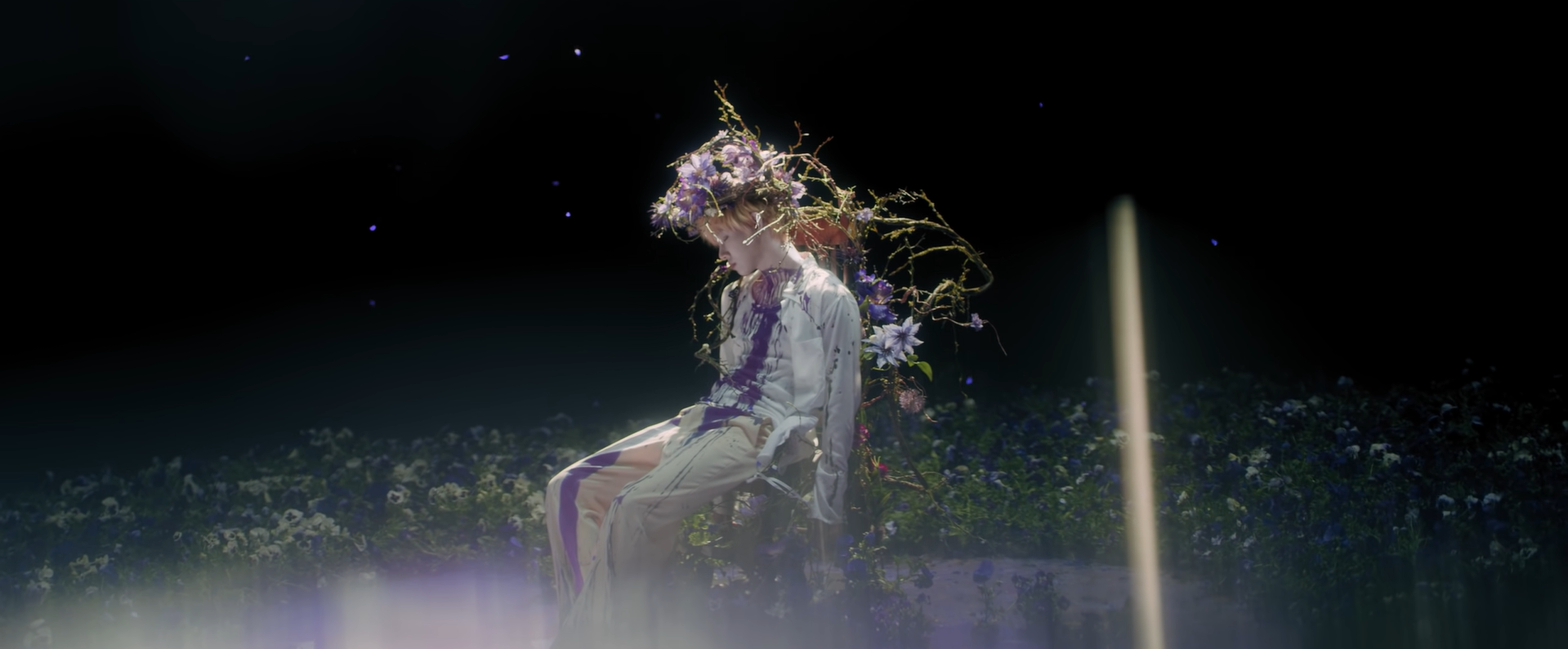
Still from the ‘Eternally’ official music video
Repetition and Shifting Meaning
Repetition plays a crucial role in TXT’s storytelling, but the repetition rarely stabilizes meaning. When an image returns, it often appears under altered conditions that invite comparison with its earlier appearance.
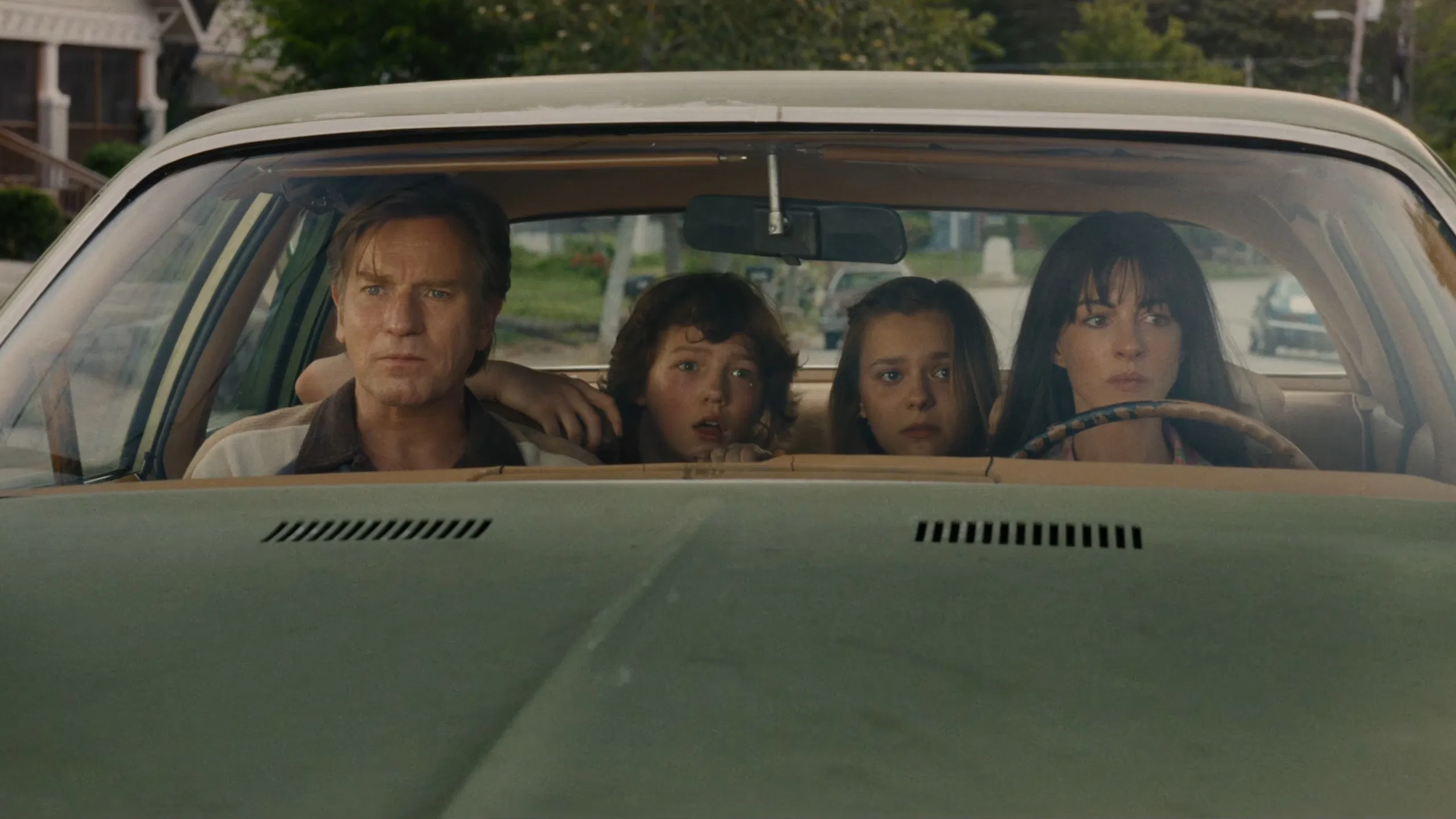
The music video for Eternally illustrates this pattern clearly. The video moves between sharply contrasting environments that do not connect through a continuous space. Scenes interrupt one another without explanation, producing a sequence that feels less like a single location than a series of abrupt transitions.
When similar motifs surface elsewhere – distorted versions of familiar places or strained group dynamics – it affects how earlier scenes are understood. Viewers begin to reconsider what they have already seen, asking whether a previous moment belonged to the same reality or to another variation within the narrative.
Lore and Supplementary Narratives
TXT’s storytelling extends beyond music videos through additional materials, including animated releases such as The Doom’s Night. These works introduce characters and conflicts that resemble those hinted at in the group’s visual content.
Importantly, these supplementary texts don’t function as definitive explanations. They offer more context, but they do not gather every element into a single, stable plot. Instead, they add further connections that viewers may choose to trace across the wider body of material. This approach differs from conventional serialized storytelling, where side material often clarifies the main narrative. TXT’s supplementary works expand the narrative field without closing it.
The Viewer as Assembler
When storytelling unfolds across many separate texts, the viewer’s role inevitably shifts. Watching a single video rarely provides the entire picture. Understanding develops gradually as recurring details are noticed and remembered.
Fans often approach TXT’s releases in this cumulative way. They revisit earlier videos, compare imagery between eras, and speculate about how new material reframes what came before. The narrative doesn’t require a single interpretation, but it encourages the act of assembling one. Over time, meaning arises from this ongoing process of recognition and reconsideration.
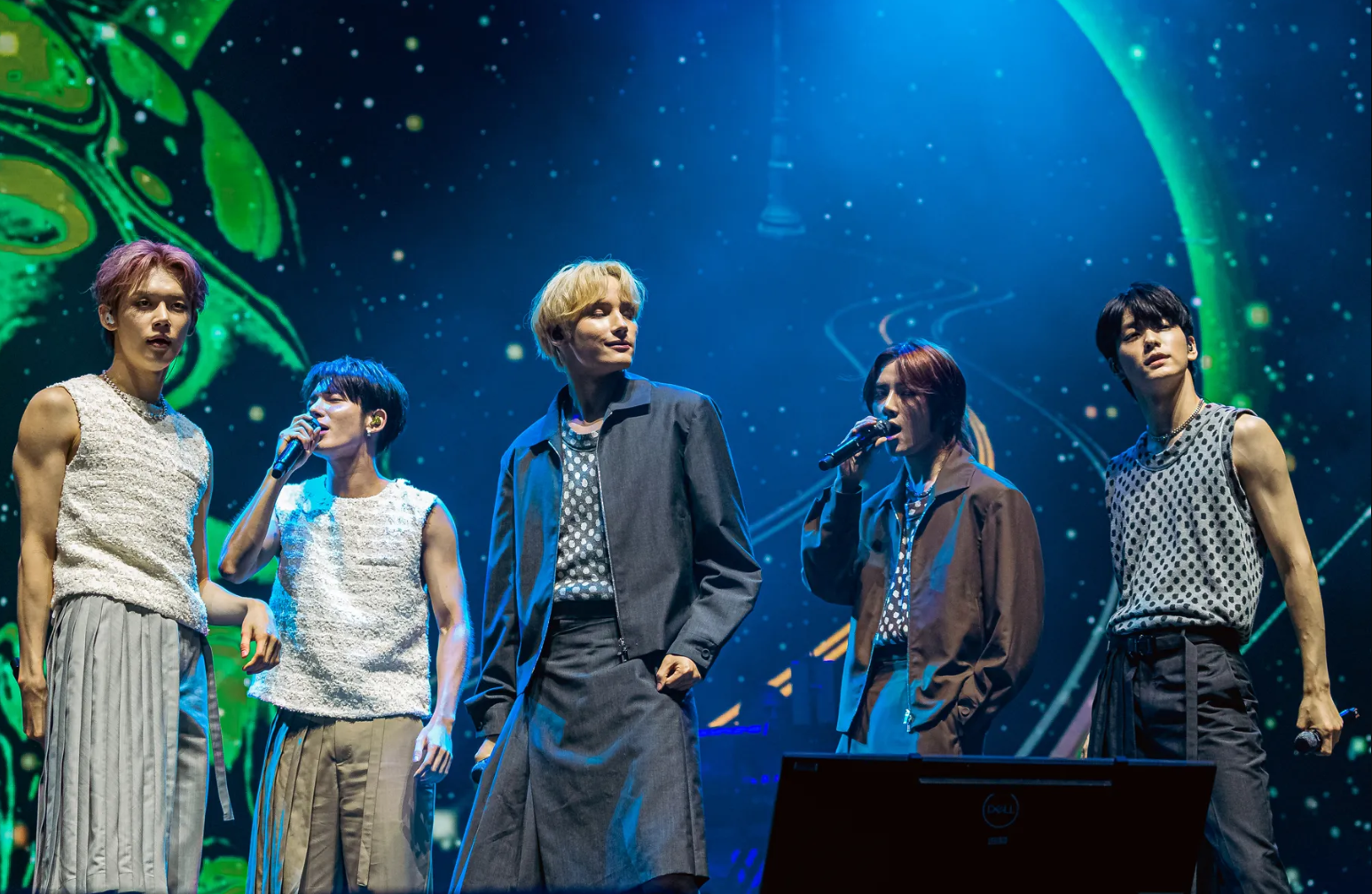
TXT performing at Lollapalooza Chicago in 2023 | Photo courtesy of Rolling Stone
A Moment of Stillness After The Dream
In their most recent release, 7TH YEAR: A Moment of Stillness in the Thorns, TXT brings the first movement of their narrative to a close. The arc that began with The Dream Chapter was anchored in the fantasy of youth, in the sense that friendship and possibility could hold together even as it began to strain. That sense of stability no longer carries through to the ending. Instead of resolving the story, the video shows how much of that earlier world depended on conditions that no longer apply.
With 7TH YEAR, the group moves into a different phase where their characters are no longer supported by symbolic spaces that shift with them. They are placed within a world that doesn’t accommodate the same kind of movement, where actions have weight and where transitions between moments don’t smooth over what separates them. This shift brings their use of fragmentation into clearer focus. That openness sustained the idea that meaning could still be assembled from scattered parts.
When they moved into this new era, it didn’t feel like they were starting over, just continuing in a way that made more sense for where they are now. I like that their music reflects that kind of shift, where things feel a bit more open and uncertain. It’s why their story and music never feel distant to me. It’s something I’ve grown alongside since 2020, and something I’m still growing into as Tomorrow x Together moves into their new chapter.