
‘The Bride!’ REVIEW: A Mad Experiment Gone Wrong

‘The Bride!’ REVIEW: A Mad Experiment Gone Wrong

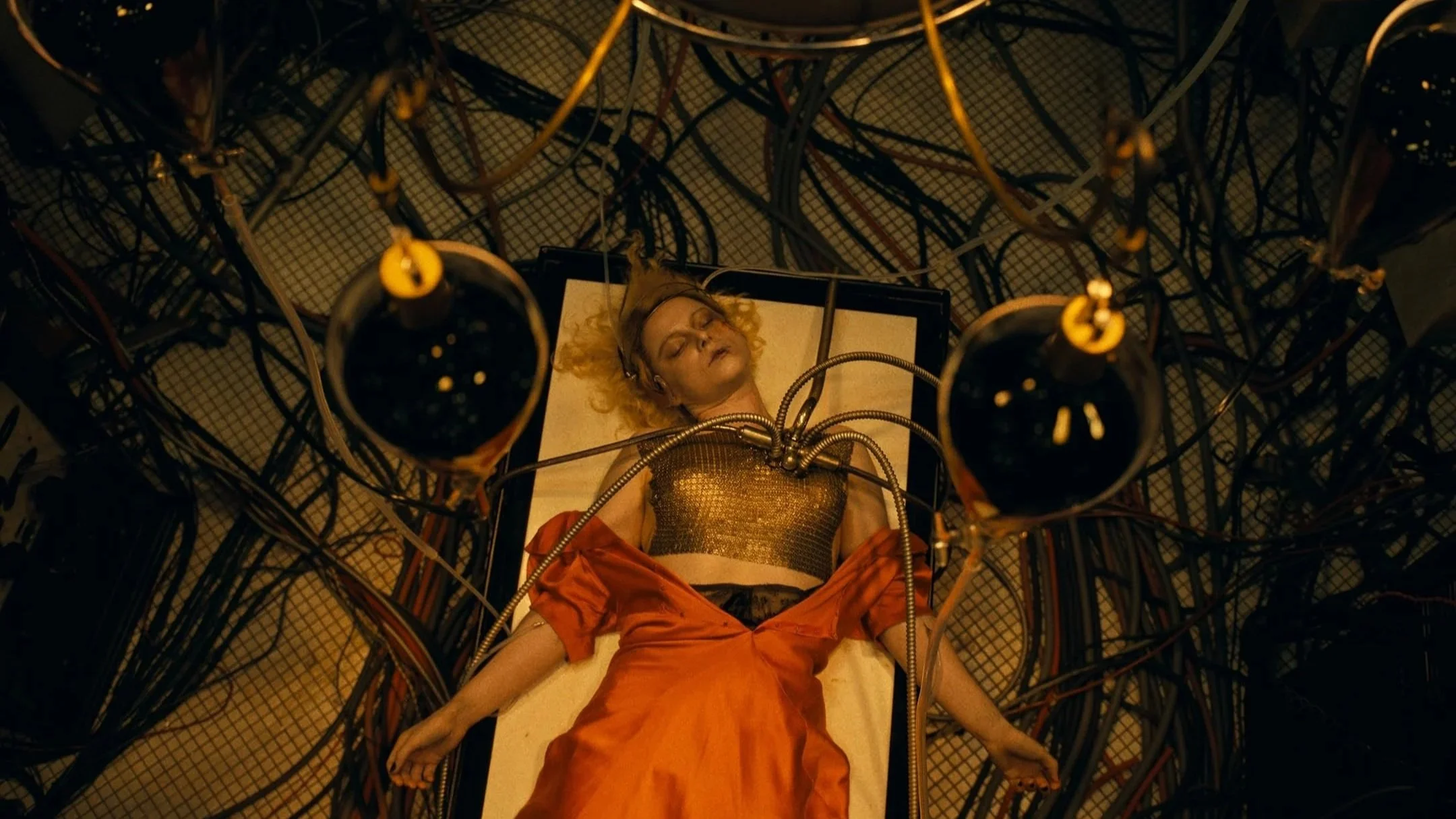
Jessie Buckley as Ida/The Bride in The Bride! | Still courtesy of Warner Bros. Pictures

The Bride! was always destined to inspire wildly different reactions. It’s difficult to even describe that I will admit to being baffled by parts of it.
Put simply, the movie is a reimagining of 1935’s Bride of Frankenstein, but to actually explain what happens in it would make me sound crazy. The film opens with Mary Shelley, influential author of Frankenstein, speaking directly to the audience from a black-and-white afterlife, alone in this dark, unknowable limbo, monologuing that she has another story left to tell.
Her vessel for telling that story is Ida (played by Jessie Buckley, in a dual role as both author and the Bride, a nod to Elsa Lanchester who did the same in the original Bride), a young woman mixed in with violent gangsters in 1930s Chicago.
Shelley isn’t just the narrator for this story, or a framing device. She enters the story, possessing Ida, speaking through her as though she were the Greek muse speaking through Homer, enabling him to spin long tales straight off the dome.
At a dinner with a couple mob goons working for the big boss Lupino, Ida suddenly erupts into a fit of madness, splitting off into two personalities, half a tough, sultry city girl trying to play it cool to survive in a violent world surrounded by violent men, half a British-accented living thesaurus who rattles off chains of synonyms of words spoken to her and publicly calls out Lupino for his crimes.
And then there's Frankenstein's Monster (Christian Bale), or simply Frank, as he's now been nicknamed, who walks into Chicago as just another man looking for love. I wondered how Gyllenhaal would rework the Monster and change his origins to fit him into this milieu. But the film's Monster is indeed the very same one that Victor Frankenstein brings to life in the 19th century, as if a character from a popular novel walked out from the pages and into the real world.
Frank comes to Chicago to see Dr. Euphonious (Annette Bening), a mad scientist, who propositions her to make him a bride. Euphonious can hardly believe her eyes; to her, Frankenstein's Monster is fictitious, or was until he walked through her door. He is who he says he is, and he's got the forehead staples to prove it.
Like Euphonious, it was difficult to process what was happening in front of me, but also incredibly fascinating. What exactly is this movie trying to be? It's unfair to to decide how you feel about it only 15 minutes in, but it is almost whiplash-inducing to go from the edgy, monochrome, black box theater-style monologue with Shelley, to the possession outburst in the middle of a gangster crime story, to Frankenstein's Monster looking to experience the pleasures of life still unknown to him on account of his being a man assembled from the parts of different corpses.
It's a busy opening, but I think the film really finds its footing from there because it locks in on being arch and mostly stays there. Gyllenhaal finds the humor in the interplay between Frank and Euphonious. Bale plays Frank as someone who is, to put it delicately, excited at the prospect of finally, after a hundred or so years, having a partner he can copulate with. Like a man on the apps, he is sheepishly desperate, eager yet inexperienced. Bening's Euphonious, with her wild grey hair, big, rounded glasses, and white lab coat, is the spitting image of a cartoon mad scientist.
Euphonious reluctantly agrees to revive a corpse for Frank, spurred on when he questions if she's truly mad enough to fit her label. Together, they dig up Ida, who was murdered by Lupino's gangsters. Ida is revived, with both her own and the Shelley persona still intact, but she has no memory of her past.
The film takes off from there, launching into what can only be described as the corpses of Bonnie and Clyde, the faded reels of ‘30s Hollywood musicals, the tattered pages of pulp fiction, and, I suppose, Todd Phillips' Joker, all Frankensteined together with the best movie stars and big Art Deco production design that money can buy. It cannot be said that the film has no ideas. That it doesn't quite land the plane on a single one is kind of a problem, but it's hard to make something that's not at least a little interesting when working with such charged material.
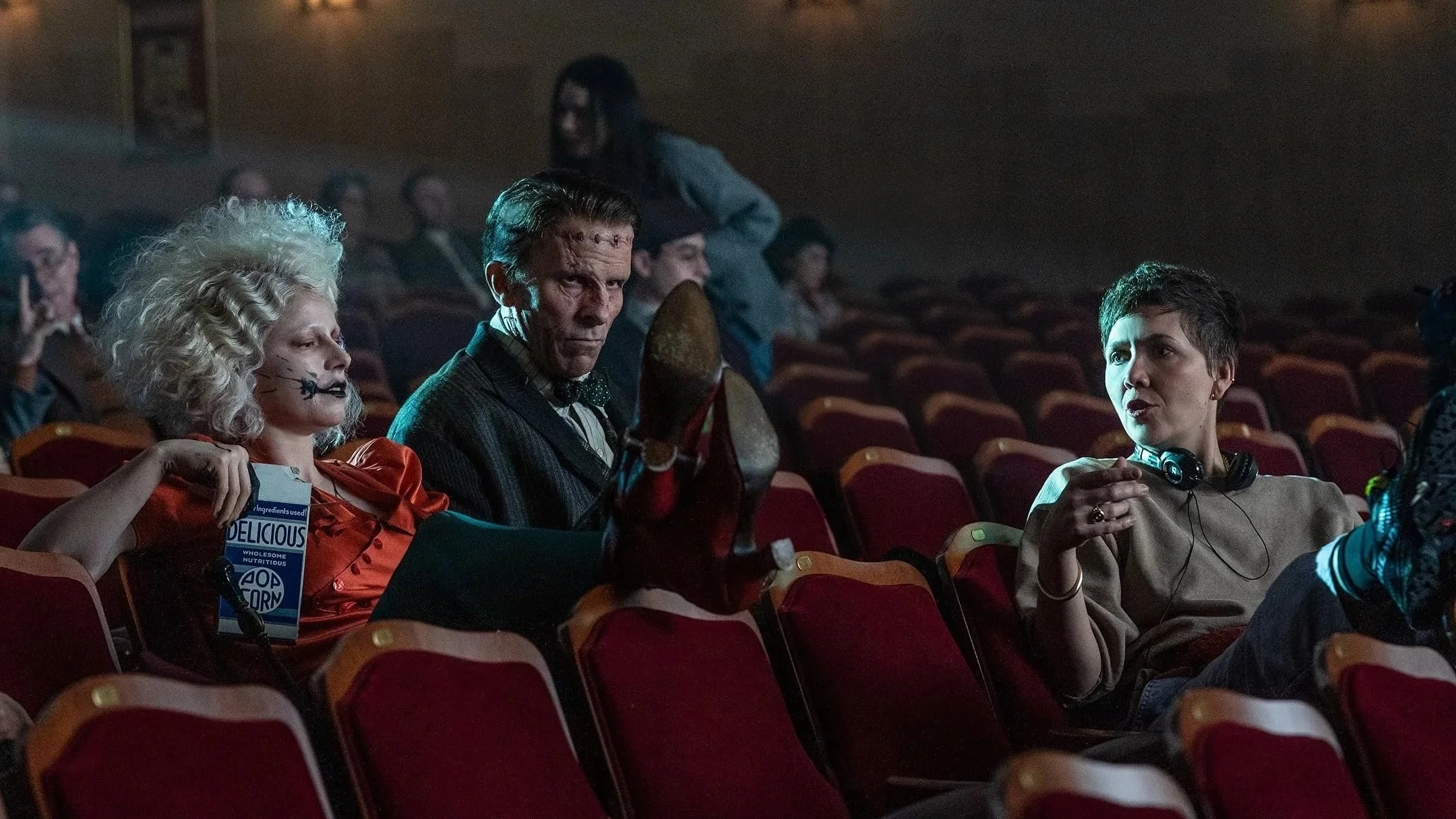
Jessie Buckley as Ida/The Bride, Christian Bale as Frank, and writer-director Maggie Gyllenhaal behind-the-scenes of The Bride! | Photo courtesy of Warner Bros. Pictures
The Bride! is a film about violence, how violent men are to women, how institutions shield men from punishment, specifically the police, for whom “protect and serve” refers entirely to the male ruling class. It’s about violence as a means of retaliation for the abused.
It’s a Bonnie and Clyde story resurrected for the 21st century—in the way the notorious twosome captured, even inspired, an American populace ravaged by the Great Depression, serving as Robin Hood–esque figures standing up to the establishment; and in the way the 1967 film Bonnie and Clyde, arriving during the Civil Rights Movement and at the tail end of the Hollywood Production Code, signaled the beginnings of a “New Hollywood”—a more counter-cultural popular cinema where criminals became the leads at a time when the police were no longer seen as do-gooders cleaning up the streets, but instead the establishment goons who could be sicced onto people like a pack of rabid dogs, a sentiment still ringing true today.
On their runaway crime spree, the people killed in Frank and Ida’s wake are largely cops and abusive men (who are usually both at the same time).
And yes, comparisons to Joker are inevitable. From that film, Gyllenhaal ports over two key creatives in shaping its mood, cinematographer Lawrence Sher and composer Hildur Guðnadóttir, and there are certainly a couple moments that can be likened to Joker: like that film's climax, The Bride! has a wave of Bride copycats descending upon a city after Ida's public stand against Lupino and cop killing becomes front page news, fed up women taking matters into their own hands and retaliating against the men who've abused them, mimicking the black blood spatter staining Ida's lips, or specific shots that see Ida bathed in the same teal blue light that Joaquin Phoenix's Arthur/Joker dances in.
It's an easy comparison to make, one that Gyllenhaal might even be inviting, which could inspire some eye rolling depending on how well Joker works for you (it doesn't work for me). There is some overlap in look and theme, but where Joker is a miserable experience from start to finish, there's a lot of fun to be had with The Bride! and it's attempts to be mainstream outsider art, even if you end up disliking it.
Ida and Frank are societal castaways, treated as freaks, primarily because Frank is sewn together from the parts of different men and Ida is a woman. They hide in the only public spaces dark enough for them to try to blend in; the clubs and the cinema. Gyllenhaal's use of electronic pop artist Fever Ray is delightfully anachronistic, as is the knowingly silly appearance of her brother Jake Gyllenhaal as Ronnie Reed, a ‘30s Hollywood musical star.
Among the many other things it's got going on, The Bride! is also a movie about the movies, critiquing the notion of entertainment as escapism or a machine for empathy. Gyllenhaal will cut back and forth between her brother on screen and Frank performing the same scene. Frank sees himself as Reed, and we see him literally substituting himself for Reed on the big silver screen, dancing along to the swinging tunes or giving heartfelt confessions of love. It's his reprieve from a society that shames him. Reed's pictures also become his courtship model when he tries to persuade Ida to be his bride. His notions of love and romance come only from the movies, which, you can imagine, is not the most convincing of illusions for her. When Frank and Ida attempt to see a B-horror movie in 3-D, they are chased out of the theater by cinemagoers who identify them as the real monsters.
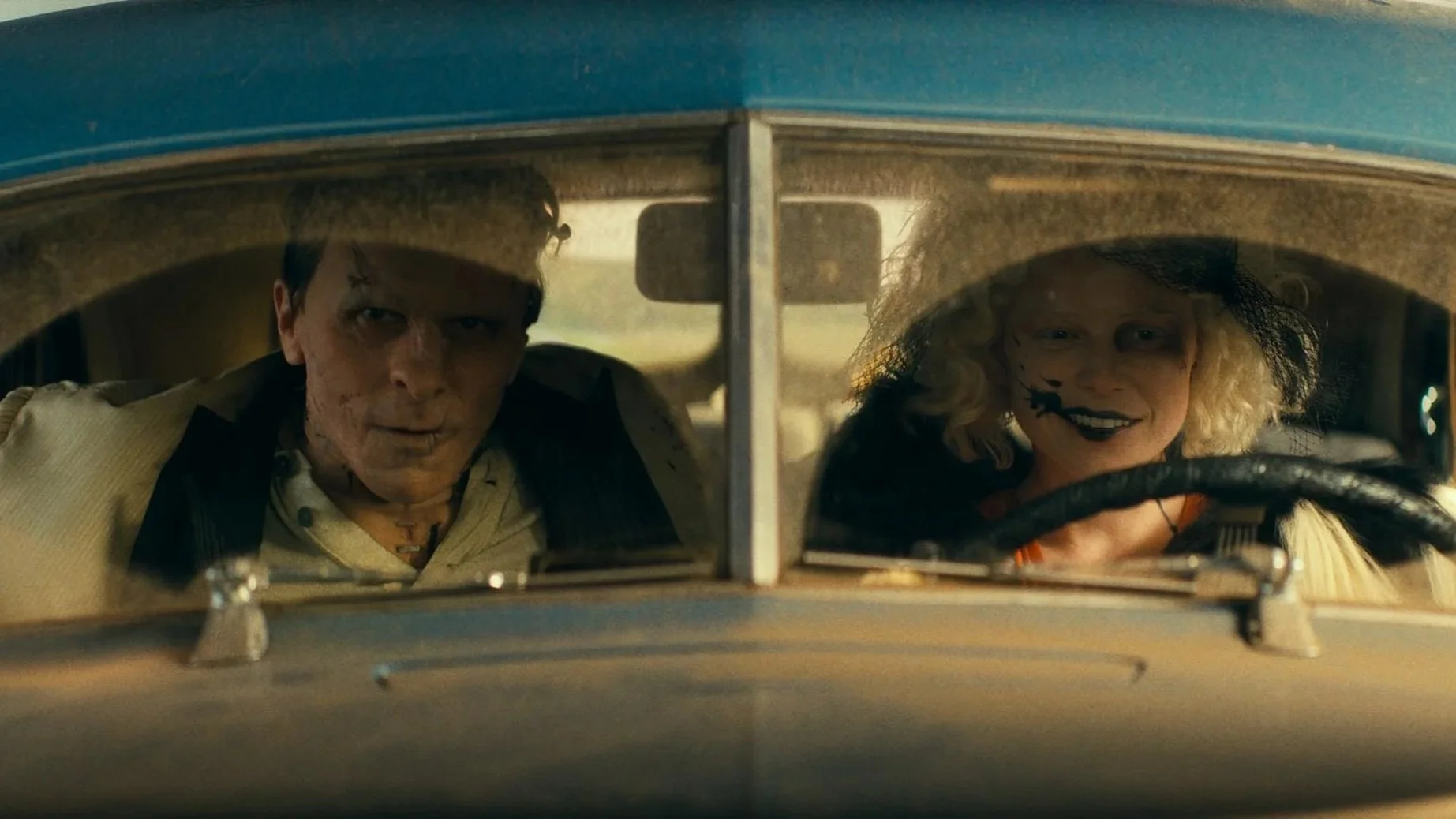
Jessie Buckley as Ida/The Bride and Christian Bale as Frank in The Bride! | Still courtesy of Warner Bros. Pictures
Does The Bride! undercut itself sometimes simply because there's too much going on? Undoubtedly. The film's narrative aims fluctuate as jarringly as Buckley's performance hops from Ida to Shelley and back again. Its women empowerment, gothic romance, and kitschy B-movie threads simply do not intertwine satisfyingly, and by the time it reaches the credits, it feels like at least one of those things is left as an afterthought. There's a subplot featuring Peter Sarsgaard as Jake Wiles, a hangdog detective who's a bit of a doofus, and Penelope Cruz as Myrna Malloy, his "secretary" and the real brains of the operation, that channels some Howard Hawksian ratatat back-and-forth dialogue that's charming and adds color to the film, but might undermine the film's own stance about the police.
The Bride! is the exact kind of wild swing that I cannot help but admire. Gyllenhaal really goes for the fences, which is what you want from a filmmaker being handed a sizable budget. I’m all for an old school Hollywood dance number redone as a colorful, kinetic, quick-cut sequence dropped in the middle of the film like the staggering undead corpse of a forgotten art form, but that’s not everyone’s cup of tea. As the adage goes, "Shoot for the moon. Even if you miss, you'll land among the stars", only in this case, the stars probably mean having clips posted on Twitter in a couple of months when the reclamation project for this film eventually comes around.
‘The Bride!’ is now showing in cinemas nationwide.