
‘Ky Nam Inn’ REVIEW: A love story with nuances loaded with history

‘Ky Nam Inn’ REVIEW: A love story with nuances loaded with history

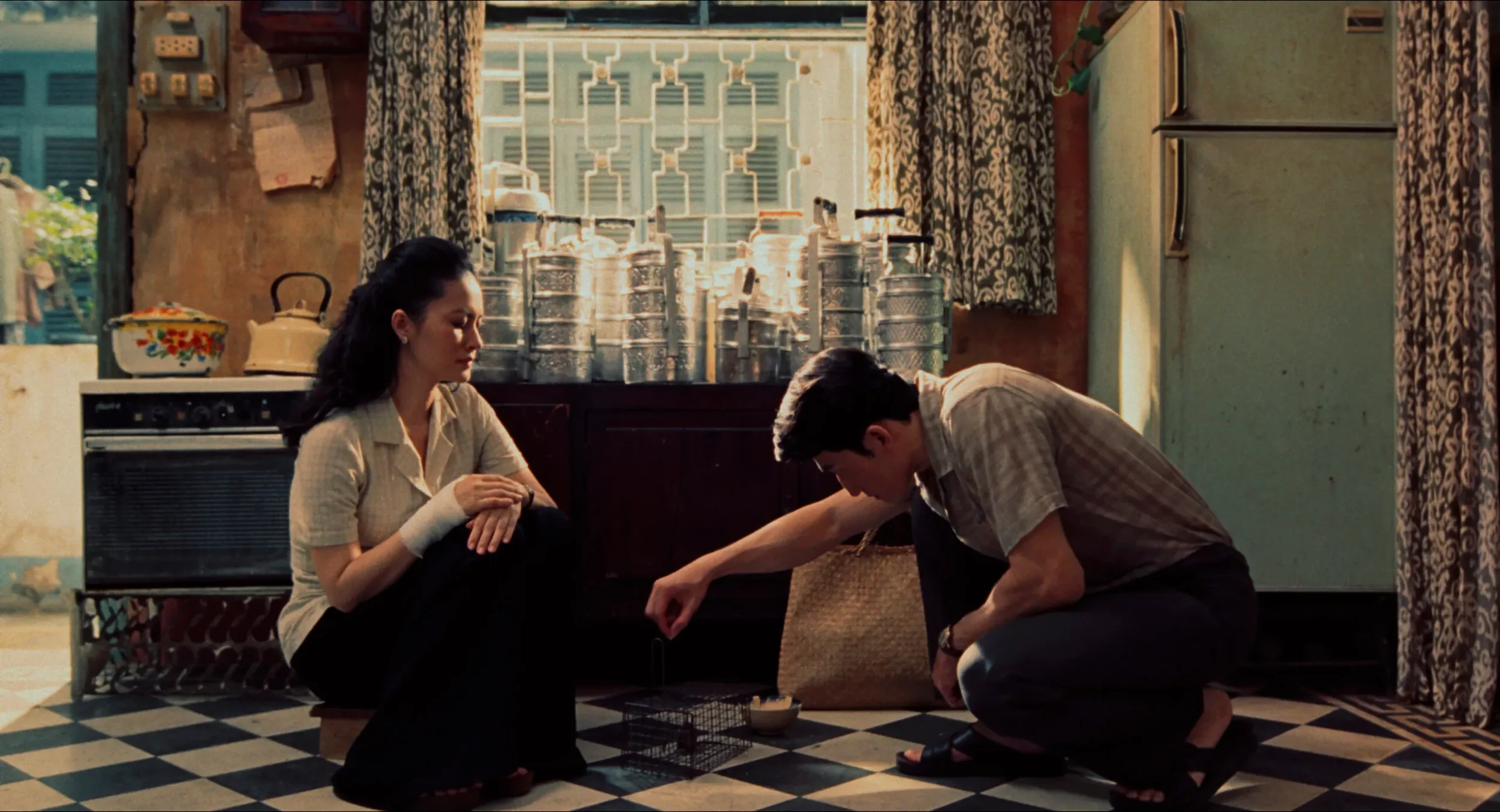
A still from Ky Nam Inn

The Vietnam War left many Vietnamese people devastated and separated. The disastrous effects of the war are visible not only in the country's physical state but also in the dynamics of people from different regions. Just when people were still healing from the many scars inflicted by the civil war, North Vietnam supported the Cambodian War and sent troops to aid the ongoing war, which added another burden to the people of Vietnam.
When you make a period film, the most obvious route is to highlight heavily the most important events of the time period to immerse the audience in the conditions of the time, regardless of its thinly veiled connection to the actual plot of the film. Choosing this route and doing it sloppily only alienates people who have thorough knowledge of the subject and those who lived that specific era. Thankfully, this is not the case for Leon Le’s sophomore film, Ky Nam Inn.
At the surface, Ky Nam Inn follows the story of Khang, a translator whose familial connections secured him protection from the government and a job to translate the famous French novella Le Petit Prince, and his involvement with his neighbor, Ky Nam, a middle-aged, widowed cook. Their connection is one to watch, and while their age difference and Ky Nam’s status as a widow might be the first indicator of why the neighbors take an issue with their close rapport, their backgrounds suggest a deeper reason as to why it was such a big deal to some.
The world-building of the movie is just exceptional. As soon as the movie introduced us to the apartment building Khang moved into, we got a good glimpse of the characters we would meet for the rest of the run time. The subtleties of the time period and politics of the film might go over your head, but this is the perfect and only way to do a period piece that depicts the microcosm of life during that setting. You then realized it was the tension between citizens of North and South that Ky Nam is being treated as such by her neighbors. You understand why Khang was assigned to make a translation for Le Petit Prince, told to stay away from her due to his connections to the government, and how his growing bond with Ky Nam might impair his reputation. There is also a reason why there is banned music in the region, and how there are still people insistent on playing these songs. Le set out to make a film not to please and blatantly educate foreigners about the rich history of his country, but rather to show the real-life effects of the war are both in the background and directly affecting the characters in the film in subtle ways, tailored to the very people the film was depicting.
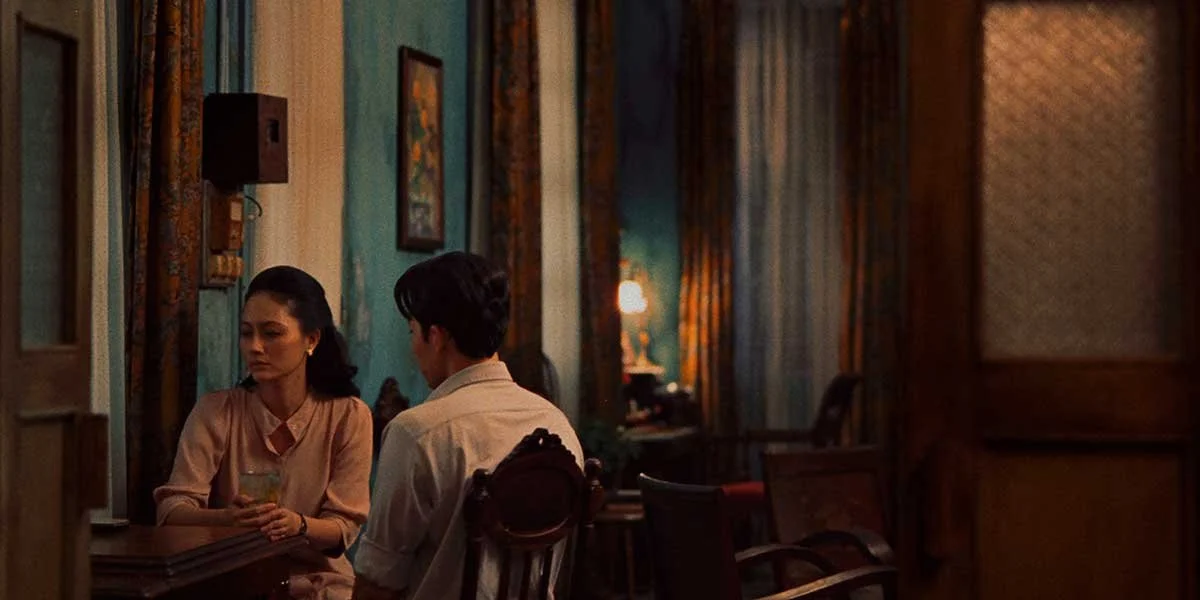
A still from Ky Nam Inn
The slow-burning connection of Ky Nam and Khang is tender and innocent - a thing that blossomed into something more meaningful and beautiful, despite the painful reality of war. Their tragic romance is all too familiar for cinema lovers, yet something is appealing to it that you watch how their story ends. Đỗ Thị Hải Yến delivers a radiant and layered performance as Ky Nam, someone who has seen and endured so much in her lifetime and still keeps on doing what she loves, cooking. Her chemistry with Lien Binh Phat is somewhat similar to Maggie Cheung and Tony Leung in In the Mood for Love, despite their age difference. Together on screen, I was so invested in the way their eyes met and how they could communicate without words. Lien Binh Phat is an outstanding lead as Khang, a translator who slowly realizes the reality of living in the city.
The atmospheric and nostalgic nature of the film was achieved with Le’s choice of shooting the whole picture in 35mm film. The whole movie is rich in color and displays the vibrant and warm culture of Vietnam, as well as the country picking itself up in disarray. The food shots are mouth-watering, and the final exchange of Ky Nam and Khang is achingly exquisite. A flashback to the past that is effective and immerses you in 1980s Saigon perfectly. Its approach is almost reminiscent of Wong Kar Wai’s In the Mood for Love, from the helpless yearning to its overall look. It doesn’t aim to plagiarize or copy Wong Kar Wai’s creation; rather, it pays homage to it and makes use of its theme to explore this form of tragic romance under a corrupt rule.
Overall, the story of Ky Nam Inn is beautifully executed with such care for Vietnam's culture and history. While one might easily compare this to Wong Kar Wai’s masterpiece, Leon Le’s sophomore film can stand on its own with its subtle depiction of 1980s Vietnam.
‘Ky Nam Inn’ was part of the Asian Next Wave category of the 12th QCinema International Film Festival.