
‘The Voice of Hind Rajab’ REVIEW: A 90-Minute Cry for Help


Hind Rajab. The film credits her as six-years-old, but the Gaza Health Ministry has her listed as five.

The last two years have produced many important films about the Israeli government’s systematic destruction not only of Palestinian life, but of their very possibility of life in the future. The most high profile of these releases in 2024 were the Masafer Yatta documentary, No Other Land, and the anthology of shorts, From Ground Zero. It’s only multiplied since then, with several films releasing to rave reviews in festivals throughout the year. Palestinian-American director Cherien Dabis’ All That’s Left of You premiered in Sundance, Iranian filmmaker Sepideh Farsi’s Put Your Soul On Your Hand and Walk in Cannes, Palestinian auteur Annemarie Jacir’s Palestine 36 in Toronto, and Tunisian director Kaouther Ben Hania’s The Voice of Hind Rajab in Venice. Other notable documentaries from the year about the solidarity movement at large are The Encampments, about the Columbia University protests, and To Kill a War Machine, about the British direct action network, Palestine Action. The banned BBC documentary Gaza: How to Survive a War Zone is also worth seeing.
Filmmakers all over the world have taken up the responsibility to make accessible exactly why Israel’s destruction of Palestinian life must be resisted against, especially in this moment of history. They encourage us to interrogate our own place in the global reproduction of violence. It’s about Palestine but it’s not just about Palestine. It’s also about unraveling the interconnected systems of co-optation, learned helplessness, and apathy, that help prop up the systems in power that dominate us. These issues are global. The lessons from these films can help clarify our moral compasses, such that they can be sharpened well enough for application throughout the rest of our lives in our respective local environments.
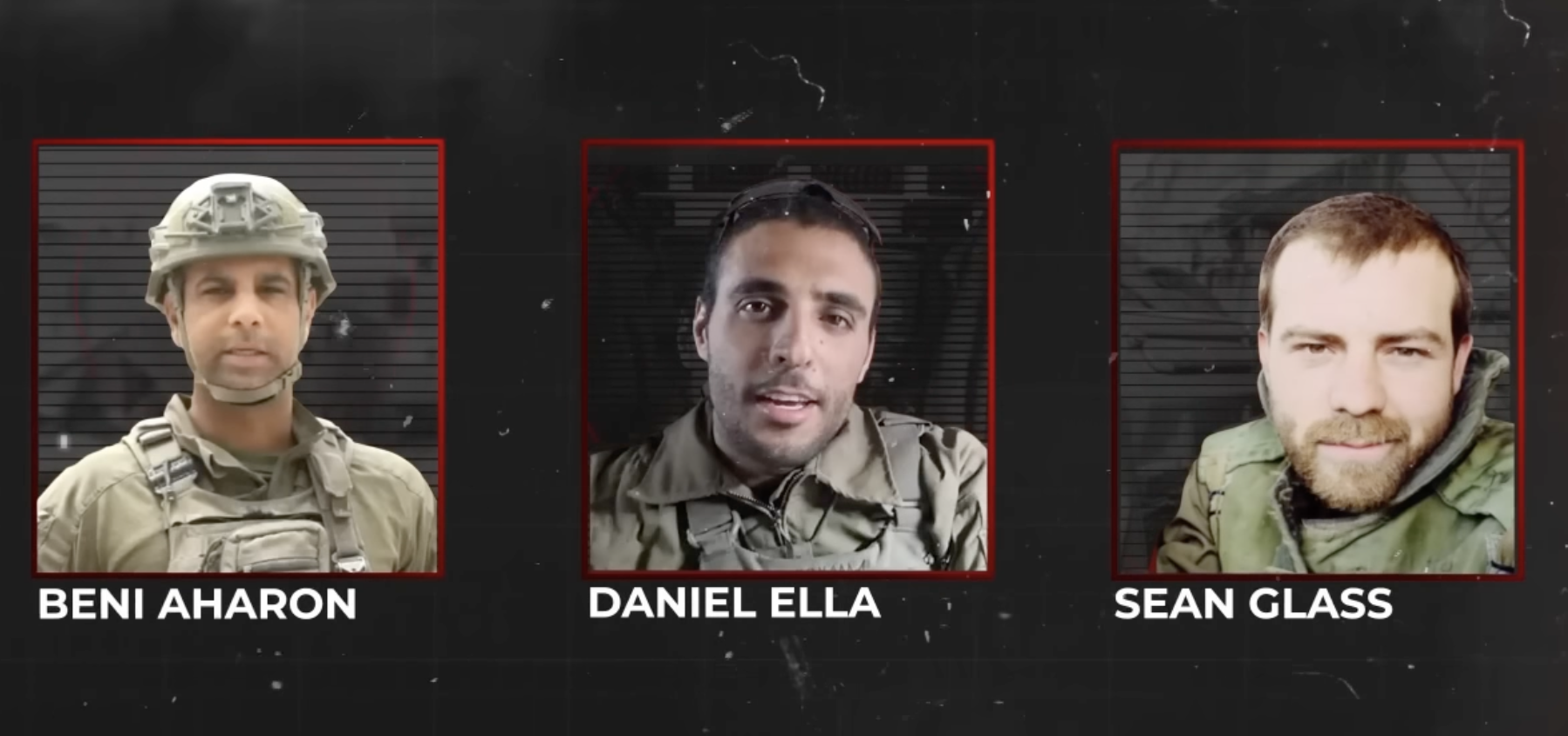
According to a recently released Al Jazeera documentary, these three men are responsible for ordering the shelling of the family’s car and tampering with the scene.
The killing of five-year-old Hind Rajab in January 2024 has become an ultimate symbol of the cruelty of the Israeli regime. Her body was found amidst six other family members’ corpses inside a vehicle with over 300 bullet holes in it. What differentiated her death from the other tens of thousands of children killed since October 2023, was that her last few hours were recorded. The Palestinian Red Crescent Society in Ramallah contacted her over the phone while coordinating an ambulance to rescue her. She was the last survivor. Trapped in a car for hours, she cried, quivering in fear, begging for help. And when her rescuers finally arrived, they were killed as well.
Twelve days later, a total of nine bodies were found at the scene: Hind, her aunt and uncle, four cousins, and two paramedics. The recorded calls were later broadcast on social media, creating a global uproar. The tragedy made her image a primary fixture in international protests decrying the depravity of the Israeli government. For example, at Columbia University, the center of the pro-Palestine encampment movement, one of their buildings was briefly taken over and renamed Hind’s Hall (which became the title for a protest song from rapper Macklemore).
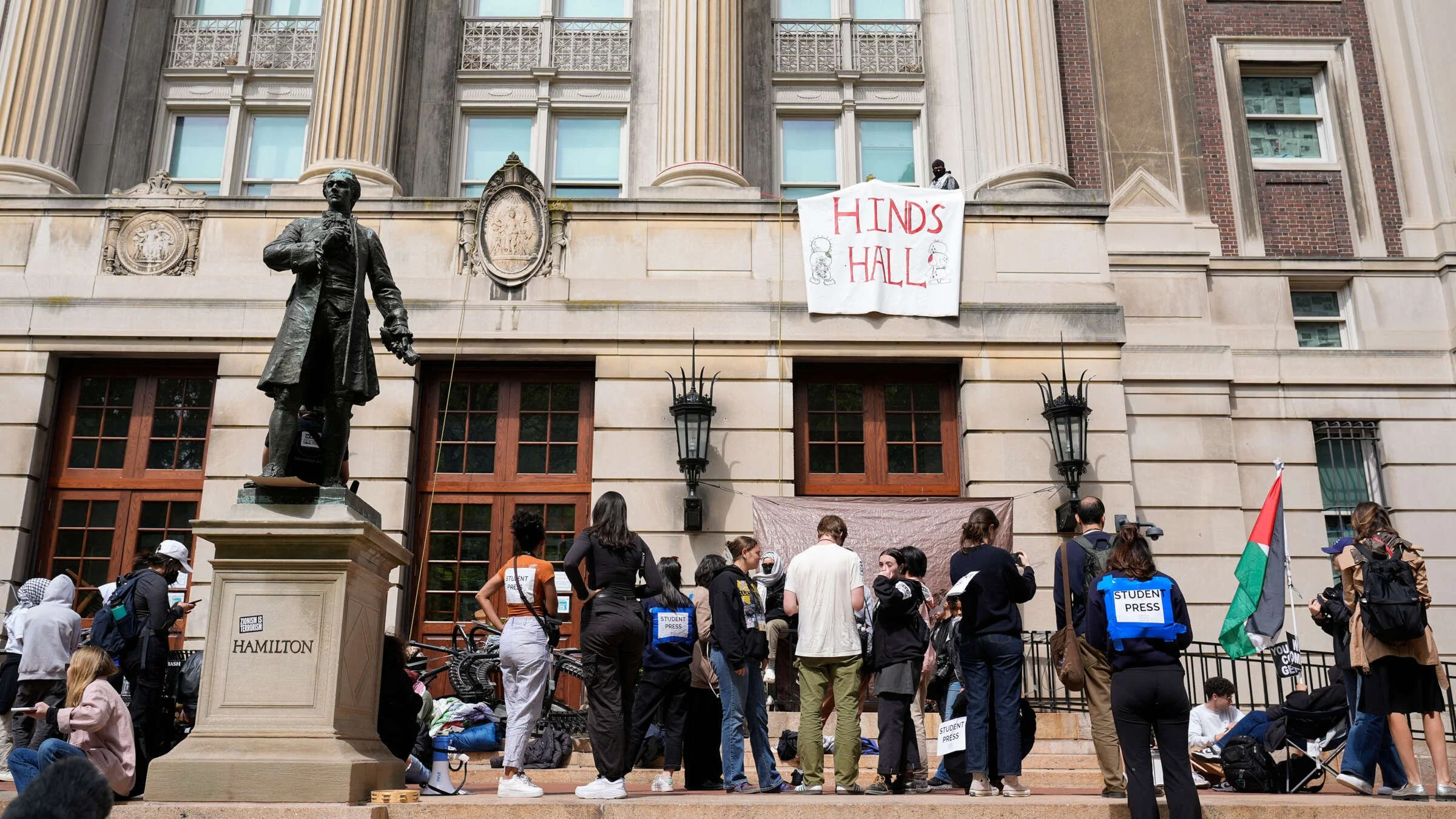
Columbia University protesters dedicated their takeover of Hamilton Hall by naming it Hind’s Hall
It’s inspired so much disgust that just this year three films were made about it, of which, The Voice of Hind Rajab is but one. Instead of a straightforward documentary about the tragedy, director Ben Hania decided to recreate the events from the perspective of the workers at the Red Crescent in Ramallah. It’s essentially a fiction film, with the only character not played by a professional actor being Hind herself. We hear her real recordings as if we were in the room with the characters when it happened.
The choice to do it this way makes for a unique film experience. In a crude sense, it feels a bit like being held hostage in the room with them. We are not allowed to look away from the horror. We can’t just scroll past it on our phones. For 90 minutes we need to listen to Hind’s cries for help, for the Palestinian cry for help. We need to meditate on this situation. Does this scenario not encapsulate the senselessness and heartlessness of the Israeli government? How can anyone continue to hold the pretense that the Israel Defense Forces is “the most moral military in the world” or that they are only trying to “wipe out terrorists” when they actively murder children like Hind? That they can be made aware of a five year old trapped inside a car, and still decide to shoot up the ambulance approved to rescue her? The film not only exposes the absurdity of the system in place, in which sending paramedics to save lives requires hours of bureaucratic nonsense, but it also reveals that it doesn’t matter how well you follow it. If they feel like killing, they will.
There is a lot of helplessness in the film. A lot of raw emotion. A lot of screaming matches. Because of the way the film is dramatized, we are positioned to identify with the workers trying to save Hind. But it doesn’t really work as well if one does so, since none of the characters are fleshed out for this purpose. They are more like mouthpieces to express the frustration of the situation and relay exposition. Most of the dialogue between them feels manufactured, meant to relay to the audience why saving Hind was so difficult.
For example, in one scene a character explains to another the meaning of the photographs on the wall of ‘Humanitarian Work Martyrs’ to argue that they can’t be too reckless. In another, he draws a diagram on a board of the different departments needed to be involved before they can call the ambulance. In reality, they probably didn’t need to explain their work or procedures to each other — these explanations are for us. And sometimes it feels like their arguments are for us as well. For the drama of cinema. There’s nothing particularly wrong with this, but I found these few moments of artificiality distracting, though it makes sense why they were included. But it comes to a point where so much of the film depicts them fighting with each other over the right thing to do that it inadvertently portrays the Palestinian Red Crescent Society as almost dysfunctional.
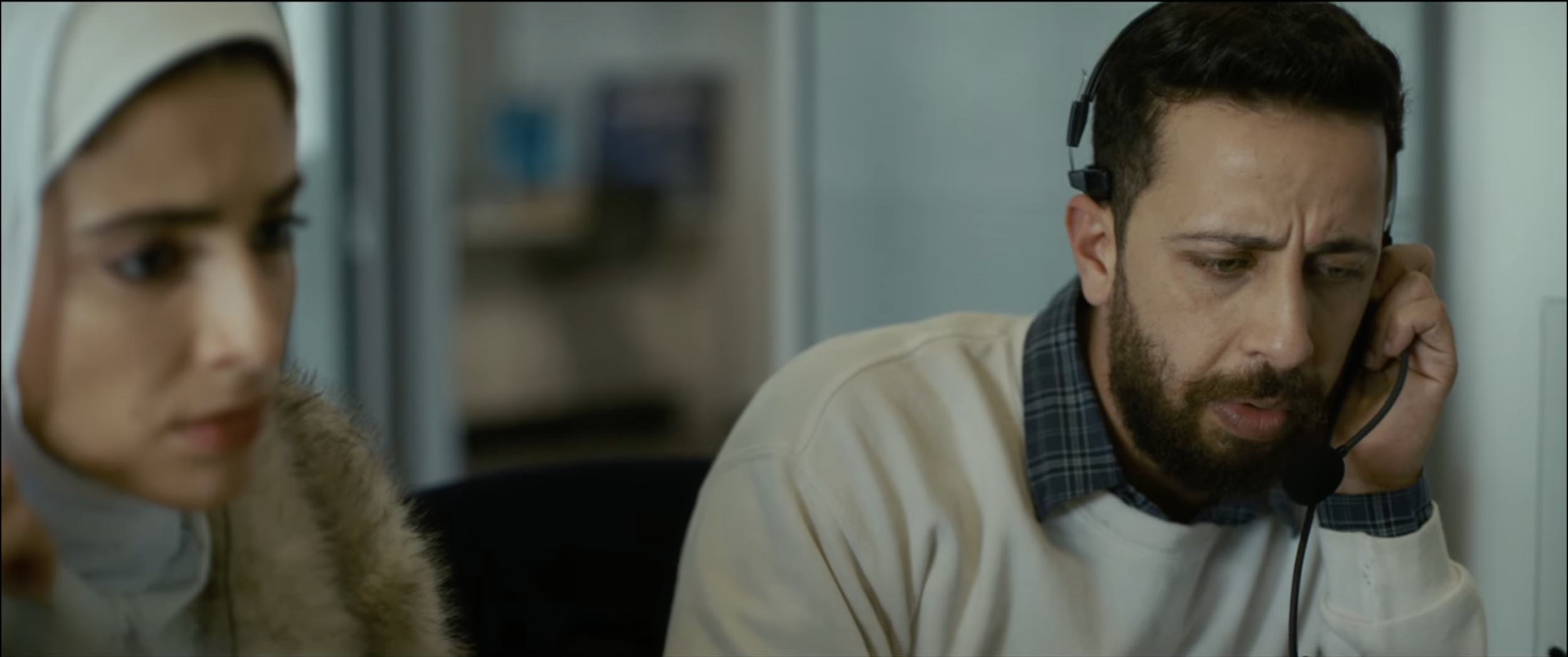
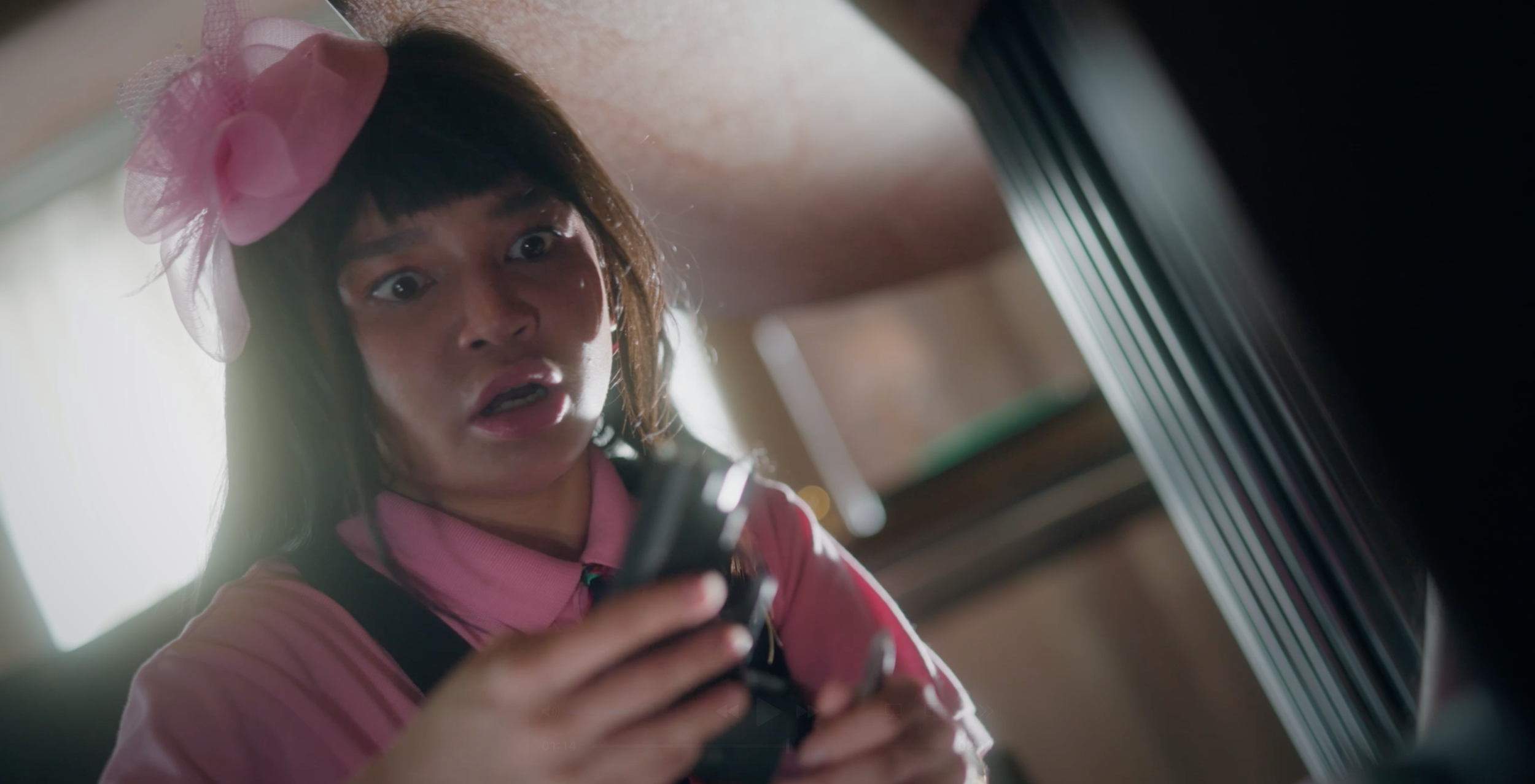
The film is visually very minimal, mostly held in tight close ups. This is a sample of how most of the shots look; there are only so many ways to film a phone call in an office.
Occasionally the film draws its curtains back and reveals the reality behind the fiction— literally, with clips of the real workers’ voices from the original recorded calls, and in one case, even videos from the day. The intention perhaps is to ground the film in reality, to remind us that these recreations attempt to be as accurate as they can, but it can also make the experience a bit jarring. However, each time it jumped in and out of the fiction, it rooted me less and less emotionally into the performances of the actors. It too consciously reminded me that they are just acting, and that if there is clear audio of the real recordings anyway, I’d much rather hear the truth than its recreation. It made me question the purpose of dramatizing any of this at all. And by the time the narrative would slip back into a chamber drama, my emotional connections to the characters had diminished.
Perhaps none of these concerns matter. The main takeaway of the film is not supposed to be the specific tensions between the workers of the Red Crescent, no matter how much its runtime needed to dramatize it. It’s about the general sense of helplessness many people feel towards the plights of Gazans. It’s about the tragic death of Hind Rajab. It’s about the Israeli war state. But could the film have been more effective as a pure drama, in which we see dramatizations of both sides of the phone call, or perhaps of Hind Rajab’s journey that day? Or maybe even as a straight documentary? What exactly is gained by filming this material in this way? How are the film’s lessons imparted differently when it is presented as a docudrama? What are audiences supposed to learn from this film that can’t be found elsewhere? And finally, since so much of her real voice is used in this film, does it in any way exploit it for entertainment or profit?
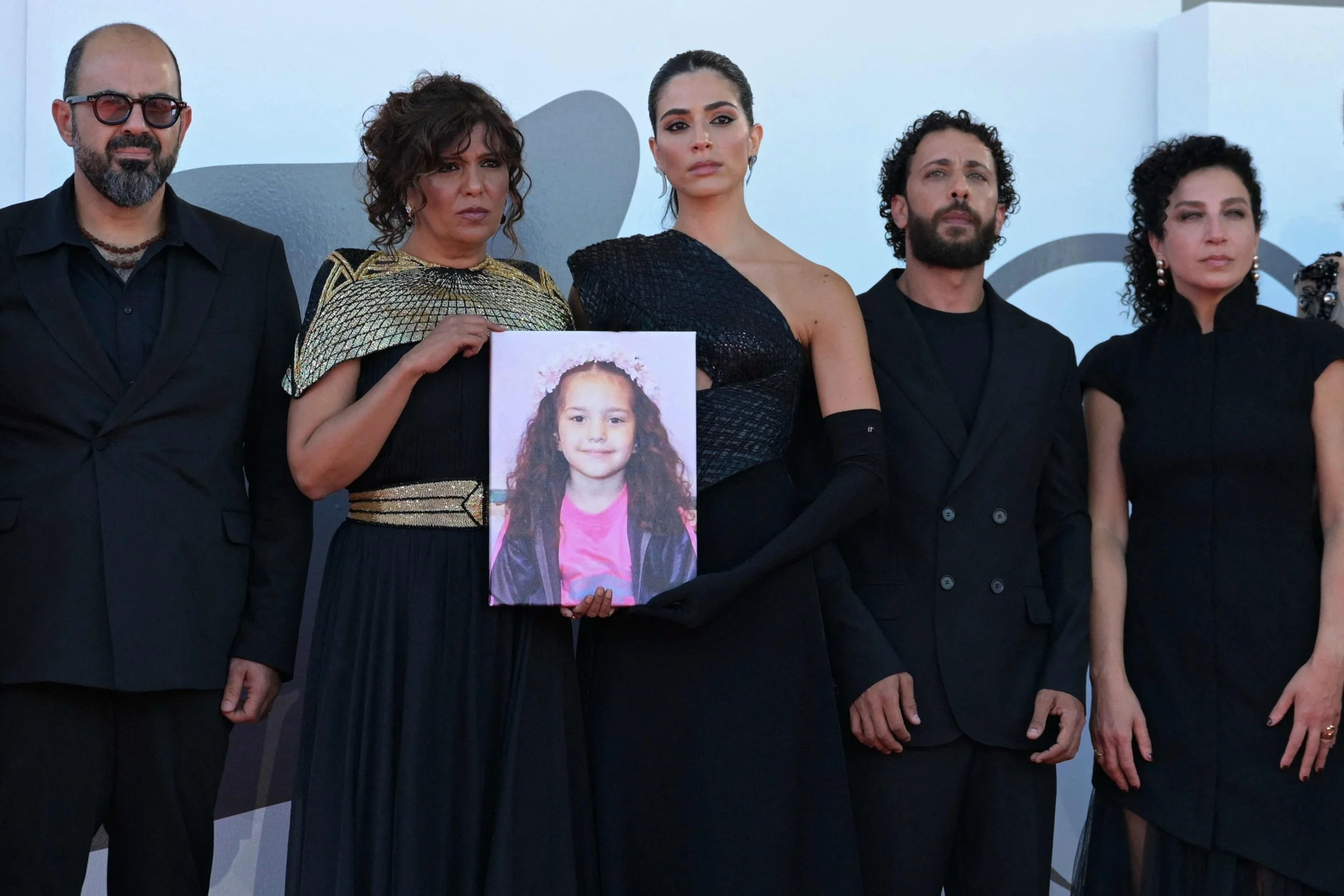
The cast of the film in Venice holding up a photograph of Hind.
These are all questions worth pondering on. But perhaps the fact that I have more questions about the use of film form than I do the nature of the film’s content betrays a failure on my part. As the credits were rolling and I was considering all these formal and aesthetic questions, the elderly man beside me in the theater spent it bawling his eyes out, nursing rivers of tears after hearing a child beg for 90 minutes for a humanity that never arrives.