
‘Habang Nilalamon ng Hydra ang Kasaysayan’ REVIEW: A new renaissance of Dustin Celestino films

‘Habang Nilalamon ng Hydra ang Kasaysayan’ REVIEW: A new renaissance of Dustin Celestino films


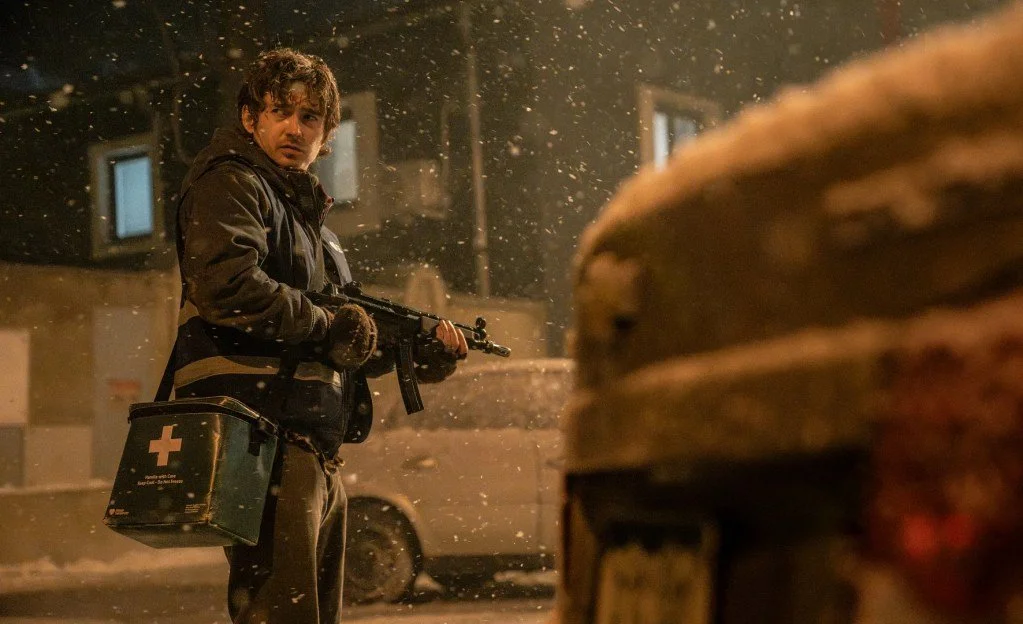
Dolly de Leon in Habang Nilalamon ng Hydra ang Kasaysayan | Still courtesy of Cinemalaya
In my 2 years of writing for SINEGANG.ph while also trying to get a foot in the door as a filmmaker, one of my biggest dilemmas has always been finding the middle ground between understanding a film based on what appears on screen versus interpreting a film in relation to the filmmaker who, in some occasions, I know personally. It’s just the timeless debate on whether or not the art should be separate from the artist, which I have always advocated that it shouldn’t be, due to both creative and moral reasons.
Having been mentored by Dustin Celestino and studying his works, I was convinced I had a reasonable grasp of who he was as a storyteller. From his writing in General Admission to Ang Duyan ng Magiting, there are some noticeable changes in his style, most notably applying more humanized depictions of characters in the latter compared to the former – but what I did admire about both pieces was his philosophical approach of leaving audiences with questions to answer themselves as opposed to answering it for them.
For Habang Nilalamon ng Hydra ang Kasaysayan, everything felt very different. The film was heavily grounded on symbolism and imagery, the most prominent ones being its references to Greek Mythology, while other visual metaphors lost their subtlety as the scenes went by. Admittedly, I initially wasn’t too fond of it, especially because the loss of subtleness made me question the entire purpose of metaphors in the first place, but I gave it some thought. Given the amount of time I spent lingering on this film, I figured this was his intention – to leave us reflecting on what we already knew; that there was no necessity to explain anything to us through imagery. Instead, it was put in the foreground, aided by some quotable dialogue, and we were forced to reflect: Once stripped of hope, what happens next?
The story unravels the phenomenon of the 2020 Philippine Presidential Election – the feeling of a rare nationwide collective action in hopes of a brighter future, the only phenomenon that could possibly give us hope after a year of a pandemic and decades of political uncertainty; the feeling of being stripped of that hope and right to a fair election.
As someone who generally leans towards the more progressive side of politics, my attention was brought to determining whether my anger with the state of the world outweighed my hope for the future of the nation. Then, I thought about the character of Bea Consuelo (Dolly de Leon), a history professor whose wisdom is rooted in her wounds and tragedies, whom Celestino wrote very well. Celestino knew the power he held as an educator and lent that power to her character. Through her character, audiences weren’t just seated in cinemas, they were seated in a class that forced them to confront a wound that was too deep to touch.
The screenplay was the strongest tool of the film, also by Celestino. It manages to deliver words of wisdom but still letting it unfold naturally. It gives us a masterclass on suspense, not through the unveiling of secrets but rather the uncertainty of how much of the unreleased emotions of characters could explode at any second. Of course, when it did happen, it was just one of many emotions felt by characters who have clearly been through so much. That alone represented all of us.
Contrary to what others might say, I don’t think this was just another Dustin Celestino film. I was convinced after watching this that he embraced a new style of writing and filmmaking – proving that no amount of merit should ever discourage an artist from trying something new. I can genuinely say I strongly look forward to watching his next film.
‘Habang Nilalamon ng Hydra ang Kasaysayan’ premiered at Cinemalaya 2025.